


Contents
- The real product is the controlled process
- Draw the responsibility map before requesting quotes
- Build a transfer package a factory can actually run
- Match the process chain to the device architecture
- Use stage gates instead of calendar optimism
- Treat the quotation as a risk document
- What Jucheng can own in the manufacturing chain
- A decision checklist before nomination
- Frequently asked questions
The Real Product Is the Controlled Process
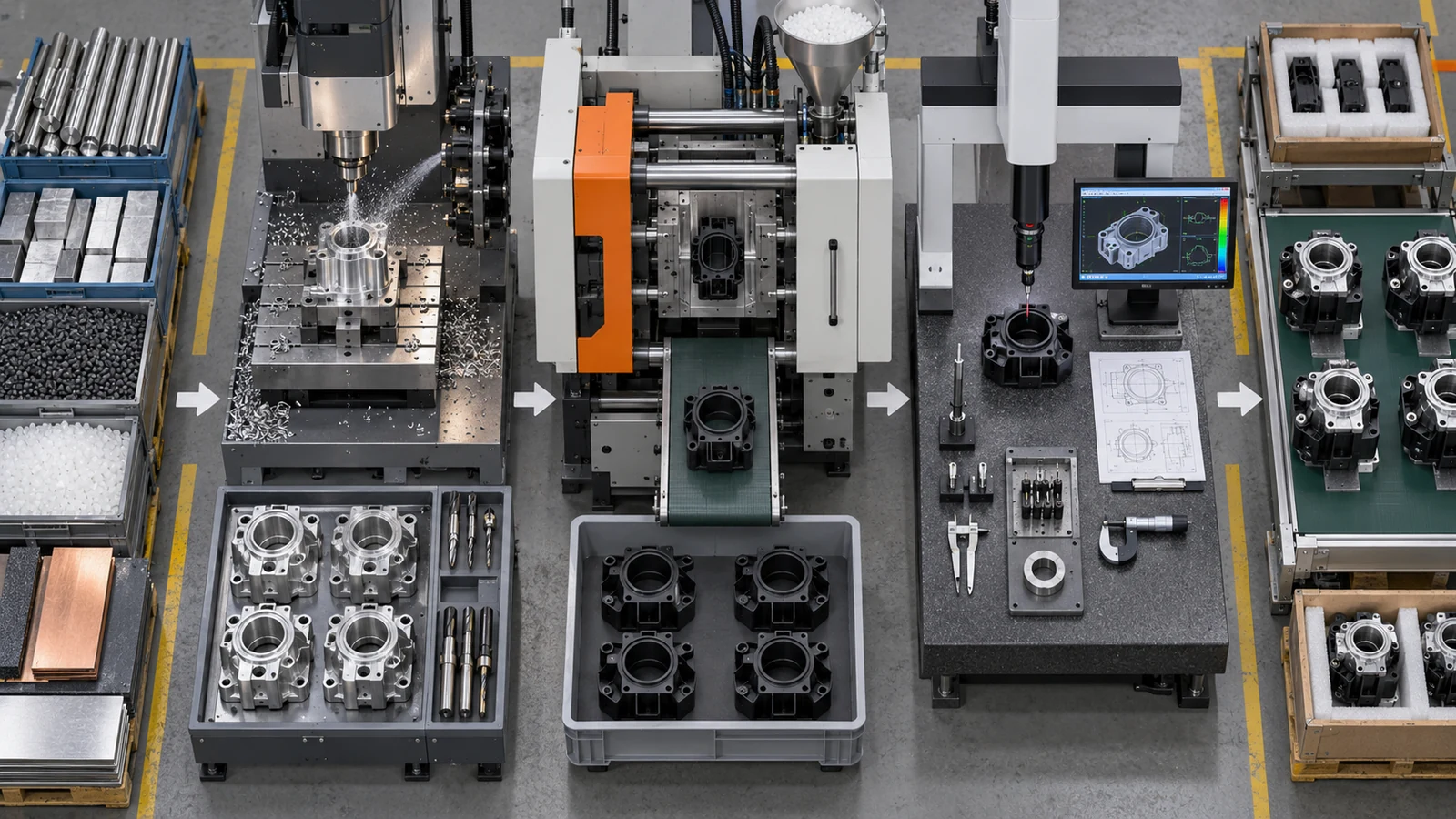
A contract manufacturer does more than convert CAD files into parts. The supplier becomes part of the system that turns approved inputs into consistent outputs. That system includes purchasing controls, material identification, machine programs, tooling, inspection methods, acceptance criteria, nonconformance handling, document retention, and rules for approving changes. This distinction matters because a visually acceptable prototype is not proof of a production-ready process. A prototype may be adjusted by a skilled technician until it works. Production requires the same result to be achieved repeatedly by a defined route, with evidence that critical characteristics remain within the approved limits. The project therefore needs both a capable process and a controllable process. The regulatory context reinforces that point. The U.S. Food and Drug Administration’s Quality Management System Regulation became effective on February 2, 2026 and incorporates ISO 13485:2016 by reference. ISO describes its standard as a quality-management framework for organizations involved in medical-device design, production, installation, servicing, and related supply activities. These requirements do not turn supplier selection into a certificate-checking exercise; they make process ownership and objective evidence more important.
A production transfer is complete only when another qualified person can reproduce the accepted result from the approved documents, tools, parameters, and inspection plan—not from the memory of the engineer who built the prototype.
Draw the Responsibility Map Before Requesting Quotes

The first sourcing document should not be the RFQ. It should be a responsibility map. Medical device contract manufacturing programs fail when both sides assume the other party owns a decision: material substitutions, special-process validation, sterilization compatibility, gauge design, labeling data, packaging configuration, or supplier-change notification. A useful map separates four roles: the legal manufacturer, the design authority, the production supplier, and any approved sub-tier processor. One company may hold several roles, but the responsibilities still need to be named. Teams evaluating how to choose a medical device manufacturer should ask for evidence at each handoff rather than relying on a general promise that the supplier “handles quality.”
| Decision | Typical owner | Evidence required |
|---|---|---|
| Design inputs and intended use | Legal manufacturer / design authority | Approved requirements and risk controls |
| Manufacturing route and work instructions | Contract manufacturer | Process flow, controlled instructions, revision history |
| Critical-to-quality characteristics | Shared | Ballooned drawing, control plan, measurement method |
| Special-process approval | Shared, defined by agreement | Validation protocol, report, approved operating window |
| Supplier or process changes | Contract manufacturer initiates; customer approves | Change notice, risk review, requalification decision |
The map should also define escalation. If a specified resin is unavailable, can purchasing select an equivalent grade? If a cutting tool changes, is customer notification required? If a sub-tier finisher moves a line, does that trigger requalification? A clear answer before nomination is cheaper than an argument after validation.
Build a Transfer Package a Factory Can Actually Run
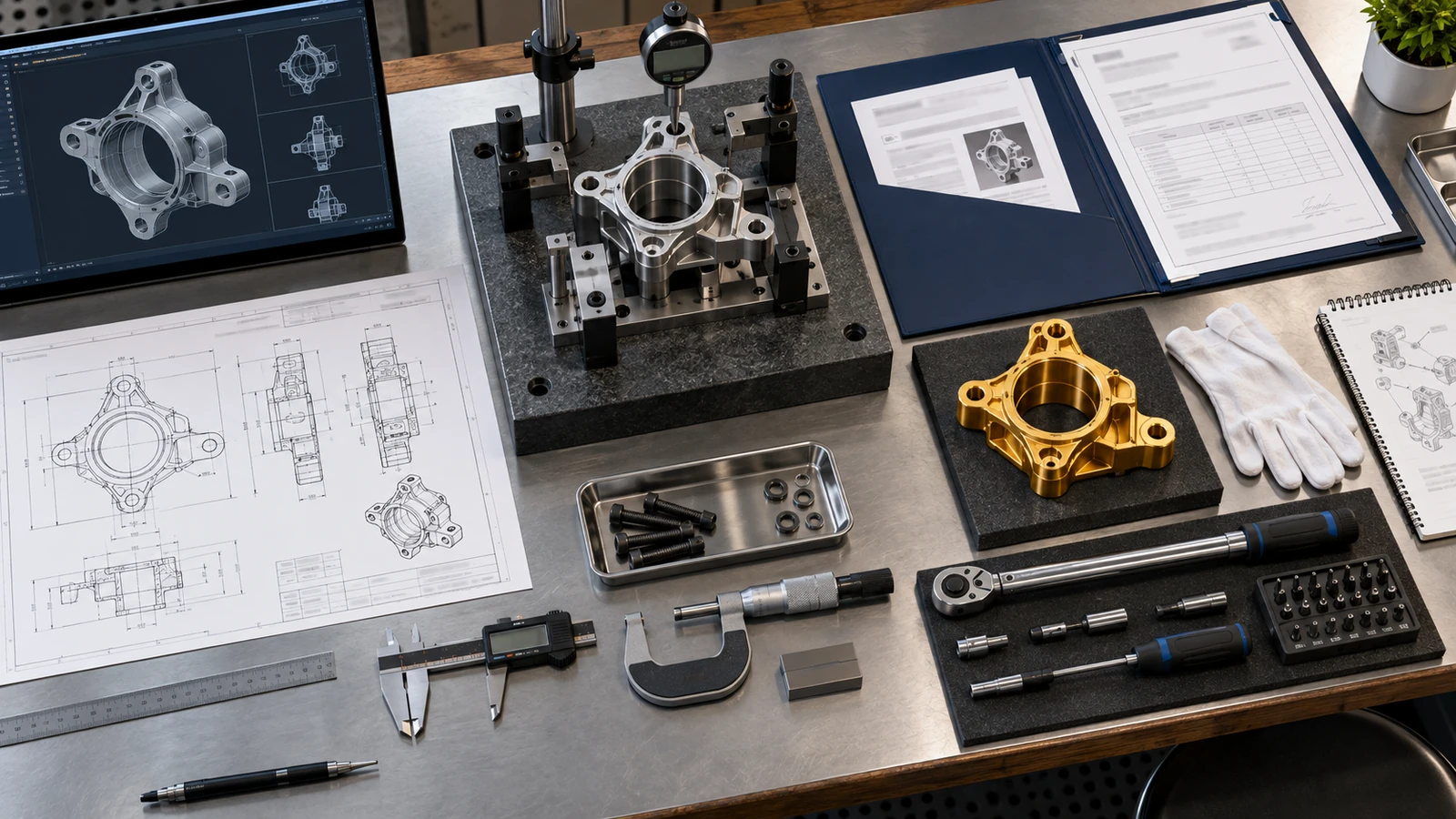
A clean CAD model is necessary, but it is not a manufacturing package. The supplier must understand which features control performance, which surfaces interact with patients or fluids, which dimensions are only reference values, and which requirements depend on downstream assembly. Without that context, an apparently sensible DFM change can remove a risk control. The transfer package should contain the current 3D model and drawing, material specification, finish requirements, critical-to-quality feature list, approved supplier restrictions, inspection expectations, cosmetic standards, packaging needs, and revision history. Where applicable, it should also identify biocompatibility, cleaning, particulate, sterilization, electrical isolation, or traceability requirements. The existing guide to medical device materials provides the material-selection context; the contract-manufacturing package must convert that choice into a purchasable and verifiable specification.
Separate three kinds of requirements
- Product requirements describe what the part or assembly must achieve: dimensions, mechanical behavior, appearance, sealing, insulation, or interface performance.
- Process requirements define how controlled work must be performed when the outcome cannot be fully verified by final inspection alone.
- Evidence requirements specify what must accompany the lot: material certificates, first-article records, dimensional reports, process data, certificates of conformity, or serialized traceability.
This separation improves quotations as well as production. A supplier can price the part, the controlled process, and the documentation burden instead of hiding all three inside a single unit price. It also prevents a familiar dispute in which the buyer expected a full inspection package while the supplier priced only the physical components.
Match the Process Chain to the Device Architecture
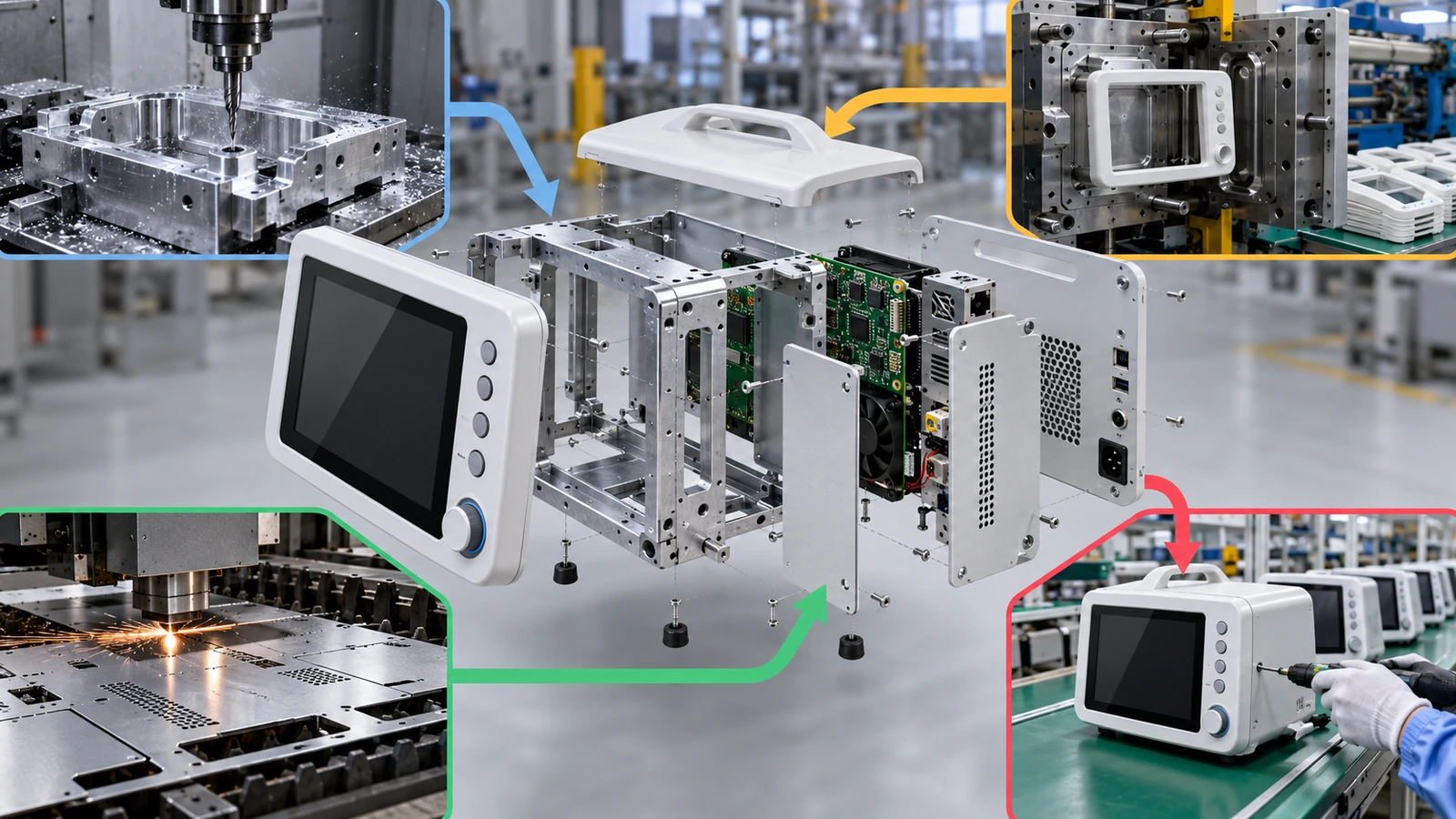
The right contract-manufacturing model depends on the product architecture. A diagnostic instrument may combine a machined frame, formed sheet-metal chassis, molded fluidic cartridge, printed fixture, coated enclosure, and tested subassembly. The highest-risk interface may not exist within any one component; it may be the alignment between components made by different processes. Review the complete medical device manufacturing process before assigning suppliers. Consolidating work under one accountable partner can reduce handoff errors, but only when that partner can control sub-tier work, maintain revision alignment, and report deviations transparently. Process breadth without configuration control simply moves the coordination problem behind a purchase order.
| Product need | Likely route | Transfer question |
|---|---|---|
| Rigid precision geometry | CNC milling or turning | Are datums and inspection setups consistent with assembly function? |
| Lightweight housing or chassis | Sheet metal, machining, or die casting | Which interfaces control grounding, sealing, and alignment? |
| Complex polymer component | Injection molding, additive manufacturing, or vacuum casting | Is the material, surface, and dimensional evidence appropriate for the build stage? |
| Multi-part functional module | Controlled assembly and test | Who owns fixtures, torque values, test limits, and failure disposition? |
A practical sourcing strategy often changes with maturity. Early prototypes favor flexible processes and rapid design feedback. Verification units need stable materials and documented inspection. Pilot production tests tooling, fixtures, work instructions, and operator consistency. Commercial production then focuses on validated settings, lot control, yield, capacity, and approved change management.
Use Stage Gates Instead of Calendar Optimism
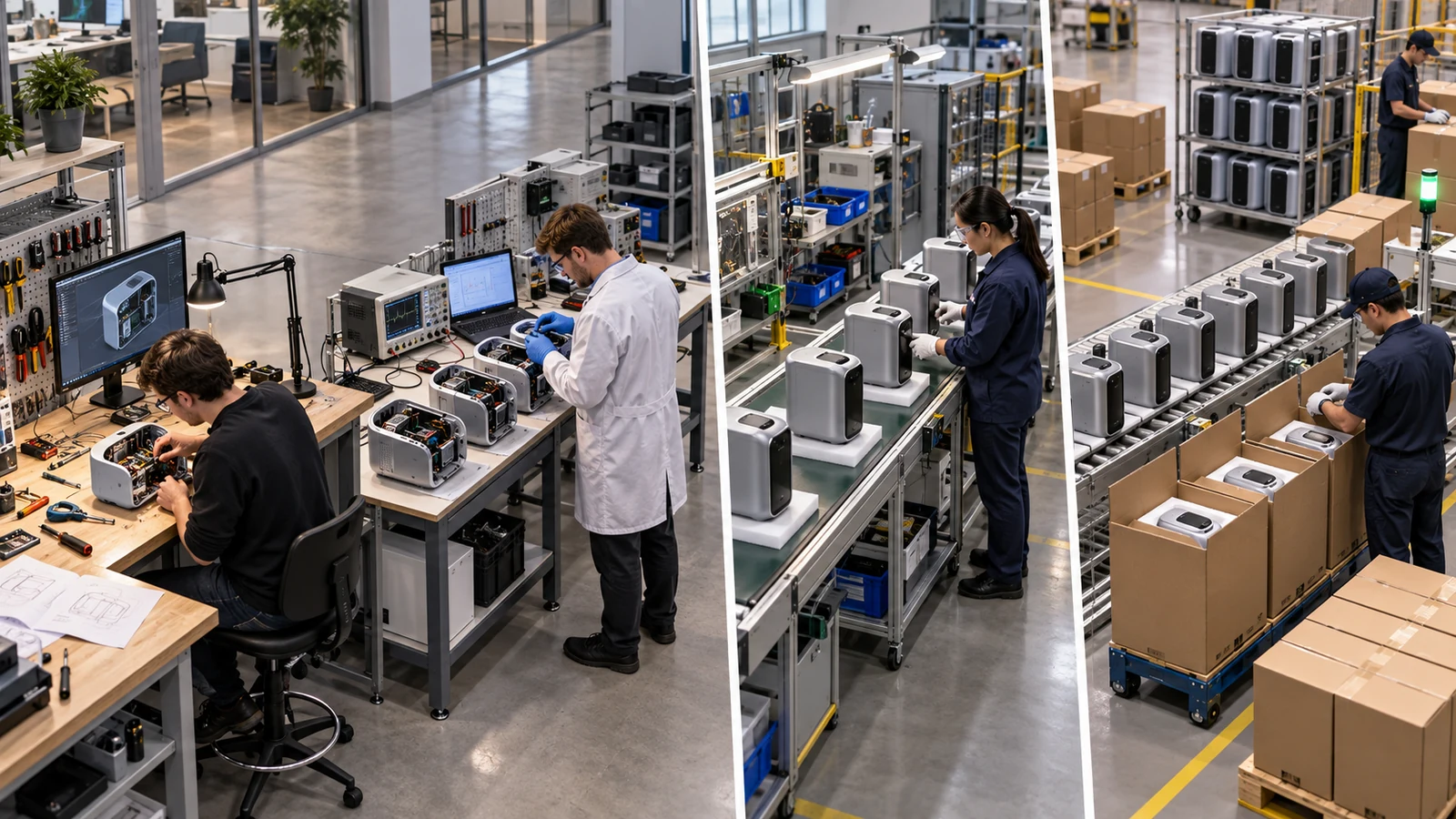
A date on a launch plan does not demonstrate readiness. Stage gates do. Each gate should close a defined uncertainty before the project spends more money or creates evidence that may need to be repeated. The exact sequence varies by device class and intended market, but the logic remains consistent.
- Feasibility gate: Confirm that the proposed materials, processes, tolerances, and inspection methods are technically credible.
- Transfer gate: Freeze the approved inputs and verify that the supplier can interpret the package without undocumented assumptions.
- First-article gate: Compare physical output with drawings, interface requirements, cosmetic criteria, and functional tests.
- Pilot gate: Run the intended workflow with production tooling, fixtures, operators, records, and packaging.
- Release gate: Approve the process baseline, open deviations, control plan, quality agreement, and change-notification route.
Each gate needs an owner, entrance criteria, exit evidence, and a rule for conditional approval. “Parts look good” is not an exit criterion. “All critical dimensions accepted using the approved method; two minor documentation actions remain open with owners and dates” is a decision that can be audited and managed. When the process output cannot be fully confirmed through later inspection or testing, validation becomes especially important. The FDA recognizes that contract manufacturers and other external operations may be part of regulated manufacturing activities. Its guidance on Device Master Files also explains how contract manufacturers may provide confidential information about facilities, procedures, processes, and quality controls for regulatory submissions.
Treat the Quotation as a Risk Document

The lowest unit price may reflect genuine efficiency, but it may also reflect missing assumptions. A strong quotation exposes the manufacturing model: process route, material grade, lot size, tooling ownership, inspection level, documentation, secondary operations, packaging, lead-time basis, and exclusions. Cost analysis should therefore compare like with like. The broader framework in medical device manufacturing cost is useful when building a total-cost model. For contract manufacturing, add the cost of supplier management, incoming inspection, engineering changes, validation repeats, shipping between processors, quality escapes, and delayed evidence—not merely piece price.
Five questions that make a quote more useful
- Which assumptions would change the price after technical review?
- Which operations are performed in-house, and which are subcontracted?
- What inspection records are included at the quoted price?
- Who owns production tooling, fixtures, gauges, and software?
- What triggers requalification, and who pays for it?
A quotation that answers these questions may appear longer than a simple price sheet, but it creates a more stable commercial baseline. Procurement can compare risk allocation rather than comparing numbers that were built on different scopes.
What Jucheng Can Own in the Manufacturing Chain
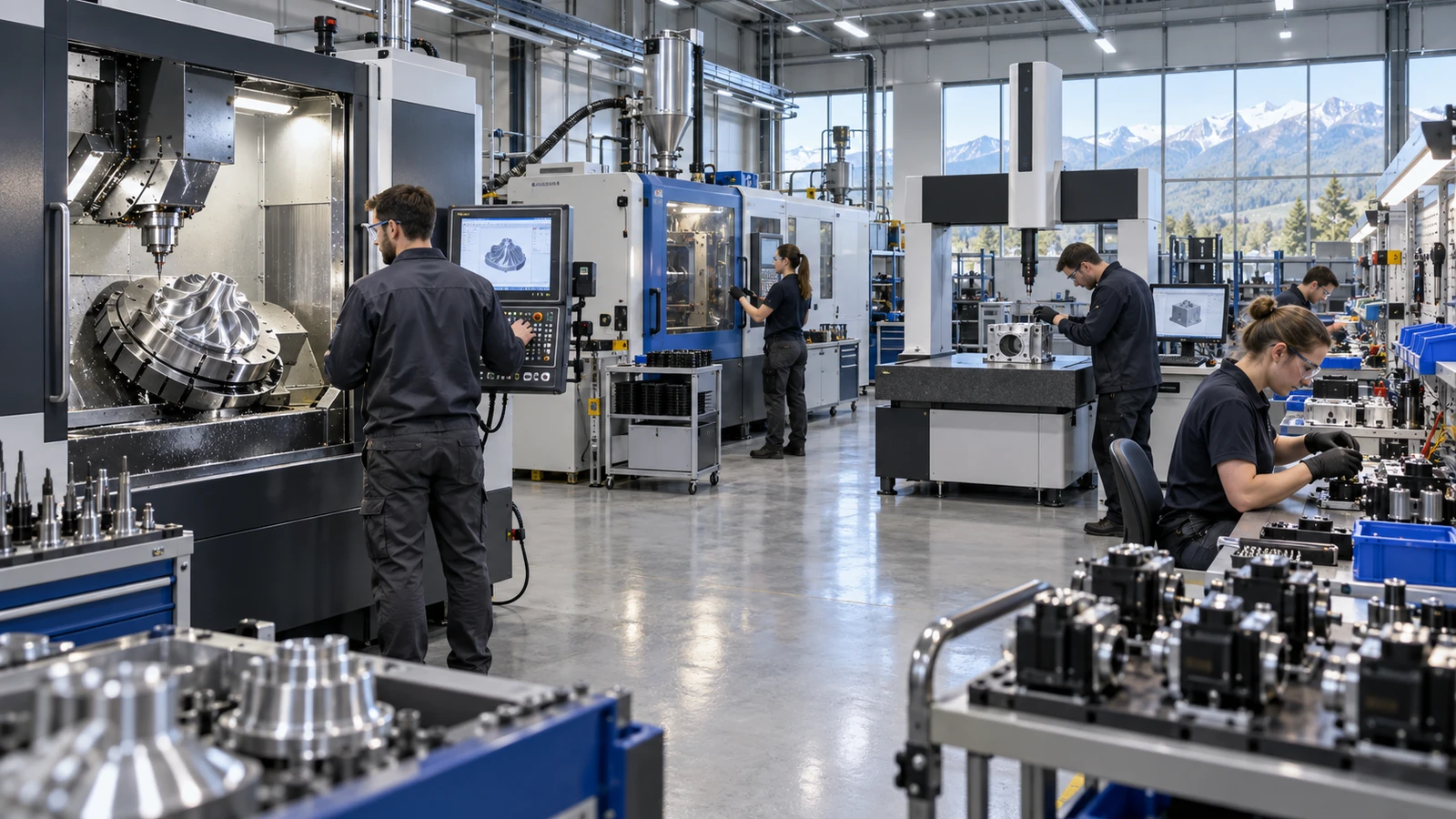
Jucheng Precision supports medical-device development and production through CNC machining, sheet-metal fabrication, 3D printing, injection molding, vacuum casting, reaction injection molding, die casting, rapid tooling, surface finishing, inspection, and coordinated assembly. That range is most valuable when the device contains process interfaces that must be reviewed together rather than purchased as unrelated parts. For an enclosure program, for example, the discussion can begin with thermal loads, access panels, grounding paths, sealing surfaces, fastener strategy, cosmetic zones, and expected quantities. The manufacturing route may then be compared across machined prototypes, formed sheet-metal pilot units, molded polymer housings, or cast metal production parts. The objective is not to force every design into one process; it is to select a route that matches the current evidence need and leaves a credible path to the next volume stage. Jucheng can also review drawings and models for manufacturability before quotation, identify ambiguous tolerances and interfaces, propose an inspection approach, and coordinate multi-process builds. Customers should still define intended use, regulatory strategy, acceptance criteria, and required records. A capable partnership works because responsibilities are explicit—not because either party assumes the other will discover every requirement.
A Decision Checklist Before Nomination
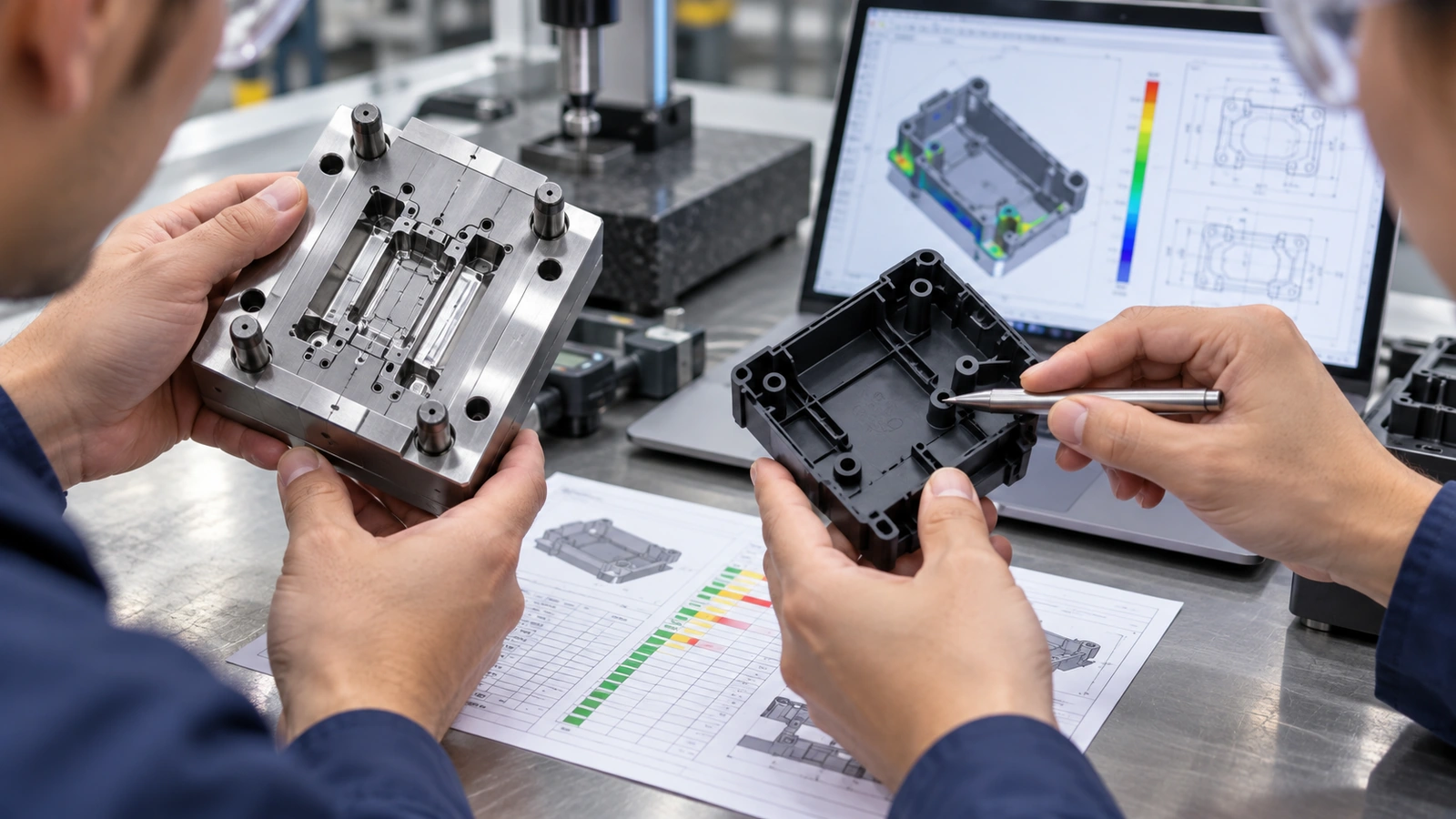
Before issuing a production purchase order, the project team should be able to answer the following questions without relying on verbal history:
- Is the product configuration and revision status unambiguous?
- Are critical-to-quality characteristics linked to an inspection method?
- Are approved materials and prohibited substitutions documented?
- Are special processes and validation responsibilities identified?
- Does the supplier disclose and control sub-tier operations?
- Are first-article, pilot, and release gates defined?
- Does the quality agreement cover deviations, nonconformances, complaints, records, and change notification?
- Are tooling, gauge, fixture, and data ownership clear?
- Does the quotation include the required evidence package?
- Is there a realistic capacity and continuity plan?
If several answers are “not yet,” the project may still be ready for prototypes, but it is not ready for controlled production. That distinction protects both the OEM and the supplier from committing to a maturity level the documentation cannot support.
Häufig gestellte Fragen

What is medical device contract manufacturing?
Medical device contract manufacturing is an arrangement in which an external supplier performs defined production activities for a medical-device company. The scope may include components, tooling, finishing, assembly, testing, packaging, or a complete process chain. The legal and regulatory responsibilities depend on the market and contractual role, so ownership must be defined explicitly.
Does outsourcing transfer regulatory responsibility to the supplier?
No. Outsourcing work does not automatically transfer the legal manufacturer’s responsibilities. The OEM must understand which regulatory obligations apply, select and control appropriate suppliers, and maintain the evidence needed for its device and target markets. The contract manufacturer remains responsible for the activities assigned to it under applicable requirements and agreements.
When should a contract manufacturer join the project?
Supplier input is most useful before geometry, materials, tolerances, and process choices become expensive to change. Early DFM can identify manufacturing risks, but the design authority should control decisions affecting intended use, safety, performance, and approved risk controls.
What should be included in an RFQ package?
Include current models and drawings, quantities, material and finish specifications, critical characteristics, expected manufacturing stage, inspection and documentation requirements, packaging needs, target schedule, and any approved supplier or process restrictions. Identify unanswered questions instead of allowing each bidder to make different assumptions.
Is ISO 13485 certification enough to approve a supplier?
No. Certification is relevant evidence of a quality-management system, but it does not prove that a supplier has the right equipment, process knowledge, capacity, validation approach, measurement capability, or experience for a specific device. Approval should combine quality-system review with a project-specific technical and operational assessment.
How can an OEM reduce risk during manufacturing transfer?
Use a controlled transfer package, name responsibilities, identify critical characteristics, conduct DFM and risk reviews, approve first articles, run a representative pilot, close validation actions, and establish change-notification rules before routine production. The records should show why the process was accepted, not merely that parts were delivered.
Move From a Part Quote to a Controlled Manufacturing Plan
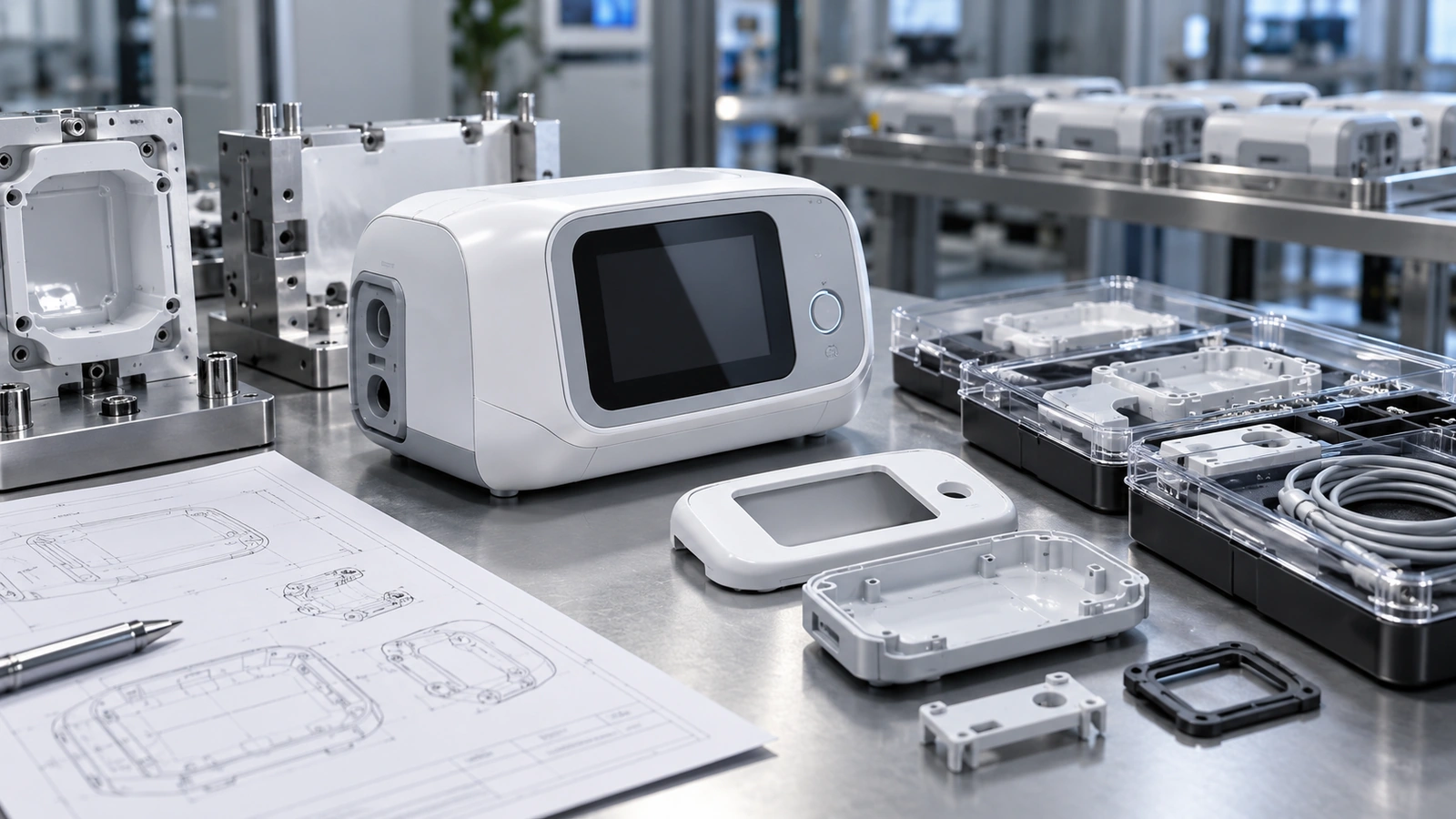
Medical device contract manufacturing creates value when it connects engineering decisions, production controls, quality evidence, and commercial responsibility. If you are preparing a prototype, pilot build, tooling program, or low-volume production transfer, send Jucheng Precision your drawings, quantity range, materials, critical requirements, and current project stage. Request a manufacturing review and quotation to compare suitable processes, identify transfer risks, and define the evidence your build should produce.

