


Contents
Turn the RFQ into a Technical Brief
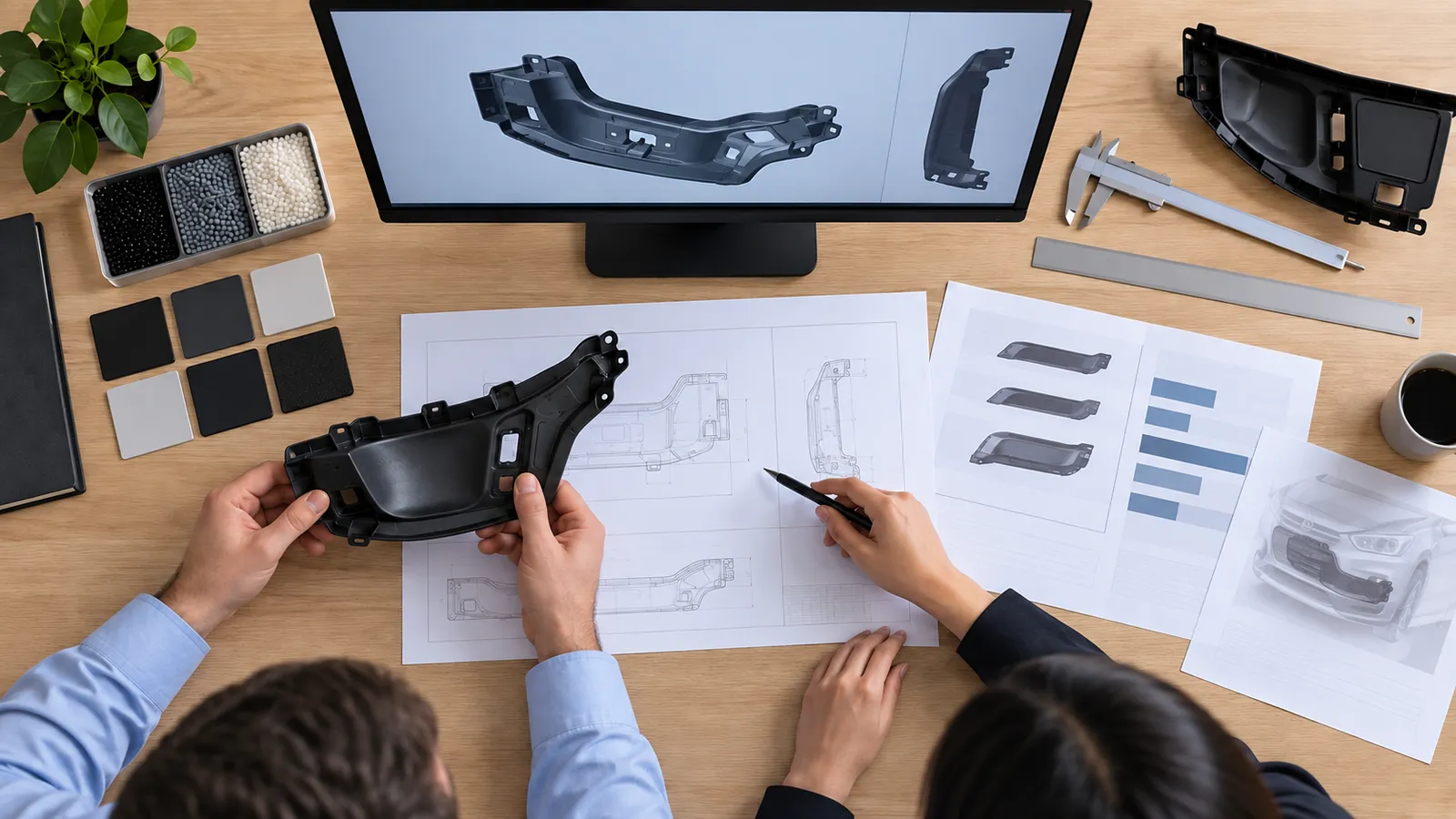
A short RFQ often hides the decisions that determine cost and risk. Before contacting suppliers, identify the part function, resin family, annual volume, launch quantity, visible surfaces, critical interfaces, expected environment, and whether the design is still changing. Include available CAD, drawings, tolerances, assembly context, and any test requirements. This gives every supplier the same starting point and makes the replies comparable. Separate fixed requirements from negotiable preferences. For example, a sealing surface may have a hard functional limit, while a non-visible texture may be open to discussion. This distinction helps a supplier suggest a lower-risk gate, draft change, material alternative, or inspection method without weakening the part. It also reveals whether a company is reading the design or merely repeating the part weight and tool price.
| RFQ input | What it reveals about a supplier |
|---|---|
| Functional requirement | Whether the company asks useful follow-up questions |
| Volume and ramp | Whether tooling and capacity planning are realistic |
| Material and environment | Whether resin advice is engineering-based |
| Inspection criteria | Whether quality is tied to measurable features |
Look for Engineering Before Equipment
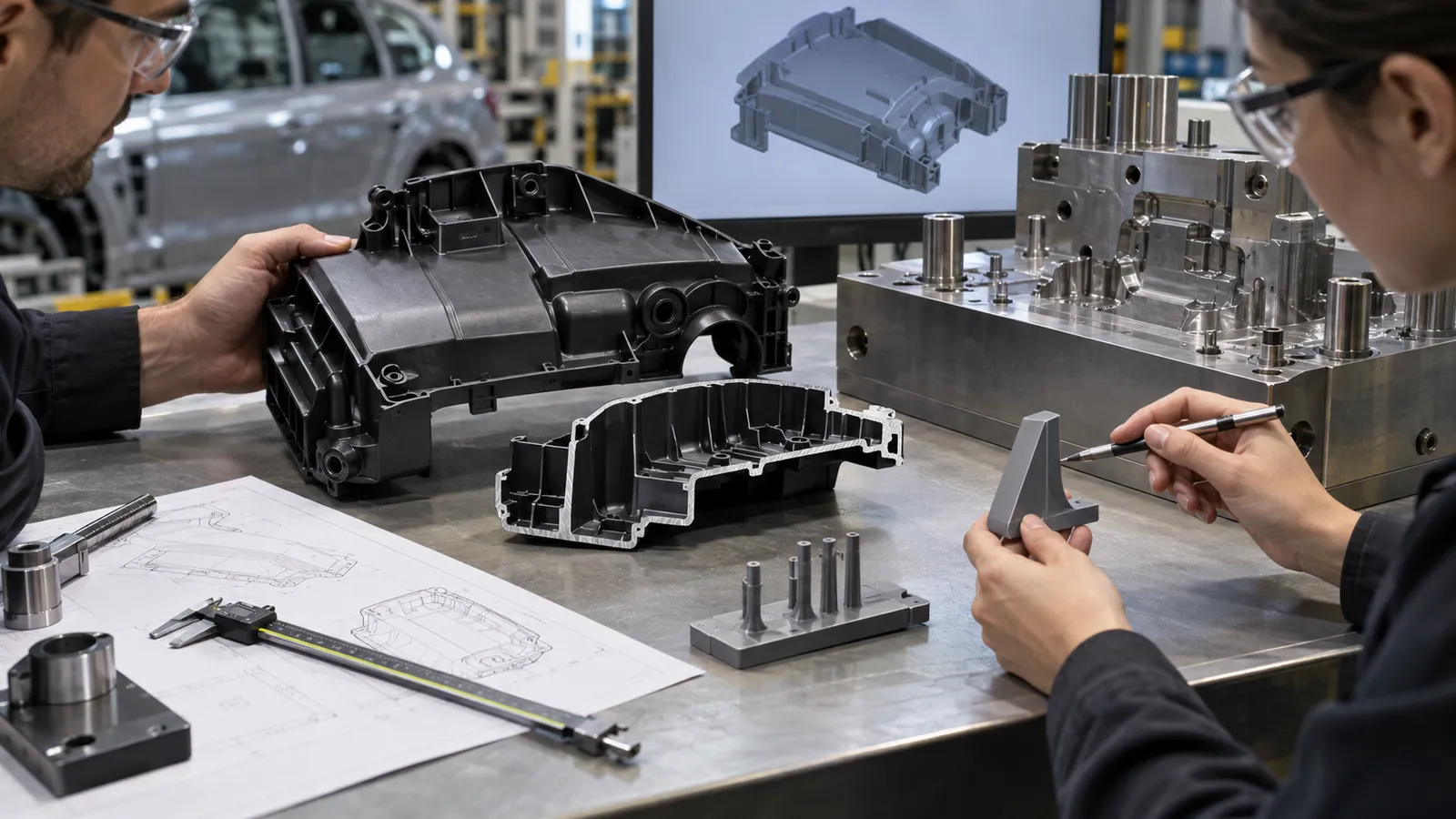
Equipment lists are easy to copy; engineering reasoning is harder to fake. Ask the supplier to identify likely parting lines, gate regions, draft concerns, sink risk, weld-line locations, ejection constraints, and warpage drivers. A strong response does not need to solve every issue before award, but it should show that the company understands how geometry, resin, mold design, and process settings interact. The engineering review should also address the project stage. A prototype part may need speed and learning more than a long-life production mold. A production component may need maintenance access, cavity balance, process windows, and spare-part planning. Automotive injection molding companies that can explain this transition are more useful than a supplier that treats every project as the same molding order.
- Request a short DFM review with assumptions clearly marked.
- Ask which dimensions are likely to move during molding and cooling.
- Confirm how design revisions will be reviewed after tooling begins.
- Check whether the supplier can coordinate molding with finishing or assembly.
Test the Tooling Conversation
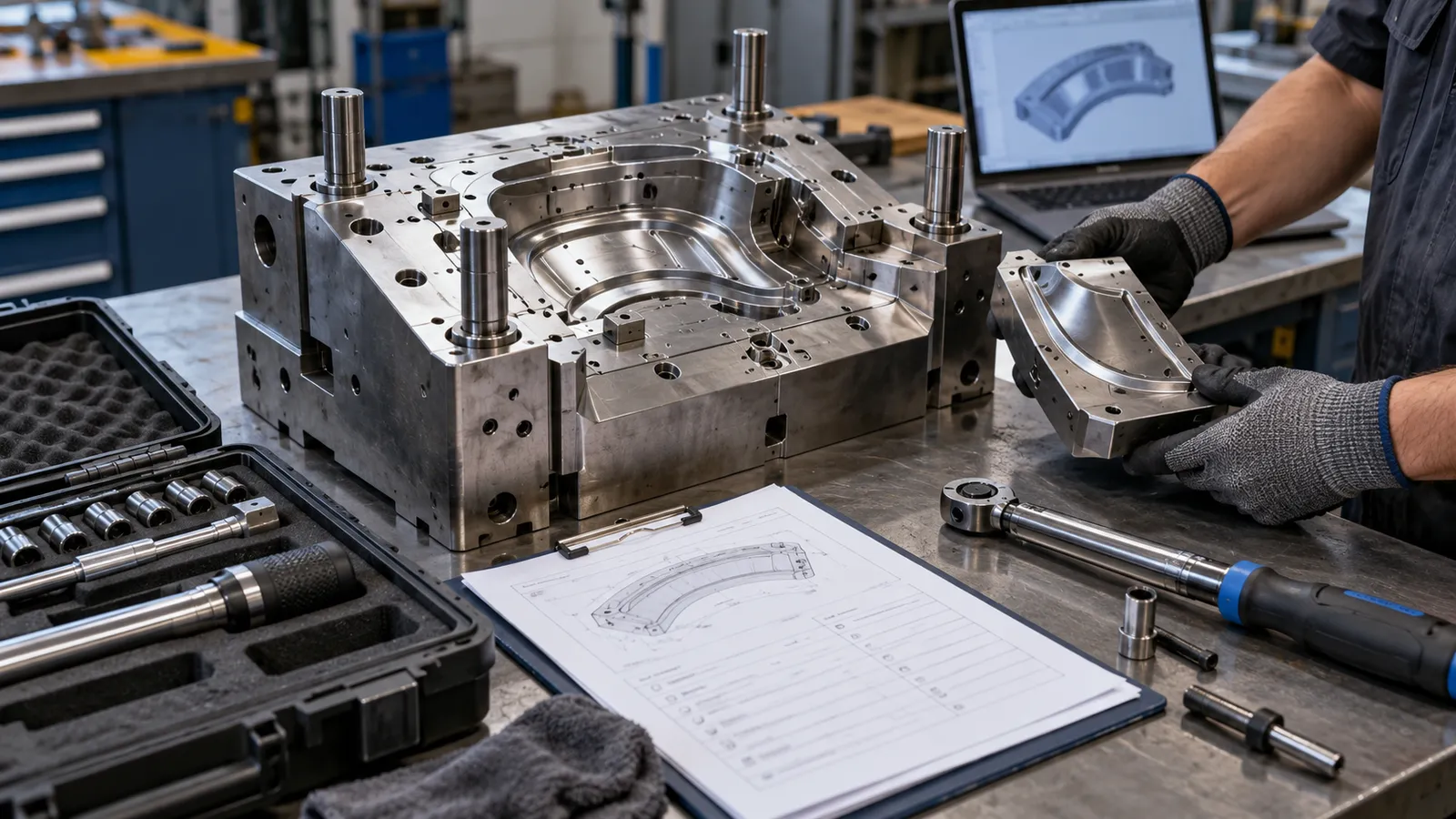
Tooling is often where supplier relationships become difficult. Clarify who owns the mold, who approves steel changes, where it will be stored, how maintenance is recorded, and what happens if the program moves to another facility. The contract should also define trial shots, sample quantities, repair responsibility, and the evidence required before production release. Ask how the company chooses soft tooling, bridge tooling, or production tooling. A lower-cost tool may be sensible when the design is still moving, but it can be false economy if the program expects long cycles, tight interfaces, or multiple years of supply. The supplier should explain tool material, expected life, cooling and venting strategy, and which features may need replaceable inserts.
| Tooling question | Why it matters |
|---|---|
| Who controls revisions? | Prevents unauthorized geometry changes |
| How are trials documented? | Connects corrections to measurable results |
| What is the maintenance plan? | Protects repeatability after launch |
| What is the expected tool life? | Aligns investment with program volume |
Separate Quality Claims from Quality Evidence

Quality should be visible in the workflow. Look for controlled drawings, incoming material records, mold-trial reports, first-article inspection, process monitoring, nonconformance handling, and traceable sample approval. Certifications can support a supplier evaluation, but they do not replace evidence that the specific project will be measured and controlled. Ask for sample inspection formats with sensitive customer information removed. The useful details are the datum structure, critical dimensions, measurement method, revision, and disposition of out-of-tolerance results. For appearance parts, ask how gloss, texture, gate marks, weld lines, flash, and color are agreed. A supplier that cannot define acceptance criteria will create arguments at the end of the project.
- Check whether measurement methods match feature size and tolerance.
- Confirm that material lots and drying or conditioning requirements are recorded.
- Ask how process changes are approved after sample sign-off.
- Review how corrective actions are closed and verified.
Evaluate the Whole Supply Chain
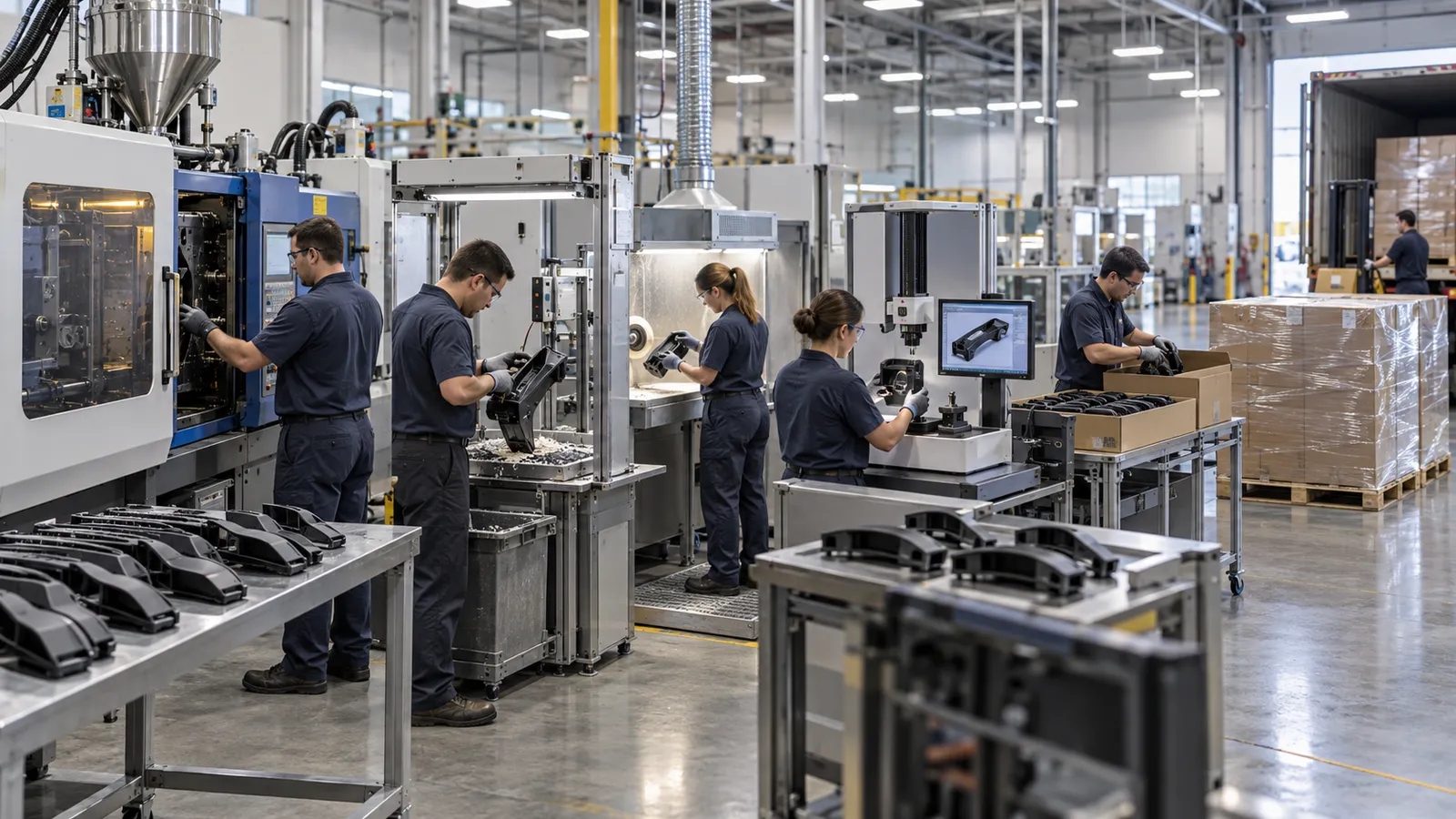
Automotive programs rarely end at the molding machine. Parts may need trimming, pad printing, plating, painting, laser marking, insert installation, ultrasonic welding, inspection, kitting, or subassembly. Even when one company does not perform every operation internally, it should explain who controls the outside process and how quality is transferred between steps. Capacity should be evaluated in the same way. Ask about machine range, mold storage, resin availability, backup plans, shift coverage, and the ability to support a ramp without changing the approved process. A supplier with a clear capacity model can identify constraints before the launch date instead of discovering them during a production emergency.
| Supply-chain area | Evidence to request |
|---|---|
| Secondary operations | Process owner, acceptance standard, and inspection point |
| Material supply | Approved grades, lead-time assumptions, and lot control |
| Capacity | Machine fit, expected cycle, and ramp plan |
| Logistik | Packaging, labeling, shipment cadence, and escalation path |
Use a Weighted Supplier Decision
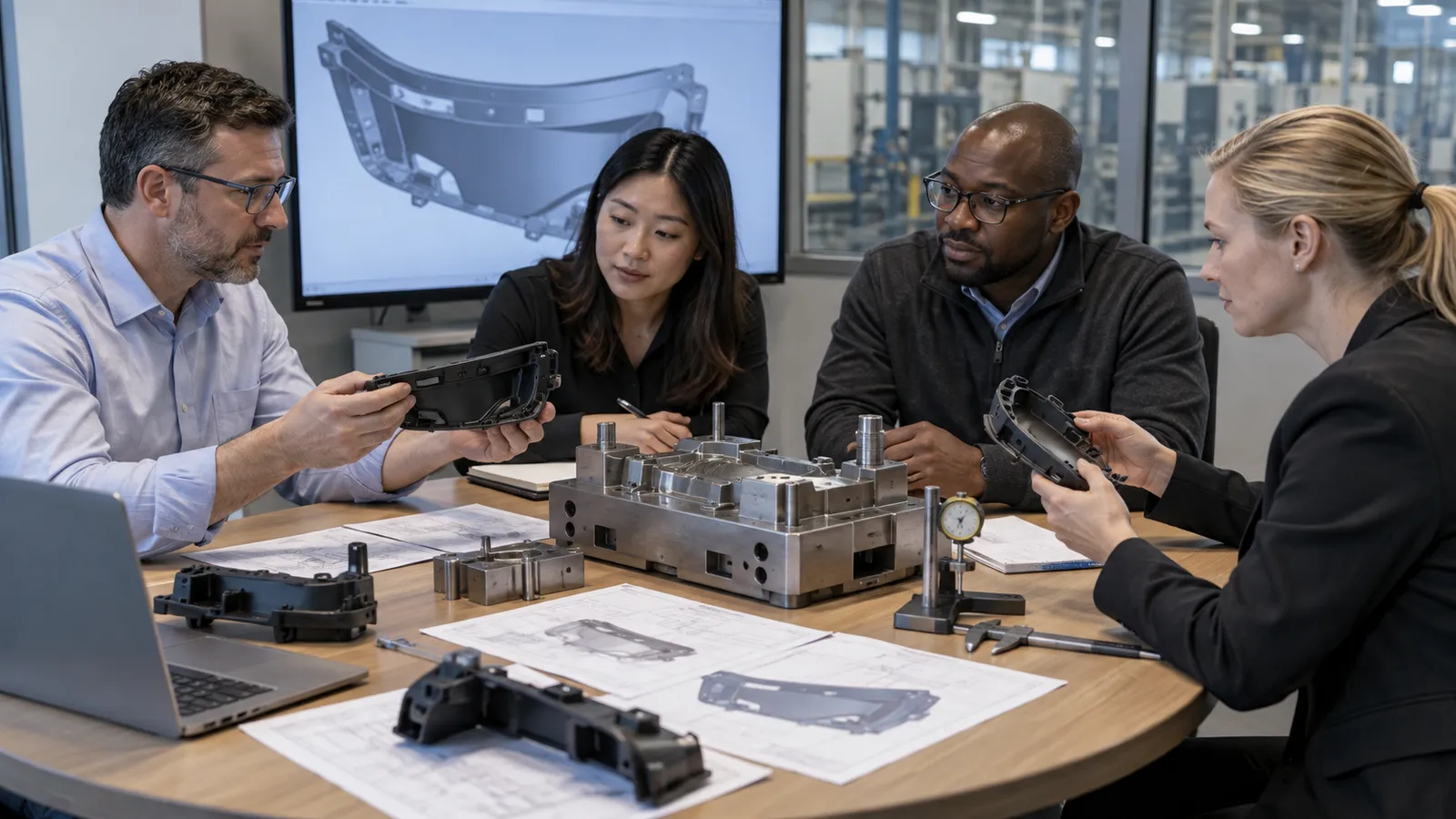
Price should be one factor, not the decision. A practical scorecard can weight DFM quality, tooling strategy, material knowledge, inspection, capacity, communication, delivery risk, and total program cost. The weights should reflect the part. A cosmetic interior component may need more emphasis on appearance control, while a structural bracket may need dimensional capability and material validation. Before award, hold a technical review with the preferred supplier and ask them to repeat the critical assumptions. If the quote, DFM, tooling plan, and inspection approach do not agree, stop and reconcile them. The goal is not to find a perfect promise; it is to expose uncertainty while the project can still change cheaply.
- Score the response against the same criteria for every supplier.
- Record assumptions behind tool cost, cycle time, material, and inspection.
- Run a design and manufacturing review before purchase order release.
- Define the evidence required for sample approval and production release.
The best automotive injection molding companies make risk easier to see. They explain what the part needs, how the mold will support it, how quality will be demonstrated, and how the program will scale. That transparency is usually more valuable than a small difference in the first quotation.

