


Contents
Begin with the Substrate and Service Environment
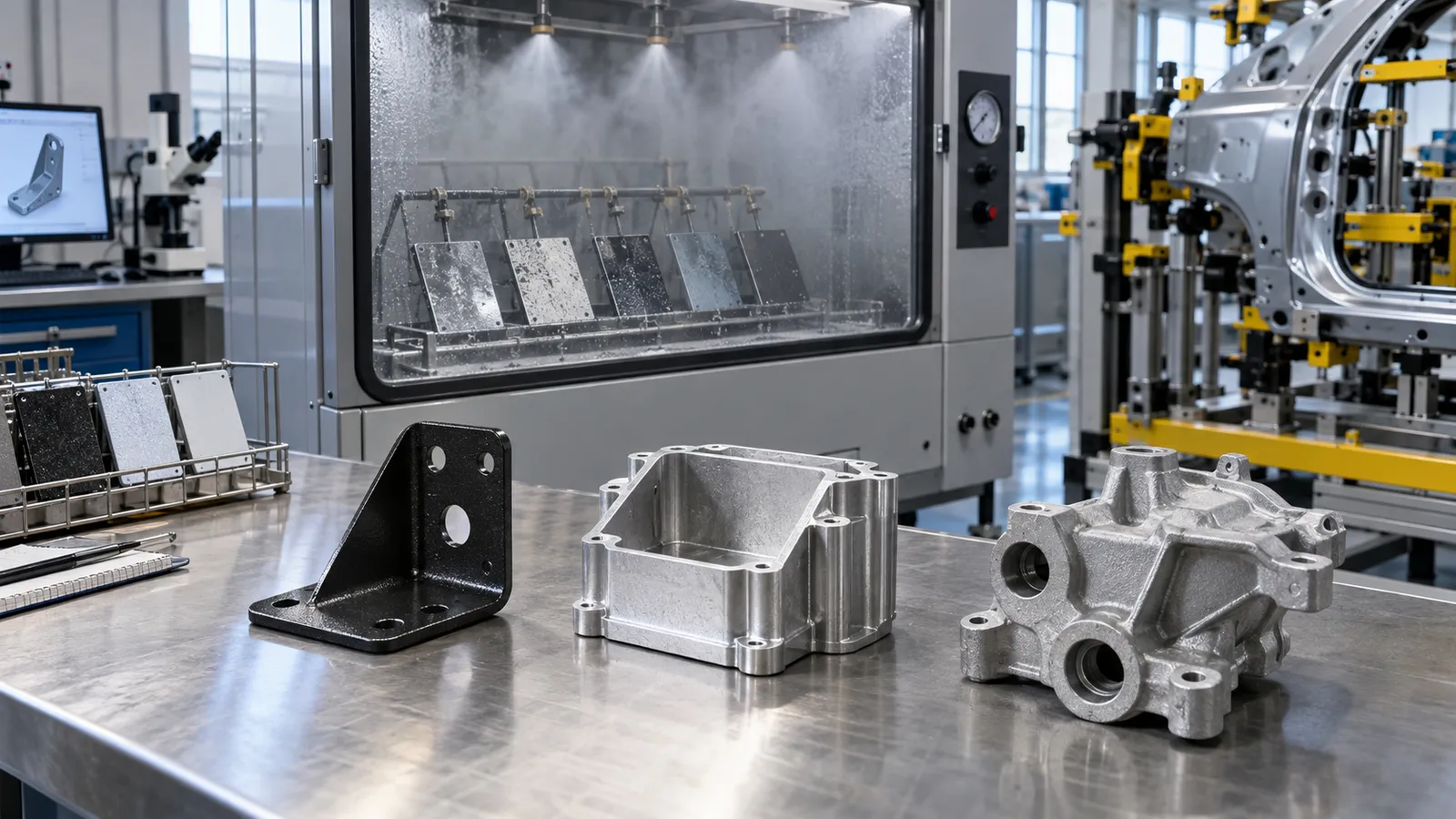
The first question is not “Which color?” It is “What will the part experience?” Automotive parts may see road salt, humidity, stone impact, heat cycles, detergents, oils, UV exposure, or contact with adjacent metals. A coating specification should identify the substrate, expected exposure, appearance class, corrosion target, and areas that must remain uncoated for assembly. Steel, aluminum, and zinc-rich or galvanized substrates do not behave the same way in preparation or curing. Castings may bring porosity and surface contamination; fabricated brackets may have weld scale, sharp edges, or trapped oils. If the substrate is not prepared for the coating system, a thick powder layer cannot compensate for poor adhesion or contamination.
| Input | Coating consequence |
|---|---|
| Steel bracket | Needs rust control, edge coverage, and reliable pretreatment |
| Aluminum housing | Requires oxide and contamination management |
| Cast component | May need outgassing control and surface sealing |
| Mixed-metal assembly | Needs masking and galvanic-risk review |
Pretreatment Does the Quiet Work
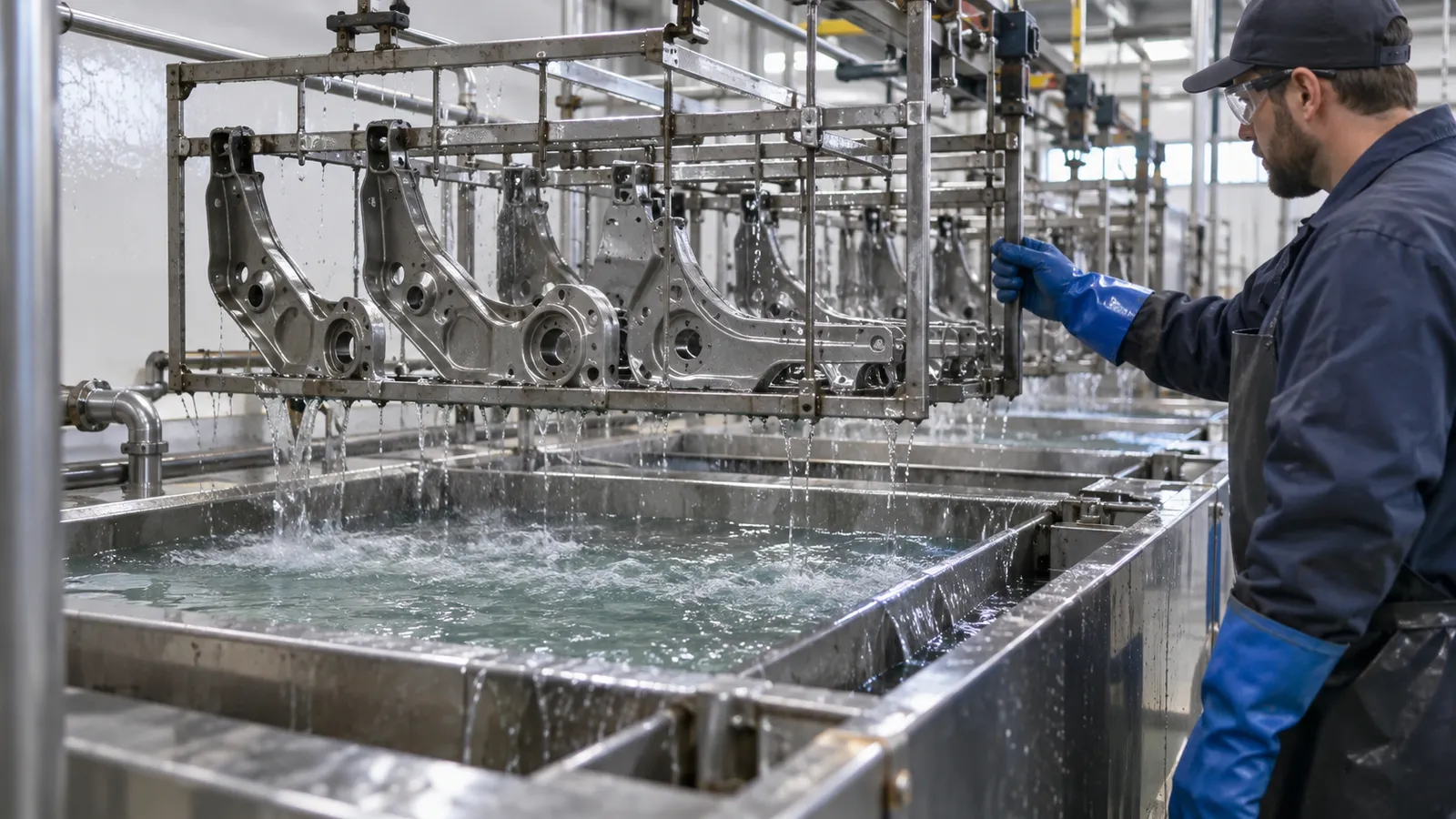
Pretreatment improves adhesion and corrosion resistance by making the surface chemically and physically suitable for powder. Cleaning removes oils and shop residues. Conversion or other approved preparation helps create a stable interface. Rinsing and drying matter because leftover chemicals, moisture, or residues can create blistering, poor adhesion, or uneven appearance. The sequence should match the substrate and the selected powder system. A supplier should be able to explain which steps are used, how bath or chemical conditions are monitored, and how parts are protected between preparation and coating. For Automobil-Oberflächenveredelung parts, process records are more useful than a generic statement that the surface was “cleaned.”
- Define cleaning and pretreatment around the actual substrate.
- Control flash rust risk between preparation and coating.
- Keep hooks, racks, and contact points away from critical surfaces.
- Document conditions when corrosion performance is a release requirement.
Geometry Controls Coverage
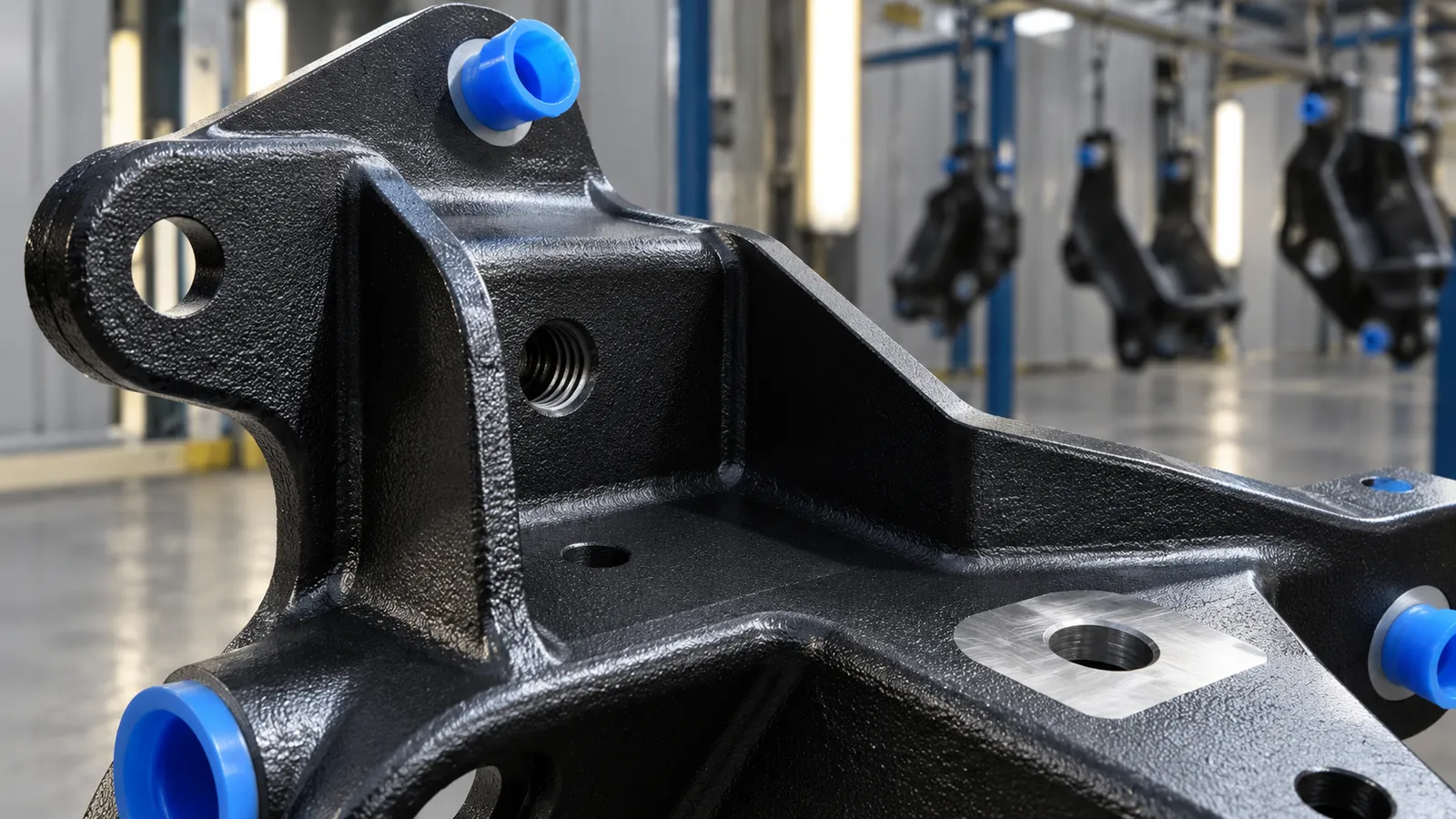
Powder is applied as a charged cloud and then cured as a film. Recesses, Faraday areas, sharp corners, deep channels, and internal faces can receive a different film build from broad exposed surfaces. The part design and rack orientation should therefore be reviewed before production. A small radius, a drain hole, or a redesigned mask can improve coverage more effectively than simply increasing powder. Masking is equally important. Threads, grounding points, bearing seats, press-fit zones, sealing lands, and identification surfaces may need clean boundaries. Masking must survive the coating and cure cycle without leaving residue. When the component will be assembled after coating, define the acceptable build-up on each interface and verify it with a gauge or functional fit check.
| Merkmal | Typical risk | Design or process response |
|---|---|---|
| Deep recess | Thin or uneven film | Adjust gun angle, rack position, or geometry |
| Sharp edge | Low coverage and early corrosion | Add radius and verify edge film |
| Thread or bore | Assembly interference | Mask and inspect with functional gauge |
| Grounding point | Electrical resistance or lost contact | Keep clean and define contact area |
Select Powder for the Duty
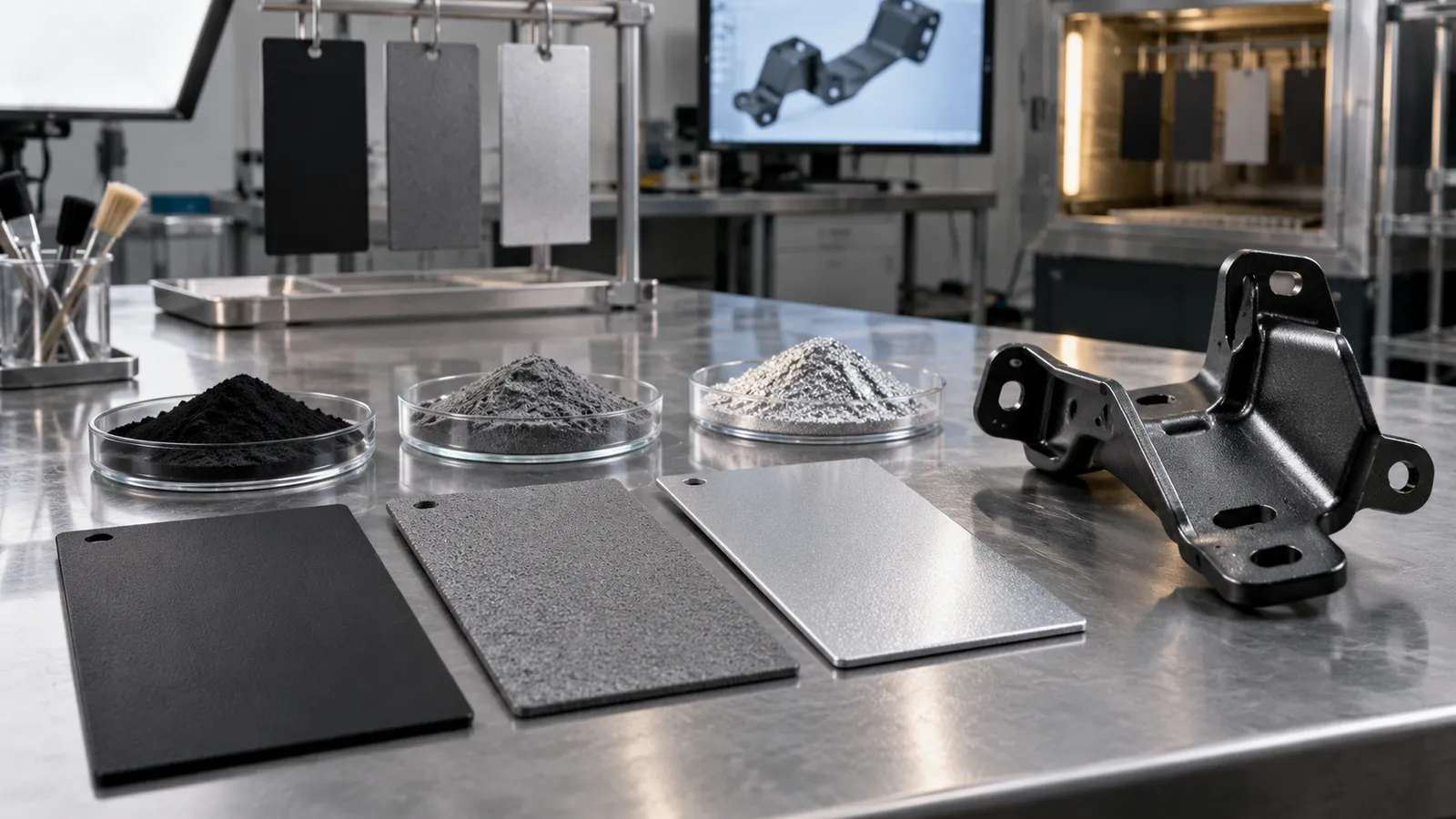
Powder selection should consider chemistry, gloss, texture, cure window, impact resistance, chemical exposure, and color stability. A decorative interior bracket may have different needs from an underbody shield or an exposed aluminum housing. The selected powder also needs to fit the part’s thermal limits and any adjacent inserts or components. Film thickness is not a simple “more is better” decision. Excessive build can hide detail, interfere with assembly, crack at edges, or create appearance variation. A thin film may fail to provide the required protection. The specification should define a target range, measurement locations, and the treatment of difficult features rather than only naming a color code.
- Match powder chemistry to temperature, fluids, and weather exposure.
- Set gloss and texture using an approved physical sample when appearance matters.
- Define film-build limits for interfaces and cosmetic surfaces.
- Confirm that the cure schedule is compatible with the substrate and part mass.
Cure Control Is a Process Variable
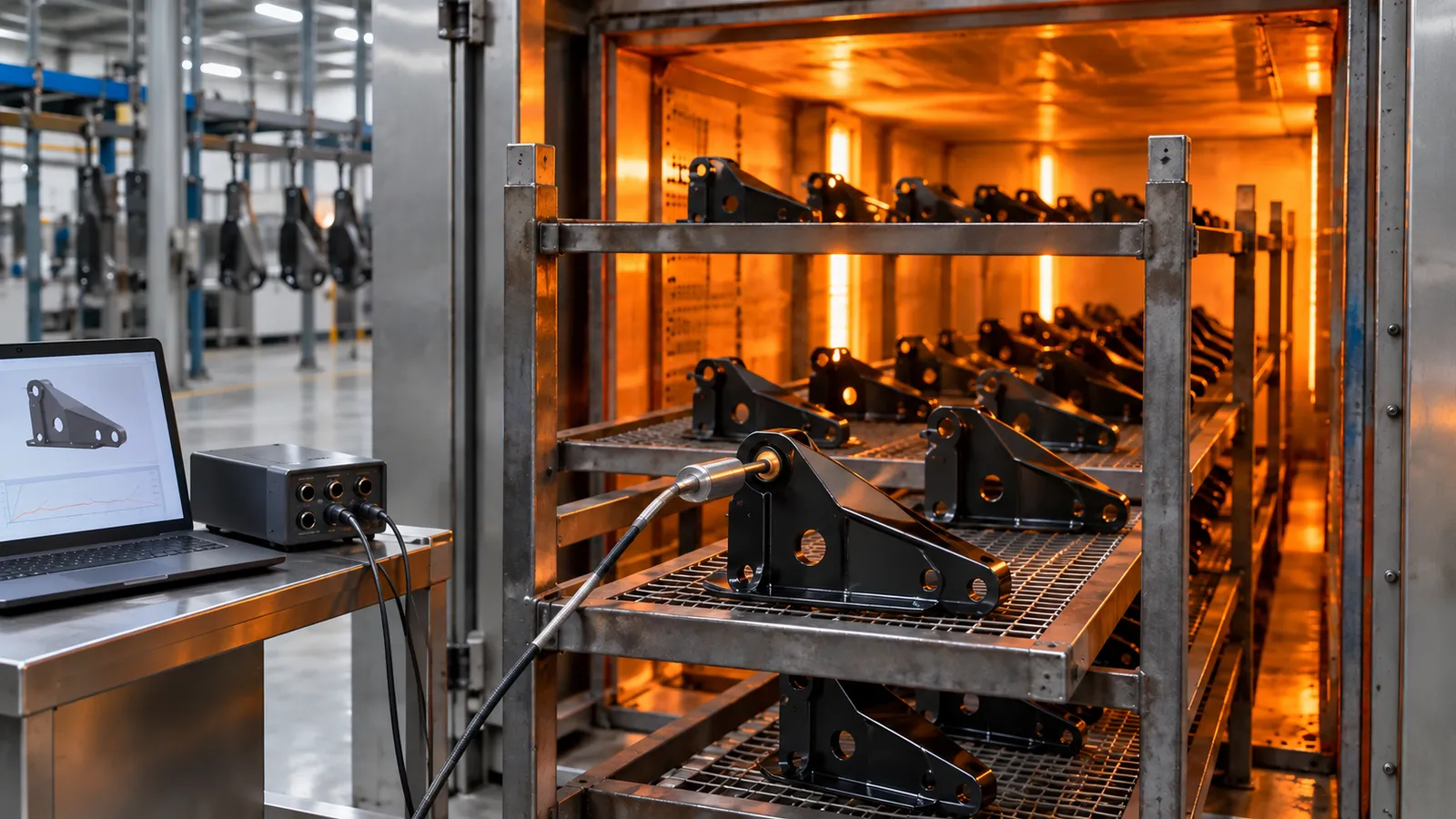
The oven does not cure every part at the same speed. Part mass, geometry, rack loading, airflow, and line speed determine how quickly the metal reaches the required temperature. A conveyor setting that works for a small bracket may under-cure a thick casting. Under-cure can reduce adhesion and chemical resistance; over-cure can shift color or damage sensitive materials. A robust process uses temperature measurement on representative parts, not only the oven display. When a new part, powder, rack arrangement, or batch size is introduced, the cure profile should be reviewed. The record should identify powder lot, oven conditions, part location, and any deviations. This is especially important when coating automotive parts that must remain consistent across multiple production runs.
| Cure check | What it protects |
|---|---|
| Part-metal temperature | Confirms the coating actually reaches the cure window |
| Line speed and load | Prevents hidden variation between batches |
| Powder lot and profile | Supports troubleshooting and traceability |
| Post-cure appearance | Catches color, gloss, and texture drift |
Inspect the Finish as a Functional Layer
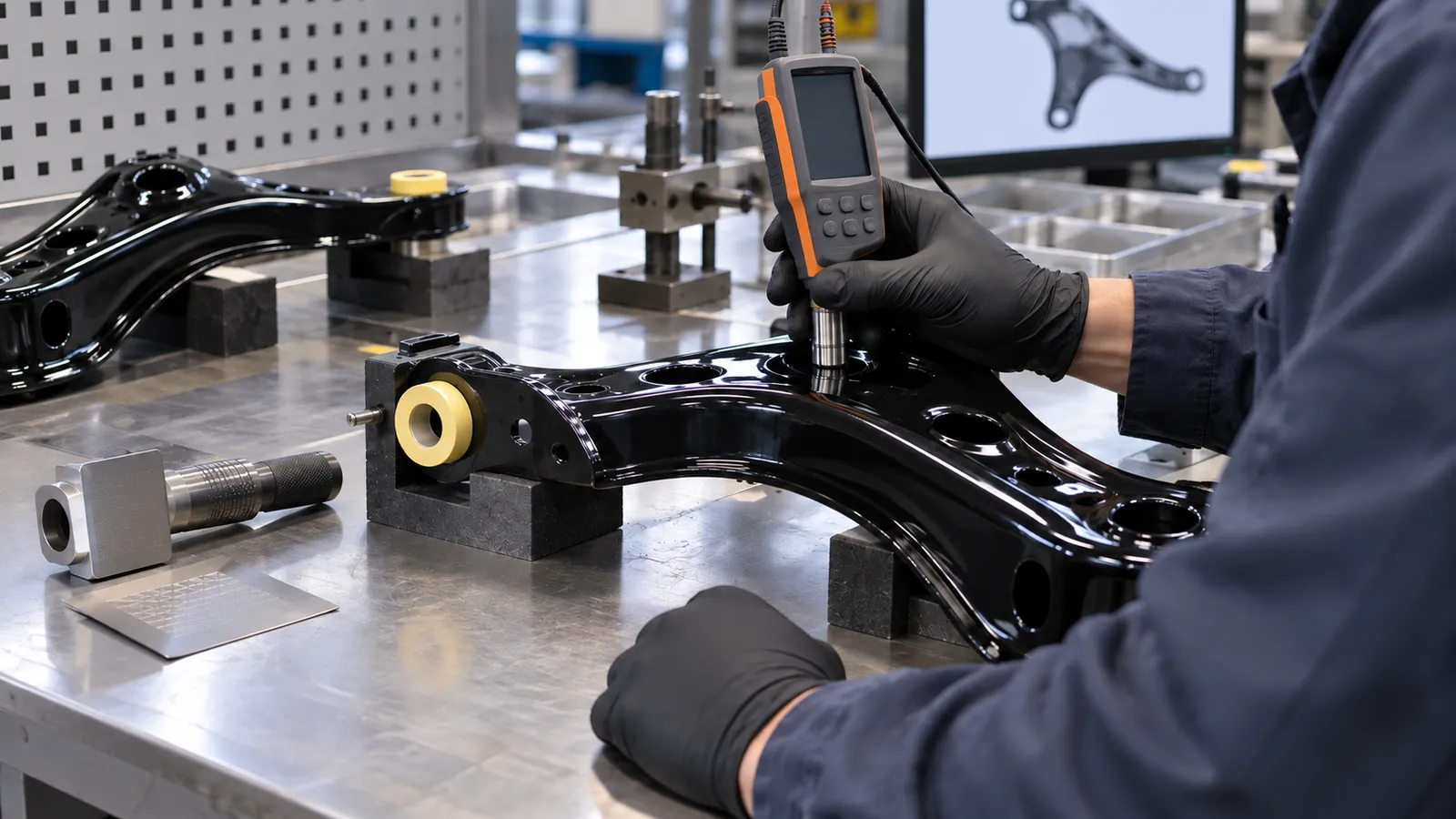
Inspection should combine appearance and function. Visual checks can identify runs, craters, pinholes, contamination, color variation, and masking errors. Film-thickness checks confirm build. Adhesion, impact, hardness, or corrosion testing may be appropriate when the service environment demands it. The right test plan depends on the risk rather than on a universal checklist. Finally, inspect the finished part in its assembly context. A beautiful coating that prevents a fastener from seating or blocks a ground path is a failed coating. Use representative fixtures, threads, seals, or mating parts when releasing the process. This closes the loop between the coating line and the automotive system that the component must serve.
- Approve appearance against a controlled sample, not memory.
- Measure film thickness at critical and difficult-to-coat locations.
- Verify adhesion and corrosion performance when specified.
- Complete a functional assembly check after coating.
Powder coating automotive parts succeeds when the finish is designed as part of the component. Substrate, geometry, masking, powder, cure, and inspection must agree. Treating the coating line as an isolated final step is what creates many of the failures that the process is meant to prevent.

