


A biocompatible 3D printing resin claim applies within a defined material and manufacturing context. It does not mean that any printer, wash process, cure cycle or patient-contact use is acceptable. The finished component’s suitability depends on the specific formulation, supported workflow, intended contact and the evidence required for the device.
For a procurement team ordering a medical prototype, the first distinction is whether the sample is a visual model, a functional test article or a proposed patient-contact component. These roles require different decisions. Choosing an impressive material label without specifying the role can lead to unnecessary cost or, more seriously, unsupported assumptions about the finished part.
Three Uses That Should Not Share One Specification

An anatomical display model may need accurate shape and clarity without being intended for patient contact. A bench-test fixture may need strength and dimensional stability. A proposed contact component needs an appropriate biological evaluation as well as the relevant mechanical and manufacturing evidence.
Describe the contact context before selecting resin. Nature, duration and location of contact are relevant; a skin-contact statement cannot be extended casually to other applications. The device owner and qualified specialists should define the intended use and evaluation, not leave it to the printer operator.
| Sample role | Primary question | What the resin label does not establish |
|---|---|---|
| Visual model | Is the geometry understandable? | Production strength or patient-contact suitability |
| Functional bench sample | Does the part perform the defined mechanical task? | Equivalence to a molded production material |
| Proposed contact component | Is the finished state appropriate for the specified contact? | Approval for every device or use duration |
Die medical device materials overview provides the broader selection context. Resin printing is one possible route, not a default replacement for machined or molded material where those routes better represent the required component.
The Document Package Comes Before the Print Job

Obtain current instructions for the exact resin and supported equipment. Record the version, material identity and relevant use limitations. Marketing descriptions are useful for initial screening, but the manufacturing instructions define conditions that the process must actually reproduce.
Formlabs’ BioMed Clear material page provides a specific example of a resin with stated contact applications and post-processing information. Those statements belong to that product and supported workflow; they are not evidence that every clear resin has the same scope.
Identify the compatible printer, settings and post-processing arrangement specified by the supplier. A successful-looking print on another platform may not reproduce the material state underlying the original evidence. Any departure needs an appropriate technical assessment rather than a claim that the chemistry is close enough.
Keep the purchase description precise. A request for medical resin is ambiguous when several formulations have different properties and documentation. Name the approved grade and clarify whether substitutes require approval before the print is started.
Geometry Can Make Post-Processing the Hardest Operation
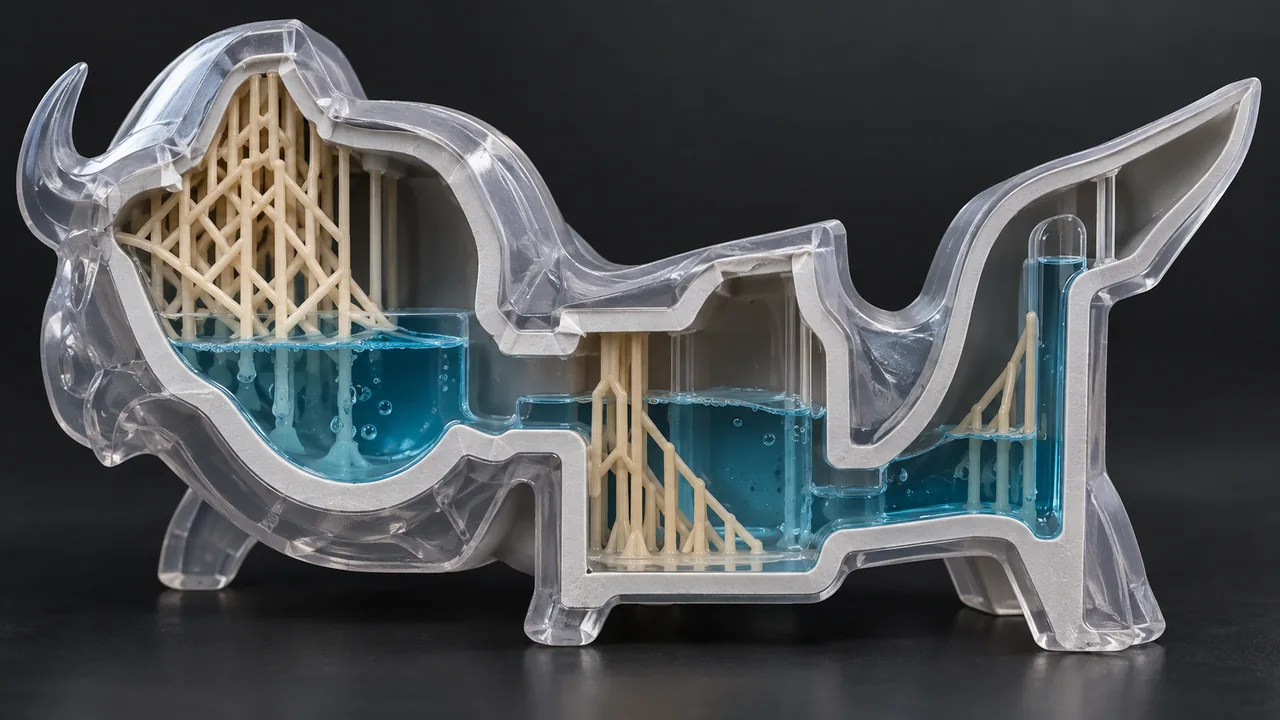
A hollow shape with narrow openings may retain liquid resin or washing fluid. A fine recess can be difficult to inspect after cleaning. A deep feature may also present a different post-cure challenge from an exposed flat surface. Review the part as a geometry that must be finished, not merely a mesh that can be printed.
Consider whether additional access, drain paths or a different orientation can improve the workflow without changing function. If a closed cavity is essential, assess whether the proposed resin process is appropriate rather than assuming it can be solved by washing for longer.
Support placement creates another interface. Removing supports can leave marks or alter a functional surface. Determine which regions can accept them, whether the removal method affects the relevant dimensions and how the finished surface will be evaluated.
Why a Clear Part Is Not Automatically Easy to Inspect
Transparency can help observation but also introduce reflections and optical distortion. Select the viewing direction, lighting and measurement method deliberately. A smooth image does not prove that a hidden cavity is free of residual material or that a dimension meets its requirement.
Jucheng’s 3D printing service can be approached with these geometry and documentation requirements. Confirm the exact process and available material workflow before using any development sample for a higher-risk purpose.
Washing and Post-Curing Define the Finished State

Washing removes uncured material under a defined procedure; post-curing develops the intended material state under the supplier’s specified conditions. They are separate operations with different controls. An operator’s impression that a part feels dry does not establish completion of either one.
Follow the formulation’s instructions for wash media, exposure, drying and cure conditions. Do not copy a generic time or temperature from another resin. Longer is not automatically safer if additional exposure changes dimensions or other relevant properties.
Formlabs’ post-processing guidance emphasizes resin-specific instructions for biocompatible applications and the role of suitable post-processing. It also identifies dedicated equipment within its validated workflows. These are process considerations to confirm for the selected product, not optional details after the quote is accepted.
Track material segregation and equipment cleanliness where required by the workflow. Shared tools or containers can introduce a different material into the part’s processing history. A controlled route should make the relevant prevention and identification measures clear.
Measure Performance in the Condition You Plan to Use

Define the dimensional and mechanical checks after the specified finishing operations. A measurement before post-cure may not describe the part that will be delivered. Likewise, an assembly trial on an unfinished component may give a misleading impression of its final fit.
Include the intended exposure where it matters. Cleaning, disinfection, sterilization or repeated handling can introduce separate questions. The resin’s stated contact scope does not automatically answer whether the printed geometry retains strength or dimensions after the planned exposure.
Use representative samples for the question being tested. A flat coupon can support selected material evaluations, but it may not represent a thin snap, a support-marked surface or a narrow passage. Document what a specimen represents and avoid extending its result beyond that scope.
The existing medical 3D printing article discusses additive manufacturing more broadly. Keep this resin decision focused on formulation, supported process and finished-state evidence rather than repeating a general list of printing technologies.
Procurement Questions That Prevent an Unsupported Shortcut

Ask for the exact grade and current manufacturing instructions, the supported equipment, the finishing procedure and the delivery state. Request the records needed to identify the material lot and process used for the samples. State which substitutions and process changes require approval.
For a Jucheng inquiry, explain whether the part is a visual prototype, a functional development sample or a component requiring further evaluation. Confirm the available manufacturing route and specialist responsibilities. Printing a part does not, by itself, establish a device-level regulatory claim.
Can a Biocompatible Resin Prototype Validate a Molded Product?
It can support selected questions such as fit or layout, but it is not automatically representative of the molded material, surface or mechanical behavior. Use the final route when the test question depends on those differences.
Is a Manufacturer’s Resin Report Enough for Our Device?
It is supporting evidence within its stated scope. The device owner must determine whether the formulation, process, finished configuration and contact conditions are represented and what additional evaluation is required. Do not treat the report as blanket device approval.