


What must a small appliance prototype prove?
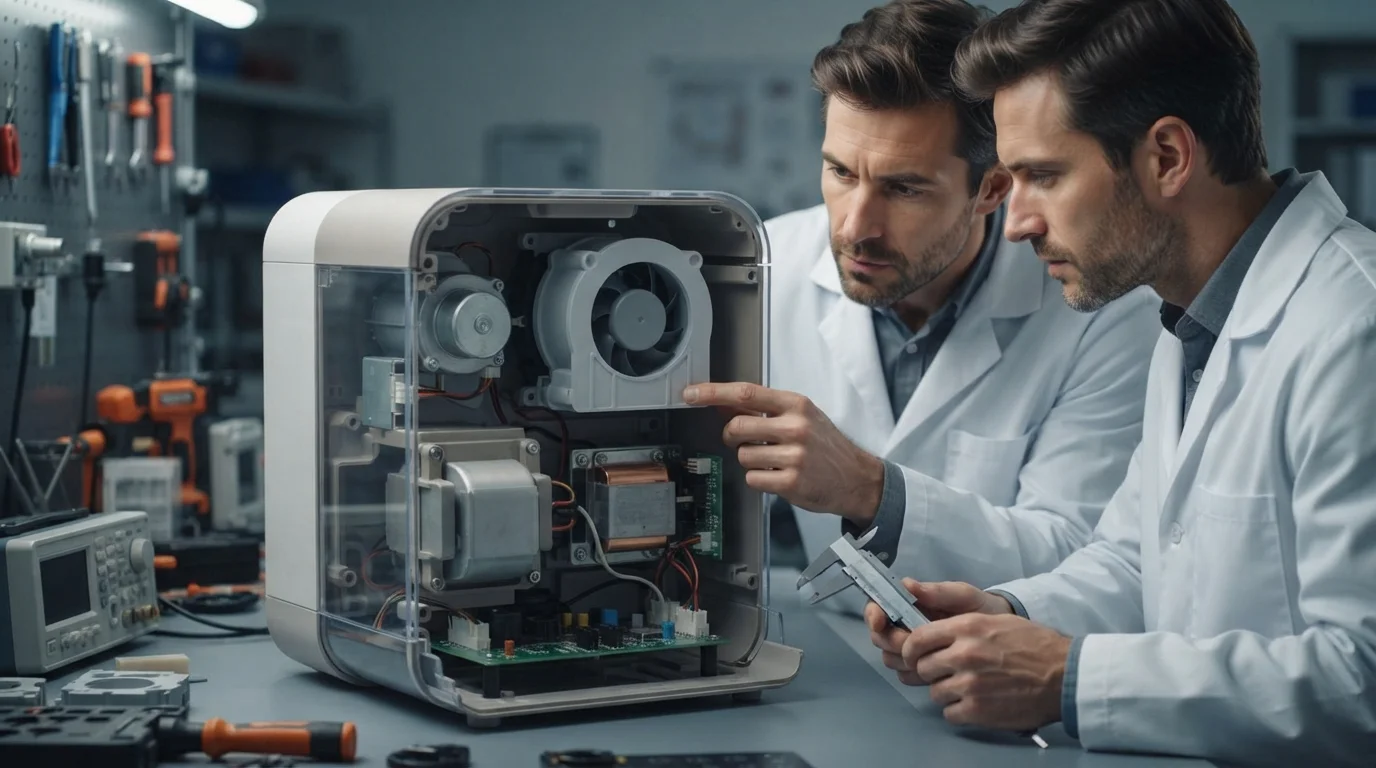
A small appliance prototype should answer a defined product question. The question may concern appearance, ergonomics, internal packaging, thermal behavior, control operation, assembly, or manufacturing feasibility. One model rarely proves every requirement, so each prototype should match the stage of development.
| Prototype objective | What to evaluate | Evidence to collect |
|---|---|---|
| Form and appearance | Proportions, controls, seams, grip, color, and visible surfaces | Appearance model, user review, and approved revision |
| Internal fit | Motor, fan, heater, battery, PCB, wiring, fasteners, and service clearances | Assembly trial and interference review |
| Functional behavior | Controls, moving parts, airflow or fluid path, vibration, noise, and operating sequence | Working prototype and test record |
| Manufacturability | Housing split, walls, ribs, bosses, draft, joining, and process limits | DFM review and revised CAD |
| Production readiness | Repeatability, assembly time, inspection points, and material consistency | Pilot parts and first-article review |
The most expensive prototype mistake is building a polished exterior before confirming the internal architecture. A housing that looks finished can still conceal an unworkable assembly sequence or inaccessible service area. Start with the risk that could force the largest redesign.
Which prototype should be built first?
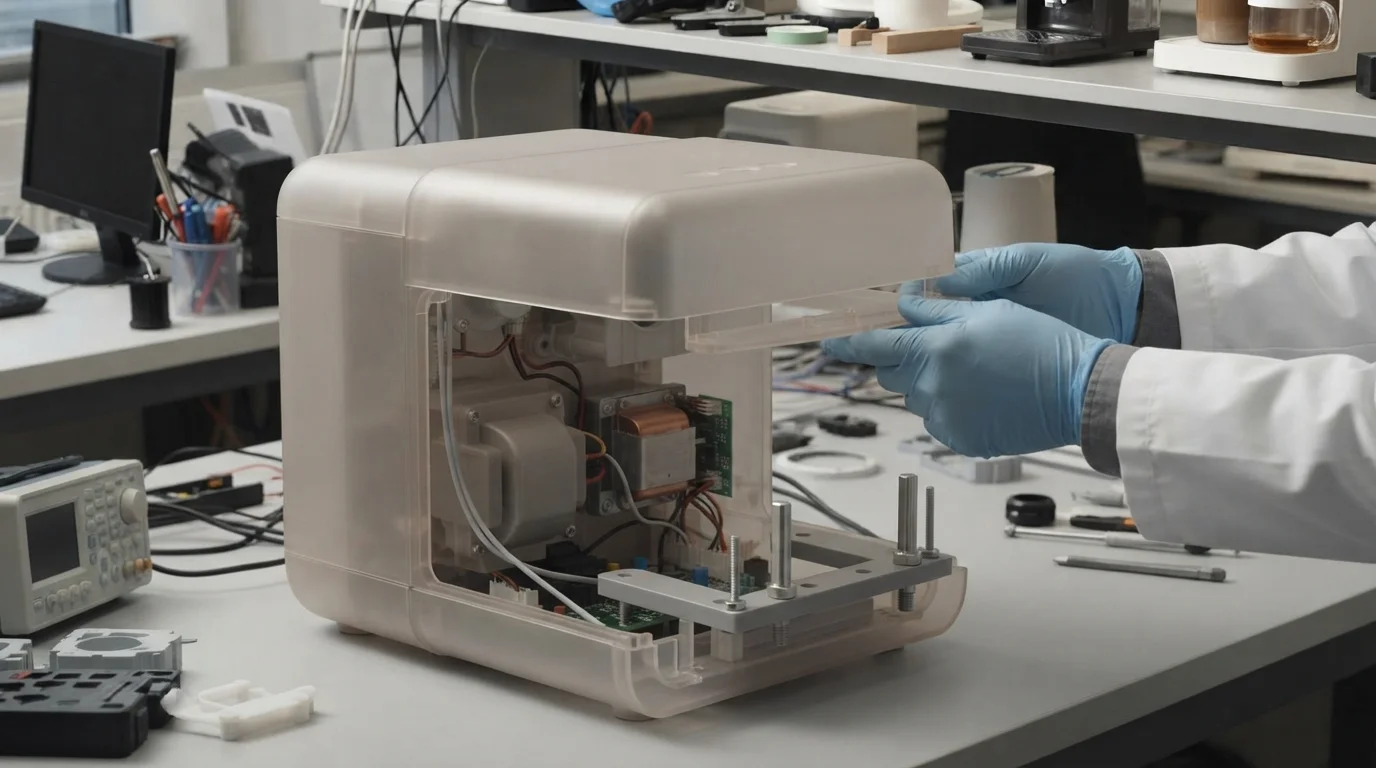
Most small appliance programs benefit from more than one prototype stage. The first model should be fast enough for design learning. Later samples should become progressively closer to the intended material, finish, process, and assembly method.
- Concept model: evaluate proportions, user interaction, grip, access, and the visual relationship between major components.
- Fit-check model: use representative internal components or accurate envelopes to confirm clearances, fasteners, cables, controls, and service access.
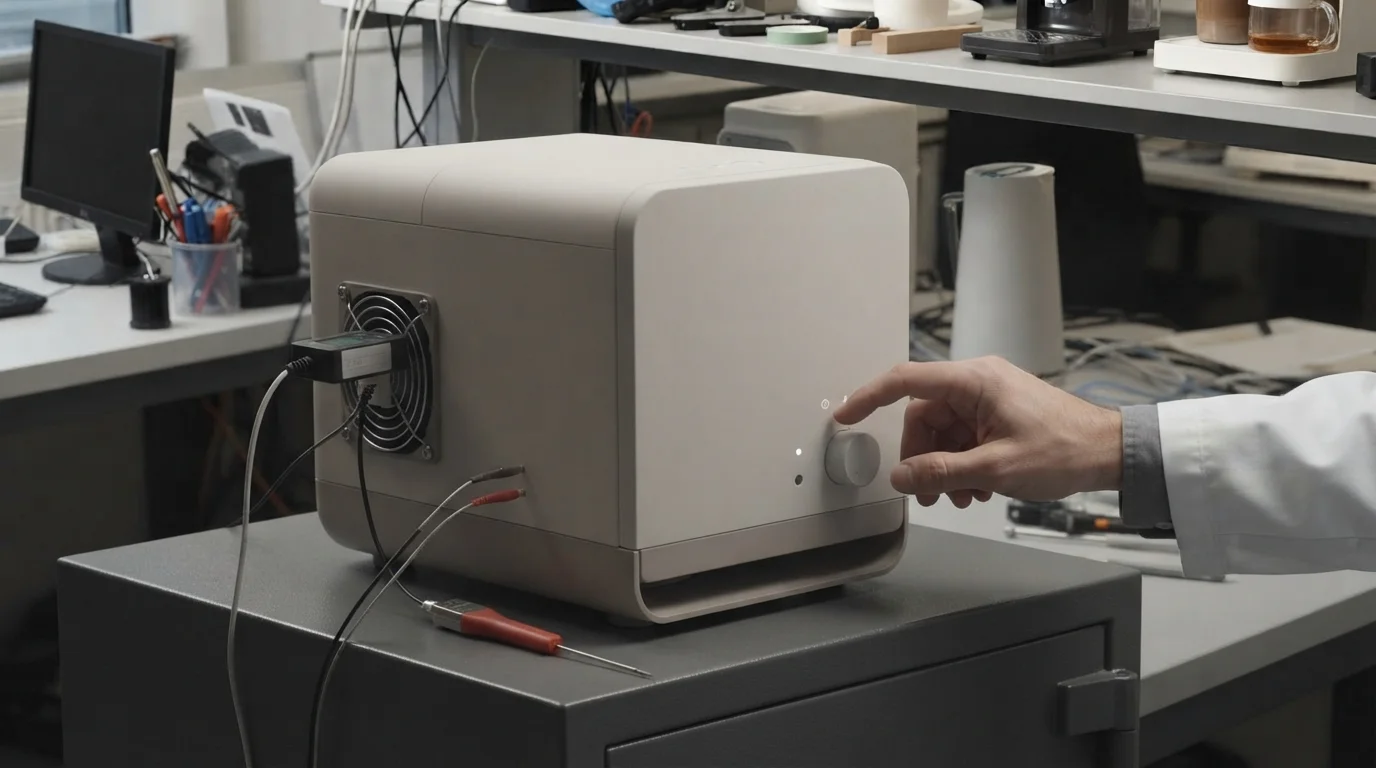
- Functional prototype: operate the critical mechanism or electrical system and record heat, vibration, noise, movement, and control behavior.
- Appearance prototype: review visible housing, surface finish, color, seams, labels, and user-facing interfaces.
- Production-intent sample: use a manufacturing route and material that provide meaningful evidence for the pilot or production decision.
Physical prototypes can be made through several routes. 3D printing can support early geometry and ergonomics, machining can provide precise plastic or metal parts, and molding or casting can help evaluate production-like surfaces and assemblies. Our prototype manufacturing service can be considered according to the design stage and the question the build needs to answer.
A functional prototype does not need to imitate every production detail, but it should not create false confidence. If the final appliance depends on a molded housing, a printed housing may prove fit without proving shrinkage, surface texture, snap-fit performance, or production assembly.
How do housing and internal parts affect manufacturability?
Small appliances often package many components inside a compact shell. The housing, internal frame, controls, motor or drive system, wiring, power components, and fasteners must be designed as one assembly. Manufacturing feasibility depends as much on how parts are loaded and joined as on the exterior shape.
Review the housing structure
Check the parting line, wall-thickness transitions, ribs, bosses, clips, screw towers, vents, handles, and access panels. For injection-molded parts, draft and ejection should be considered early. For machined parts, review tool access, internal corners, thin walls, and stock removal. For sheet-metal parts, check bend radii, reliefs, fasteners, and the order of forming and joining.
Review the assembly sequence
Ask how a person or fixture will load each component. Can the wiring be routed without being pinched? Can the board be serviced? Can the housing close without excessive force? Are fasteners accessible from the correct direction? A design that requires an awkward sequence may increase cost and create variation even if every individual part is manufacturable.
Review heat, motion, and vibration
Moving and powered components create additional design questions. The prototype should reveal whether clearances remain stable during operation, whether mounting features transmit unwanted vibration, and whether heat changes the fit or finish of nearby parts. The exact test conditions depend on the appliance and should be defined in the project plan.
How should materials and processes be selected?
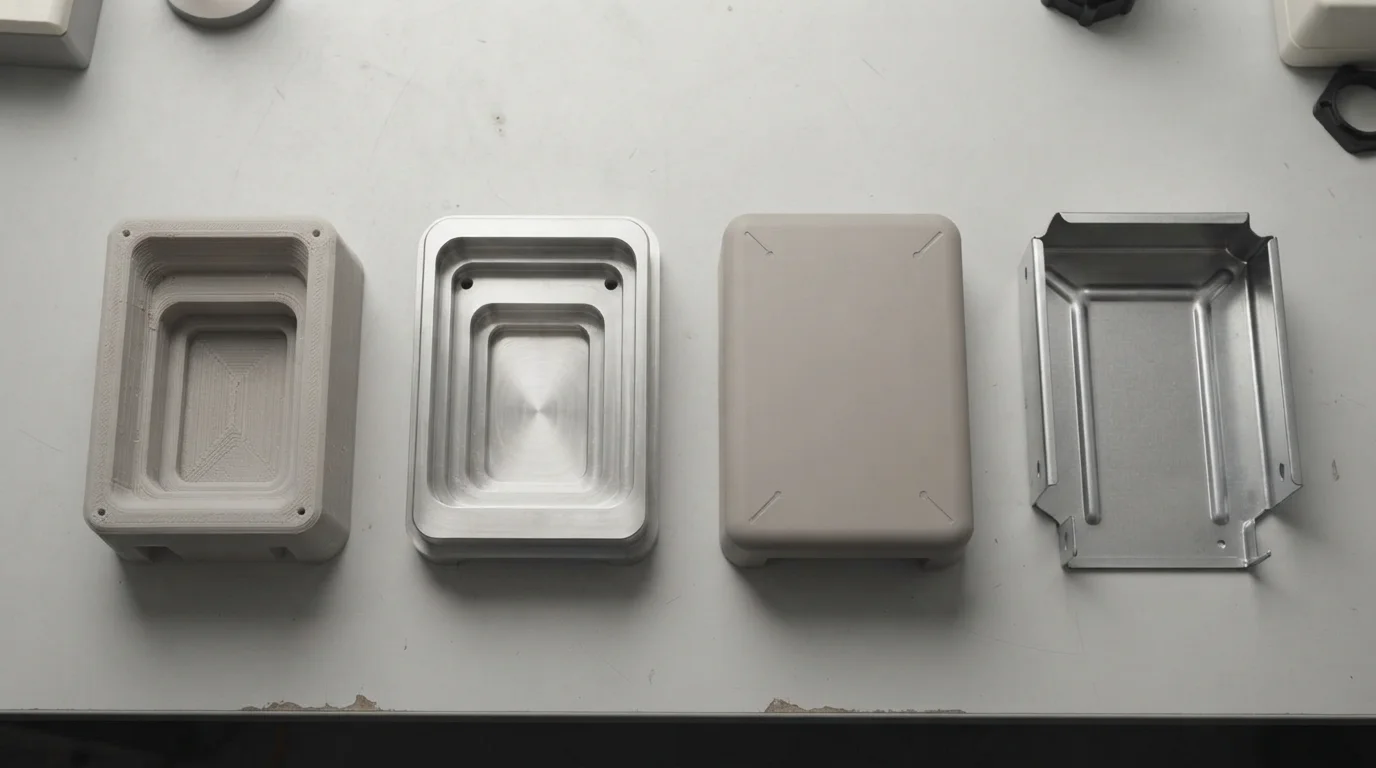
Material and process selection should follow function, appearance, production volume, and validation needs. A small appliance may combine molded plastic housing parts, machined or fabricated metal components, elastomeric controls or seals, and standard fasteners. The prototype plan should make clear which materials are representative and which are temporary.
| Need | Possible process | Decision to verify |
|---|---|---|
| Fast shape iteration | 3D-Druck | Does the form fit the user and internal component envelope? |
| Precise functional housing | CNC-Bearbeitung | Do interfaces, mounts, and mating parts align correctly? |
| Folded metal structure | Blechbearbeitung | Can the chassis meet stiffness, joining, access, and finish requirements? |
| Repeatable plastic housing | Spritzgießen | Are geometry, quantity, tooling, draft, and appearance aligned? |
| Small appearance batch | Das Vakuumgießen | Does the surface and assembly experience represent the evaluation? |
For precision brackets, shafts, knobs, or housing components, CNC-Bearbeitung may be appropriate when accurate functional parts are needed. For a plastic housing that requires a repeatable mold-based route, low-volume injection molding can be evaluated when quantity and design maturity justify it. The final selection must be based on the individual appliance design.
What tests belong in prototype validation?
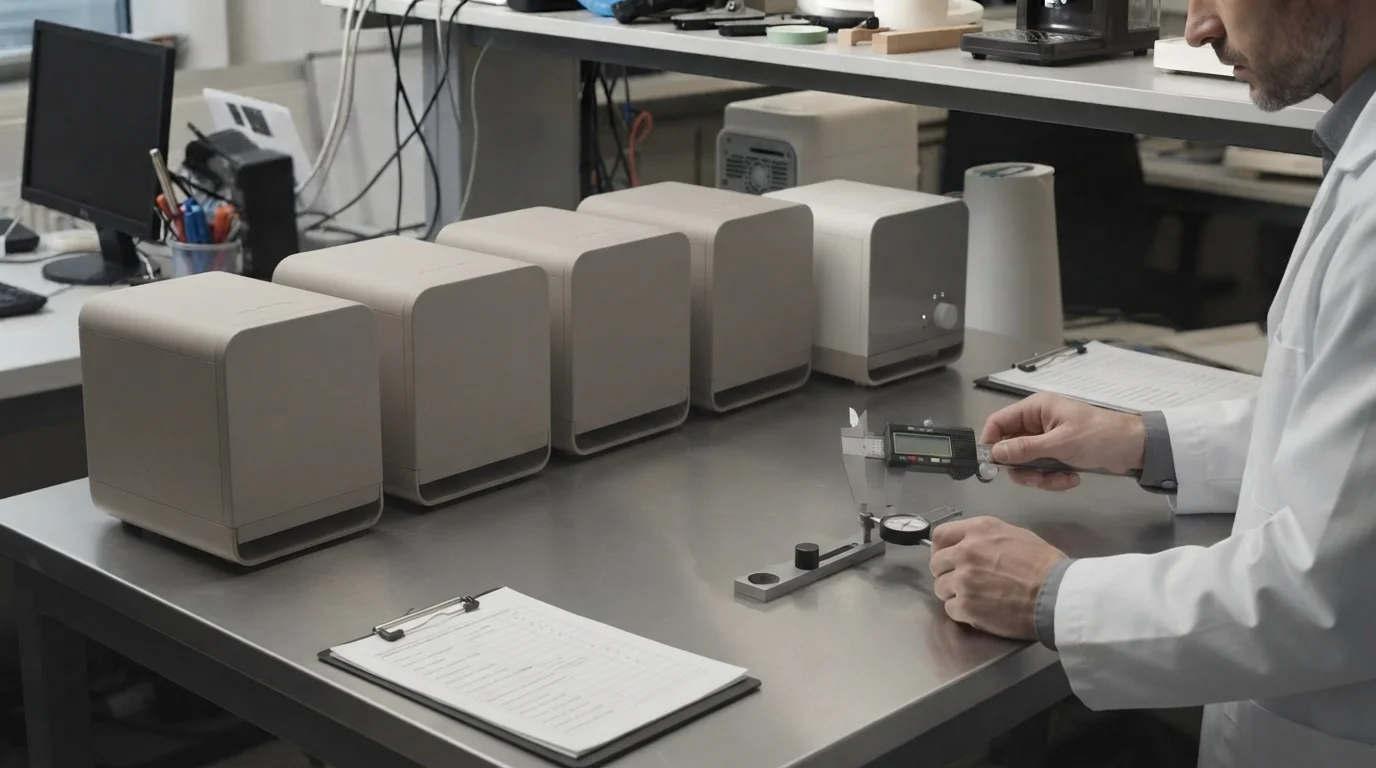
Prototype validation should be planned around failure modes, not only visual approval. The test plan varies by appliance, but most projects should consider the following groups of checks.
- Fit and assembly: confirm component clearances, housing closure, fastener access, cable routing, service access, and part interfaces.
- User interaction: review buttons, knobs, handles, lids, doors, grips, displays, indicators, and cleaning access.
- Functional operation: run the critical mechanism and verify the intended sequence, movement, output, and controls.
- Thermal and environmental behavior: define appropriate checks for heat, moisture, cleaning, dust, impact, and storage.
- Noise and vibration: evaluate motor mounts, rotating components, loose parts, resonance, and perceived quality.
- Cosmetics: review seams, gaps, texture, color, gloss, marks, parting lines, and visible-surface consistency.
- Manufacturing repeatability: compare multiple parts or assemblies for variation in fit, finish, warpage, flash, burrs, or assembly force.
Document the prototype revision, materials, process, test conditions, and observed failures. Without that context, a successful test may not be repeatable on a later sample or production part.
What should be included in a prototype RFQ?
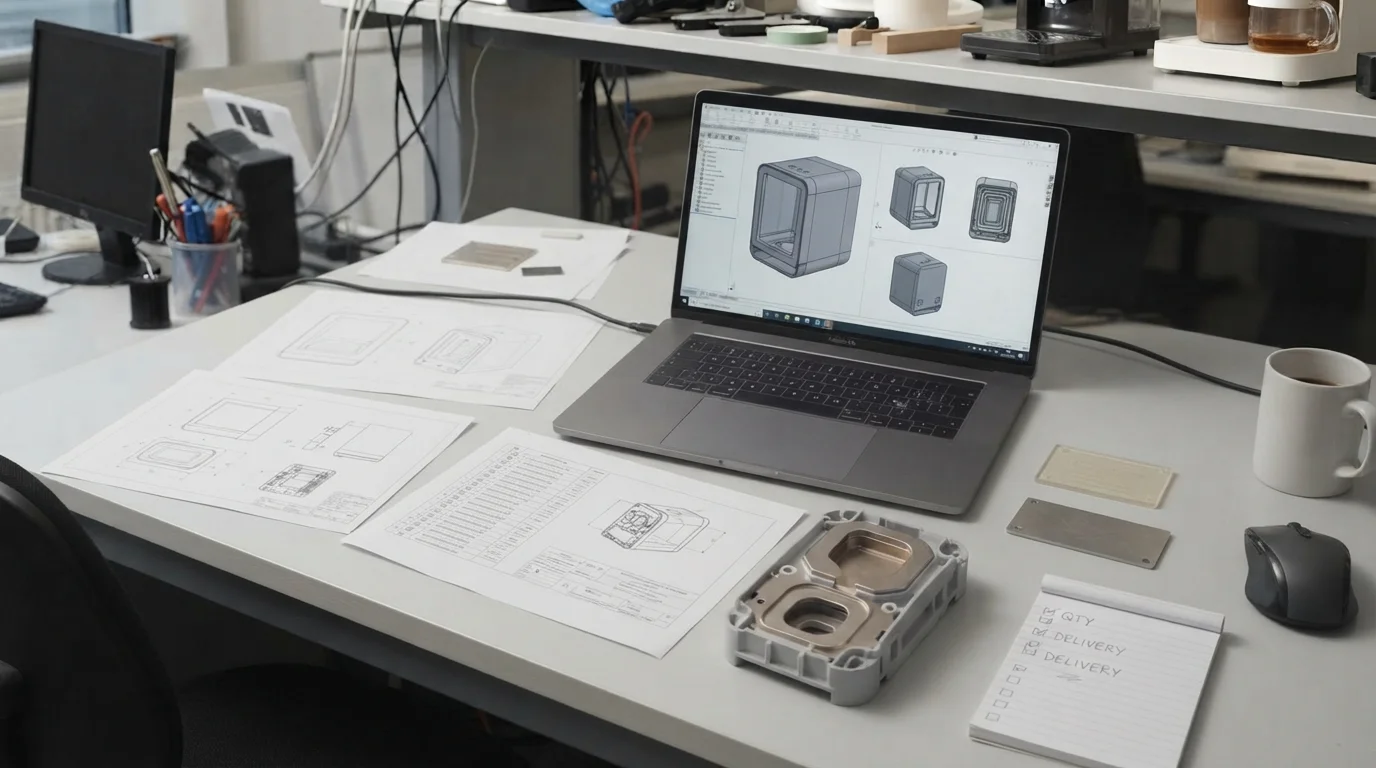
A clear RFQ helps a manufacturer recommend the right prototype route instead of quoting only the visible housing. Include the product context and the decision the prototype must support.
| RFQ item | Information to provide |
|---|---|
| Product brief | Appliance function, user environment, operating conditions, and development stage |
| CAD and drawings | 3D files, critical dimensions, tolerances, revision, and assembly references |
| Internal components | Motors, batteries, PCBs, heaters, fans, displays, cables, fasteners, and purchased parts |
| Prototype objective | Appearance, fit, function, ergonomics, thermal behavior, assembly, or production-intent validation |
| Quantity and timing | Number of concept models, functional samples, pilot parts, and required decision dates |
| Material and finish | Preferred materials, alternatives, color, texture, visible surfaces, and cosmetic expectations |
| Testing and quality | Functional tests, fit checks, critical dimensions, inspection records, and acceptance criteria |
Ask the supplier to separate tooling, unit parts, finishing, assembly, inspection, and shipping assumptions. If the design could use more than one process, request a comparison that explains tradeoffs in cost, lead time, geometry, material behavior, and production transition.
Häufig gestellte Fragen
How many prototypes does a small appliance need?
There is no fixed number. The project may need separate appearance, fit, functional, and production-intent samples. The correct quantity is the number required to answer important engineering and user questions before the next commitment.
What is the best process for a small appliance prototype?
The best process depends on the risk being tested. 3D printing can support early form and fit, CNC machining can provide precise functional parts, and molding or casting can provide more production-like surfaces or assemblies.
Should a small appliance prototype use production materials?
Use production-intent materials when material behavior affects the decision being made. Temporary materials may be acceptable for early form studies, but they should not be treated as proof of final thermal, cosmetic, flexibility, or service-life performance.
When should tooling be ordered?
Tooling should follow a review of product requirements, internal assembly, process-specific DFM, prototype evidence, and expected quantity. Ordering tooling before resolving high-risk geometry can increase modification cost and delay the program.
Turn prototype results into a manufacturing decision
A good small appliance prototype program creates a clear chain from question to evidence to decision. Define what must be learned, select a prototype process that can answer that question, record failures and revisions, and only then commit to a production-intent route.
The final handoff should include the current CAD assembly, drawings, component envelopes, material and finish requirements, validation records, target quantity, and open-risk list. For folded metal components, Blechbearbeitung may be part of the comparison alongside molded, machined, printed, or cast parts.
Small appliance prototyping is most valuable when it exposes manufacturing problems early: an inaccessible fastener, an unstable mount, a housing that cannot close, a finish that cannot be repeated, or a component that changes the assembly sequence. Resolve those issues before production tooling or a larger order makes the design harder to change.
For general product-development context, see the appliance development stages described by Autodesk and the prototype-to-production checkpoints outlined by Iron Systems. These references provide general context; the final process, material, and test requirements must be verified for the individual product.

