


Robotics Manufacturing Standards: Navigating ISO 10218 and Safety Compliance
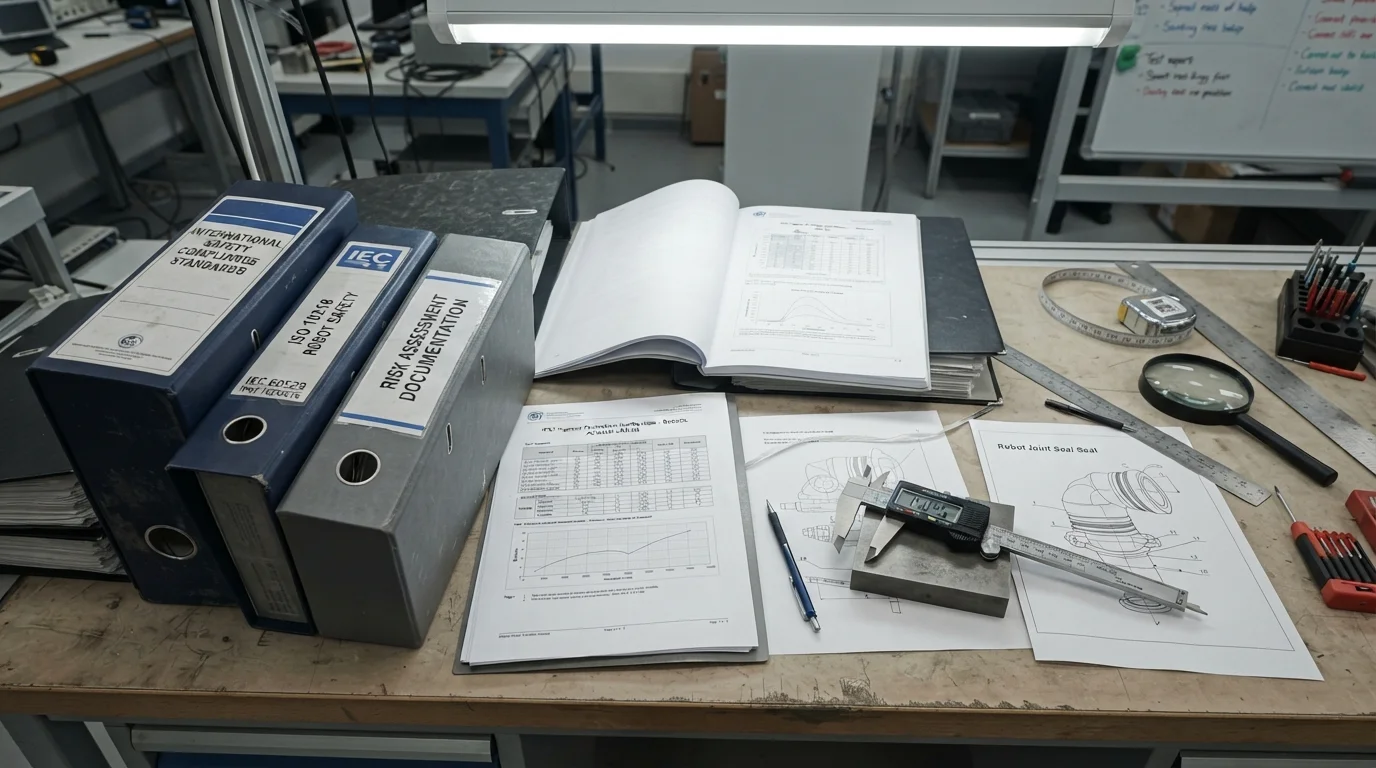
What standards and certifications govern robotics manufacturing? Robotics hardware production is governed by three primary international regulatory frameworks: ISO 10218-1/2 (mandating structural integrity, protective stop functions, and fail-safe mechanical limits for industrial robots), ISO/TS 15066 (defining power and force-limiting biomechanical thresholds for collaborative robots operating alongside humans), and IEC 60529 (specifying IP65, IP67, or IP68 environmental ingress protection against dust and high-pressure water washdowns), supported by factory-level ISO 9001 and IATF 16949 quality management certifications. Adhering to verified robotics manufacturing standards guarantees that dynamic automated systems deliver uncompromised operator safety, mechanical durability, and global market compliance.
Integrating compliance protocols during initial 3D modeling and toolroom machining prevents costly redesigns and ensures seamless CE marking and UL safety certification. Understanding how mechanical tolerances, sealing gaskets, and material traceability interact allows engineering teams to commercialize industrial and humanoid robotics safely.
Understanding ISO 10218 and ISO/TS 15066 for Collaborative Robots (Cobots)
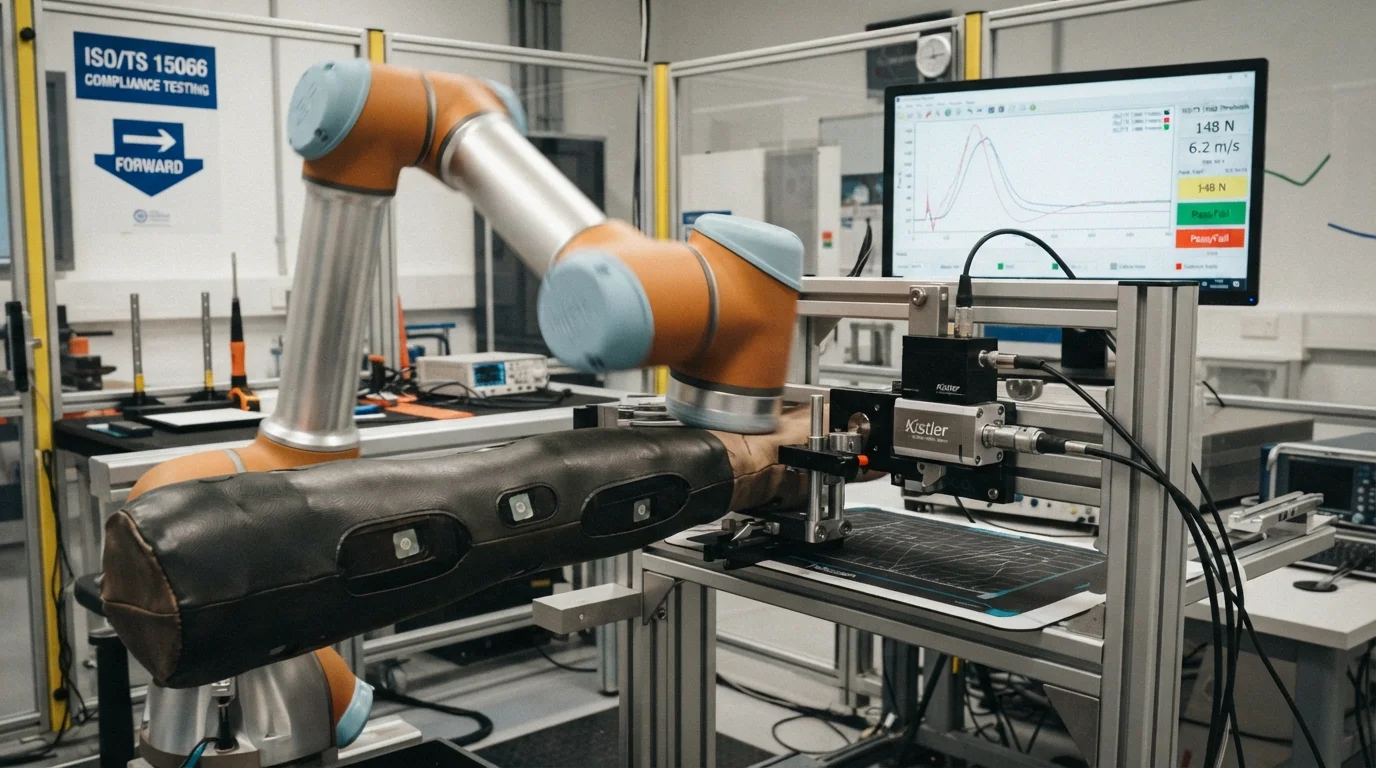
Collaborative robots (cobots) operate in open workspaces without protective safety cages, demanding mechanical architectures engineered to limit kinetic impact energy during accidental human contact. ISO/TS 15066 establishes strict biomechanical pressure limits across different human body zones (e.g., maximum 140 N/cm² on the human chest or arm). Meeting these force limits requires manufacturing lightweight structural arm links from high-strength AL7075-T6 aluminum to minimize moving inertia while smoothing external corner radii in CAD to eliminate sharp pinch points.
Key mechanical design criteria for collaborative safety compliance include:
- Continuous smooth external radii: Machine all exterior arm link edges with a minimum R5.0 mm rounded radius to distribute transient contact forces over wider surface areas.
- Pinch-free joint shrouds: Design overlapping rotational joint covers with controlled gaps (< 4 mm or > 25 mm) to prevent finger entrapment during high-speed articulation.
- Dual-channel torque sensor integration: CNC-machine rigid mounting pockets on joint output flanges to seat dual-channel strain-gauge force sensors for instantaneous collision detection.
Ingress Protection (IP Ratings): Designing Waterproof Seals for Harsh Environments
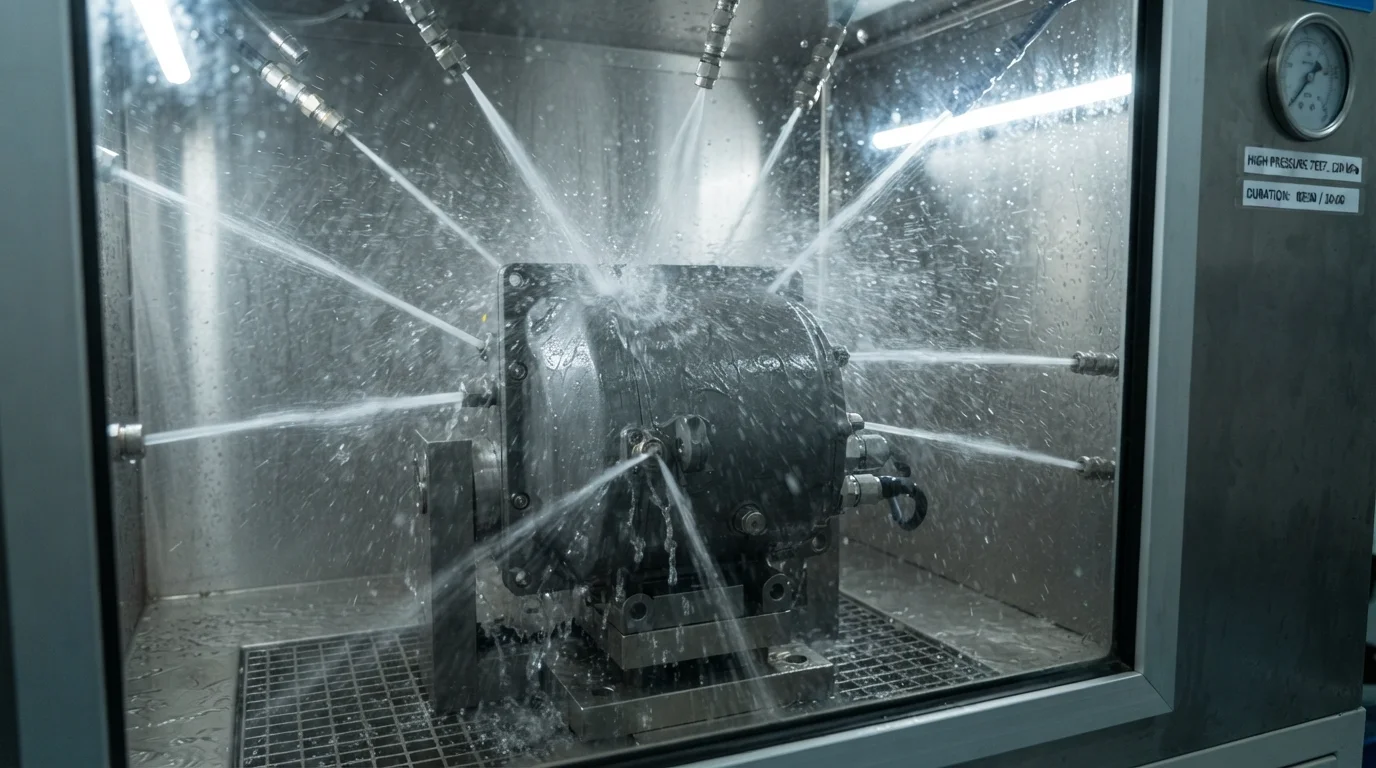
Industrial robots deployed in automotive paint booths, metal machining bays, or outdoor logistics yards face constant exposure to cutting fluid mist, fine metal swarf, and high-pressure chemical washdowns. When hardware developers implement verified robotics manufacturing standards, engineering precision gasket retention grooves and dynamic shaft seals ensures that actuator housings achieve verified IP65 or IP67 ingress protection under IEC 60529. Discussions on automation hardware groups across Reddit and Facebook highlight that machining O-ring grooves with proper surface smoothness (Ra 0.8–1.6 µm) is critical to prevent micro-leakage under immersion testing.
Comparing environmental protection classes illustrates distinct mechanical sealing requirements:
| Protection Rating | Environmental Defense Capability | Primary Mechanical Sealing Requirement |
|---|---|---|
| IP54 Standard Class | Dust protected, resistant to splashing water from any direction | Standard tongue-and-groove joint fitment with foam gasket strips |
| IP67 Immersion Class | Complete dust tight seal, protected against water immersion up to 1 meter | CNC-milled dovetail O-ring grooves with automated liquid silicone rubber (LSR) dispensing |
| IP69K Washdown Class | Withstands high-pressure (100 bar), high-temperature (80°C) steam jets | Precision-machined rotary shaft lip seals with double-clamped elastomeric gaskets |
Material Traceability, Mill Certificates, and Dimensional Verification
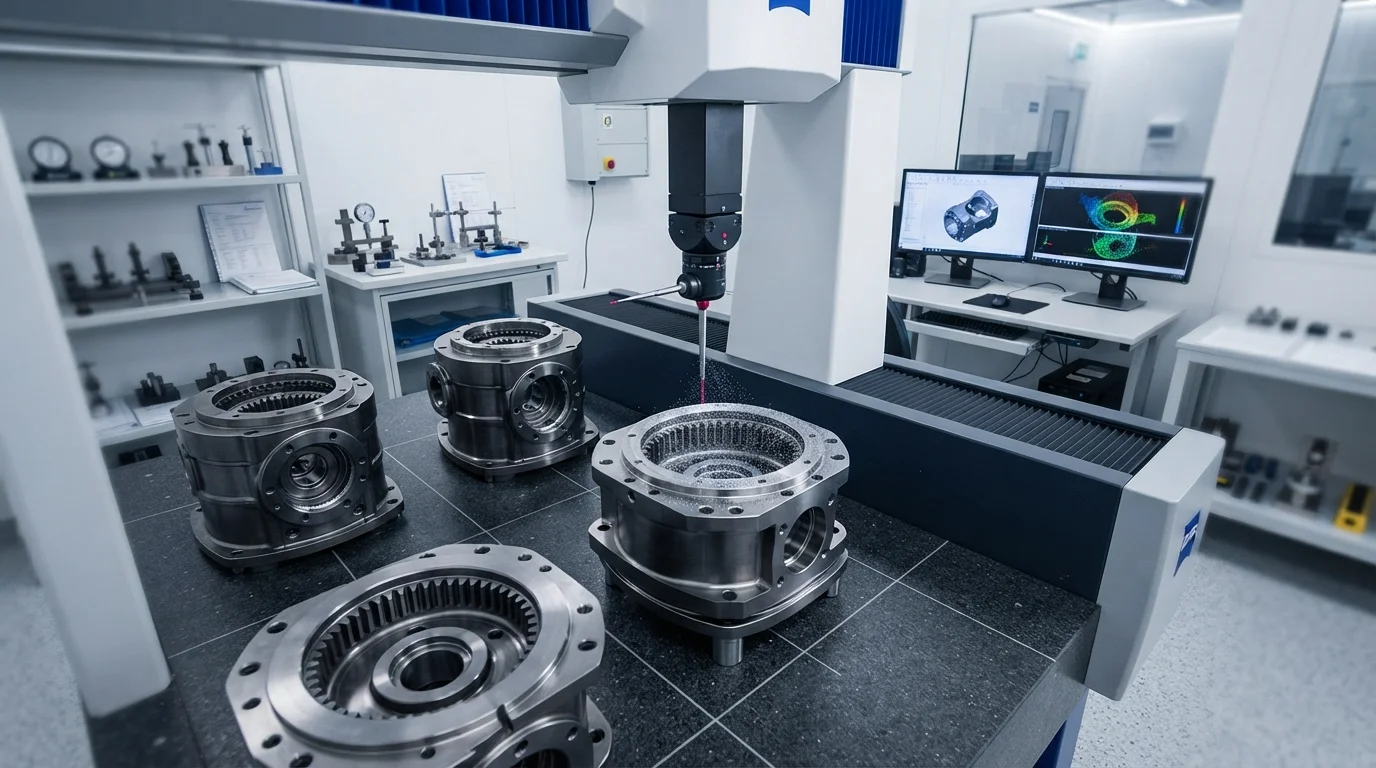
High-payload articulated robot arms operating at maximum acceleration require certified forged raw stock that guarantees 100% isotropic tensile strength and zero internal voids. A certified contract manufacturing partner must maintain rigorous lot traceability, providing authentic Material Test Reports (MTR) verifying chemical spectrometry and mechanical properties for all raw alloy billets, accompanied by complete coordinate measuring machine (CMM) dimensional inspection scans for every serialized joint assembly.
Shop-Floor Quality Auditing and Compliance Maintenance Guidelines
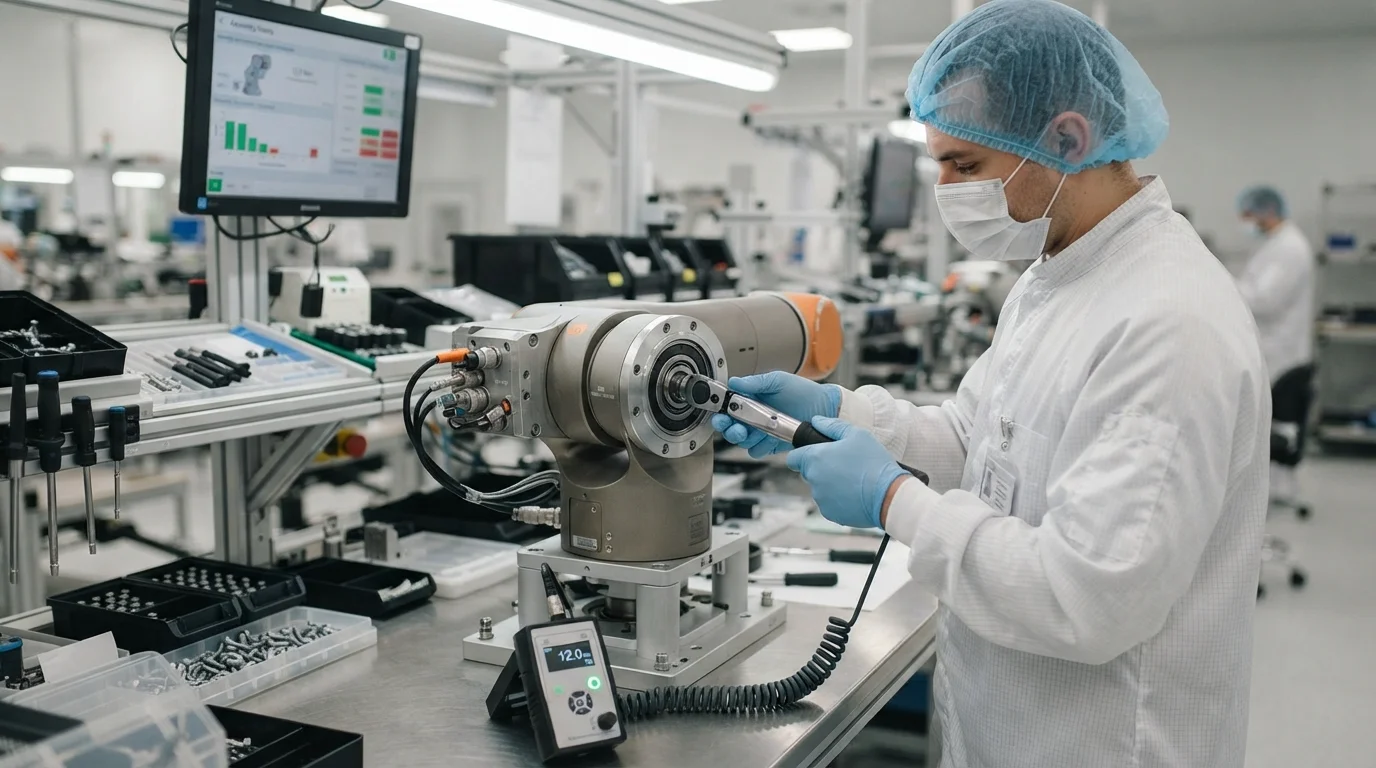
Maintaining continuous compliance across production batches requires disciplined cleanroom assembly practices, automated leak testing, and documented torque calibration records. Preventing joint seal degradation ensures long-term operational airworthiness in the field.
Key quality maintenance protocols include:
- Pressure decay leak testing: Subject assembled IP67 actuator enclosures to calibrated air pressure decay tests (typically 50 kPa hold for 60 seconds) to detect seal defects before shipping.
- Calibrated torque logging: Tighten all structural link fasteners and bearing retaining rings using digital torque drivers with automatic data logging to eliminate human assembly variance.
- Surface finish Ra auditing: Measure O-ring groove sidewall roughness with optical profilometers to ensure surfaces meet strict Ra 0.8 µm limits without cutter marks.
Häufig gestellte Fragen (FAQ)

1. What is the difference between ISO 10218-1 and ISO 10218-2?
ISO 10218-1 specifies safety requirements for the design and construction of the robot arm itself, while ISO 10218-2 covers the integration and safety of the complete robotic work cell system.
2. How does ISO/TS 15066 regulate collaborative robot (cobot) joint design?
ISO/TS 15066 defines maximum allowable transient and quasi-static contact force thresholds across different human body areas, requiring cobots to incorporate low-inertia arm links, smooth rounded geometry, and integrated torque-limiting sensors.
3. What is required to achieve an IP67 rating on a robotic joint?
Achieving IP67 requires precision CNC-machined O-ring grooves with Ra 0.8 µm finishes, continuous liquid-dispensed silicone gaskets, rotary shaft lip seals, and verified pressure decay testing showing zero leakage under 1 meter of water immersion.
4. Why is material lot traceability essential for high-payload robotic arms?
Material lot traceability proves that structural aluminum and steel billets possess verified tensile yield strength and zero internal voids, preventing sudden catastrophic link failure during high-speed industrial acceleration.
5. How do engineers prevent galvanic corrosion between aluminum arms and steel bolts?
Engineers specify Type III hard anodizing on aluminum link surfaces and utilize zinc-nickel plated or passivated stainless steel fasteners with non-conductive washers to isolate dissimilar metals.
6. How does Jucheng Precision support robotics safety and quality compliance?
Jucheng Precision provides 5-axis CNC machining, automated IP67 gasketing, pressure decay leak testing, and complete Zeiss CMM First Article Inspection reporting under certified ISO 9001 and IATF 16949 quality systems.
Why Choose JUCHENG for Your Robotics Sourcing
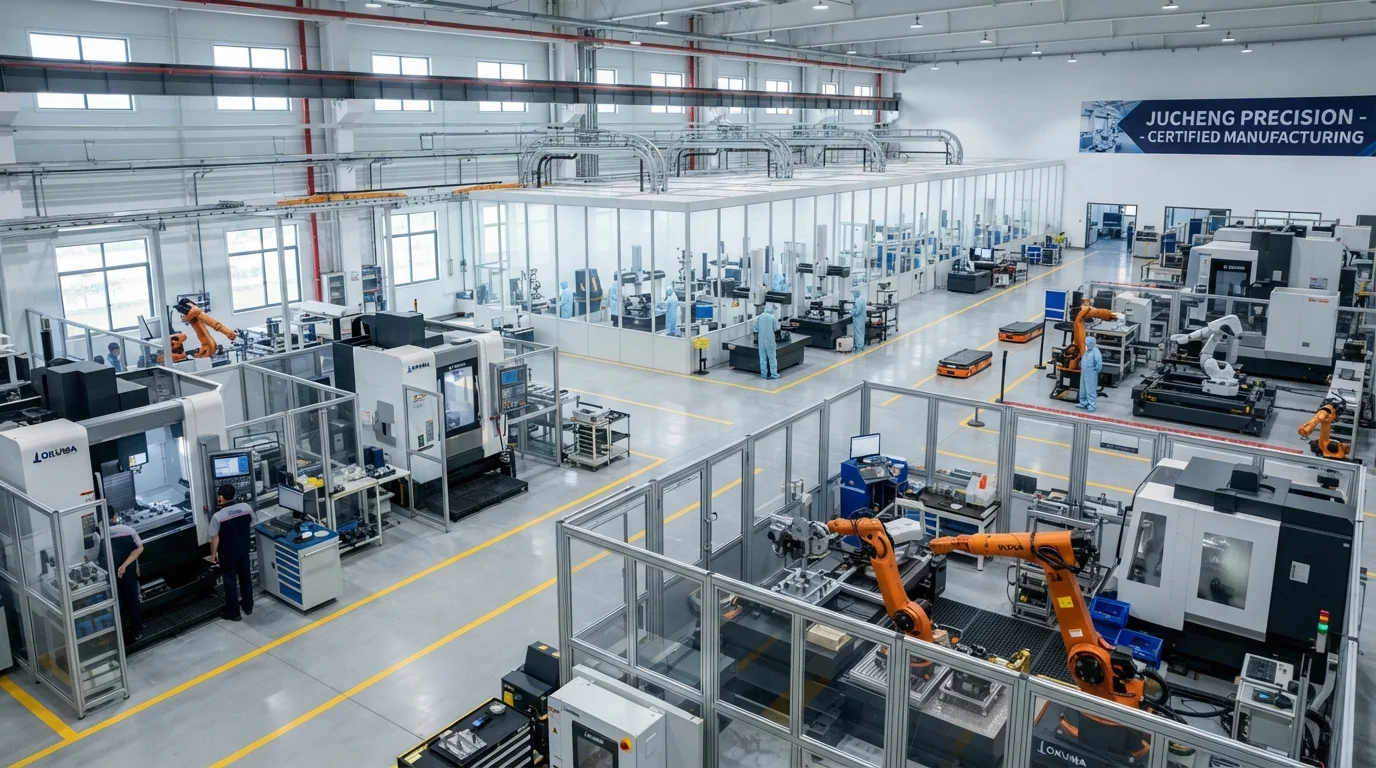
Achieving uncompromising kinematic safety and international market authorization requires an experienced contract manufacturing partner with audit-ready production infrastructure. JUCHENG supports robotics innovators by delivering comprehensive 24-Stunden-kostenlose DFM reviews that analyze bearing bore concentricity, O-ring groove sealing geometries, and structural pocketing ratios prior to cutting metal stock. Founded in Shenzhen in 2012 with an 8,000-square-meter facility in Dongguan, our factory houses 150+ advanced machines, including 25+ high-performance 5-axis Haas and Mazak milling centers alongside dedicated sheet metal and rapid tooling cleanrooms [9.10].
Backed by ISO 9001, ISO 14001, ISO 13485, and IATF 16949 certifications, our engineering teams ensure that complying with rigorous robotics manufacturing standards achieves verified IP67 sealing integrity, sub-micron machining precision, full Material Test Report (MTR) traceability, and absolute batch consistency.
Ready to Manufacture Your Robotics Hardware to Certified Safety Standards?
Laden Sie noch heute Ihre 3D-Modelle hoch, um sofortiges Feedback, wettbewerbsfähige Preise und eine professionelle DFM-Analyse von unseren erfahrenen Ingenieurexperten zu erhalten. Lassen Sie JUCHENG Ihre komplexen Designs mit unvergleichlicher Geschwindigkeit und Zuverlässigkeit zum Leben erwecken!

