


Implant materials are often introduced as a shortlist of titanium, stainless steel, cobalt-chromium, PEEK, ceramics, and bioresorbable polymers. That list is useful but incomplete. Real failures emerge from interfaces: material and tissue, implant and instrument, coating and substrate, fastener and thread, clean surface and manufacturing residue, or a polymer and the process history that changed it.
Material selection for an implantable device is a product-specific, risk-based responsibility. This engineering overview does not approve a material for clinical use. It shows how design and manufacturing teams can organize the questions, prototypes, supplier controls, and evidence needed before final qualification.
Contents
Treat the Material as Part of a System
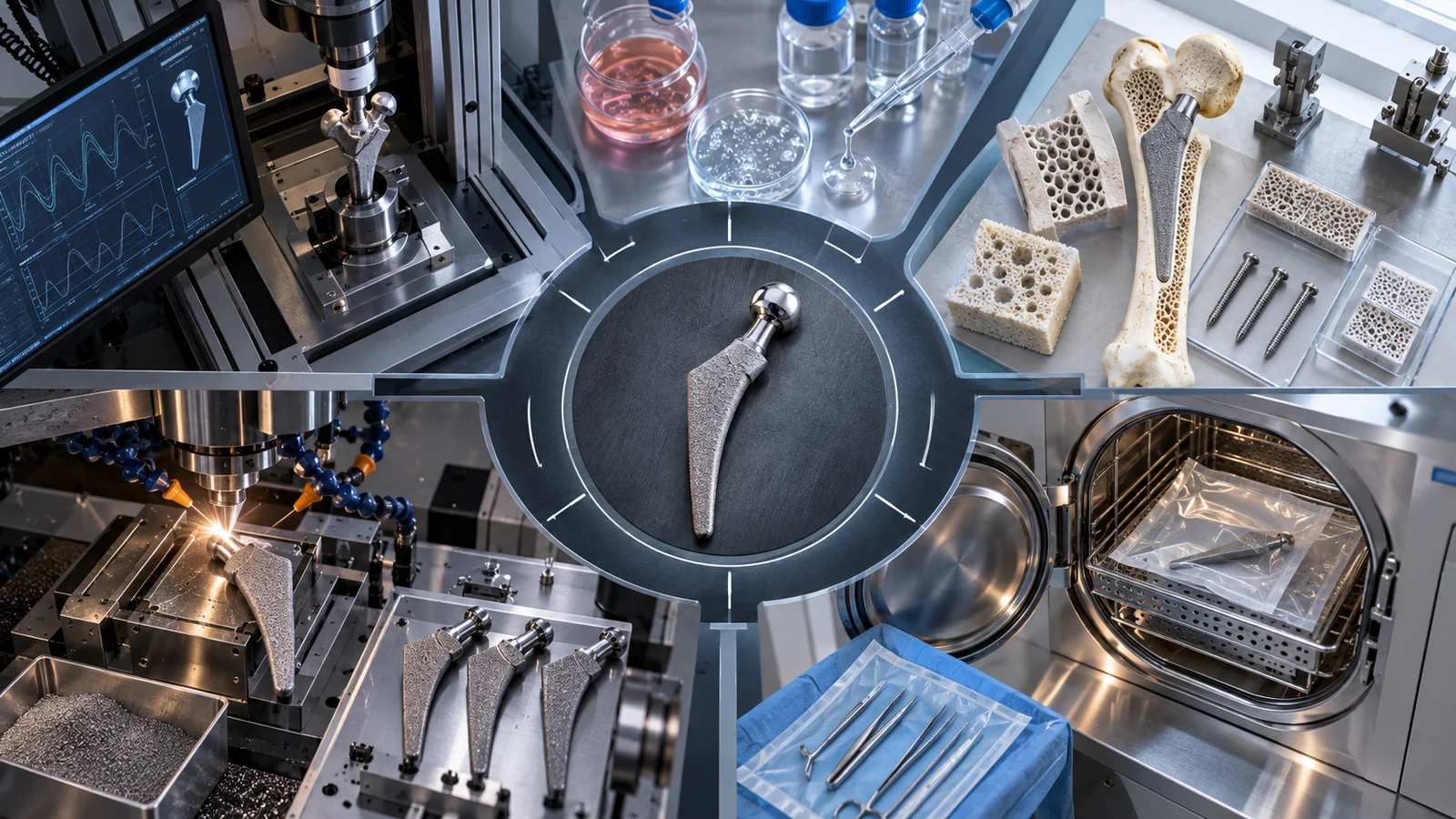
Start with intended function, anatomical environment, contact duration, load path, motion, imaging needs, sterilization, delivery method, and removal or revision scenario. Then describe the interfaces. A strong bulk material may still perform poorly if its surface creates wear debris, its modulus changes load transfer, its geometry concentrates stress, or its assembly partner drives galvanic behavior.
The material question belongs under the wider medical device materials framework, but implantable applications demand deeper biological, mechanical, chemical, and regulatory assessment. The exact finished device, processing residues, degradation products, and contact profile matter more than the generic material name.
Frame selection with four linked models
- Mechanical model: static load, fatigue, impact, wear, creep, and fixation.
- Biological model: contact type, duration, local environment, and degradation or wear products.
- Manufacturing model: forming, machining, additive manufacturing, heat treatment, finishing, cleaning, and sterilization.
- Clinical-use model: implantation, instrumentation, imaging, revision, and lifecycle exposure.
What the Major Material Families Offer
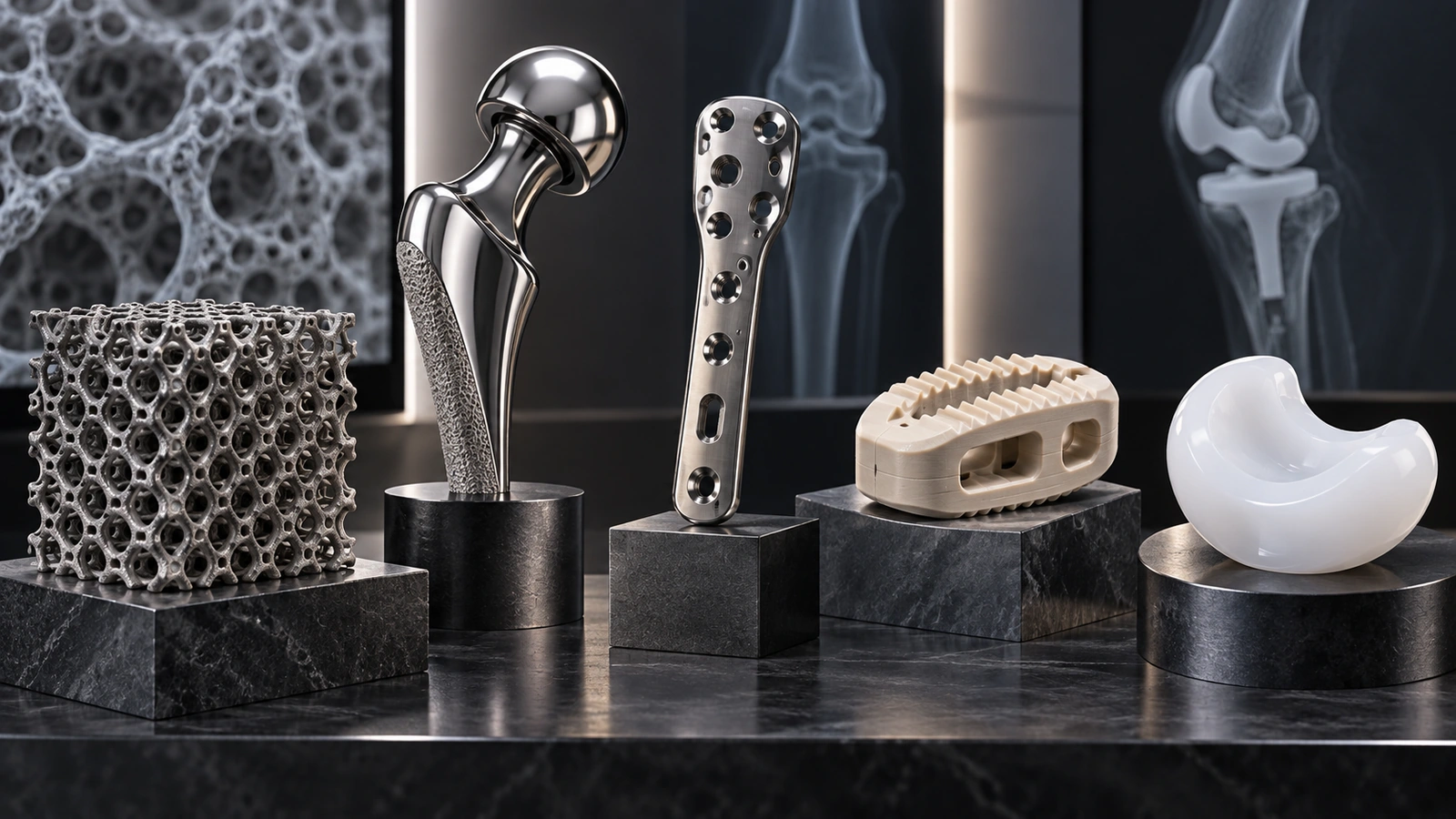
| Familie | Potential strengths | Questions that remain |
|---|---|---|
| Titanium alloys | Strength-to-weight, corrosion behavior, established processing routes | Fatigue, fretting, surface state, machining or additive history, mating materials |
| Stainless steels | Strength, manufacturability, availability, familiar instrumentation | Corrosion, inclusions, passivation, cold work, long-term application fit |
| Cobalt-chromium alloys | Wear resistance and high strength in selected applications | Machining difficulty, modulus, surface integrity, debris, alloy-specific controls |
| PEEK and related polymers | Radiolucency, tailored stiffness, machining and molding options | Grade, crystallinity, reinforcement, creep, surface treatment, sterilization |
| Ceramics | Wear, hardness, chemical stability in selected uses | Brittleness, flaw sensitivity, proof testing, joining, dimensional processing |
| Bioresorbable polymers | Temporary function with designed degradation potential | Degradation rate, storage, moisture, processing history, by-products, strength retention |
The table is a question generator, not a ranking. A lower-cost or easier-to-machine material may be the correct choice if it satisfies the complete requirement set. A high-performance material can be a poor choice when its processing controls, inspection, or evidence cannot be maintained.
Manufacturing History Changes Performance
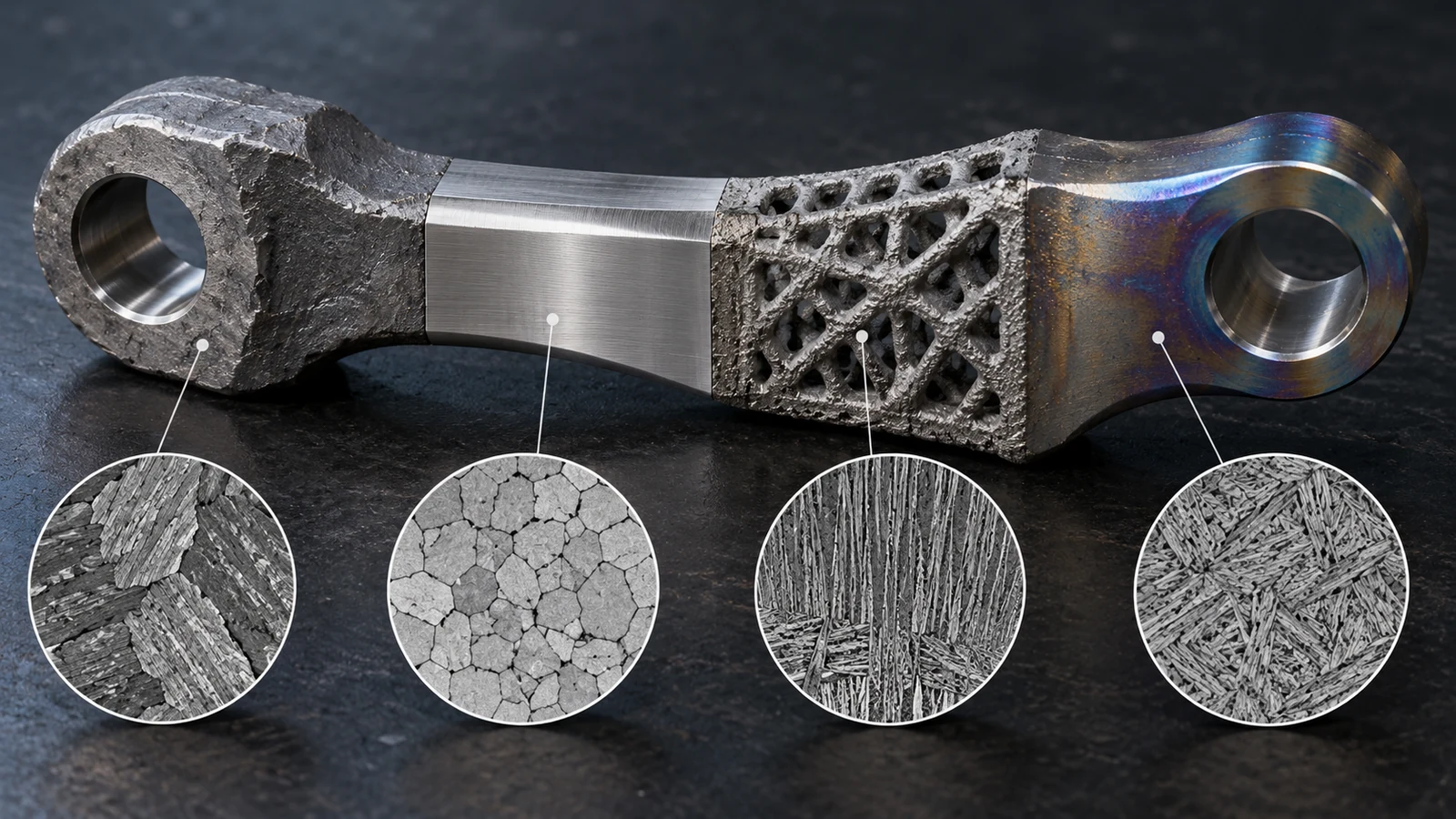
The approved object is not simply titanium or PEEK; it is the exact grade transformed by a defined sequence. Forging, bar production, additive build orientation, heat treatment, machining, polishing, passivation, coating, cleaning, packaging, and sterilization can change microstructure, residual stress, surface chemistry, dimensional stability, and fatigue behavior.
Machining parameters matter at surfaces where fatigue or contact begins. Excess heat, aggressive tool wear, burr removal, embedded media, or uncontrolled polishing can alter the final state. For polymers, stock-shape production, annealing, machining heat, moisture, crystallinity, and molding conditions can influence dimensions and performance.
A controlled manufacturing route should identify each transformation and the evidence created. The wider medical device manufacturing processes overview helps teams map where material state changes across the chain.
The Surface Is a Separate Design Decision
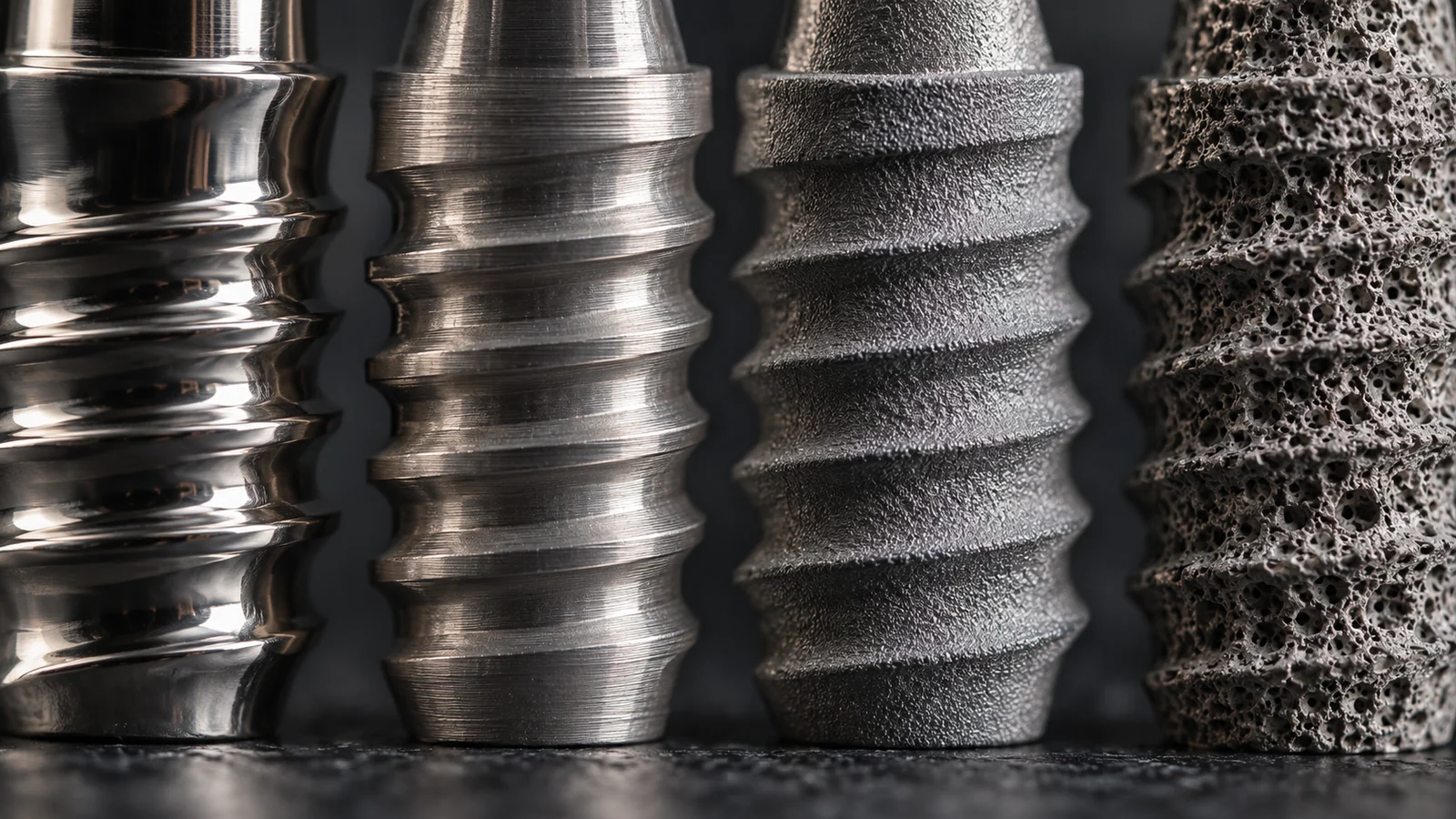
Bulk material properties do not describe the surface that interacts with tissue, instruments, coatings, or cleaning processes. Roughness, waviness, oxide state, contamination, residual media, coating adhesion, edge condition, and local damage can control wear, corrosion, fixation, or biological response.
Specify surfaces by function. A bearing interface, bone-contact region, polished neck, screw thread, sealing land, and instrument connection may require different controls on the same component. Avoid one global roughness value when local texture and direction matter.
Surface-development questions
- Which areas are polished, textured, coated, passivated, masked, or left as machined?
- How are transitions and edges controlled?
- What measurement represents the functional surface?
- Can cleaning remove process residue without changing the intended state?
- How are handling and packaging prevented from damaging the surface?
- What change in media, chemistry, or supplier requires reassessment?
Prototype Evidence Has Boundaries
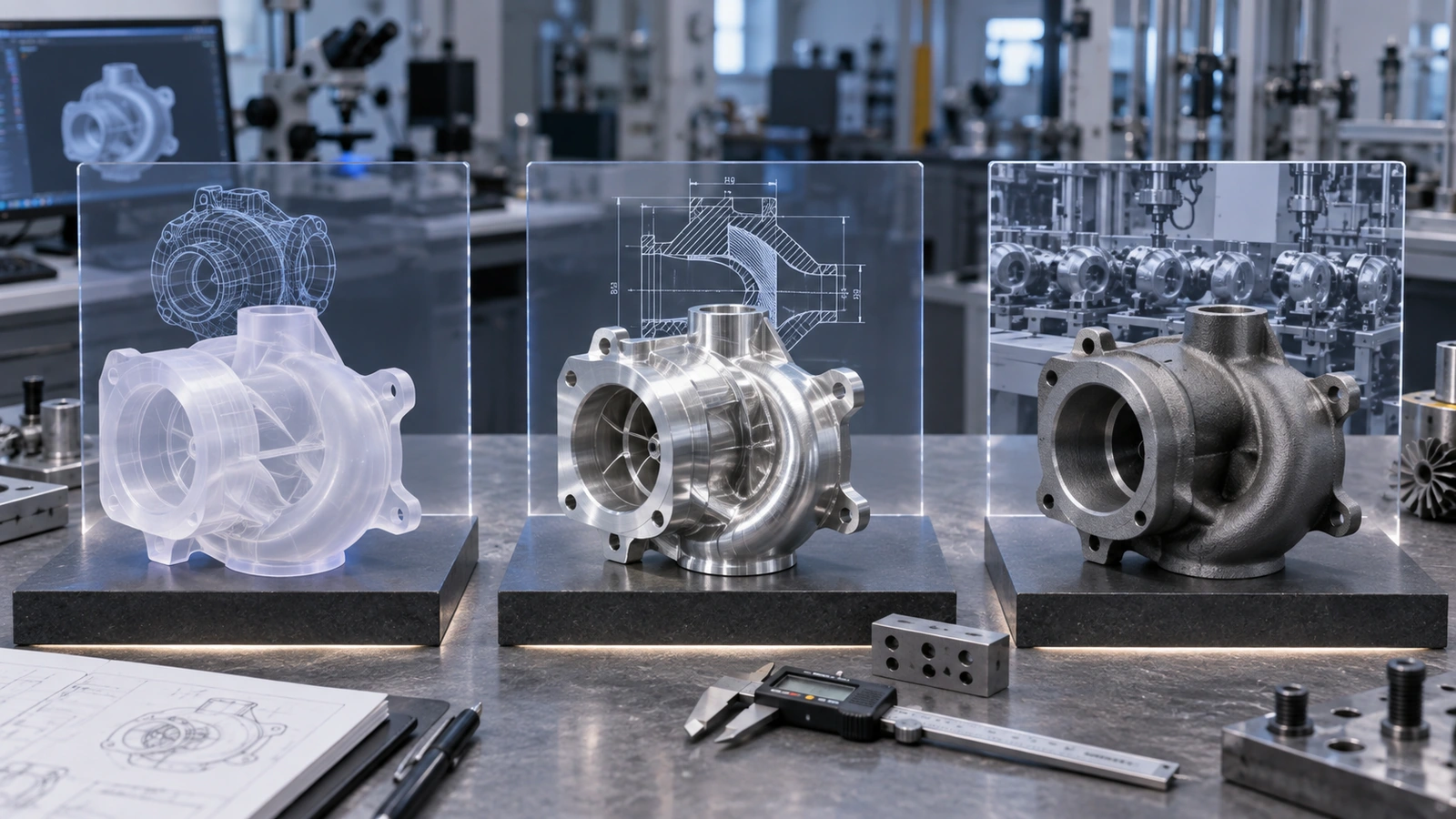
A prototype can answer geometry, assembly, surgical-access, instrumentation, and load-path questions. It may not represent the final material state, production process, cleaning, surface, or sterilization. The test report should state those boundaries so exploratory evidence is not mistaken for final qualification.
Early metal or polymer machining is useful because it allows fast design changes and realistic interfaces. Additive manufacturing can explore porous or complex geometry but introduces build orientation, support removal, internal-feature inspection, and post-processing considerations. Molded polymer evaluation may be necessary when flow, crystallinity, fiber orientation, weld lines, or production residual stress affect performance.
Use the Prototypenherstellung medizinischer Geräte route to answer one declared uncertainty at a time. That creates a traceable progression from concept evidence to production-representative evidence.
Traceability Begins With the Exact Grade
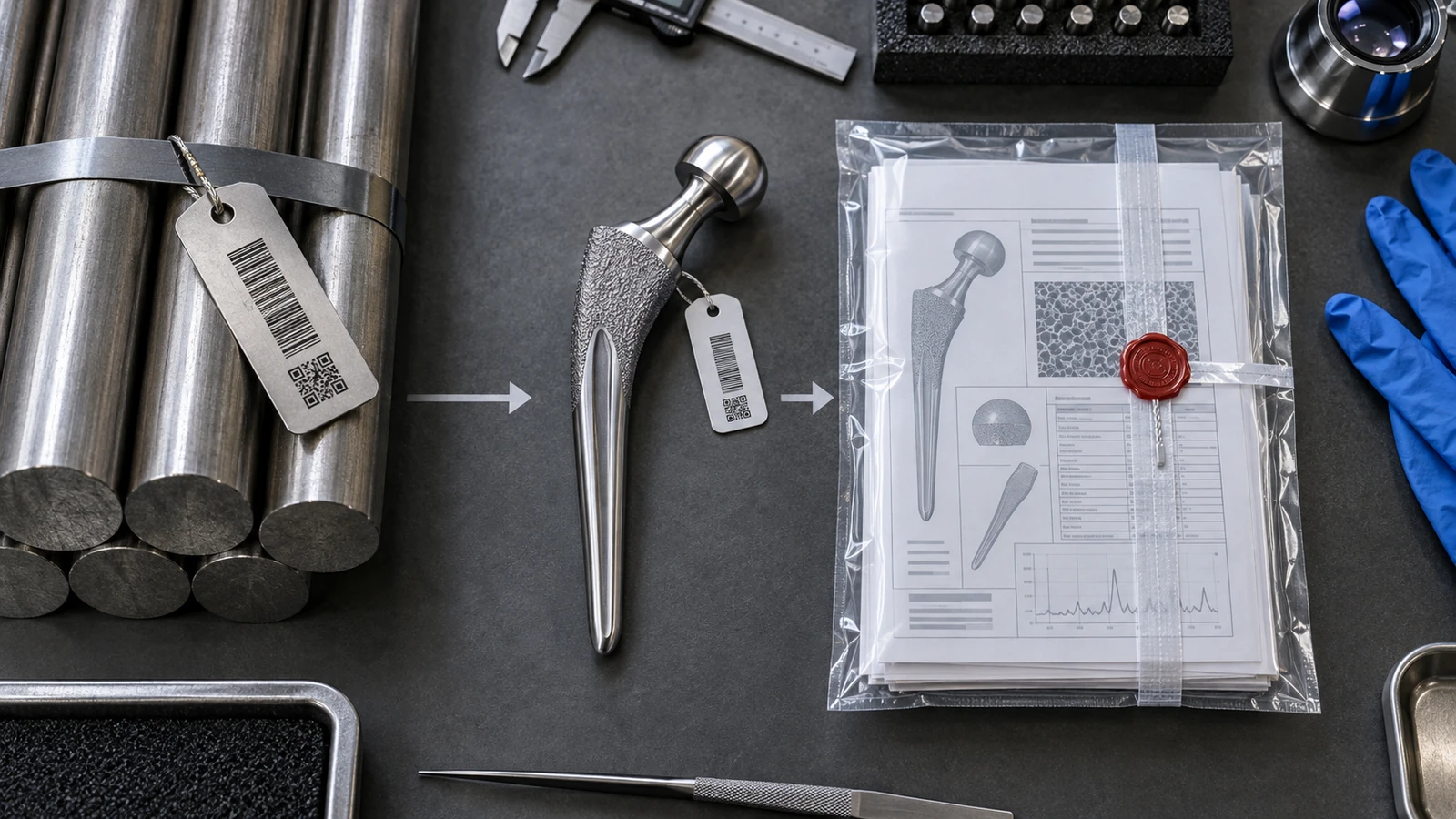
Material controls should identify standard, grade, manufacturer where necessary, product form, heat or lot, condition, dimensions, and required certificates. Define approved distributors, storage, shelf-life controls, and substitution authority. Incoming verification should be proportionate to risk and supplier confidence.
The finished-device biological evaluation should consider all patient-contacting materials, manufacturing processes, residues, packaging, and degradation information. The FDA’s ISO 10993-1 guidance describes a risk-based framework rather than treating a material certificate as complete evidence of biological safety.
Control principle: if a change can alter the finished material, surface, residue, degradation, or contact profile, it deserves documented impact assessment.
How Jucheng Can Support Development
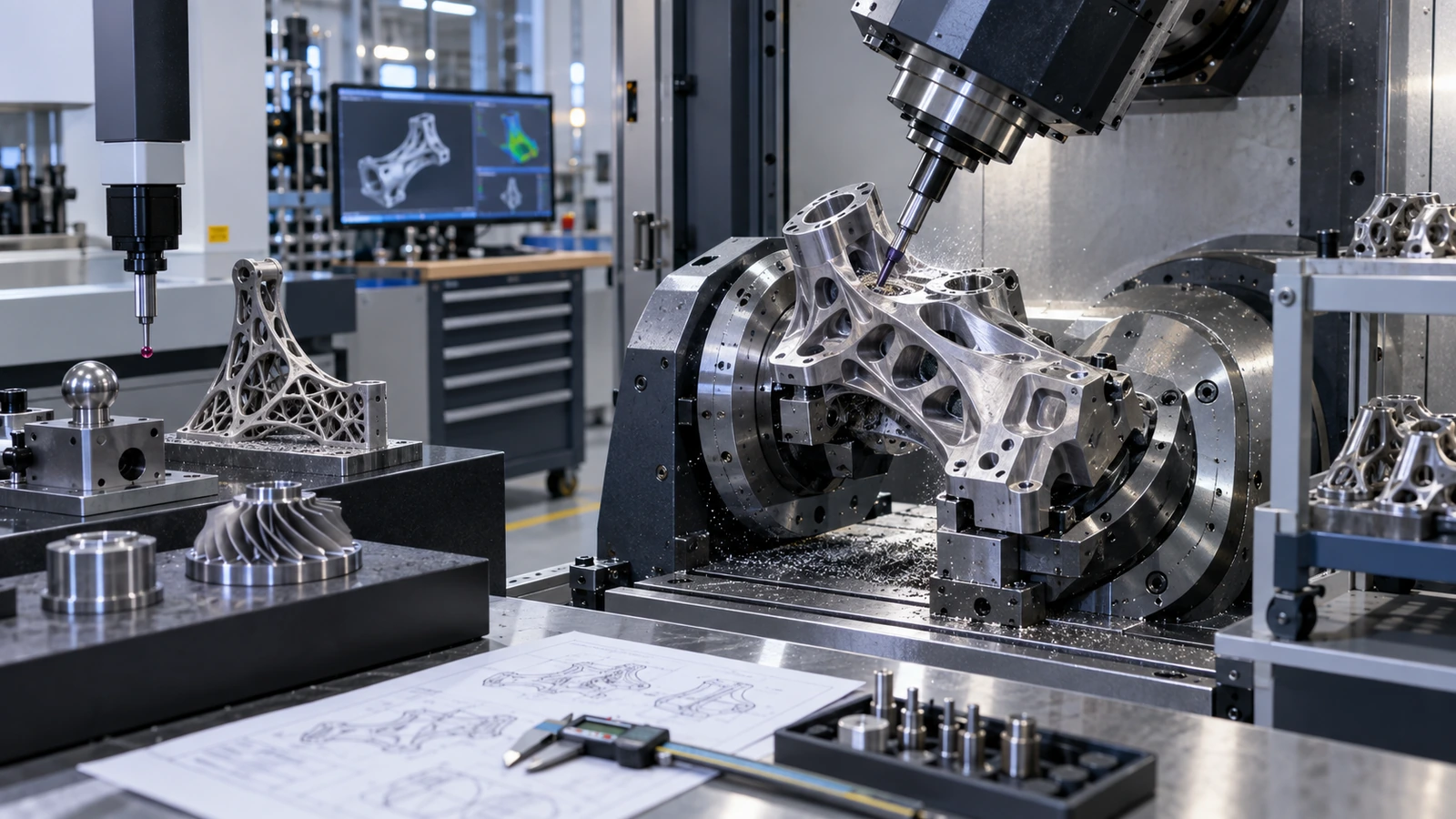
Jucheng Precision can support non-clinical development, prototypes, fixtures, instruments, housings, and production components through CNC machining, additive manufacturing, molding, tooling, finishing, inspection, and assembly. For implant-related projects, the required material, process, documentation, and intended evidence should be clearly defined by the customer and reviewed before work begins.
Useful inputs include exact material grade, drawing revision, critical surfaces, manufacturing stage, quantities, test purpose, finish, cleaning, traceability, and certification requirements. Jucheng can provide manufacturability feedback and help align the prototype route with the question the build must answer.
Implant Material FAQ

What is the best material for a medical implant?
There is no universal best material. Selection depends on intended use, anatomy, load, motion, contact duration, imaging, degradation, surface, manufacturing route, sterilization, clinical evidence, and regulatory strategy.
Is titanium always biocompatible?
Titanium alloys are widely used, but suitability cannot be concluded from the word titanium alone. Exact alloy, manufacturing state, surface, residues, contact, degradation, and finished-device evaluation matter.
Can PEEK replace metal in an implant?
PEEK may offer useful properties in selected applications, but replacement requires product-specific mechanical, biological, imaging, manufacturing, and clinical evaluation. Differences in stiffness, fixation, wear, surface behavior, and process history must be addressed.
Why does machining matter if the bulk material is certified?
Machining defines geometry and influences the surface, residual stress, burrs, heat, cleanliness, and fatigue-sensitive features. A certificate confirms the incoming material identity or properties; it does not qualify the finished component.
Can prototype test results support the final device?
They can support the questions represented by the prototype. Differences in material grade, process, geometry, surface, cleaning, sterilization, or scale must be documented and addressed before applying results to the final device.
Qualify the Finished Material System
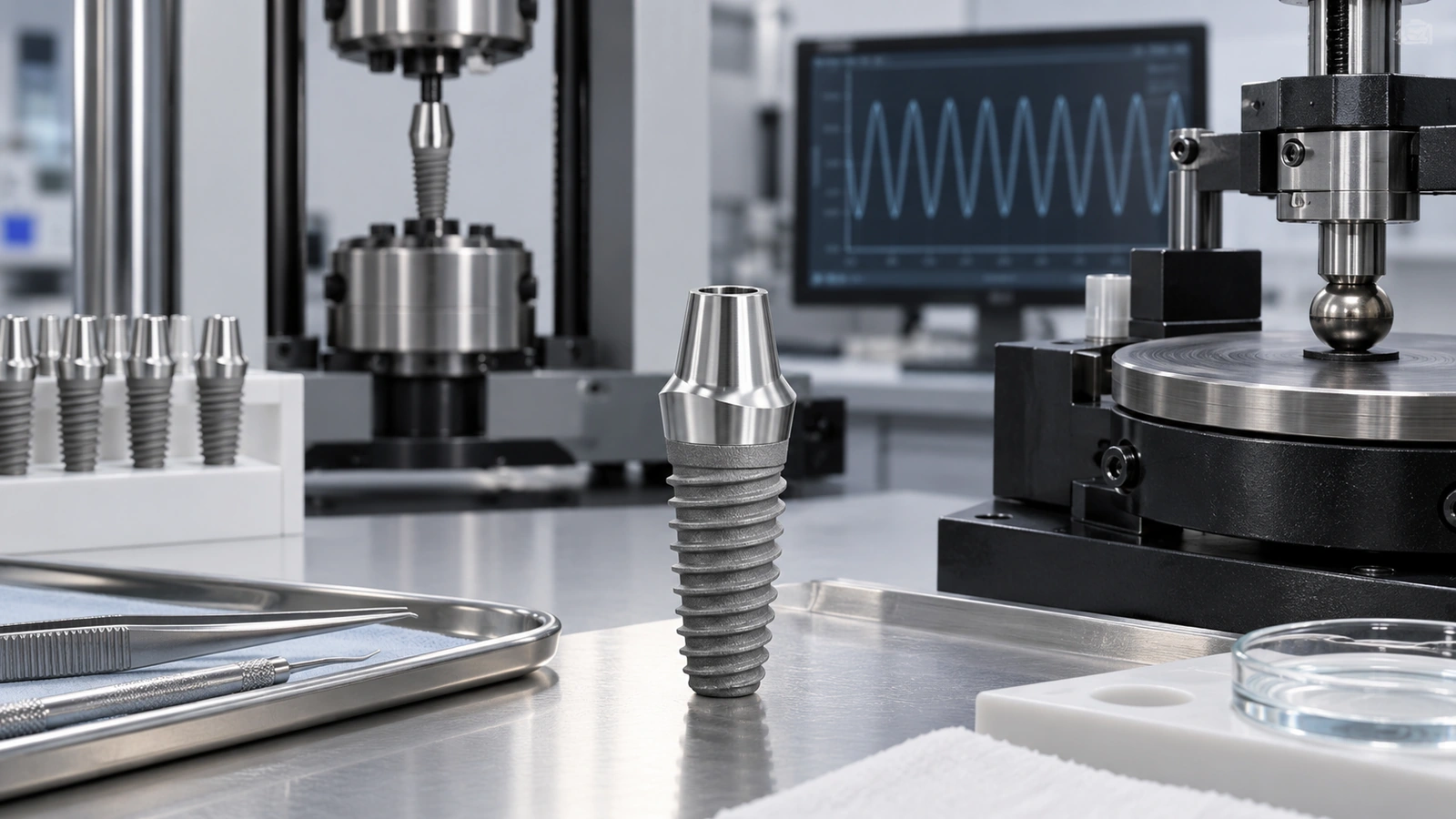
Implant materials should be evaluated as finished systems shaped by geometry, manufacturing, surface, cleaning, packaging, sterilization, and use. The generic family begins the discussion; it does not close the decision.
Send Jucheng your development files and material requirements for a manufacturability review and prototype or component quotation.

