


Steel, aluminum, and stainless steel can all make effective battery energy storage enclosures, but they solve different problems. The best material is the one that meets the structural, corrosion, thermal, manufacturing, and cost targets of a specific installation—not the material with the highest specification on paper.
This guide compares common BESS enclosure materials from a manufacturing perspective. It focuses on stationary cabinets and containerized systems, where panel stiffness, outdoor exposure, sealing surfaces, lifting loads, coating durability, and production volume matter as much as raw material properties.
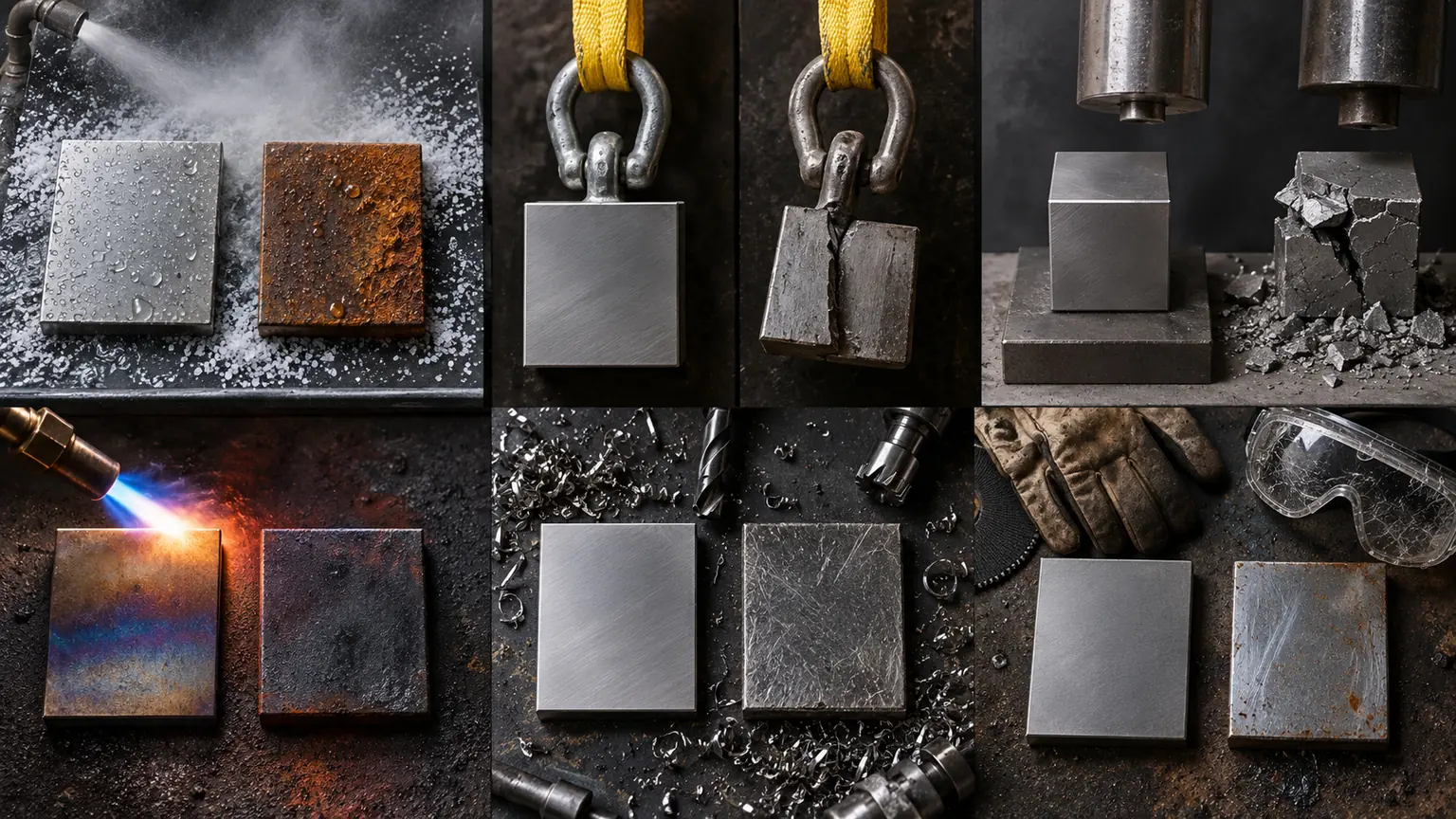
The Short Answer: Match Material to the Dominant Risk
| Priority | Often-considered material | Why | Watch for |
|---|---|---|---|
| Low cost and high stiffness | Coated carbon steel | Strong, familiar, widely fabricated | Coating damage, weight, corrosion at seams |
| Lower mass | Aluminiumlegierung | Lightweight and naturally corrosion resistant | Lower elastic modulus, galvanic interfaces, weld distortion |
| Aggressive environment | Edelstahl | Durable corrosion resistance | Material cost, forming load, finish control |
| Balanced system | Mixed construction | Different materials used where they add value | Galvanic corrosion, bonding, supply complexity |
Material selection should follow a defined operating envelope: indoor or outdoor use, humidity and salt exposure, temperature range, cabinet size, installed mass, lifting method, service life, finish expectations, and annual quantity. The enclosure design requirements should be settled before the bill of materials is frozen.
Carbon Steel: The Practical Baseline
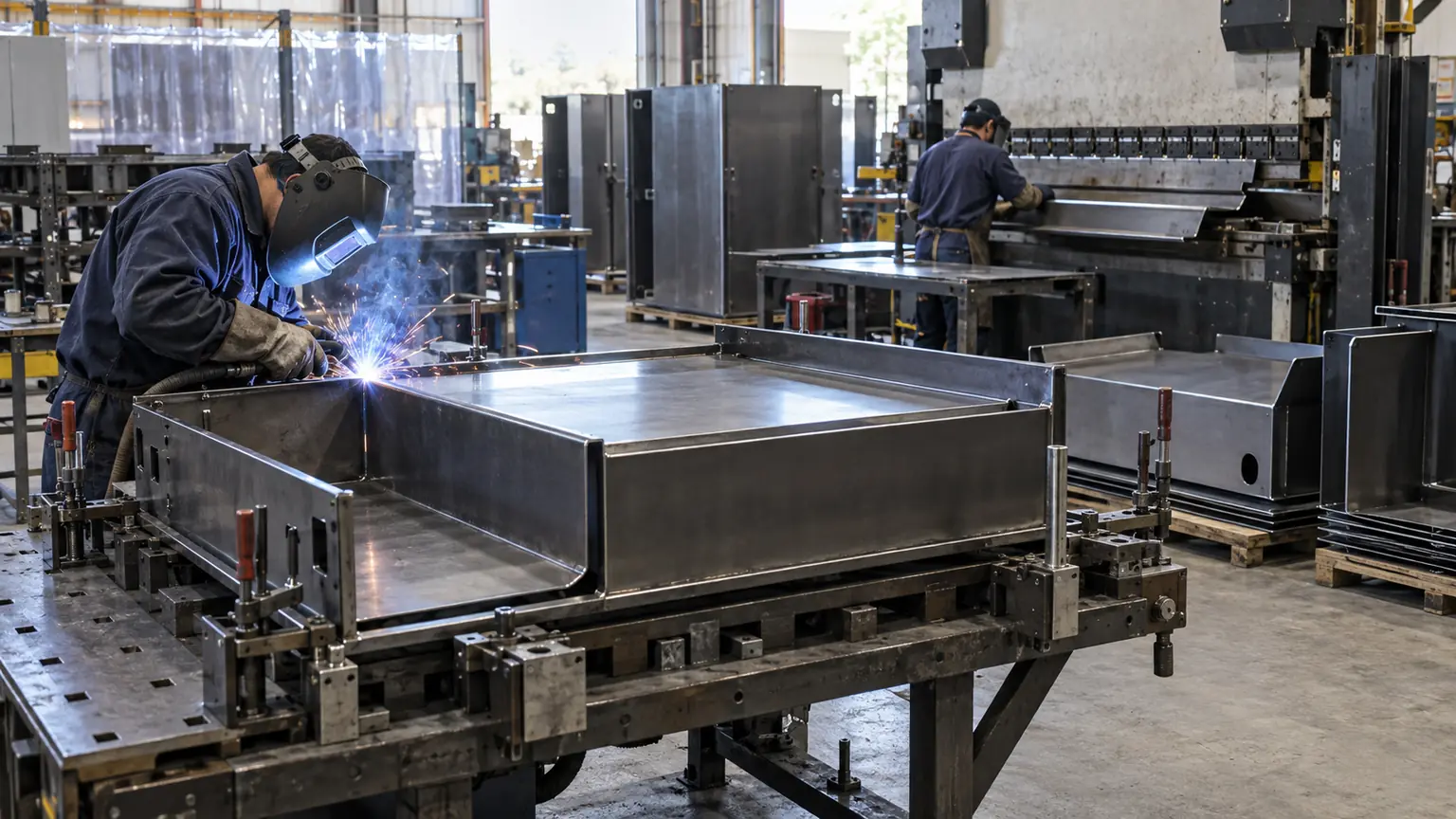
Carbon steel is often the baseline for large stationary cabinets because its stiffness helps control panel vibration, door alignment, and frame deflection. It is economical, easy to source, and compatible with laser cutting, bending, welding, inserts, and powder coating. A thinner steel panel can sometimes feel stiffer than a thicker aluminum panel because steel has a higher elastic modulus.
Its weakness is not strength but corrosion management. Edges, welds, threaded features, scratches, water traps, and coating holidays deserve attention. The design should shed water, protect seam geometry, and avoid relying on a perfect cosmetic coating to correct poor drainage.
When steel makes sense
- Large stationary enclosures where weight is acceptable.
- Frames supporting concentrated battery rack loads.
- Projects requiring predictable welding and economical production.
- Installations where a controlled coating system is practical.
Aluminum: Less Weight, Different Structural Logic
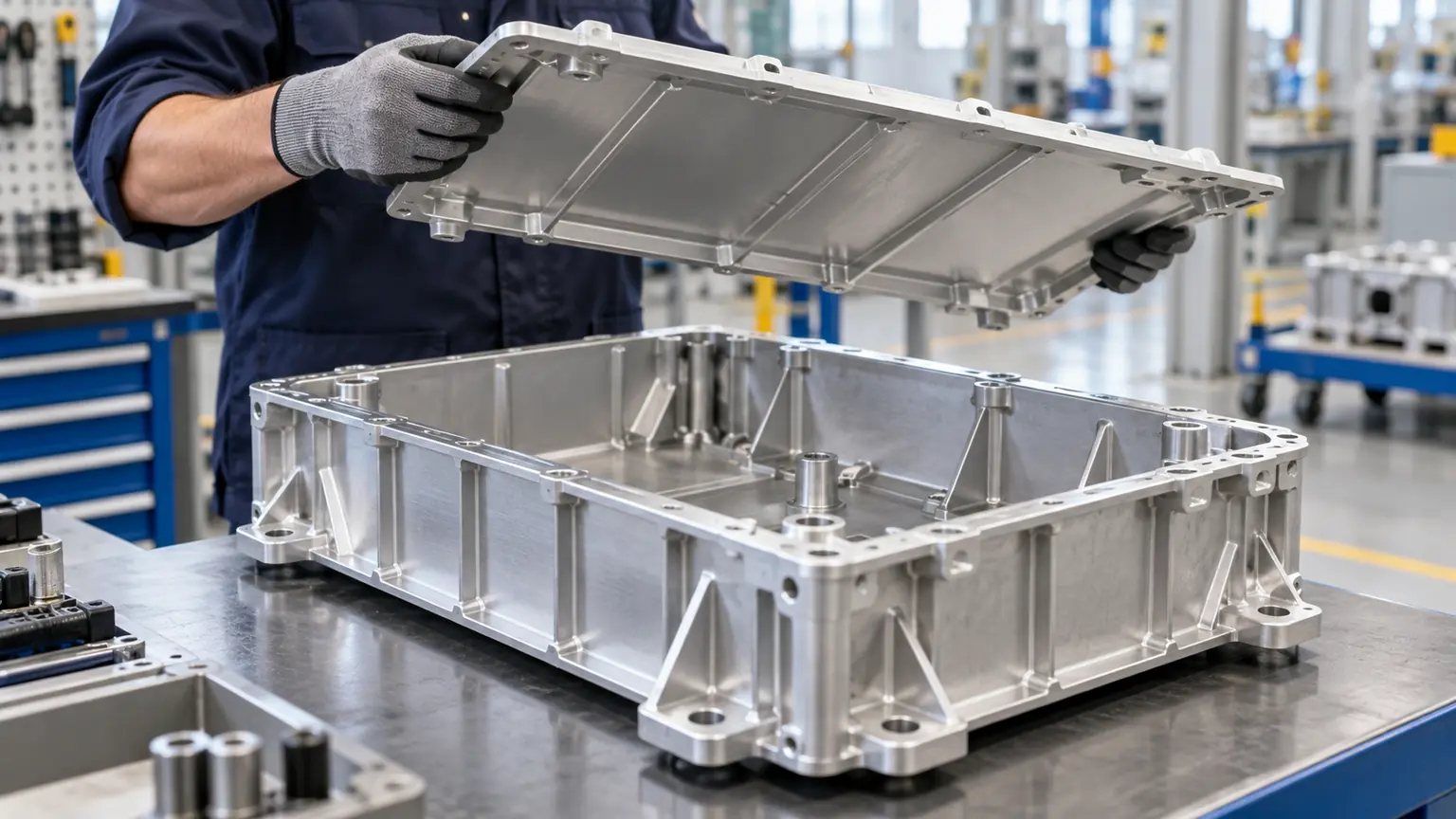
Aluminum reduces enclosure mass and resists atmospheric corrosion without depending entirely on an applied coating. It is attractive for wall-mounted units, modular cabinets, removable panels, and systems with frequent handling. Its thermal conductivity can also help spread heat, although the complete thermal path and external convection still determine cooling performance.
Substituting aluminum for steel is not a one-to-one gauge change. Because aluminum is less stiff, broad panels may require returns, ribs, beads, bonded structures, or thicker sections. Weld sequence and heat input influence flatness. Fasteners and mating metals must be reviewed for galvanic compatibility, especially in wet or salty conditions.
Where machined heat spreaders, cold plates, or precision mounting blocks join the enclosure, CNC-Bearbeitung can create controlled flatness, sealing grooves, and threaded interfaces that are difficult to hold in formed sheet alone.
Stainless Steel Earns Its Cost in Harsh Locations
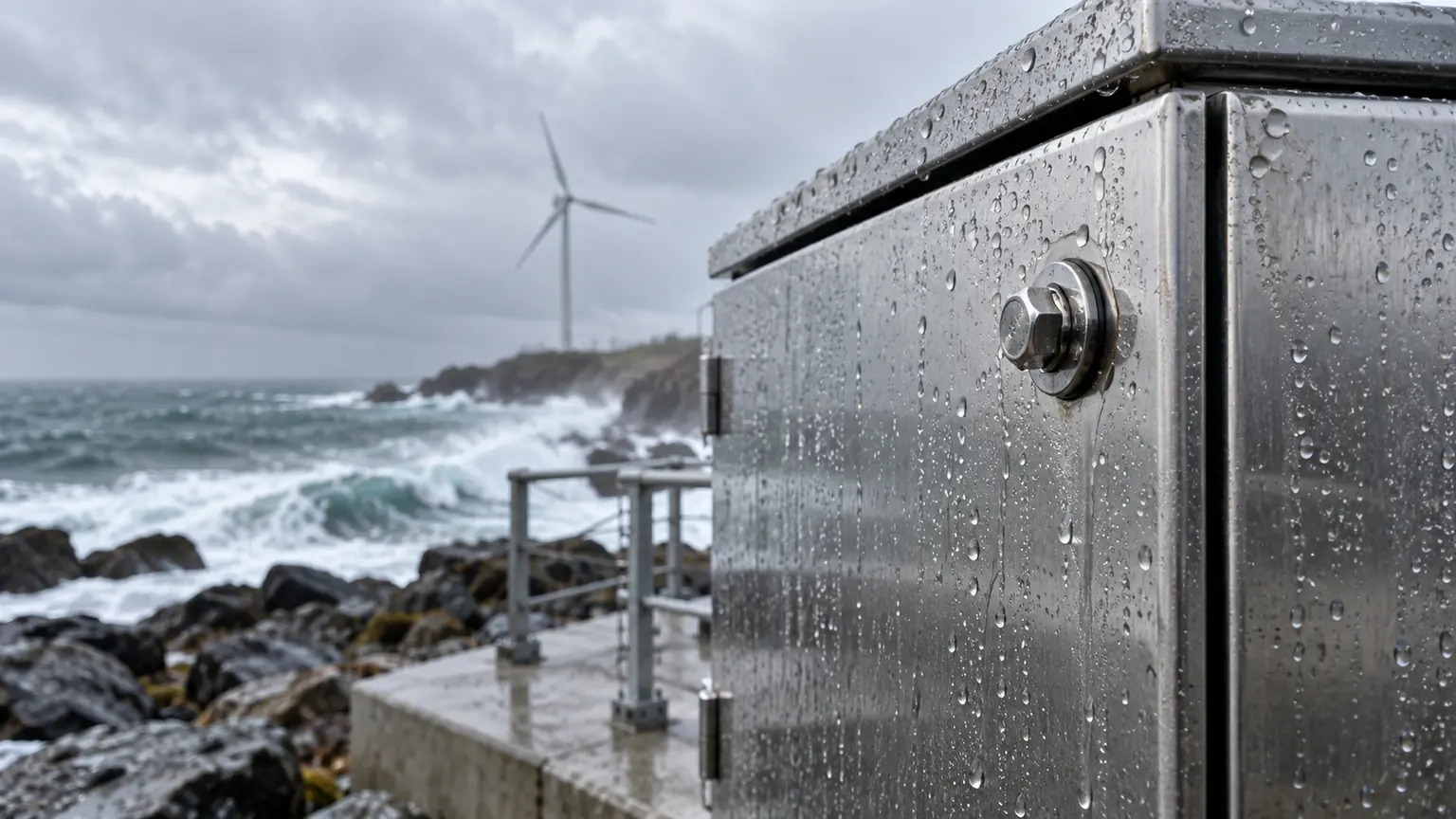
Stainless steel is considered when long-term corrosion resistance, washdown exposure, coastal air, or demanding appearance outweighs material and forming cost. Grade selection still matters; “stainless” is not a single corrosion rating. Surface finish, fabrication contamination, weld treatment, drainage, and chloride exposure all affect real performance.
Forming loads are higher than for mild steel, springback can be more pronounced, and visible surfaces can show handling marks. Fabrication planning should define grain direction, protective film, weld finishing, and the boundary between cosmetic and functional surfaces.
Mixed-Material Construction Can Be the Best Answer
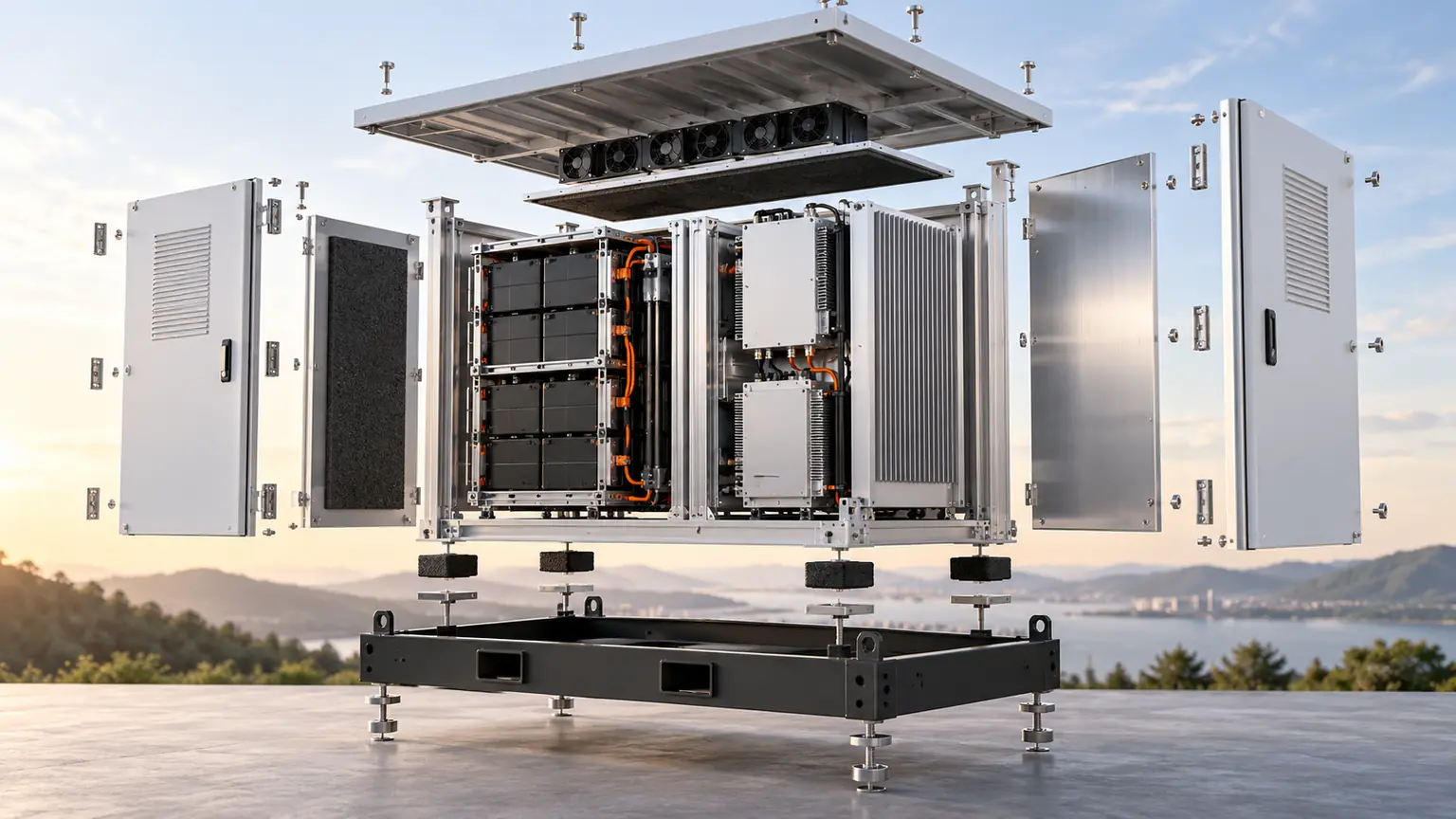
A BESS enclosure does not need one material everywhere. A coated steel base can carry rack loads, aluminum doors can reduce handling force, stainless cable plates can resist local exposure, and polymer ducts can guide airflow. This functional approach puts cost and performance where they matter.
The penalty is interface management. Dissimilar metals in the presence of an electrolyte can create galvanic corrosion. Isolating washers, coatings, sealants, compatible fasteners, drainage, and a deliberate bonding strategy may be required. Grounding and electromagnetic requirements must not be compromised by electrical isolation details.
Early mixed-process prototypes are useful because they reveal tolerance stack-up between formed panels, machined components, seals, and fasteners. Jucheng Precision’s prototyping service can combine these manufacturing routes in a single engineering build.
Coating and Fabrication Can Change the Material Decision
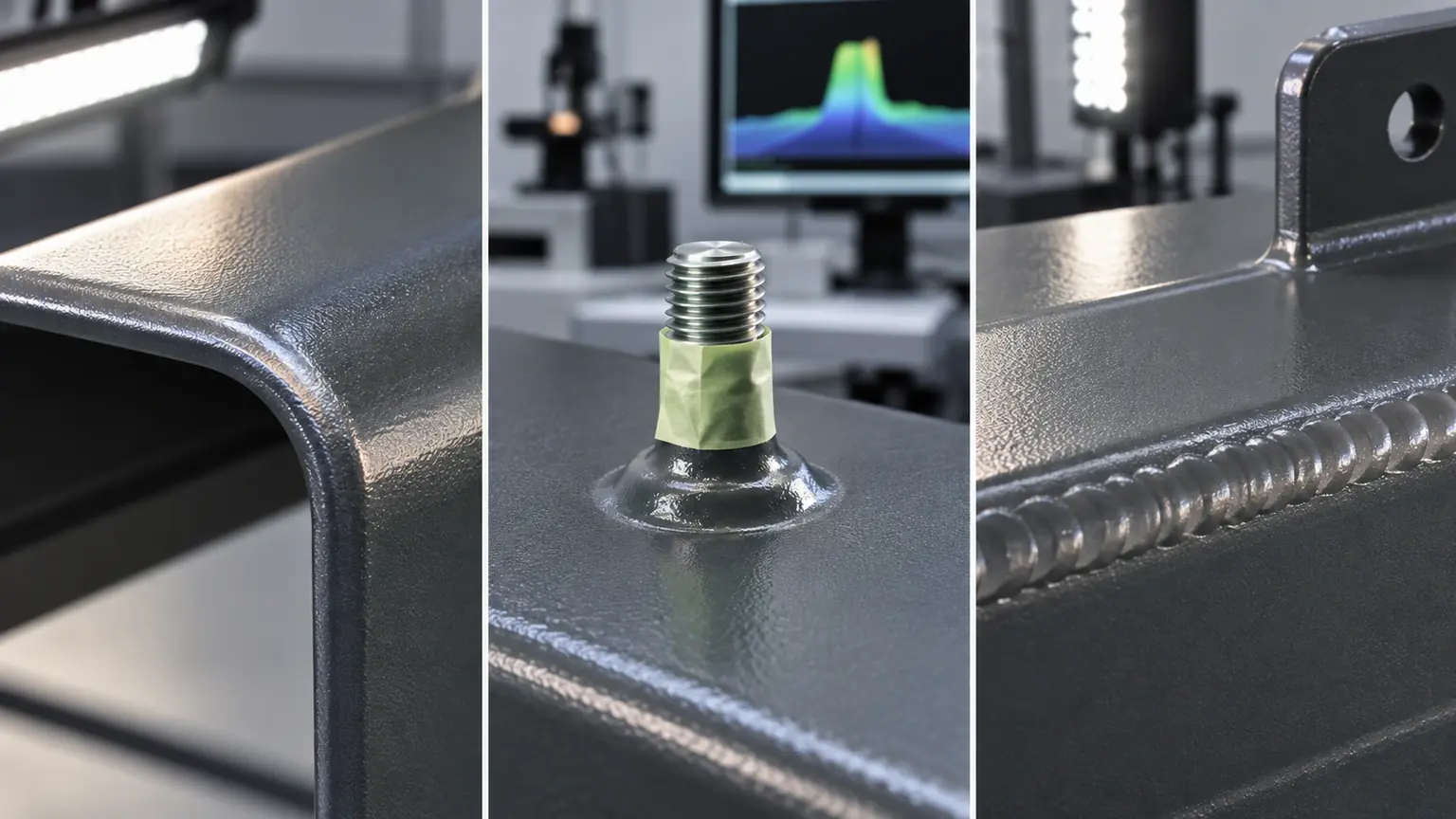
Material data sheets describe clean specimens; enclosures fail at fabricated details. Bending can crack an unsuitable coating. Welding changes local microstructure and flatness. Grinding can remove protective layers. Press-fit hardware can damage finishes. Masking, grounding studs, gasket lands, and cosmetic faces all need process-specific instructions.
For carbon steel, pretreatment and coating coverage are part of corrosion performance. For aluminum, conversion coating, anodizing, or powder coating may support appearance and environmental needs. For stainless steel, passivation or surface restoration may be required after fabrication. A qualified surface finishing process should be selected with the base metal, exposure, electrical bonding, and appearance criteria in mind.
A useful material qualification sample
Before full production, build a representative coupon or corner assembly that includes the actual sheet, bend radius, weld, fastener, coating, gasket contact, and edge condition. This sample is more informative than a flat painted panel because it contains the manufacturing features most likely to fail.
Questions Buyers Ask About BESS Enclosure Materials
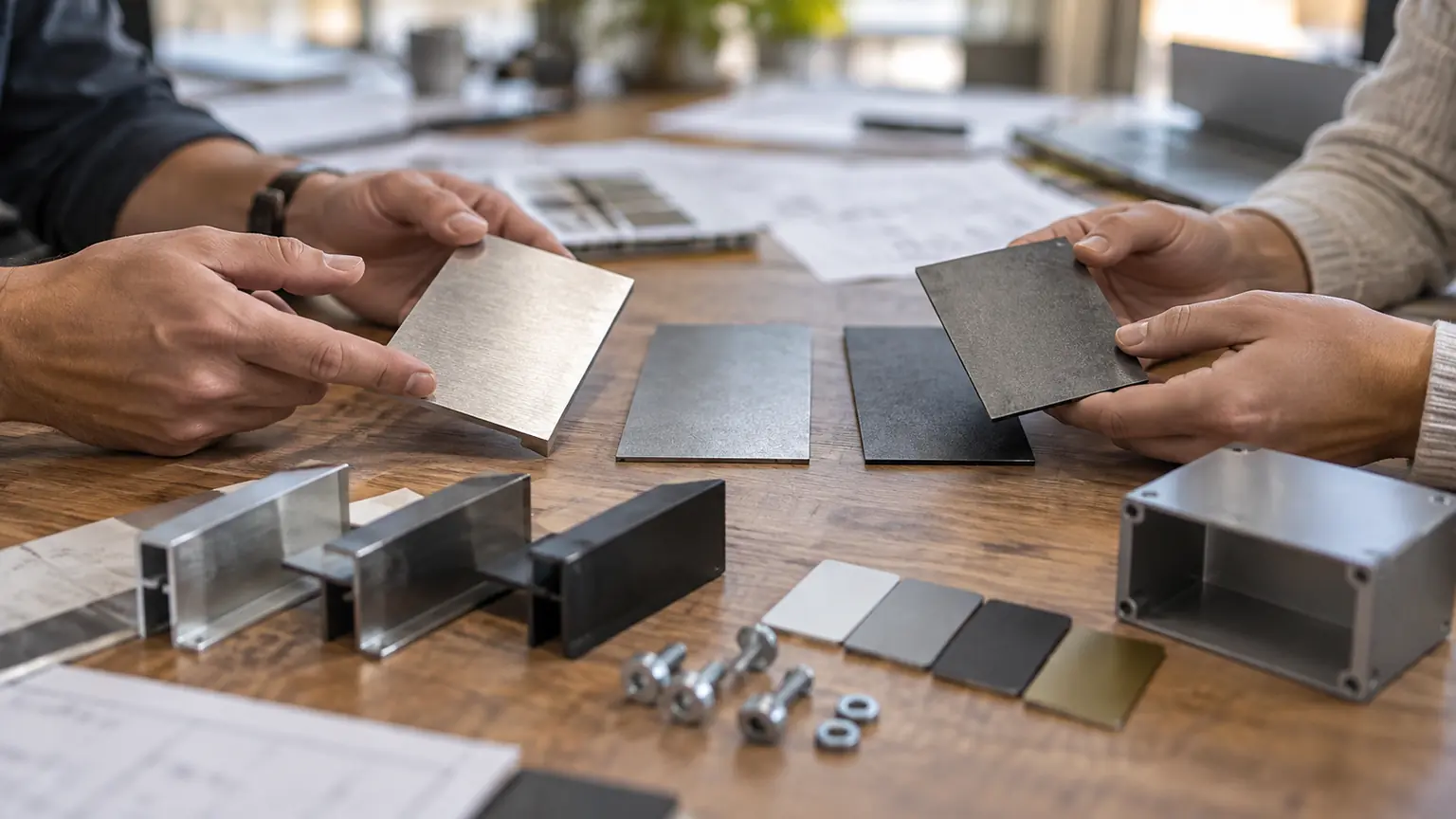
Is aluminum always better outdoors?
No. Aluminum resists atmospheric corrosion and reduces weight, but stiffness, joining, galvanic interfaces, finish, and cost still matter. A well-designed coated steel enclosure may outperform a poorly detailed aluminum one.
What is the cheapest BESS enclosure material?
Carbon steel often has the lowest raw-material and fabrication cost, but lifecycle cost depends on coating, transport, installation, maintenance, and corrosion exposure.
Can stainless steel and aluminum be used together?
Yes, when the interface is engineered. Review moisture exposure, electrical potential, isolation, fasteners, sealing, bonding, and drainage rather than assuming the combination is automatically safe.
Should material be chosen before cooling design?
No. Cooling architecture, heat exchanger openings, condensation strategy, and thermal interfaces can change panel geometry and material priorities. Develop them together.
Select the System, Not Just the Sheet
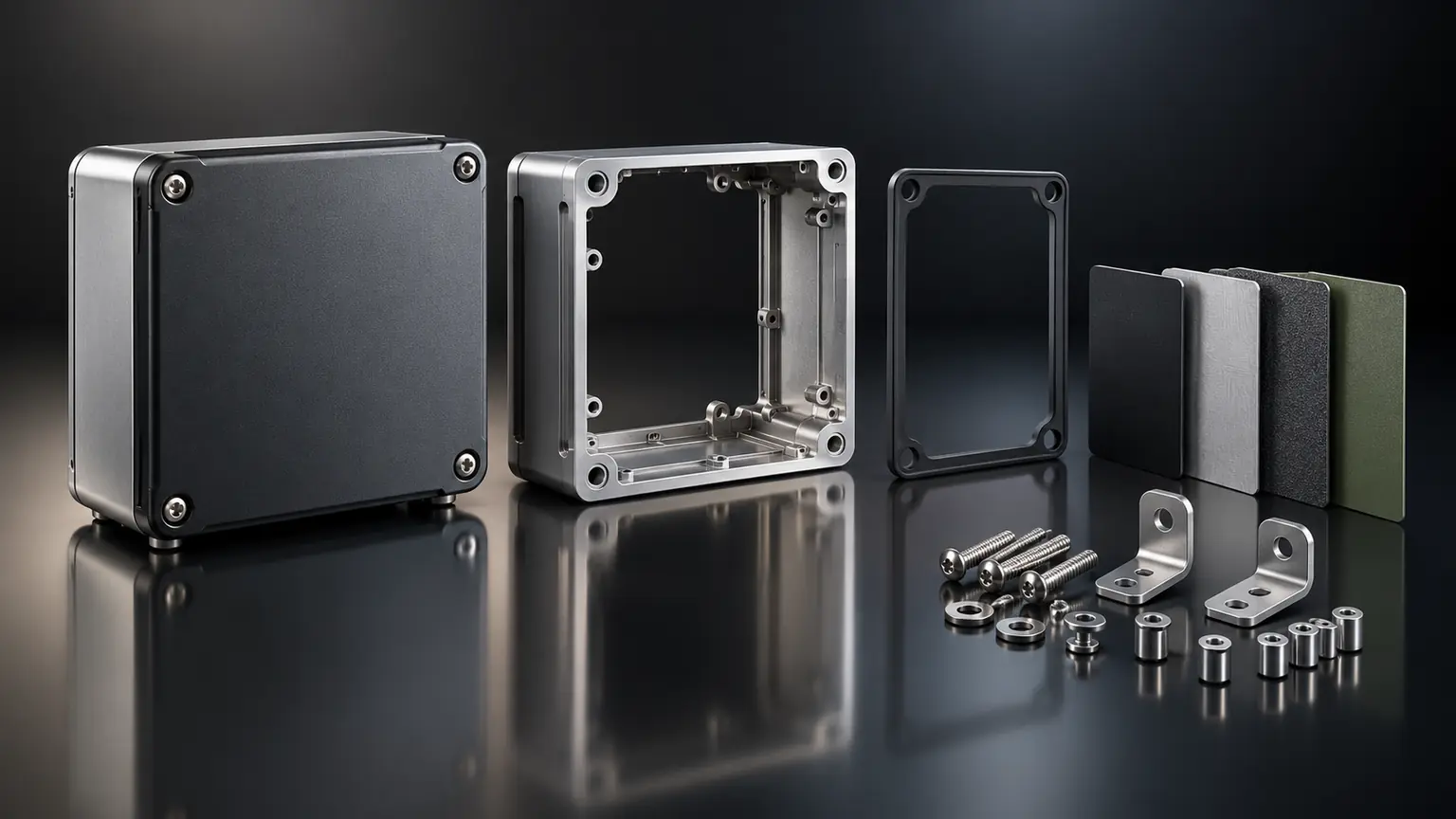
The right battery energy storage enclosure material is a system decision. Begin with loads, exposure, maintenance, thermal control, fabrication volume, and verification. Then compare carbon steel, aluminum, stainless steel, and mixed construction against those requirements. This produces a defensible specification and avoids paying for material properties the enclosure cannot use.

