


Automotive aluminum die casting is useful when a vehicle program needs a repeatable metal component with integrated ribs, bosses, housings, or structural features at meaningful production volume. The process can reduce mass and part count, but it is not simply a faster way to make an aluminum shape. Filling, cooling, ejection, porosity, machining datums, finishing, and inspection must be considered together before tooling is released.
The best die-cast design is the result of a process decision, not a generic material preference. This guide explains where aluminum die casting fits, what engineers should review before the die is cut, and how to connect the casting with downstream machining and quality control.
The role of aluminum die casting in automotive parts
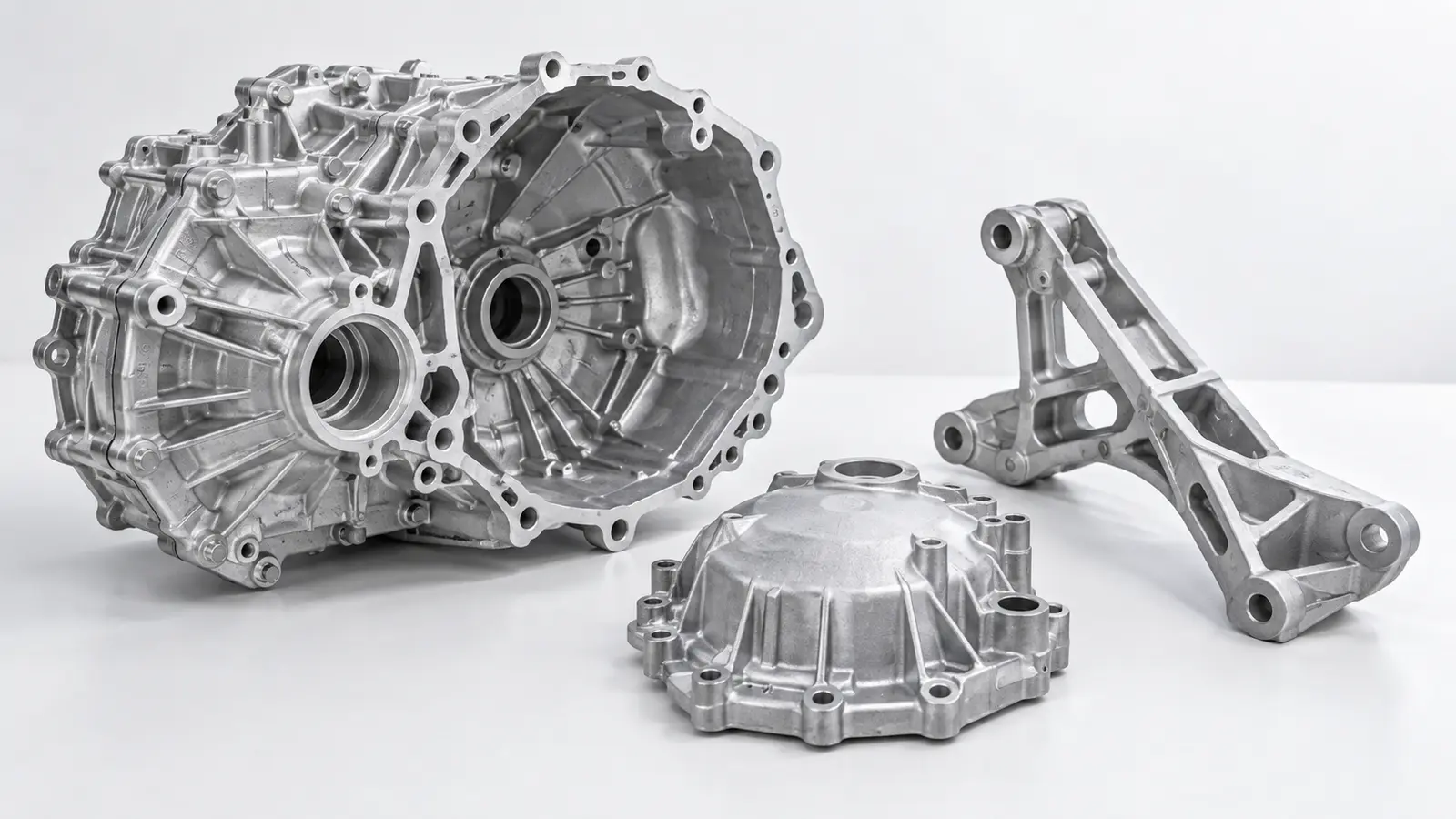
Die casting becomes attractive when a part family requires many similar components, short and repeatable cycles, and a near-net metal geometry. A casting may replace several brackets, a welded structure, or a machined block when integration improves alignment and reduces assembly work. Common candidates include housings, motor-related covers, electronic enclosures, sensor supports, structural nodes, and thermal components.
| Part characteristic | Potential benefit | Engineering check |
|---|---|---|
| Integrated ribs and bosses | Fewer separate parts | Flow, cooling, and draft |
| Thin repeated walls | Lower mass and efficient production | Fill balance and solidification |
| Machined sealing faces | Near-net stock for final accuracy | Porosity and datum stability |
| High annual quantity | Tooling cost spread over parts | Tool life and maintenance |
The broader automotive rapid prototyping workflow is valuable before the production process is fixed. Fit, packaging, service access, and thermal clearance can be learned through earlier prototypes instead of being discovered after an expensive die has been completed.
Design before the die is cut
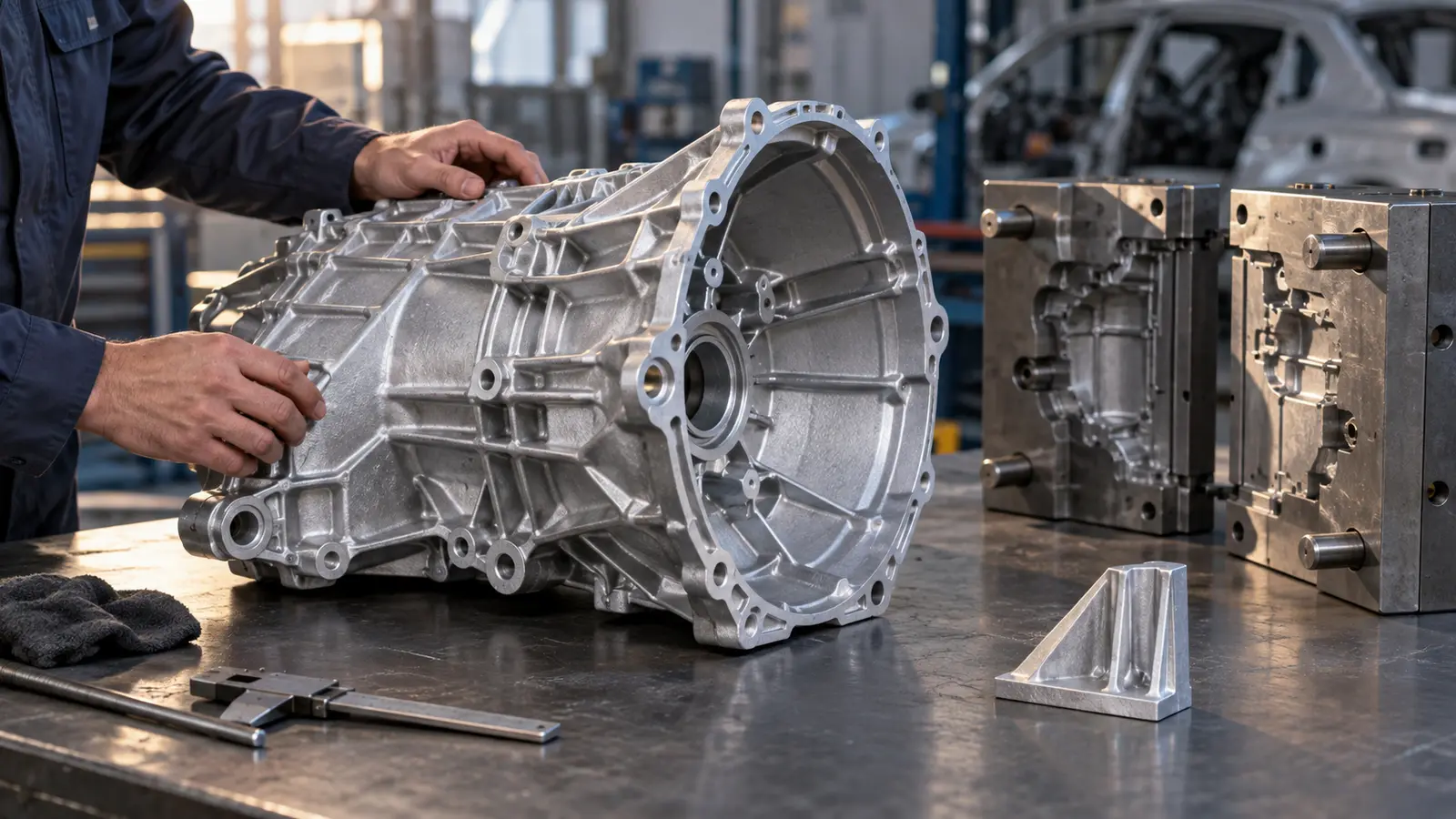
A die-cast part should be reviewed as a metal-flow problem, a release problem, and a machining problem at the same time. Uniform wall sections generally cool more predictably than abrupt thickness changes. Ribs can improve stiffness with less mass, but excessive rib density may restrict flow or create uneven cooling. Internal radii reduce stress concentration and help the metal move through the cavity.
Draft is required for reliable ejection, and it influences which surfaces can remain as-cast. Identify the primary datum, mounting faces, bores, threads, sealing lands, and bearing seats before detailing ribs or cosmetic surfaces. Critical features should have a defined machining allowance and should not depend on an uncontrolled as-cast face.
Designers should also consider gates, overflows, vents, ejector locations, parting lines, and trimming access. These are not merely toolmaker details. They can affect visible surfaces, local porosity, flash, distortion, and the amount of secondary work required after casting.
Manage porosity, distortion, and local variation
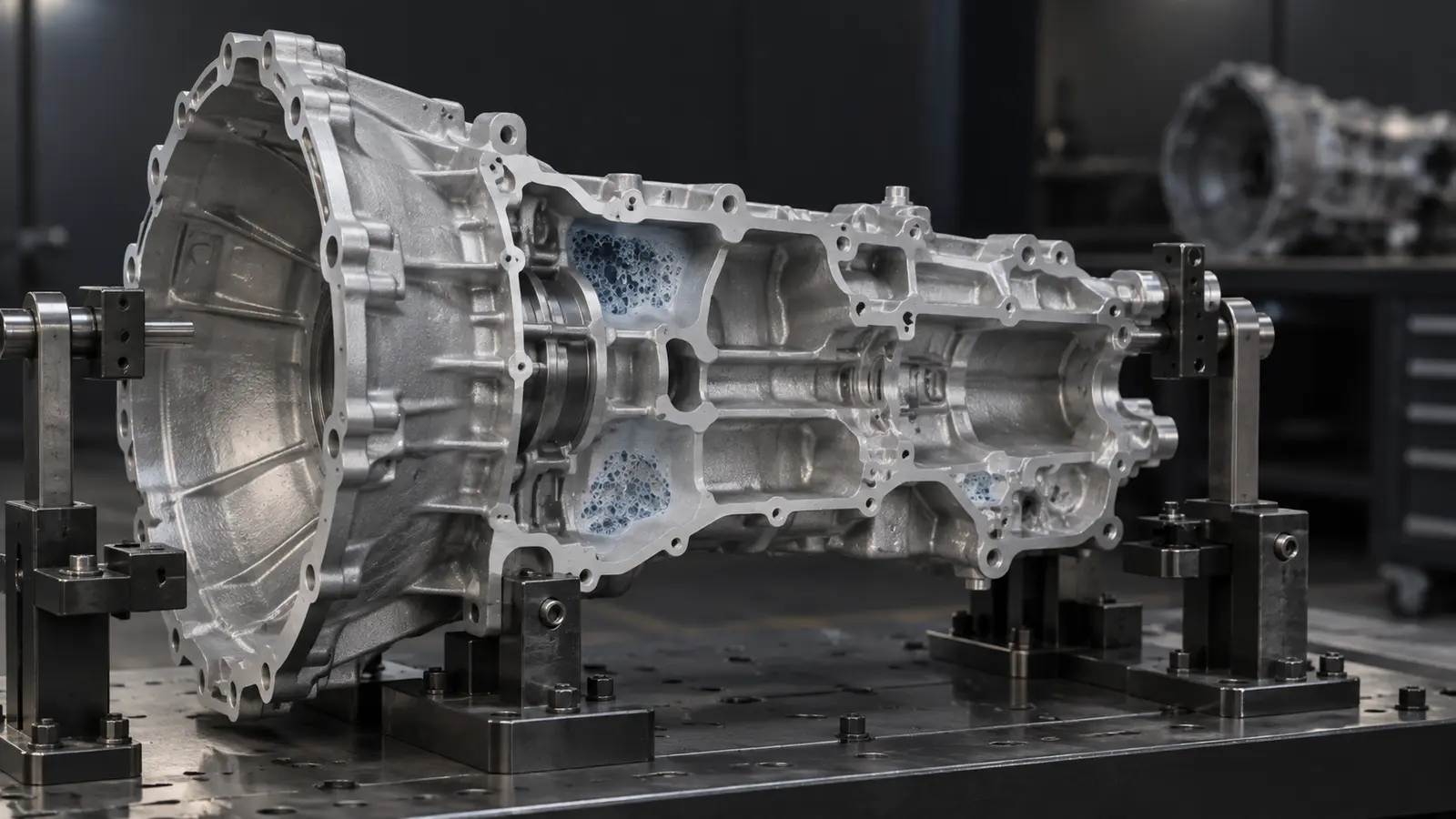
Porosity can result from gas entrapment, shrinkage, turbulence, or local solidification behavior. The acceptance method must follow the part function. A decorative cover and a pressure-containing housing should not use the same internal-quality requirement. Mark critical volumes, sealing zones, threaded areas, and load paths on the model so the process and inspection plan can address them directly.
- Separate cosmetic, dimensional, and structural acceptance criteria.
- Identify areas where pores would affect sealing, fatigue, or machining.
- Define sampling, sectioning, or non-destructive inspection where justified.
- Measure distortion after casting and again after critical machining.
- Trace material and process records to the approved sample.
Distortion can become more visible after machining removes the supporting skin of as-cast material. A stable datum strategy, balanced geometry, controlled cooling, and a planned machining sequence reduce this risk. The goal is not to promise zero variation; it is to understand which variation matters and control it before assembly.
Plan machining and finishing after casting
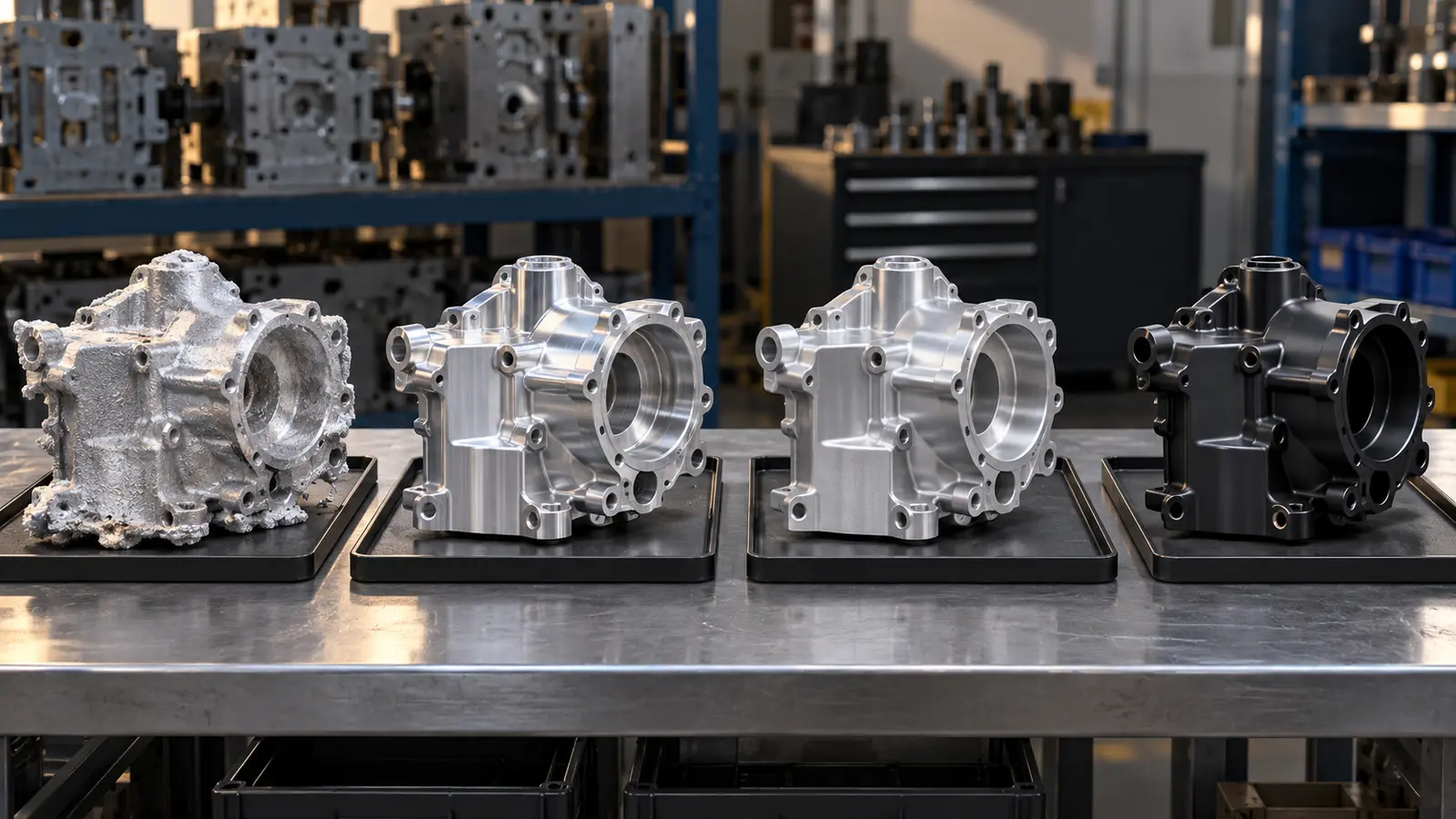
Most functional automotive castings require trimming, flash removal, drilling, tapping, reaming, milling, deburring, blasting, conversion coating, painting, or another finishing operation. The machining plan should use stable datums and avoid locating on surfaces that vary from shot to shot. Holes and bores should be related to the same functional references used in the assembly.
Die die casting service should therefore be evaluated with its secondary operations and inspection plan. A low casting price can lose its advantage if trimming, rework, machining, or inspection is poorly defined.
Finish selection depends on exposure, appearance, conductivity, corrosion, and contact with other materials. A visible housing may need controlled texture and coating preparation, while a hidden structural part may prioritize corrosion resistance and dimensional stability. Available surface finishing services should be selected with the alloy and critical interfaces in mind.
Compare alternatives before committing to tooling
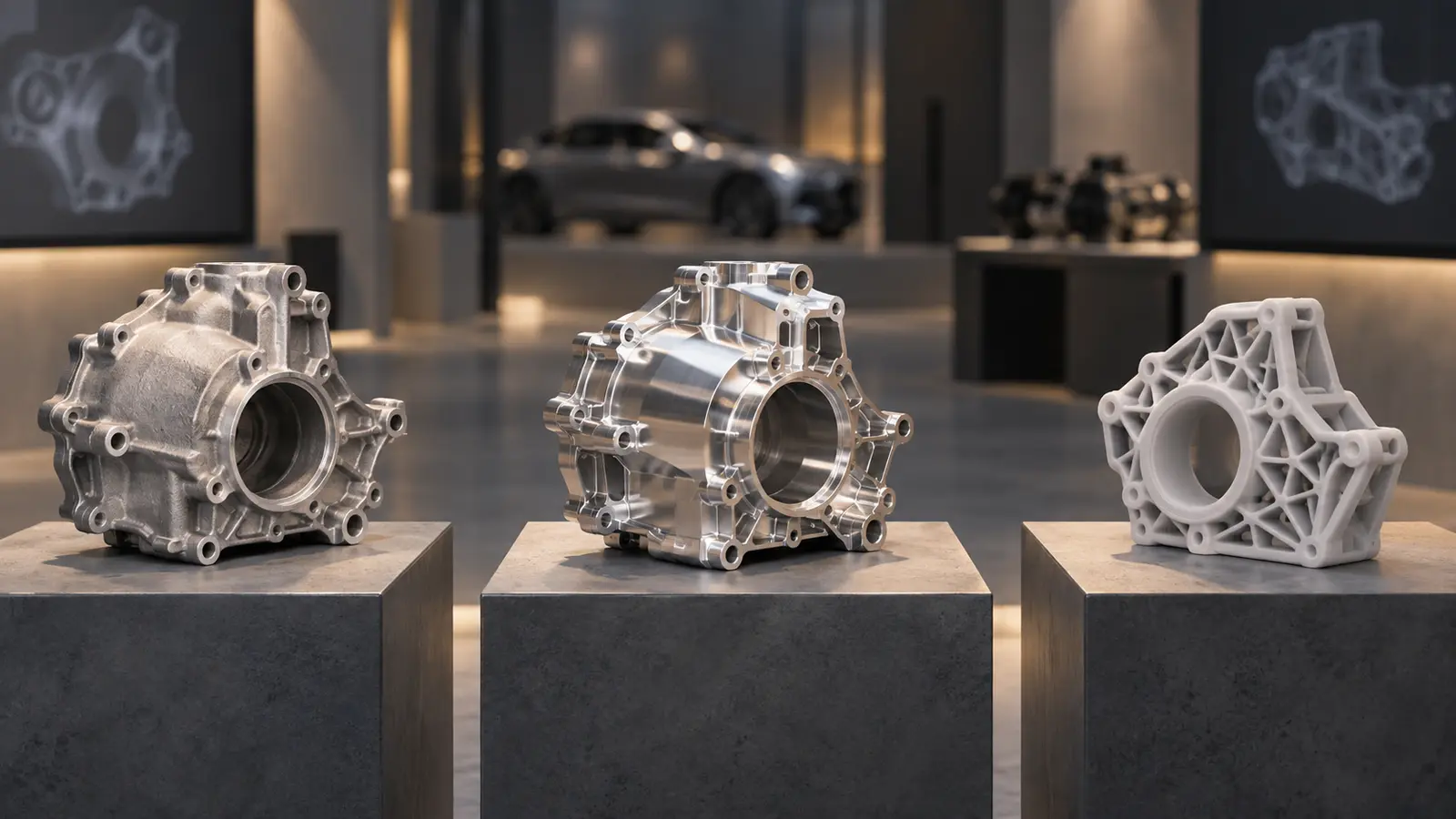
Die casting is not automatically the best answer for every aluminum automotive part. CNC machining may be more economical for small quantities or block-like geometry. Sheet metal can suit large, thin brackets and enclosures that need frequent revision. Additive manufacturing can shorten early validation. Injection molding is the logical comparison when the final component is plastic rather than metal.
| Program priority | Route to compare | Reason |
|---|---|---|
| Few parts and frequent revisions | CNC or additive | Less dedicated tooling |
| Large thin formed structure | Sheet metal | Flexible panel construction |
| High-volume integrated aluminum shape | Die casting | Repeatable near-net production |
Prepare an RFQ that supports an engineering decision
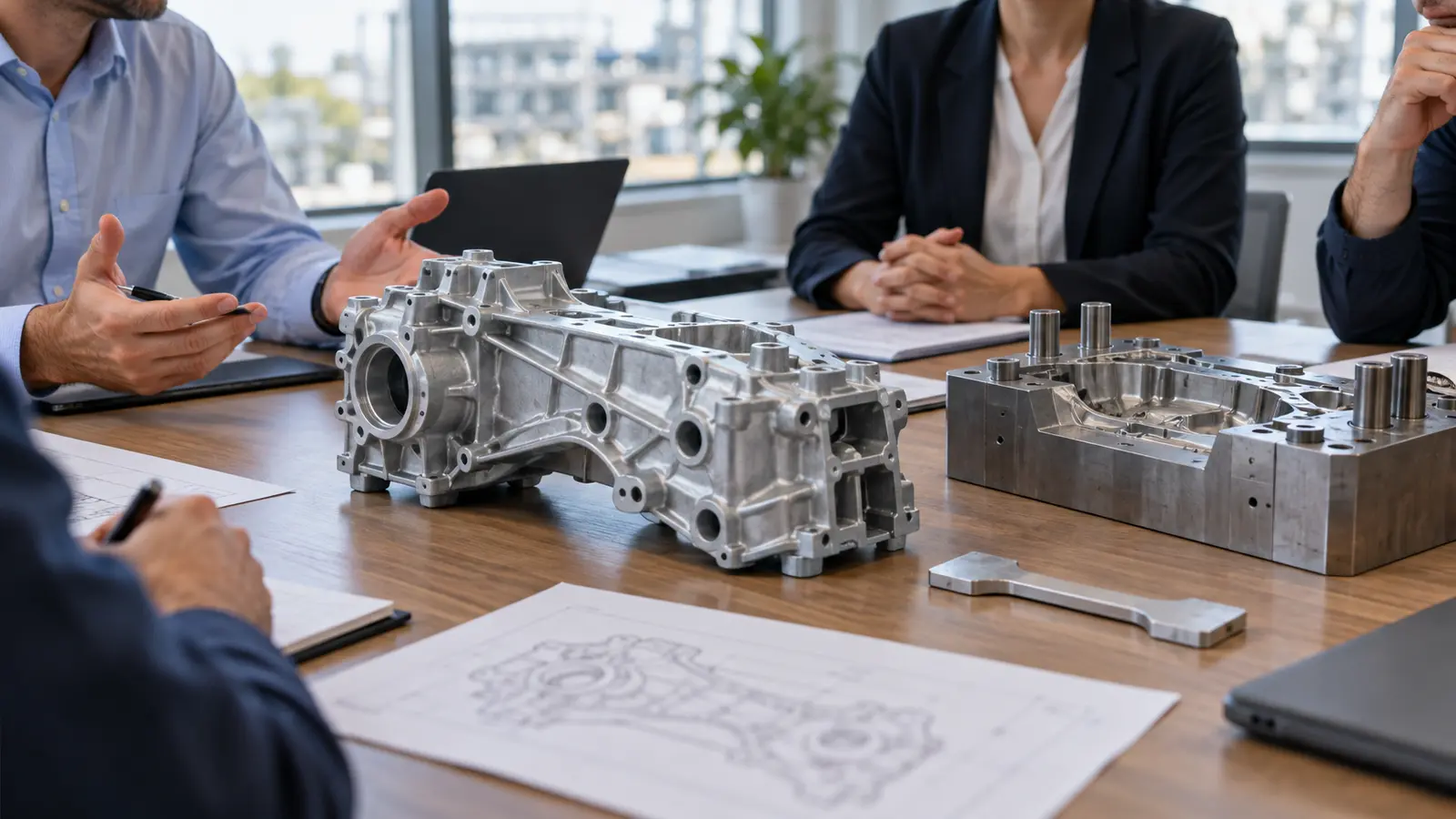
Include the 3D model, 2D drawing, alloy preference or performance target, launch and annual quantity, critical characteristics, finish, inspection requirements, and pressure, sealing, temperature, or vibration conditions. If the casting replaces an existing assembly, include the mating parts and the reason for consolidation.
Ask the supplier to identify tooling assumptions, gate and overflow considerations, machining operations, porosity-sensitive zones, inspection checkpoints, sample approval stages, and expected tool maintenance. This makes the quotation a process proposal rather than a number attached to an ambiguous model.
Häufig gestellte Fragen
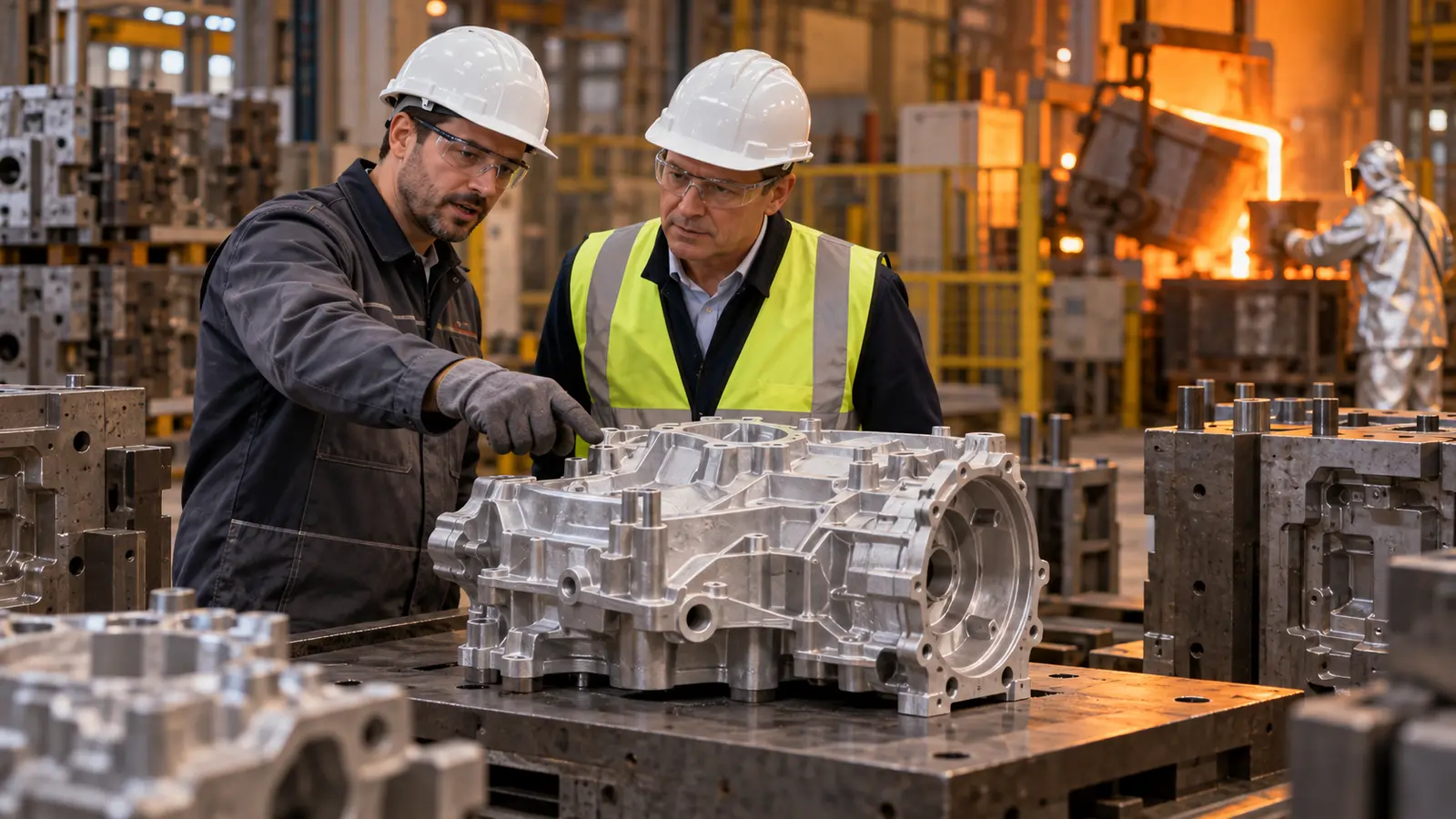
Why is aluminum used for automotive die casting?
It combines relatively low density with useful stiffness and thermal behavior, while its flow characteristics can support repeatable near-net production for many housings and structural components.
Can aluminum die-cast parts be CNC machined?
Yes. Sealing faces, bores, holes, threads, and mounting datums are commonly machined after casting when allowance and locating strategy are defined in advance.
Does die casting eliminate porosity?
No. Porosity risk must be managed through geometry, tooling, process control, material control, and inspection matched to function.
Is aluminum die casting suitable for prototypes?
It can be suitable when the quantity and validation objective justify tooling, but earlier prototypes often use CNC, additive, sheet metal, or casting routes with less dedicated investment.
What should be approved before production tooling?
Approve the alloy, critical zones, draft, wall transitions, machining datums, inspection method, finish, sample plan, and the acceptance criteria for internal quality.

