


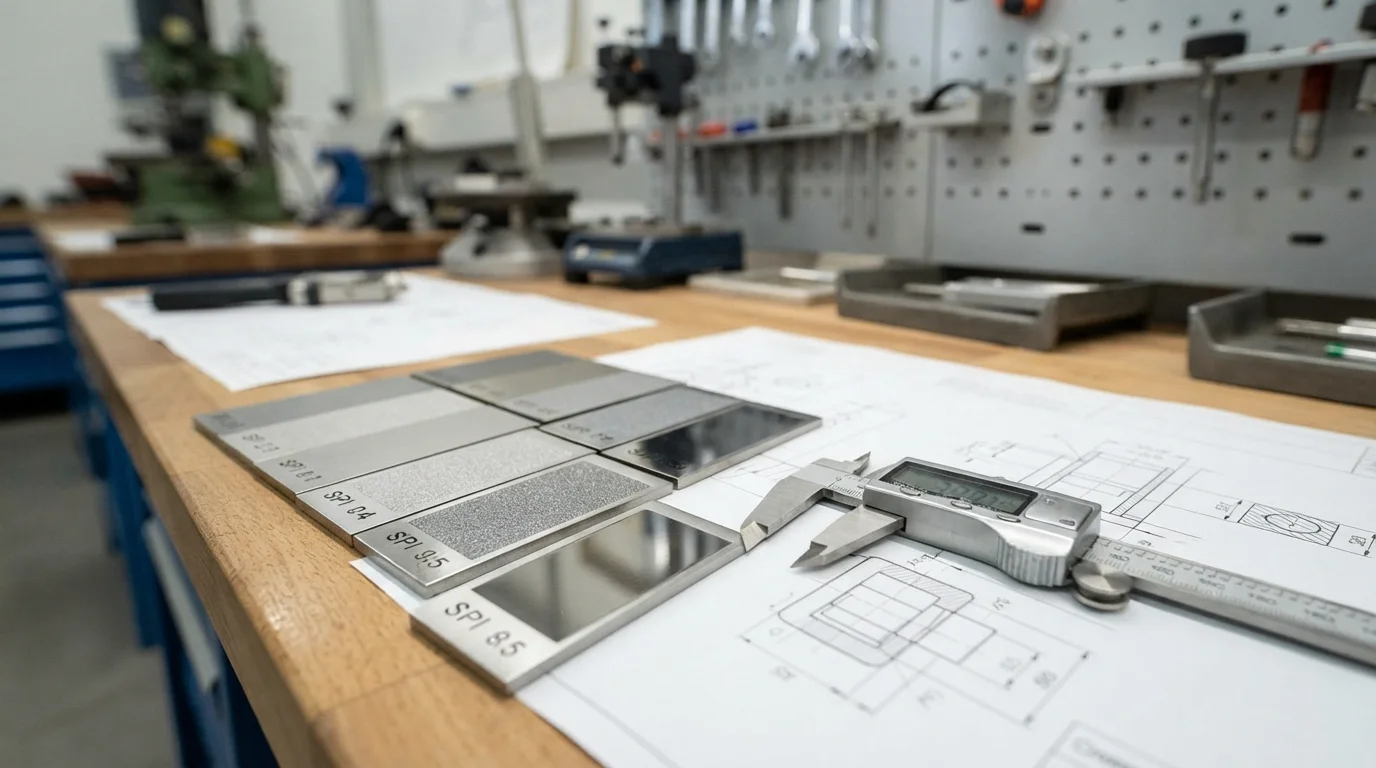
Specifying surface textures accurately during early hardware development prevents cosmetic defects and ensures smooth part ejection. When engineers explore spi finish standards for rapid aluminum molds, understanding the classification system is essential for balancing visual appeal against production costs. Without clear technical callouts, toolroom machinists may deliver finishes that do not match functional expectations, leading to expensive mold re-work during pilot runs.
Die Nutzung eines erfahrenen Schnellwerkzeug provider ensures that surface treatments are meticulously applied to soft metal inserts before Spritzgießens campaigns begin. Let us examine how SPI classifications function and what level of polish can realistically be achieved on aerospace-grade aluminum blocks.
What Are SPI Finish Standards?
Question: How are mold surface finishes categorized across the plastics industry? The Society of the Plastics Industry (SPI) classifies finishes into four distinct groups—Grade A (glossy diamond buff), Grade B (semi-gloss grit paper), Grade C (matte grit stone), and Grade D (textured dry blast)—each defining strict surface roughness parameters.
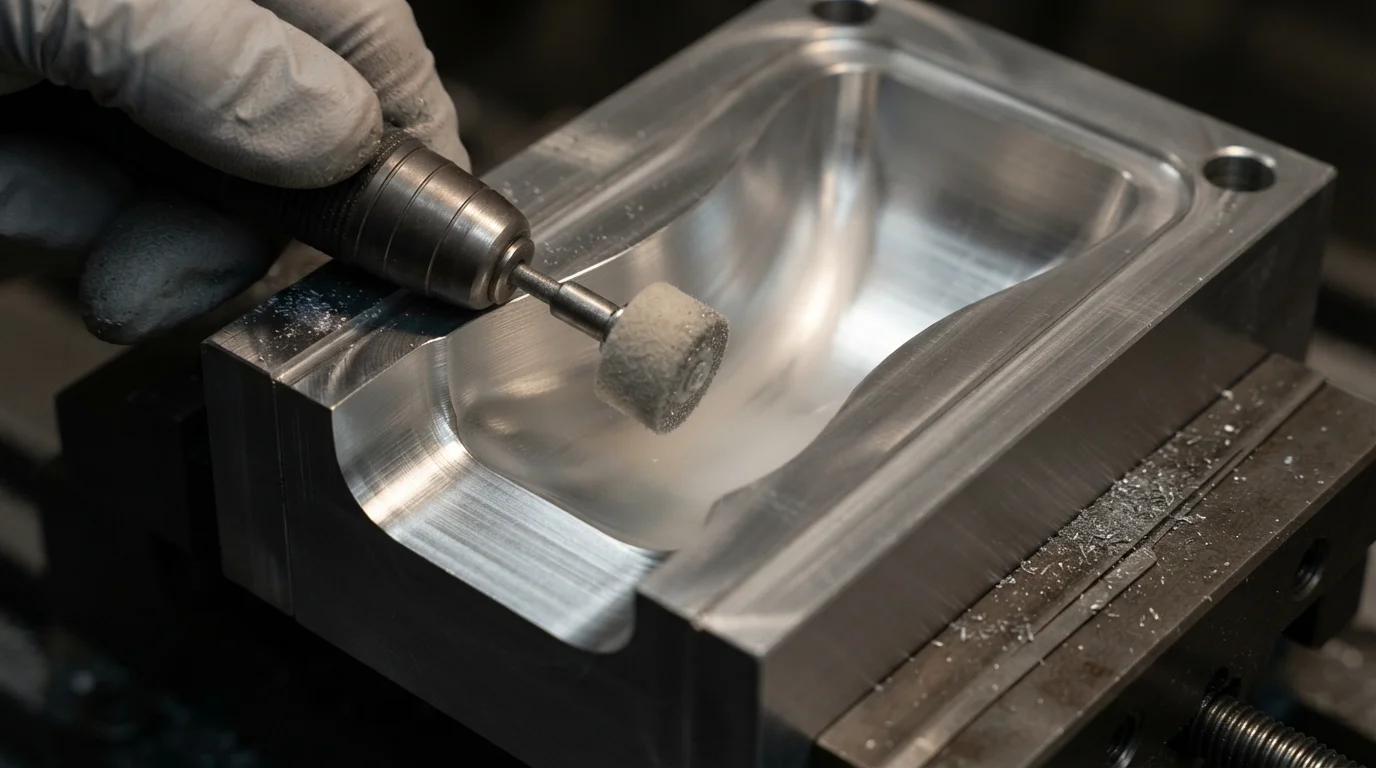
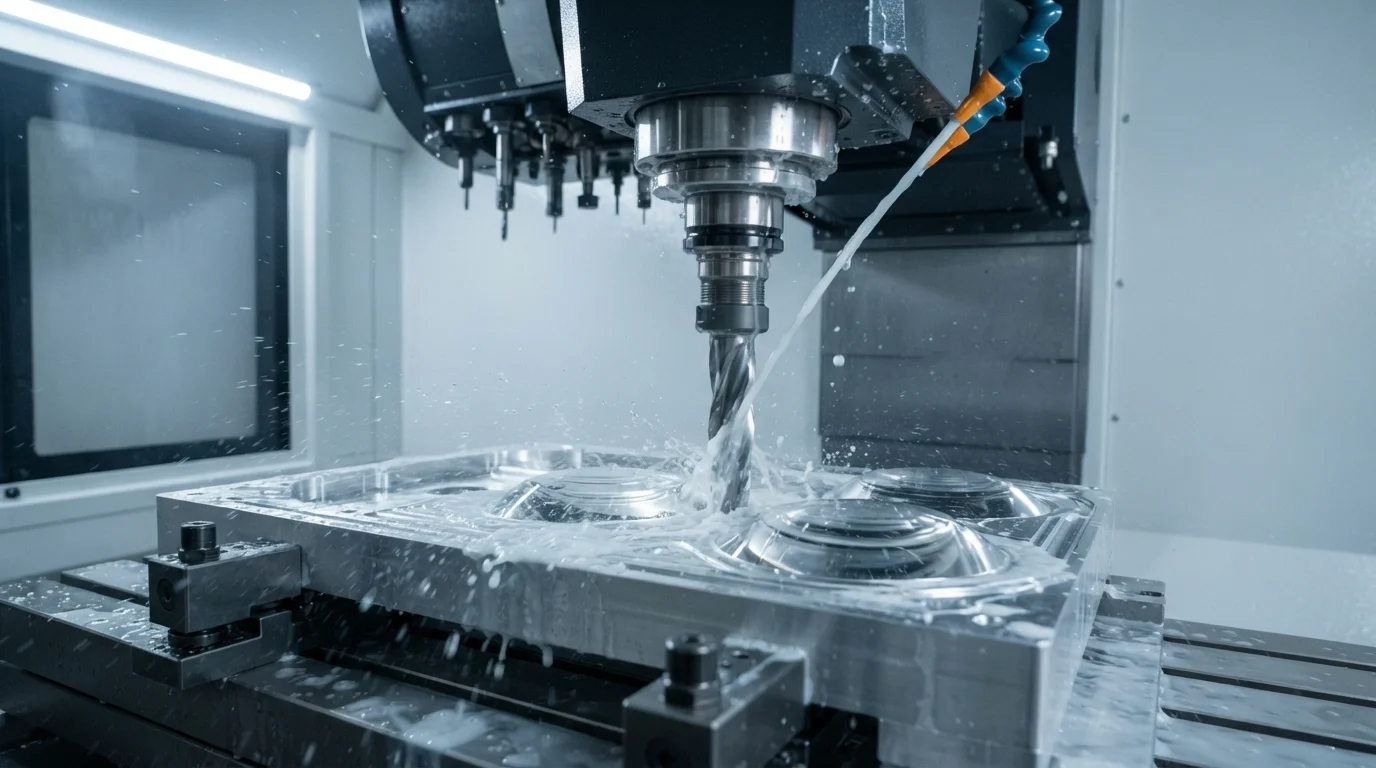
The SPI system establishes a universal language for product designers and toolmakers. Grade A finishes utilize fine diamond pastes to achieve mirror clarity, whereas Grade B and C rely on graded sandpaper and stones to create matte or semi-gloss textures. Sourcing precise CNC-Bearbeitung ensures baseline tool cavities are sculpted cleanly prior to manual hand-buffing.
Evaluating cosmetic requirements involves understanding the primary SPI tiers:
- Grade A (A1, A2, A3)—High-gloss mirror finish created via diamond buffing, ideal for transparent optics
- Grade B (B1, B2, B3)—Semi-gloss finish achieved using fine grit sandpaper, perfect for consumer electronics
- Grade C (C1, C2, C3)—Matte finish produced with fine grit stones, reducing glare on industrial housings
- Grade D (D1, D2, D3)—Textured finish utilizing dry media blasting to mask minor surface flaws
Can You Really Achieve SPI A2 Mirror Finishes on Aluminum Molds?
Question: Is it genuinely possible to polish an aluminum rapid mold up to a high-gloss SPI A2 mirror level? Yes, aerospace-grade AL7075 aluminum can be buffed to exceptional clarity, provided the toolroom uses high-purity metal blocks and expert diamond lapping techniques.
A common misconception assumes that softer non-ferrous metals cannot sustain optical-grade sheens. In practice, skilled polishers utilize progressive diamond pastes to eliminate micro-scratches without creating orange-peel distortions. When processing clear engineering thermoplastics like Polycarbonat (PC) oder PMMA, an SPI A2 aluminum mold transfers brilliant optical clarity straight from the press.
Managing high-gloss tooling projects successfully requires monitoring key technical factors:
- Purity of aluminum stock—Selecting high-grade forging plates eliminates internal micro-porosity that causes cloudy spots
- Progressive diamond buffing—Moving systematically from coarse compounds down to 1-micron diamond paste
- Protective handling—Safeguarding mirror cavities from physical scratching during press installation
How Mold Finish Translates to Plastic Part Quality
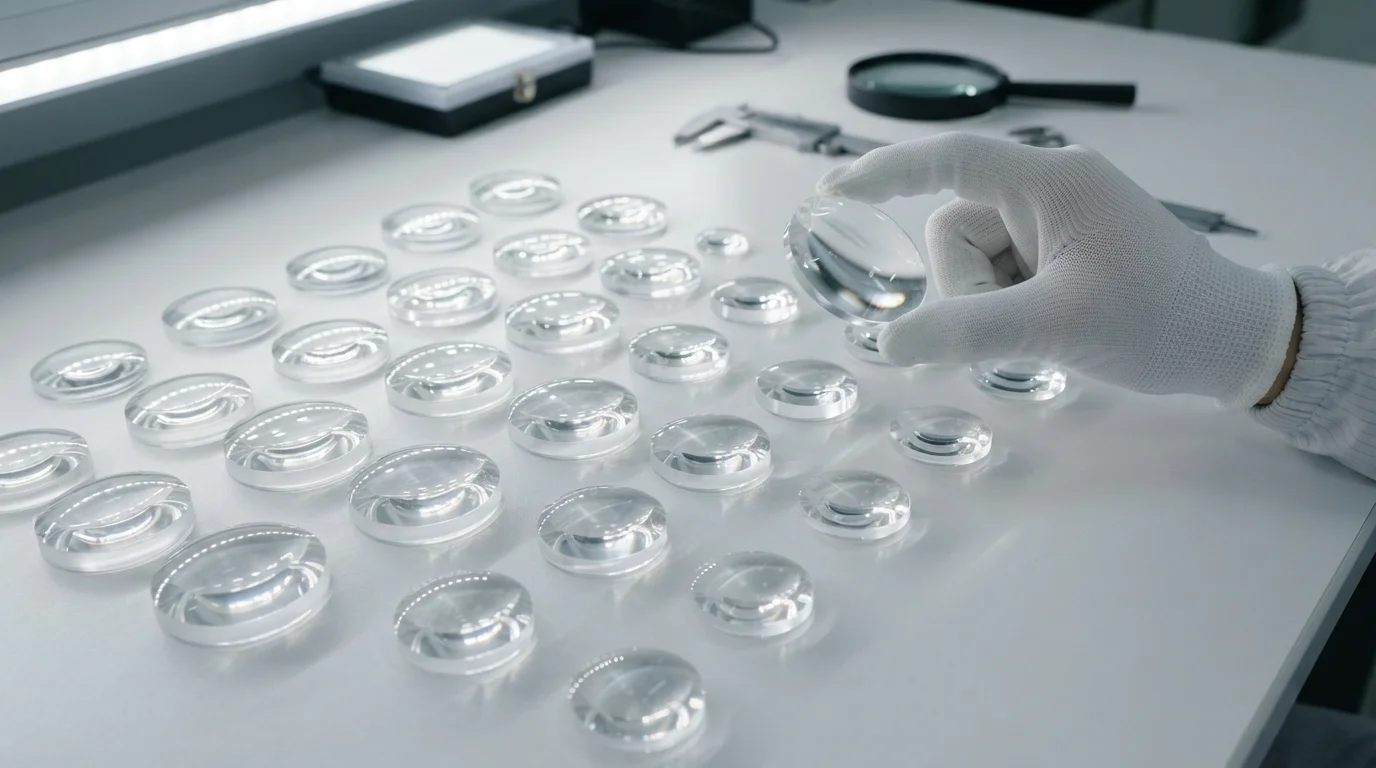
Question: How does the chosen mold cavity texture directly affect the physical release and visual appearance of molded plastic components? Smoother mirror polishes reduce frictional drag during part ejection, preventing vacuum lock and surface scuffing.
When polymer melts flow against a highly polished metal surface, the resulting part faithfully mirrors that smoothness. Conversely, rougher tool walls grip cooling plastic tightly, increasing ejection forces and risking white stress marks. Jucheng Precision supports hardware teams by delivering comprehensive 24-Stunden-kostenlose DFM reviews that evaluate polish grades, draft angles, and gate placements prior to tool cutting.
Operating from an 8,000-square-meter facility in Dongguan with 150+ advanced CNC machines, Jucheng Precision ensures your bridge tooling achieves elite cosmetic standards. Backed by ISO 9001, ISO 14001, ISO 13485, and IATF 16949 certifications, our expert toolroom artisans guarantee precision execution under one roof.
Häufig gestellte Fragen (FAQ)
What is the highest SPI finish possible on an aluminum mold?
Rapid aluminum molds can typically be hand-polished to an SPI A2 grade diamond mirror finish, satisfying high-gloss requirements for transparent optical viewports and automotive lenses.
How do SPI standards help communicate surface requirements to manufacturers?
SPI standards provide a universal alphanumeric language (ranging from A-1 gloss to D-3 texture) that bridges the gap between product designers and toolroom polishers.
Can rapid aluminum molds maintain high-gloss finishes over long production runs?
Aluminum maintains mirror polishes very well for short-to-medium bridge runs (10,000 to 50,000 units), though abrasive resins may eventually require minor re-buffing.
Why does surface finish affect part demolding performance?
Smoother diamond polishes reduce microscopic surface friction, allowing molded plastic parts to release cleanly from mold cavities without vacuum suction or sticking.
How do abrasive resins impact SPI mold polishes?
Glass or mineral-filled thermoplastics act like liquid abrasives, gradually dulling high-gloss A-grades into semi-gloss B-grades over extended molding cycles.
How does Jucheng Precision support custom surface finishing requirements?
Jucheng Precision provides expert toolroom hand-buffing, SPI mirror polishing, and professional texturing to ensure flawless part cosmetics straight from the press.
Ready to Optimize Your Rapid Tooling Surface Finish?
Laden Sie noch heute Ihre 3D-Modelle hoch, um sofortiges Feedback, wettbewerbsfähige Preise und eine professionelle DFM-Analyse von unseren erfahrenen Ingenieurexperten zu erhalten. Lassen Sie JUCHENG Ihre komplexen Designs mit unvergleichlicher Geschwindigkeit und Zuverlässigkeit zum Leben erwecken!

