


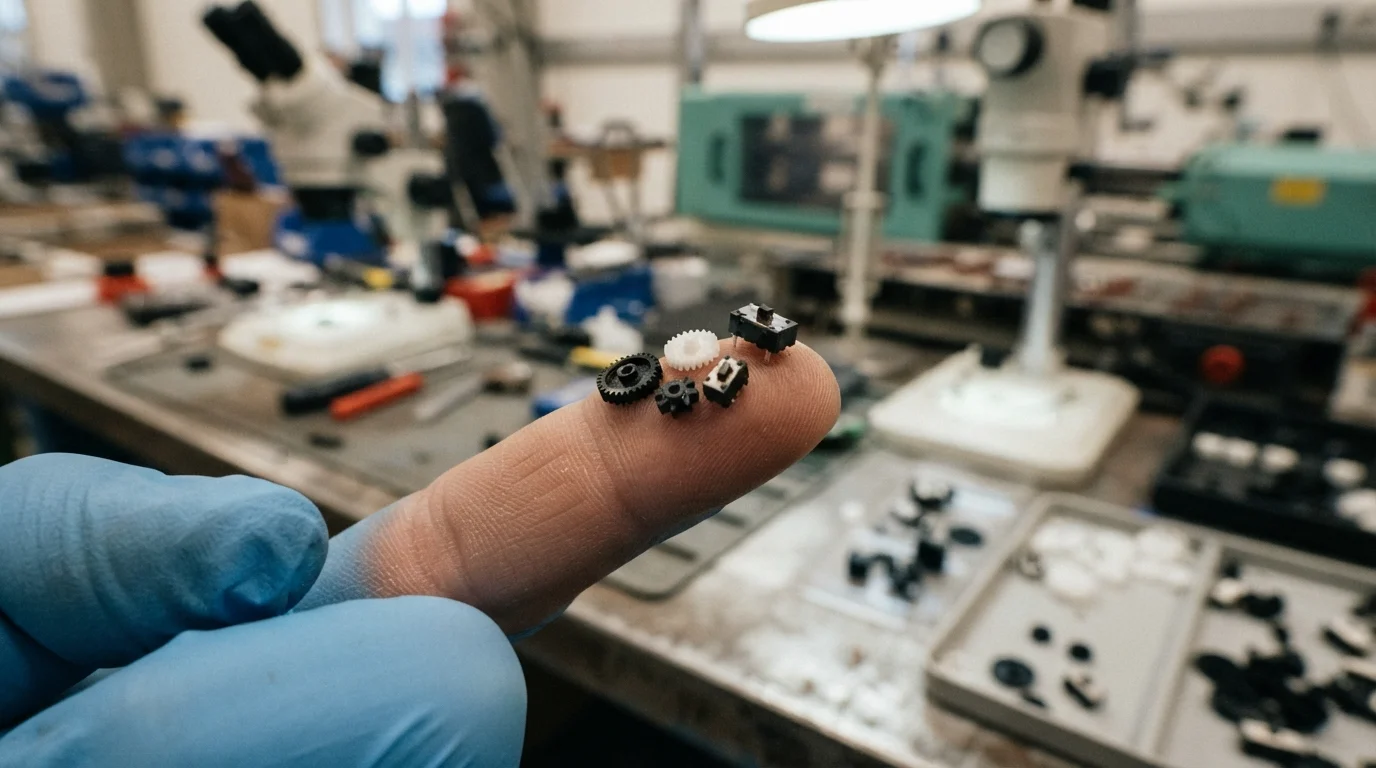
Die Verkleinerung physischer Abmessungen führt zu einer völlig anderen Ebene technischer Herausforderungen, bei denen Standard-Fertigungsannahmen nicht mehr gelten. Wenn Produktentwickler versuchen, Gehäuse im Bruchteil-Millimeterbereich, miniaturisierte medizinische Steckverbinder oder winzige Innenzahnräder zu bauen, stoßen traditionelle Prototyping-Methoden oft an eine harte Wand. Die Bewertung von Prototyping kleiner Kunststoffteile per 3D-Druck oder Spritzguss erfordert ein Verständnis dafür, wie Schichtauflösungsgrenzen und Mikroschwund die funktionale Zuverlässigkeit beeinflussen.
Inhaltsverzeichnis
1. Die Mikropräzisions-Herausforderung: Toleranzen für Miniaturkomponenten
2. Warum 3D-Drucker mit winzigen Schnappverbindungen und dünnen Wänden kämpfen
3. Erzielung von Präzision auf Mikrometerebene mit Rapid Tooling und CNC
Die Mikropräzisions-Herausforderung: Toleranzen für Miniaturkomponenten
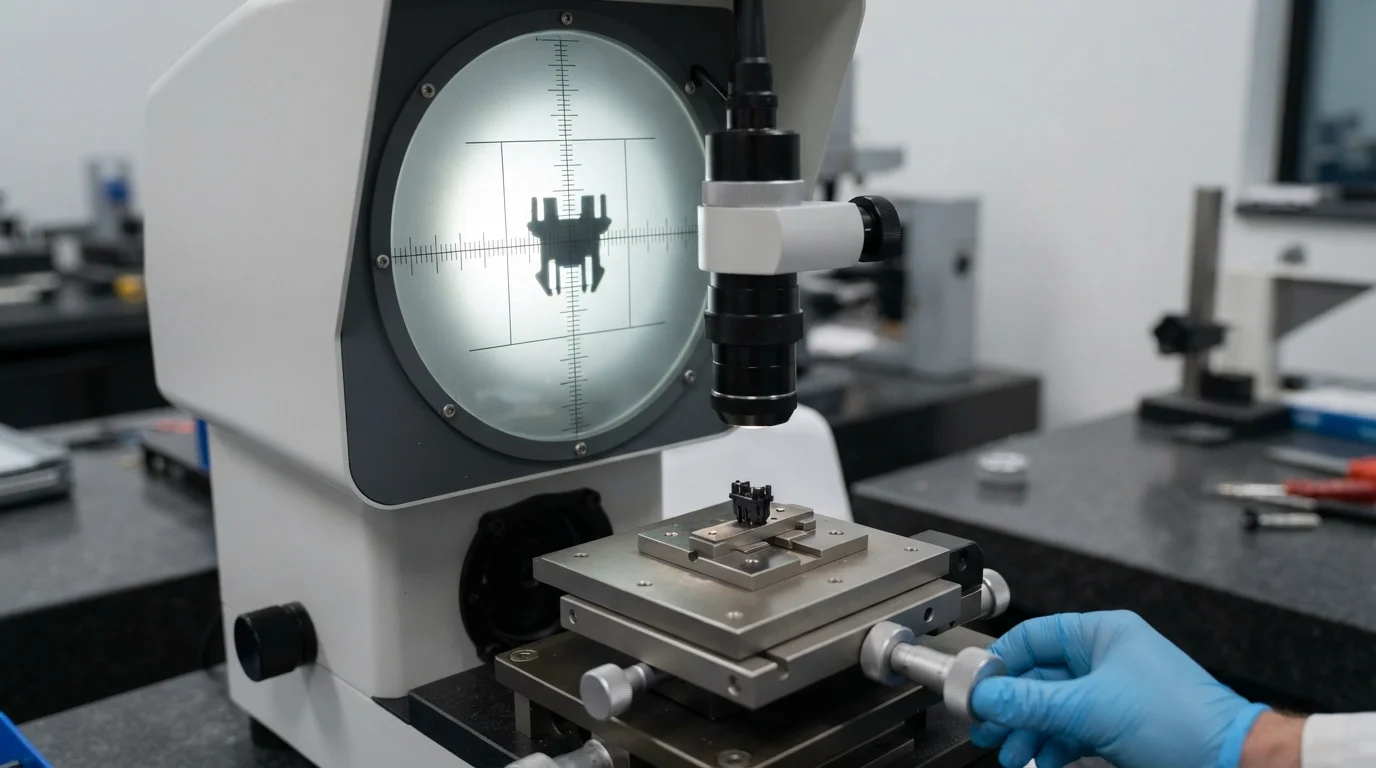
Frage: Welche Maßabweichungsgrenzen kennzeichnen Miniatur-Kunststoff-Prototyping im Vergleich zu größeren Industriegehäusen? Mikrokomponenten erfordern strenge Sub-Millimeter-Toleranzen, bei denen eine Abweichung von nur 0,02 Millimetern das ordnungsgemäße mechanische Eingreifen verhindern kann.
Das Entwerfen von Miniatur-Elektronik, Hörgeräteschalen oder winzigen optischen Sensorhalterungen beinhaltet die Verwaltung von Bruchteil-Wandstärken und Mikroschlitzen. In diesem mikroskopischen Maßstab sind Standard-Kommerztoleranzen völlig unzureichend, was hochpräzise Bearbeitung und stabile Materialkontraktionskontrolle erfordert. Die Beschaffung eines spezialisierten Prototypenservice oder hochpräzisen CNC-Bearbeitungsservice stellt sicher, dass Miniatur-Metalleinsätze und direkt bearbeitete Testblöcke die exakte CAD-Geometrie reproduzieren.
Der Vergleich von Miniatur-Fertigungsfähigkeiten beinhaltet die Überwachung spezifischer Mikropräzisionsattribute:
| Mikro-Feature-Attribut | Hochauflösender 3D-Druck | Rapid Tooling und CNC-Bearbeitung |
|---|---|---|
| Smallest Achievable Wall | 0.30 mm to 0.50 mm (Prone to warping) | 0.15 mm to 0.25 mm (Rigid and stable) |
| Micro-Snap Resilience | Brittle due to layered curing lines | High spring-back using engineering resins |
| Dimensional Repeatability | Variable across build platform | High consistency across thousands of cycles |
Why 3D Printers Struggle with Tiny Snaps and Thin Walls
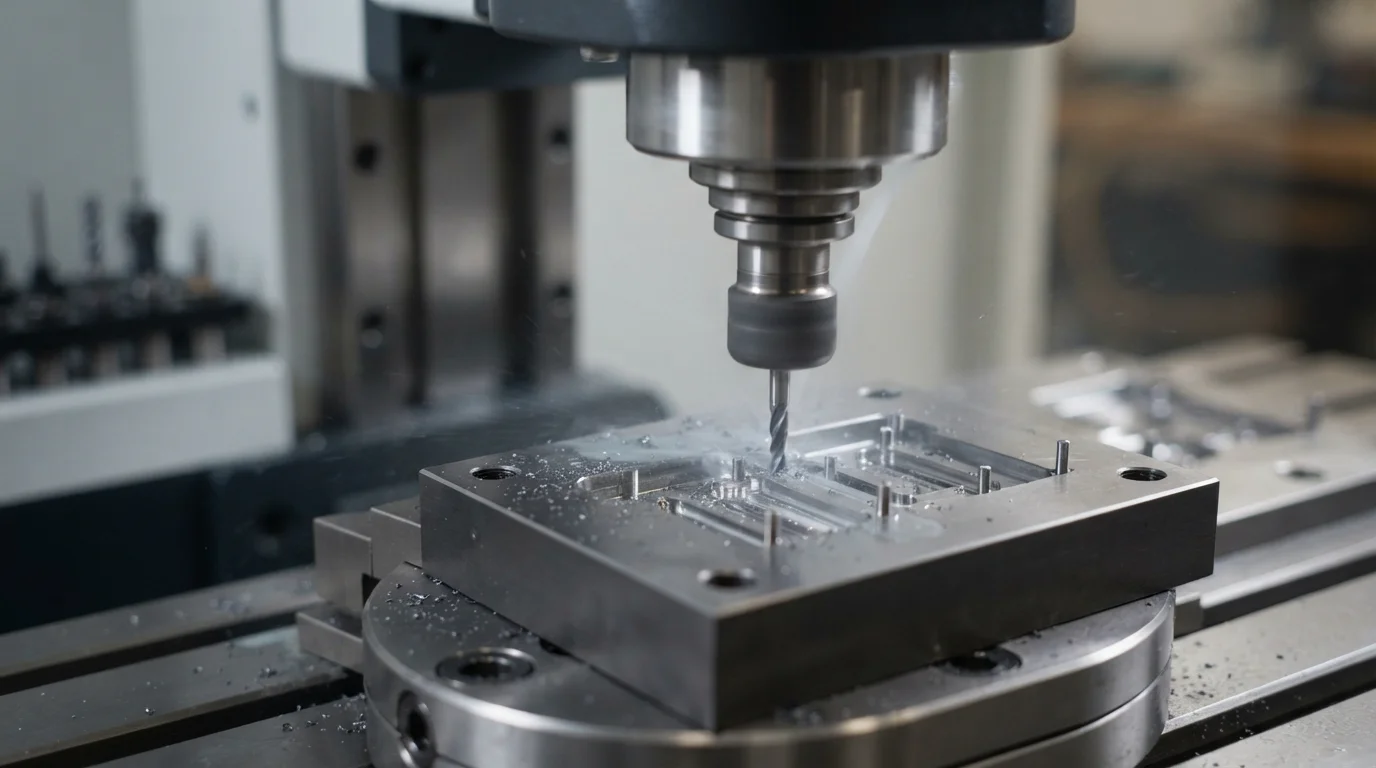
Question: Why do laser or light-cured 3D printers often fail when building microscopic snap-fit latches and thin walls? Laser spot diameters and photopolymer liquid surface tension blur fine feature edges, causing microscopic snap features to fuse shut or snap off.
Miniature snap fits rely on precise cantilever deflection and elastic memory. Printed photopolymers lack the necessary elongation-at-break, snapping instantly when deflected. Shifting production to a dedicated Schnellwerkzeugbau-Service allows engineers to mold tiny components out of tough engineering polymers like POM (Acetal) oder Polycarbonat (PC) that withstand repeated micro-deflection.
Optimizing miniature component design and ensuring structural resilience involves monitoring key engineering rules:
- Preventing laser bleed—Accounting for light scattering during printing to avoid oversized micro-holes
- Selecting wear-resistant resins—Molding miniature gears from low-friction plastics like acetal to minimize operational wear
- Maintaining uniform draft—Ensuring microscopic vertical walls feature adequate draft for clean mold release
Achieving Micrometer-Level Precision with Rapid Tooling and CNC
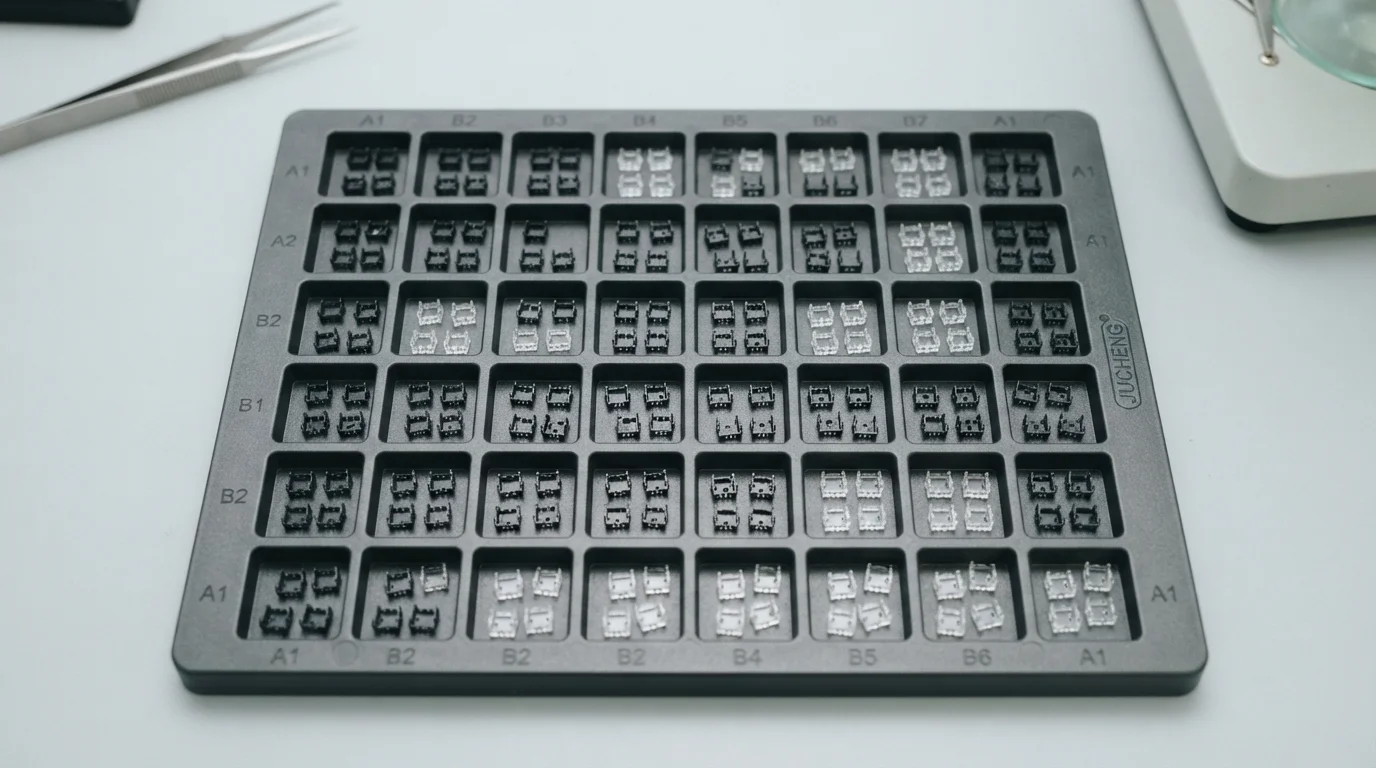
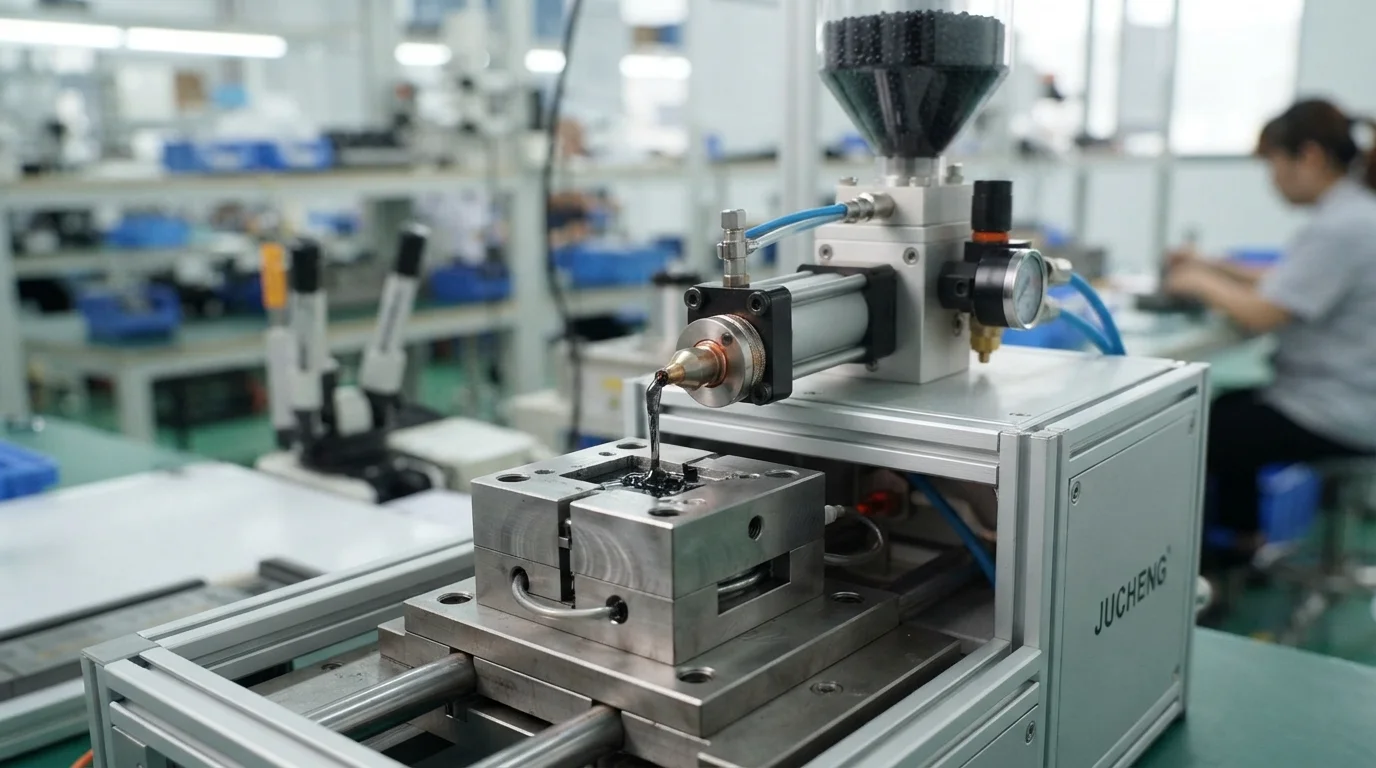
Jucheng Precision unterstützt Hardware-Entwickler durch umfassende 24-Stunden-kostenlose DFM reviews that analyze micro-feature wall thicknesses, draft angles, and gating positions prior to tool cutting. Operating with 150+ advanced CNC machines—including 25 high-precision 5-axis systems—alongside 35+ specialized injection molding workstations, our ISO 9001 certified facilities ensure exceptional micro-precision standards.
Key operational advantages of our precision micro-manufacturing framework include:
- High-speed micro-milling—Carving fractional millimeter cavity details with absolute dimensional fidelity
- Rigid engineering polymers—Injecting robust thermoplastics that outperform brittle 3D printed resins
- Null Mindestbestellmengen-Beschränkungen—Keine MOQ-Richtlinien ermöglichen eine exakte Bestandsabstimmung mit kundenspezifischen Pilotproduktionsläufen
Ready to prototype miniature components? Let Jucheng’s micro-molding experts bring your precision designs to life.
Häufig gestellte Fragen (FAQ)
Why do 3D printers struggle when prototyping miniature plastic parts?
Laser spot limits, light scattering, and liquid surface tension blur fine feature edges, causing tiny snap-fits and thin walls on 3D printed parts to fuse shut or break easily.
How does rapid tooling achieve micrometer-level precision for small components?
Rapid aluminum and steel molds carved via high-precision 5-axis CNC machines allow stable, high-pressure injection molding of robust engineering thermoplastics into delicate micro-features.
How does Jucheng Precision support miniature component prototyping?
Jucheng Precision provides 24-hour free DFM reviews, high-speed micro-milling, and precision injection molding to deliver accurate, high-strength small plastic parts.

