


A Low-Volume Build Is an Operating Model
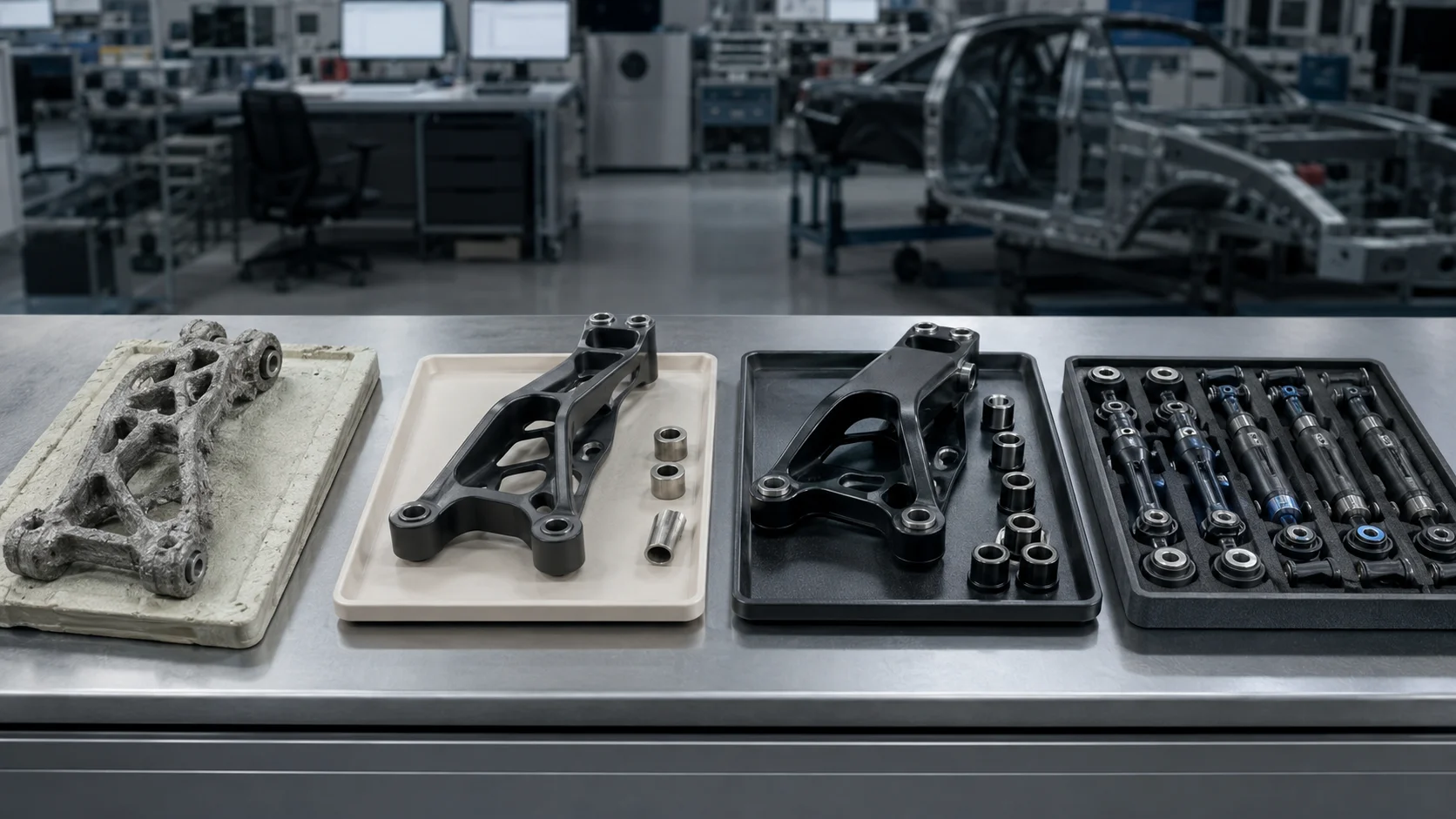
A successful build answers four questions: what must be validated, how many units are needed, how repeatable the process must be, and what happens when the design changes. A few dozen pieces for a customer review may require a different route from several hundred units for a pilot fleet or service launch.
| Build stage | Typical objective | Control that matters |
|---|---|---|
| Engineering prototypes | Confirm geometry, fit, and function | Fast revisions and critical interfaces |
| Design validation | Test materials, appearance, and assembly | Representative parts and test records |
| Pilot build | Exercise work instructions and supply flow | Repeatability, traceability, packaging |
| Early market quantity | Support limited demand before scale-up | Stable process and change control |
Choose the Route by Quantity and Evidence
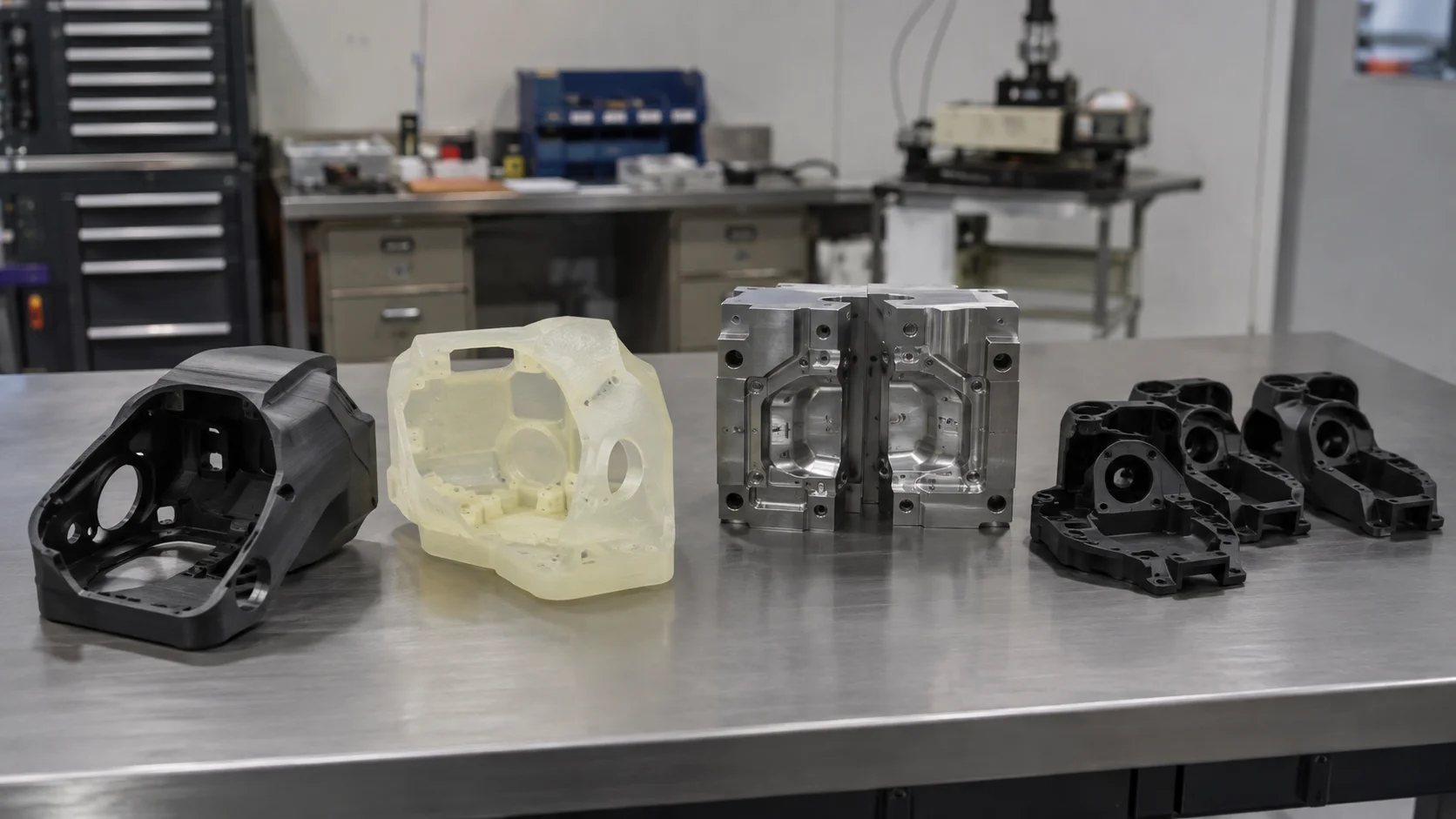
Prototype manufacturing is useful when the design still moves and the evidence is primarily geometric or functional. CNC machining can avoid tooling for small counts and protect accurate interfaces. 3D printing can shorten the path to complex shapes, while fabricated sheet metal can reproduce real formed brackets and enclosures.
When the part must look or behave more like a molded component, Vakuumguss can provide realistic small batches from a master pattern. For a repeatable molded build, Schnellwerkzeug may offer a bridge between prototype freedom and production-intent evidence.
When quantity, geometry, and material requirements justify a mold, low-volume injection molding can improve repeatability. The choice should be based on tool investment, tool life, material, finish, inspection, and expected changes—not on a unit-price comparison alone.
Build the Cost Model Before the Purchase Order
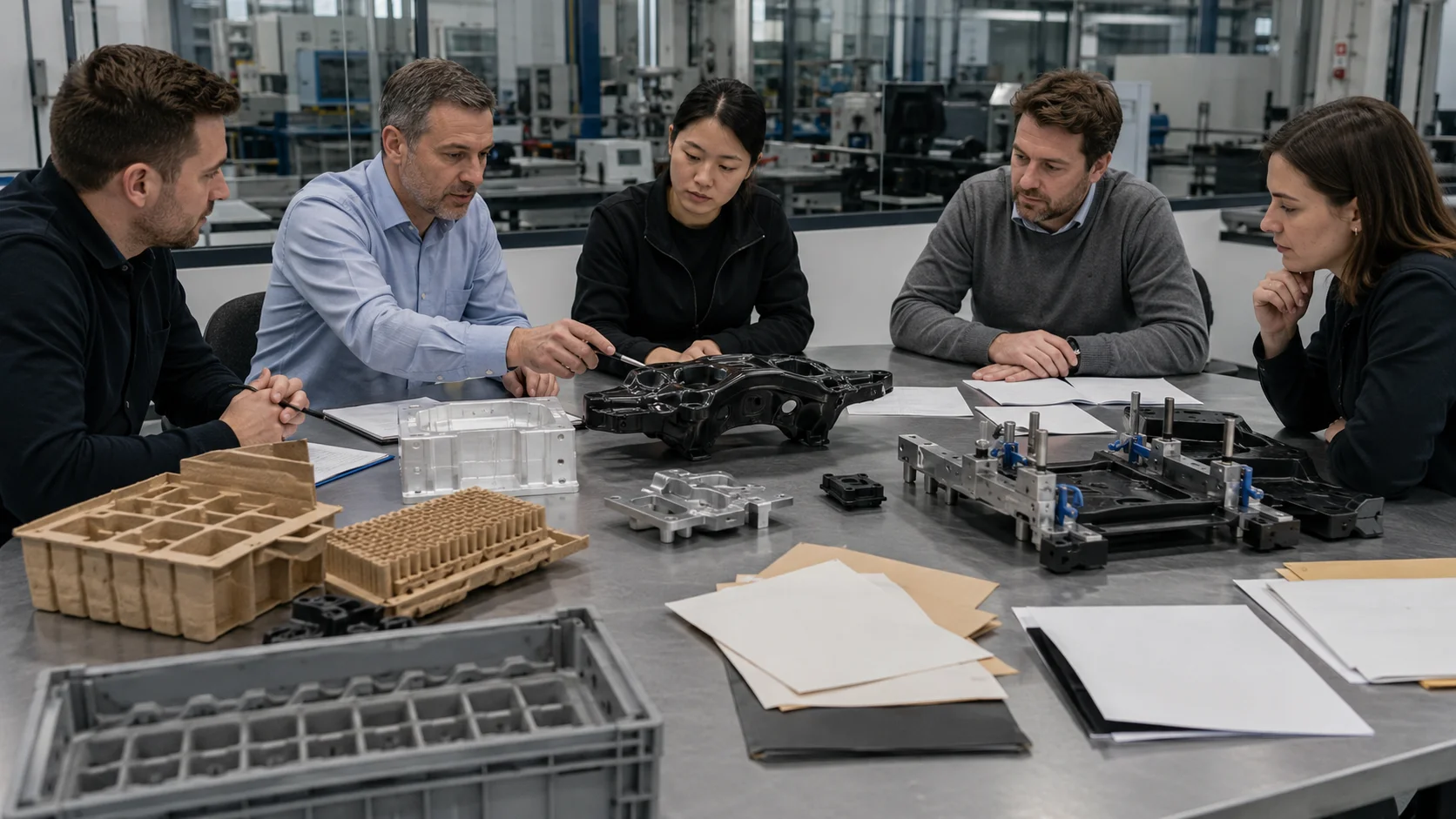
Low-volume work is often misunderstood because the part price hides the setup and risk costs. Separate the quote into non-recurring engineering, tooling or fixtures, programming and setup, material, finishing, inspection, assembly, packaging, and change allowances.
| Cost bucket | What can move it | Question for the supplier |
|---|---|---|
| Tooling and fixtures | Parting, inserts, tool material, changeability | What happens if revision B changes a critical feature? |
| Part production | Material, cycle time, machining, scrap | What assumptions define the unit price? |
| Qualität | Inspection scope, reports, samples | Which characteristics are measured and when? |
| Assembly and logistics | Joining, kitting, protection, shipping | How are parts identified and packed? |
This model gives purchasing a fair comparison between a tool-assisted process and a no-tool process, especially when the first build may lead to repeat orders.
Use Stage Gates to Prevent Late Surprises

- Gate A—definition: freeze the CAD revision, drawings, material assumptions, quantity, test purpose, and acceptance limits.
- Gate B—process review: confirm manufacturability, tooling approach, datums, joining, finish, and inspection plan.
- Gate C—first article: review a representative part or small sample before the full batch.
- Gate D—batch release: approve dimensions, appearance, function, packaging, and documentation.
- Gate E—feedback: record changes, defects, assembly observations, and the next-build decision.
Stage gates do not need to be bureaucratic. Their value is that the team makes the next commitment with the right evidence in hand.
Small Quantity Does Not Mean Small Quality Plan
A low-volume build still needs a clear definition of critical-to-function features. Identify datums, mounting points, sealing surfaces, fasteners, visible zones, electrical contacts, and any feature that affects assembly. Use targeted measurement when a full report would add no decision value, but do not leave the critical features undefined.
Material traceability and revision control are equally important. A prototype substituted with an undocumented resin or alloy may produce a result that cannot be repeated. Record approved equivalents, finish state, inspection status, and batch identity with the parts.
Plan Assembly and Packaging as Part of Manufacturing
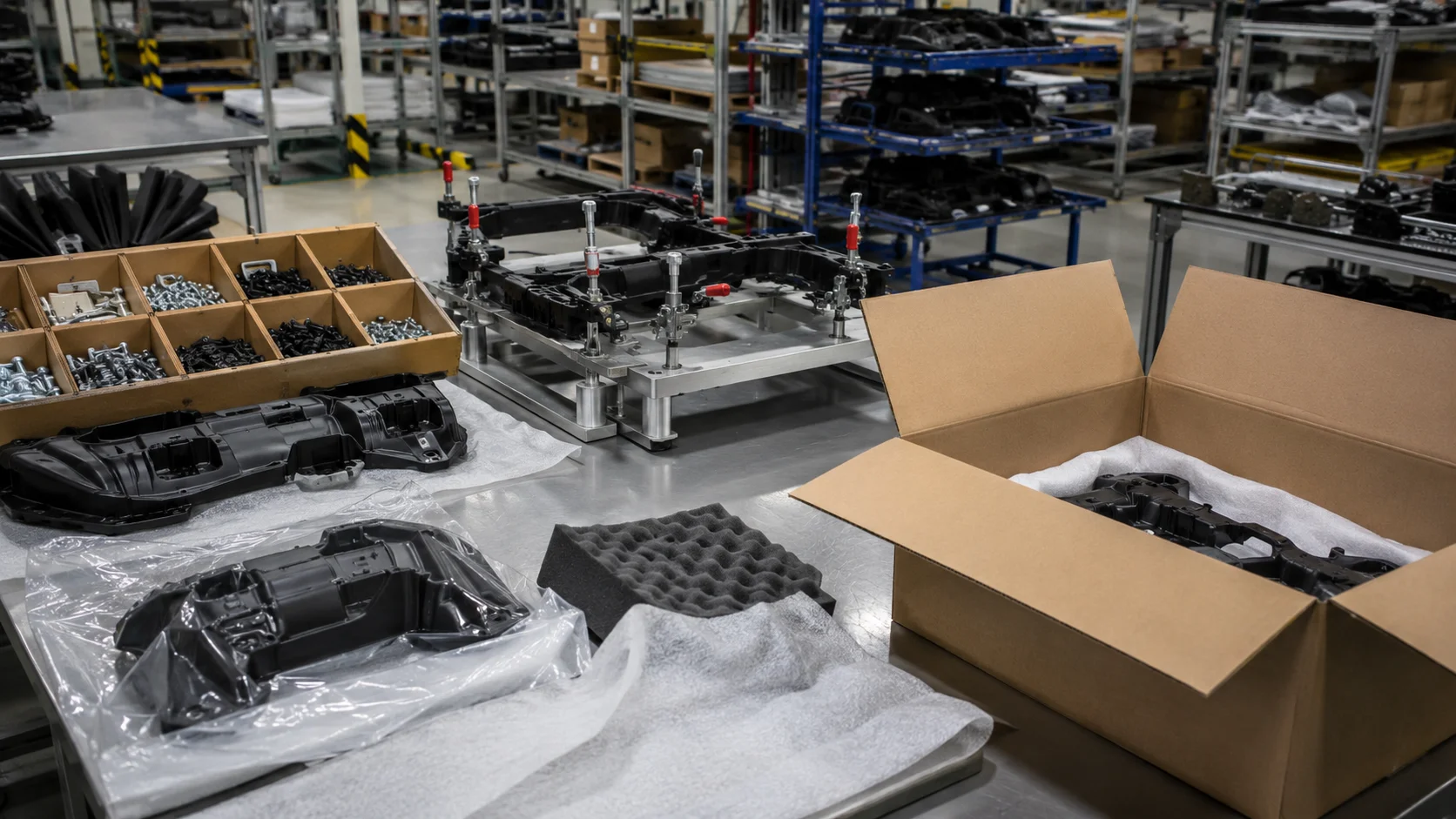
For a pilot or early market build, the delivered unit is more than a collection of components. Kitting, fastener count, protective film, orientation, labels, and packaging can affect assembly time and damage rates. If a supplier performs sub-assembly, define the joining method, torque or cure assumptions, inspection points, and the condition in which the unit will be shipped.
Ask for a representative assembled unit before approving the entire batch. It can expose tolerance stack-up, access problems, missing hardware, and packaging risks while changes are still affordable.
Questions to Ask Before Selecting a Partner
- Can the supplier support the required process mix without losing revision control?
- Which operations are performed in-house and which are coordinated externally?
- How will first-article approval and batch release be documented?
- What is the change process after tooling, programming, or material purchase?
- Can the same quality language be used for prototypes, pilot parts, and repeat orders?
The best low-volume partner makes the transition to the next stage easier. A low initial price is less valuable if every change requires a new explanation or if the delivered parts cannot be traced to the approved design.
Häufig gestellte Fragen
What quantity qualifies as low-volume manufacturing?
There is no universal cutoff. Low volume is defined by the relationship between quantity, tooling investment, process repeatability, and the program stage. A few dozen parts may be low volume for one product and a pilot build for another.
Is low-volume manufacturing the same as rapid prototyping?
No. Rapid prototyping prioritizes learning and speed, while low-volume manufacturing adds repeatability, release control, inspection, assembly, and delivery discipline. The two can be connected in one program.
When should rapid tooling be considered?
Consider it after the geometry and key interfaces are sufficiently stable, when molded behavior or repeatable pilot parts matter, and when the expected quantity makes tool investment defensible.

