


Die Bewertung der physikalischen und mechanischen Leistungsgrenzen von rohen Polymer- und Metallwerkstoffen ist die kritischste Phase in der Hardware-Entwicklung. Das Verständnis der Eigenschaften von Rapid-Prototyping-Materialien stellt sicher, dass Ihre kundenspezifischen Halterungen, Elektroschränke und medizinischen Gehäuse bei dynamischen Tests unter realen Lasten hochfunktional bleiben. Diese Materialauswahlphase bildet die Grundlage für jeden professionellen Rapid-Prototyping-Service, und bestimmt direkt, ob Ihre physischen Teile strukturellen Belastungen standhalten oder vorzeitig versagen.
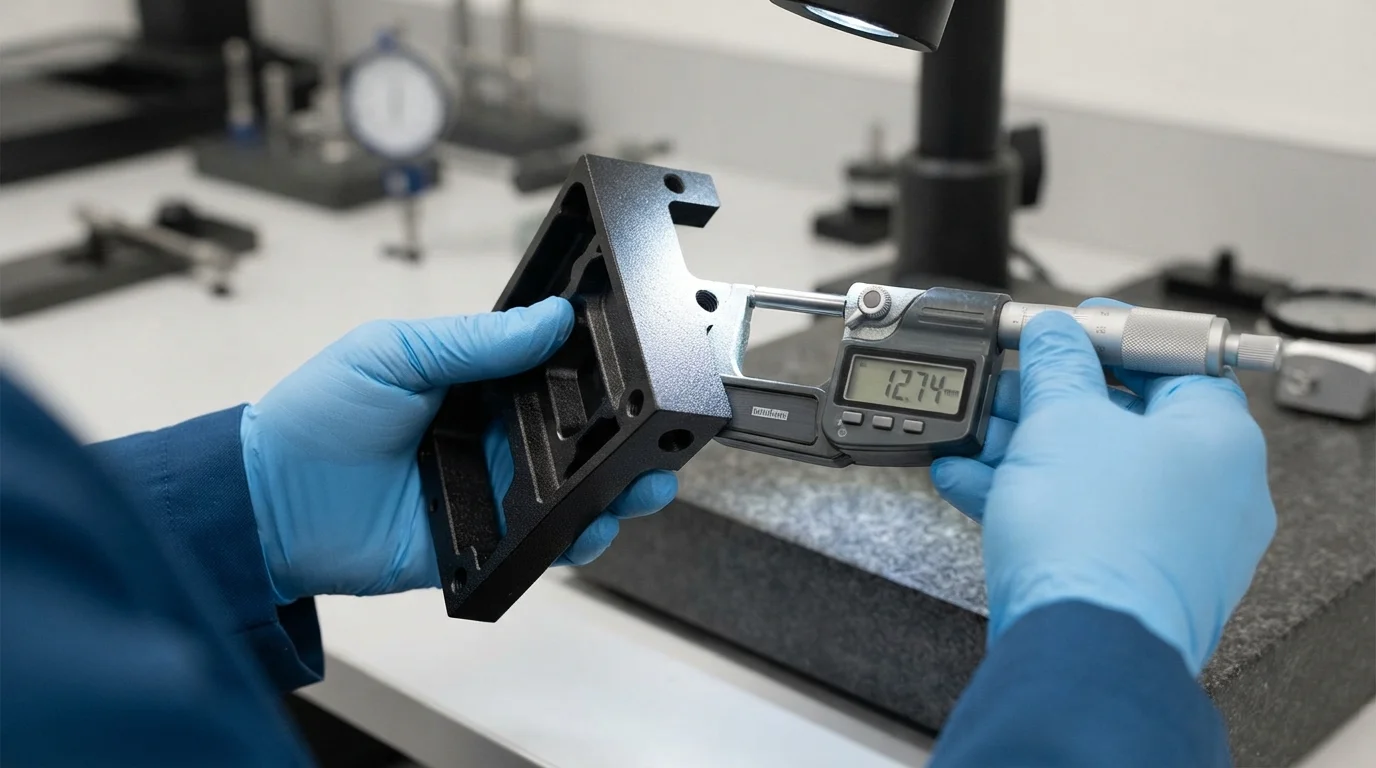
Wertvolle Ressourcen für fragile Modelle zu verschwenden, die sich bei ersten Feldversuchen verziehen, schmelzen oder brechen, ist ein großes Hindernis für Produktdesigner. Wenn Teile modelliert werden, ohne die physikalischen Materialeigenschaften wie Streckgrenze oder Wärmeformbeständigkeit zu analysieren, sind die physischen Komponenten sehr anfällig für Versagen. Die proaktive Abstimmung Ihrer mechanischen Anforderungen auf den richtigen Fertigungsprozess ist der beste Weg, um Ihren Produkteinführungszeitplan zu sichern.
Lassen Sie uns die wichtigsten Eigenschaften untersuchen, die Ingenieure bei der Planung von Prototypen berücksichtigen müssen, die mechanischen Unterschiede zwischen isotropen bearbeiteten Teilen und anisotropen 3D-Drucken vergleichen und prüfen, wie Sie auf unser vollständiges technisches Datenblatt zugreifen können.
Wichtige zu berücksichtigende Eigenschaften
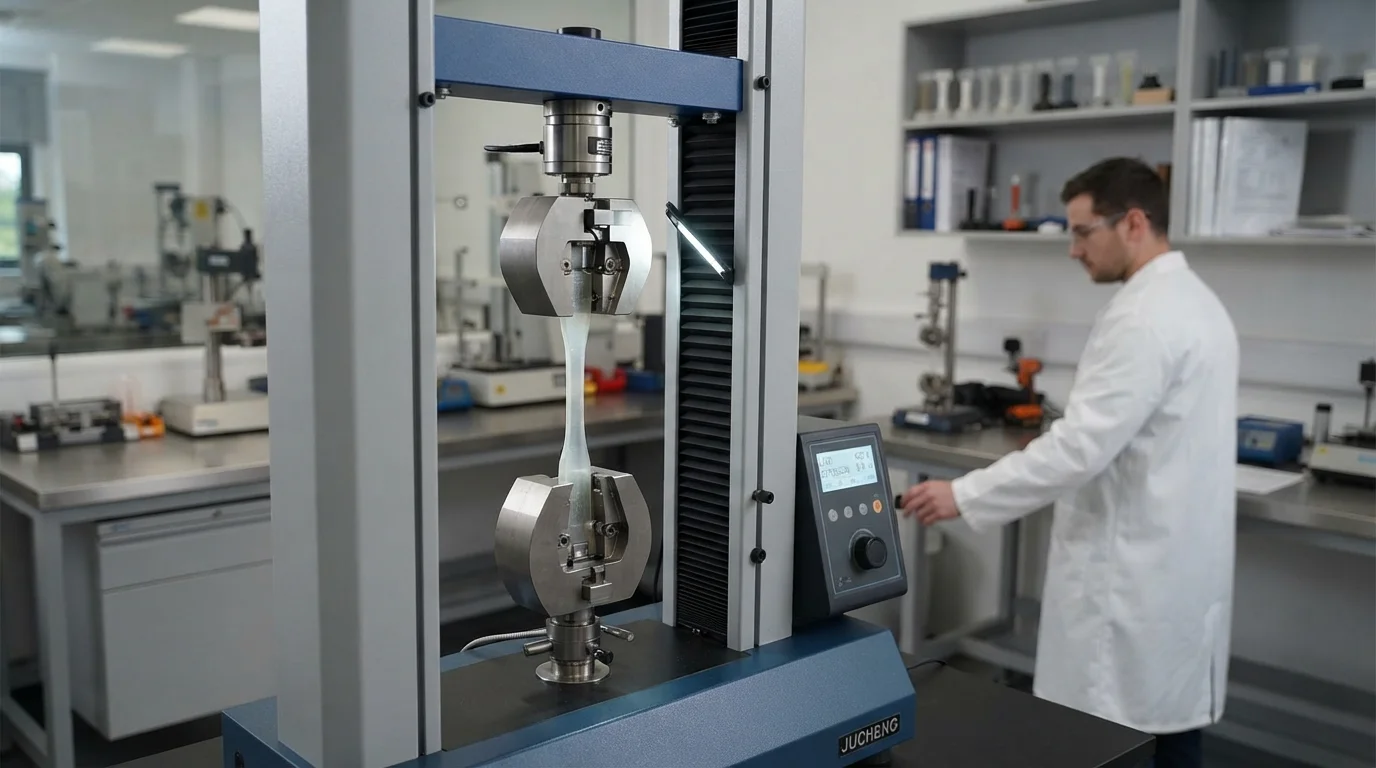
Was sind die kritischsten mechanischen und thermischen Eigenschaften, die bei der Auswahl eines Materials zu bewerten sind?
Wir müssen die Zugfestigkeit bewerten, um Zugkräften standzuhalten, die Wärmeformbeständigkeit, um thermische Verformung zu widerstehen, und die Shore-Härte, um Oberflächenverschleiß zu bewältigen.
Um eine erfolgreiche Komponentenleistung zu gewährleisten, ist die Analyse der Basiseigenschaften eines Materials entscheidend. Designer müssen je nach spezifischer Anwendung mehrere Parameter bewerten. Für tragende Halterungen ist eine hohe Zugfestigkeit (gemessen in MPa) unerlässlich, um bleibende Verformung unter Last zu verhindern. Für kundenspezifische Gehäuse, die Hochleistungselektronik beherbergen, ist eine hohe Wärmeformbeständigkeit (HDT) erforderlich, um lokale Panelverformung zu verhindern.
Ebenso ist die Verwaltung der Materialhärte für taktile Komponenten und Dichtungen entscheidend. Wir verwenden Shore-A-Skalen, um die Flexibilität weicher Elastomere (wie Silikon und Gummi) zu messen, und Shore-D-Skalen, um die Steifigkeit harter Kunststoffe zu messen. Die Wahl der richtigen Härte stellt sicher, dass Dichtungen dicht abschließen und Schutzstoßfänger Stöße effektiv absorbieren, ohne zu reißen.
CNC-Bearbeitung vs. 3D-Druck Materialeigenschaften
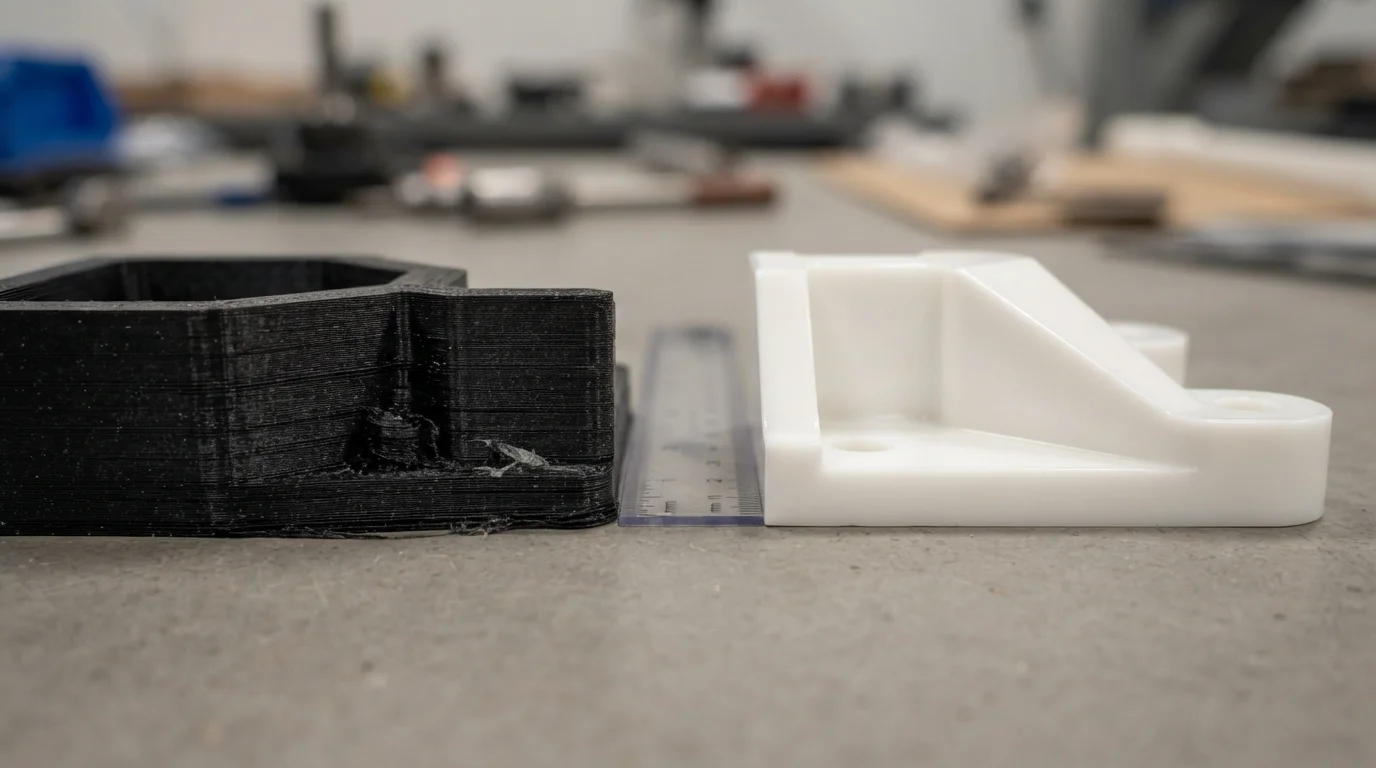
Warum besitzen zerspante Bauteile im Vergleich zu 3D-gedruckten Teilen überlegene mechanische Eigenschaften?
CNC-gefräste Teile werden aus massiven, extrudierten Blöcken geschnitzt, die 100% der physikalischen Dichte des Materials beibehalten, während 3D-Drucke geschichtete mikrostrukturelle Hohlräume aufweisen.
Das Verständnis, wie verschiedene Prozesse verändern Eigenschaften von Rapid-Prototyping-Materialien ist entscheidend für die Vorhersage des Bauteilverhaltens. Standard-3D-Druck (wie SLA oder FDM) baut Teile Schicht für Schicht auf und führt ein physikalisches Phänomen ein, das als Anisotropie. Dies bedeutet, dass das gedruckte Teil schwache Ebenen entlang seiner Z-Achse besitzt, was es unter dynamischen Lasten äußerst anfällig für Scherversagen macht, selbst wenn die Rohstoffe Rapid-Prototyping-Materialien von hoher Qualität sind.
Umgekehrt ist die CNC-Bearbeitung ein subtraktiver Prozess. Wir schnitzen Ihre Halterungen und Gehäuse direkt aus massiven, extrudierten Kunststoffblöcken (wie ABS oder Polycarbonat) oder geschmiedeten Metallbarren. Diese feste Struktur stellt sicher, dass die fertigen Teile gleichmäßige, isotrope mechanische Eigenschaften über alle Achsen hinweg beibehalten. Diese strukturelle Integrität macht die CNC-Bearbeitung zur bevorzugten Wahl für lasttragende Komponenten und hochbelastete Funktionstests.
Laden Sie unser vollständiges Materialdatenblatt herunter
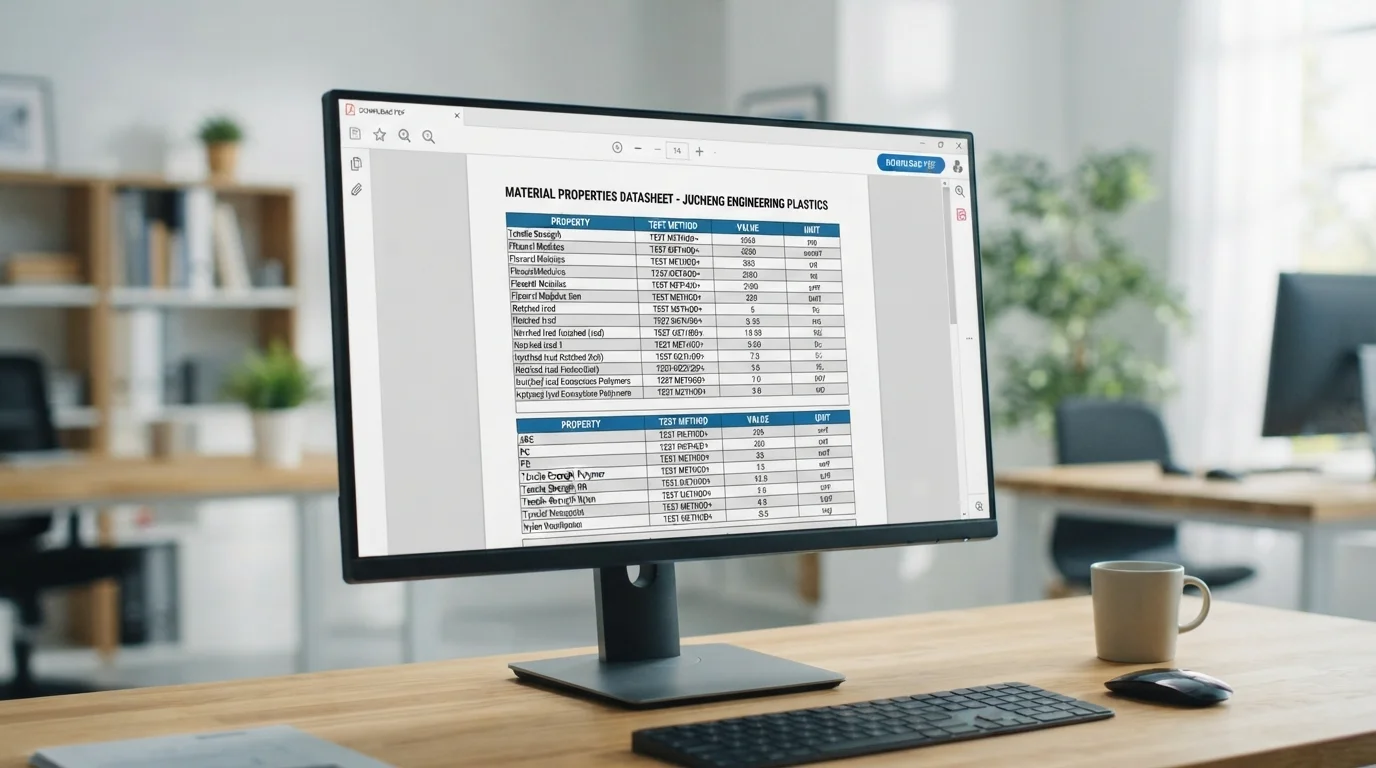
Wo können Ingenieure ein umfassendes, herunterladbares Referenzblatt für alle Prototyping-Materialien abrufen?
Wir bieten ein äußerst detailliertes, herunterladbares PDF-Datenblatt mit vollständigen mechanischen, thermischen und elektrischen Eigenschaften für alle unsere technischen Kunststoffe und Metalle.
Die Suche im Internet nach fragmentierten, inkonsistenten Materialtabellen kann Ihren Entwicklungszeitplan schnell ins Stocken bringen. Um Designteams zu unterstützen, haben wir unsere vollständige interne Materialdatenbank in einem einzigen, herunterladbaren PDF-Dokument zusammengestellt. Dieses exklusive Referenzblatt enthält vollständige physikalische Eigenschaften – einschließlich Zugfestigkeit, Biegemodul, Shore-Härte und Wärmeformbeständigkeitstemperaturen – für alle Standard- und Hochleistungslegierungen, die wir führen.
Die Integration dieser verifizierten Materialeigenschaften in Ihre frühen Designzyklen ist der effektivste Weg, um Fehler vor der Produktion zu eliminieren. Es dient als wesentliche DFM-Checkliste und hilft Ihrem Team, die optimale Legierung oder das optimale Polymer auszuwählen, um Ihre Leistungsanforderungen zu erfüllen. Klicken Sie auf den Link unten, um das vollständige Datenblatt herunterzuladen und Ihre Rapid-Prototyping-Service Arbeitsabläufe zu optimieren.
FAQ: Kritische Fragen zu Rapid-Prototyping-Materialeigenschaften
Unser Ingenieurteam hat professionelle, prägnante Lösungen für die häufigsten Materialauswahl-Herausforderungen zusammengestellt, mit denen Produktentwickler konfrontiert sind:
- Sind 3D-gedruckte Kunststoffmaterialien so stark wie standardmäßig im Spritzguss hergestellte Kunststoffe?
Nein, standardmäßige 3D-Drucke weisen im Vergleich zu geformten Thermoplasten eine geringere Zugfestigkeit und Hohlräume mit geringer Dichte auf. Für tragende Teile empfehlen wir die CNC-Bearbeitung aus extrudierten Blöcken oder die Verwendung von Rapid-Tooling-Spritzguss, um produktionsgerechte Materialeigenschaften zu gewährleisten. - Warum ist ABS für kundenspezifisches Prototyping sehr beliebt?
ABS bietet eine hervorragende Schlagzähigkeit, hohe Dimensionsstabilität und ausgezeichnete Bearbeitbarkeit zu einem sehr wirtschaftlichen Preis. Es lässt sich leicht fräsen, lackieren oder ultraschallschweißen, was es zur bevorzugten Basislösung für kundenspezifische Gehäuseprototypen macht. - Was verursacht Blechverzug oder Spannungsrisse bei bearbeiteten Polycarbonat-Prototypen?
Polycarbonat ist sehr duktil, behält aber innere Eigenspannungen aus dem Herstellungsprozess, die während aggressiver CNC-Bearbeitung freigesetzt werden und Spannungsrisse verursachen können. Wir verhindern dies, indem wir präzise Spannungsarmglühzyklen in unseren Öfen vor und nach der Bearbeitung durchführen. - Wie hilft Jucheng Precision Designern, komplexe Materialeigenschaften im Rapid Prototyping während der Designphase zu verifizieren?
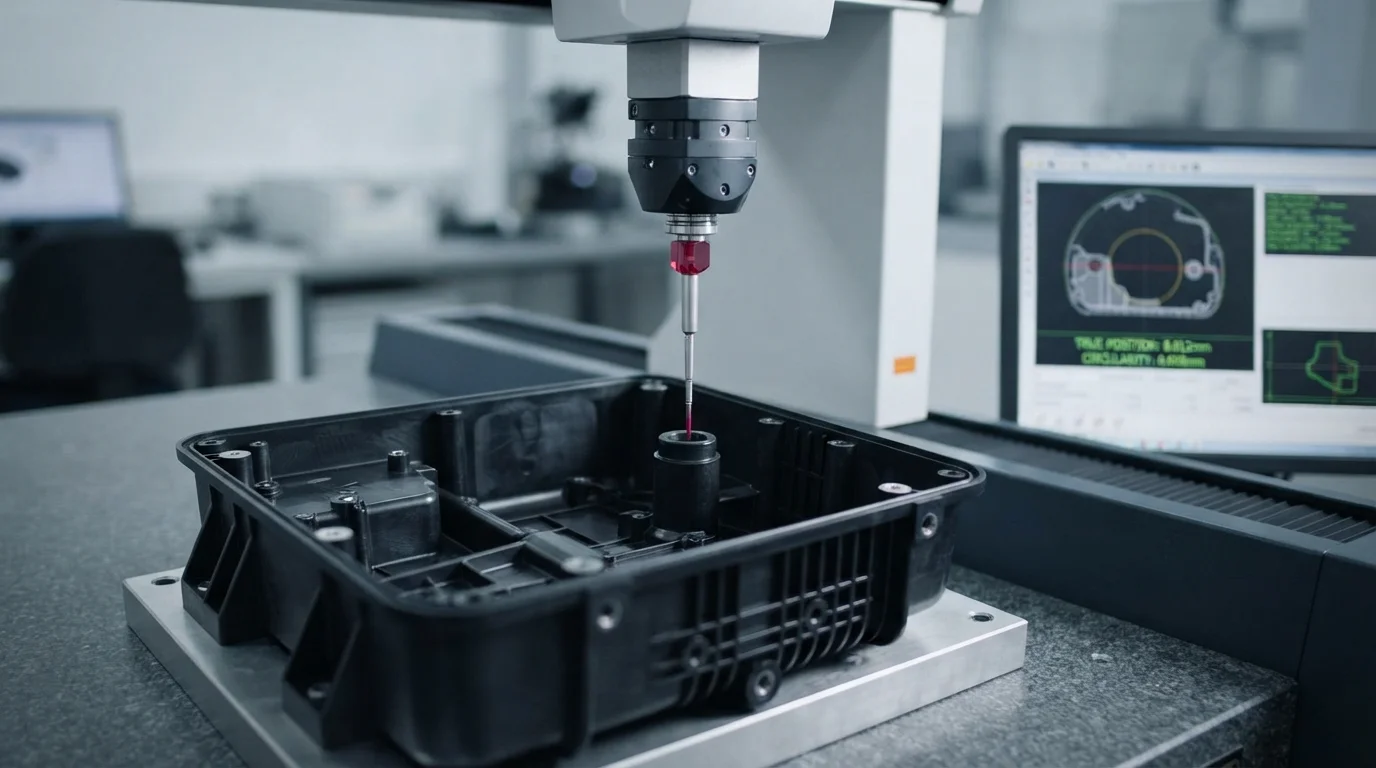
Unsere technische Abteilung führt eine umfassende DFM-Prüfung Ihrer CAD-Dateien durch, prüft auf Spannungskonzentrationen und Montageabstände und schlägt die optimale Legierung oder Polymersorte für Ihre spezifische Anwendung vor, unterstützt durch Koordinatenmessmaschinen (KMM)-Maßkontrollen an fertigen Teilen.

