


Subjecting a metal tool core to hundreds of tons of hydraulic clamping force while simultaneously injecting high-temperature polymer melts at blazing velocities pushes bridge manufacturing materials to their absolute mechanical limits. Selecting the correct cavity alloy dictates whether a rapid tool will maintain pristine structural alignment or suffer from micro-deflection during long production cycles. Evaluating p20 vs aluminum mold performance requires a deep dive into tensile yield strengths, clamping load resistances, and long-term dimensional stability under continuous press stress.
Inhaltsverzeichnis
1. Tensile Strength and Clamping Pressure Resistance Under Press Loads
2. Dimensional Stability Across Long Production Runs
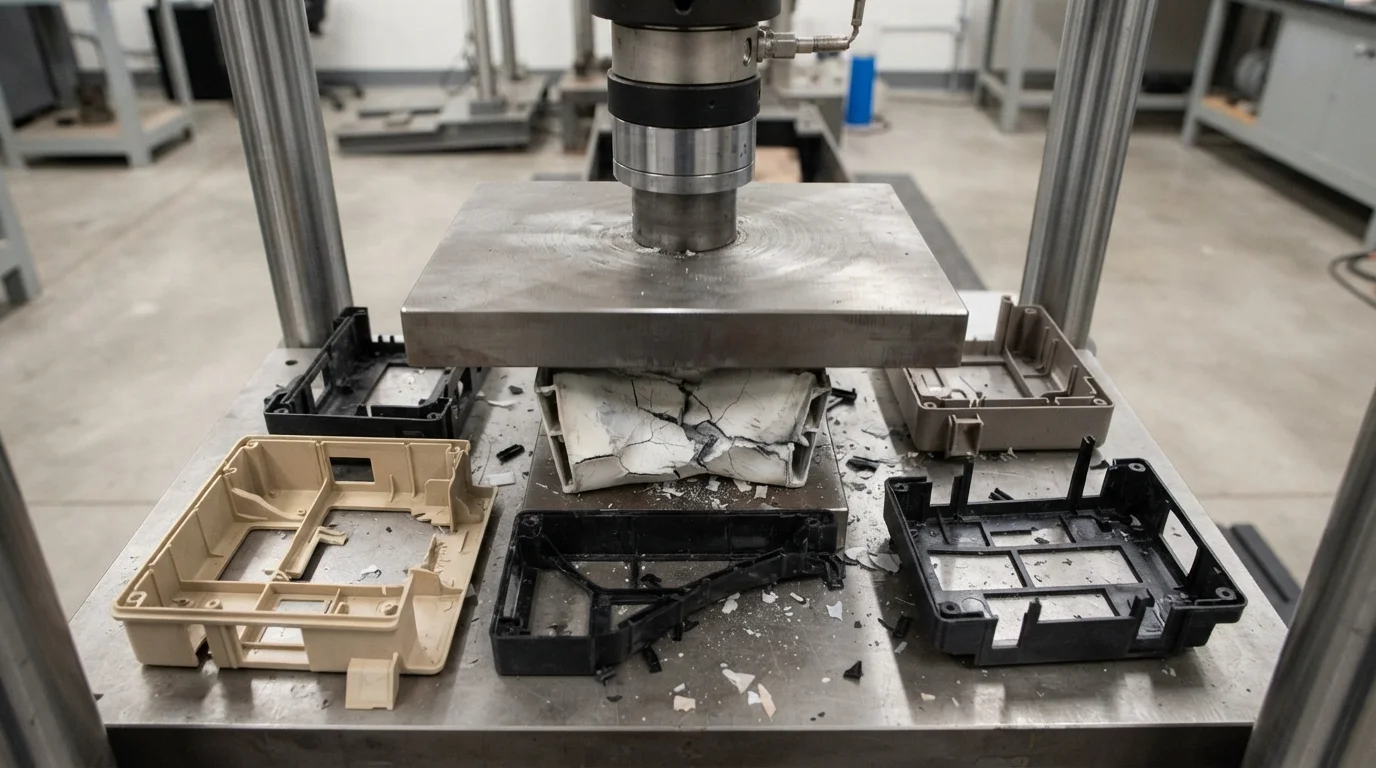
3. Impact Resistance and Crack Prevention in Thin-Walled Molds
Tensile Strength and Clamping Pressure Resistance Under Press Loads
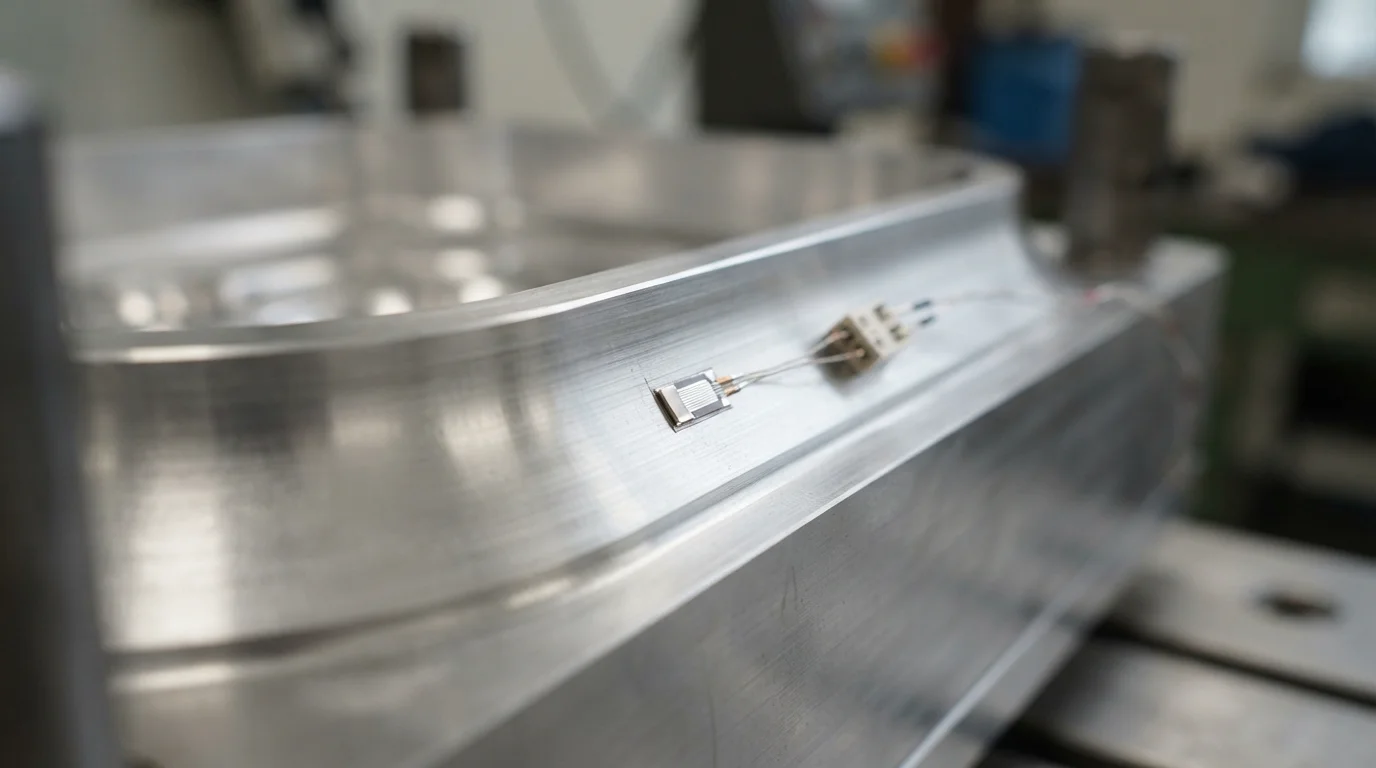
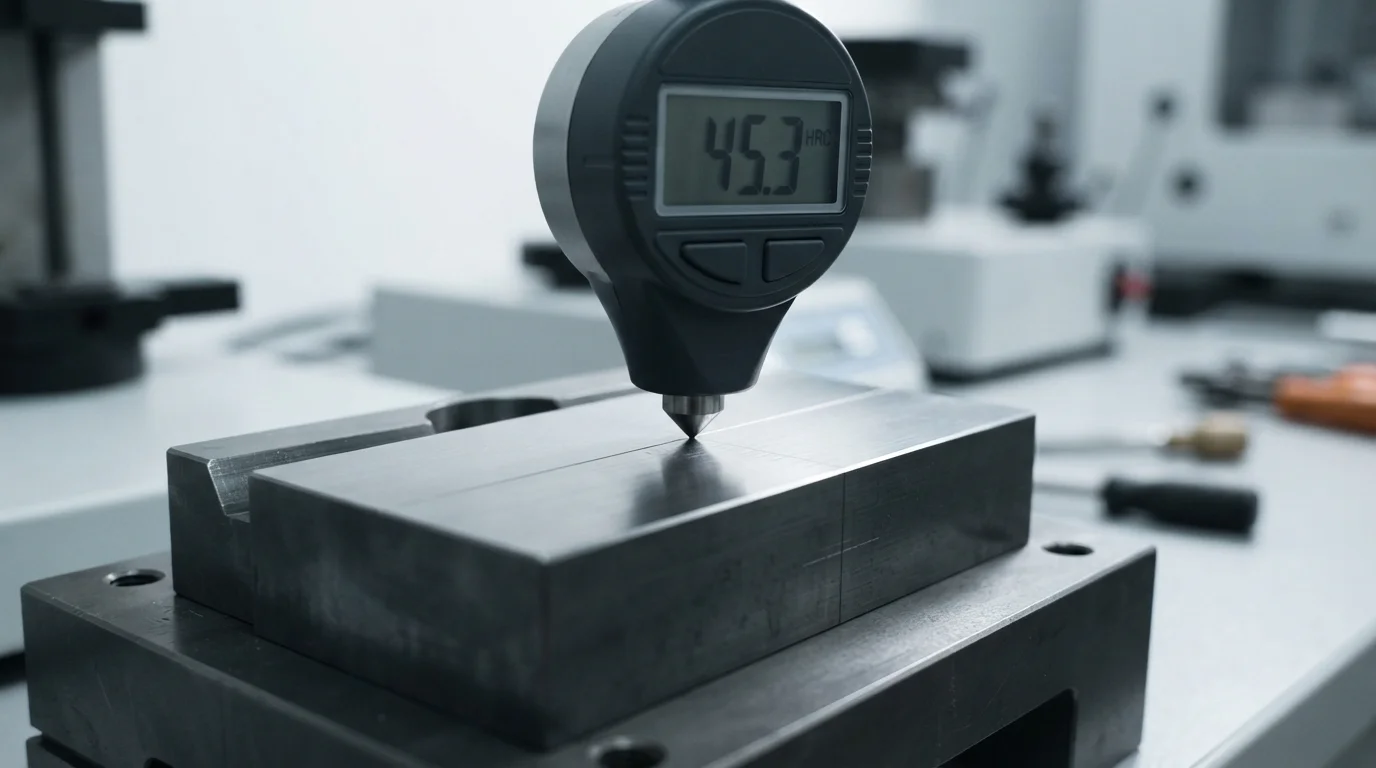
Question: How do pre-hardened P20 steel alloys and aerospace-grade aluminum plates compare when subjected to massive hydraulic press clamping loads? Pre-hardened P20 steel provides superior Brinell hardness and structural rigidity, resisting permanent micro-indentation far better than softer aluminum alloys under high-tonnage pressure.
During high-pressure injection cycles, mold split-lines absorb tremendous tonnage designed to prevent resin flash. If a cavity metal lacks adequate yield strength, repeated high-tonnage impacts will gradually deform shut-off boundaries. Sourcing a dedicated Schnellwerkzeugbau-Service ensures the chosen metal matches your project’s specific clamp tonnage requirements. Utilizing an agile Spritzguss-Service prevents flashing by matching press pressures to alloy limits.
Contrasting mechanical strength profiles across rapid tooling alloys involves monitoring specific structural properties:
| Mechanical Attribute | AL7075-T6 Aluminum Alloy | Pre-Hardened P20 Steel Alloy |
|---|---|---|
| Brinell Hardness Rating | Approx. 150 HB | Approx. 300 HB (30 HRC) |
| Tensile Yield Strength | Moderate (~500 MPa) | High (~1000 MPa) |
| High-Tonnage Deformation Resistance | Prone to localized shut-off flattening | Exceptional resistance to crushing forces |
Dimensional Stability Across Long Production Runs
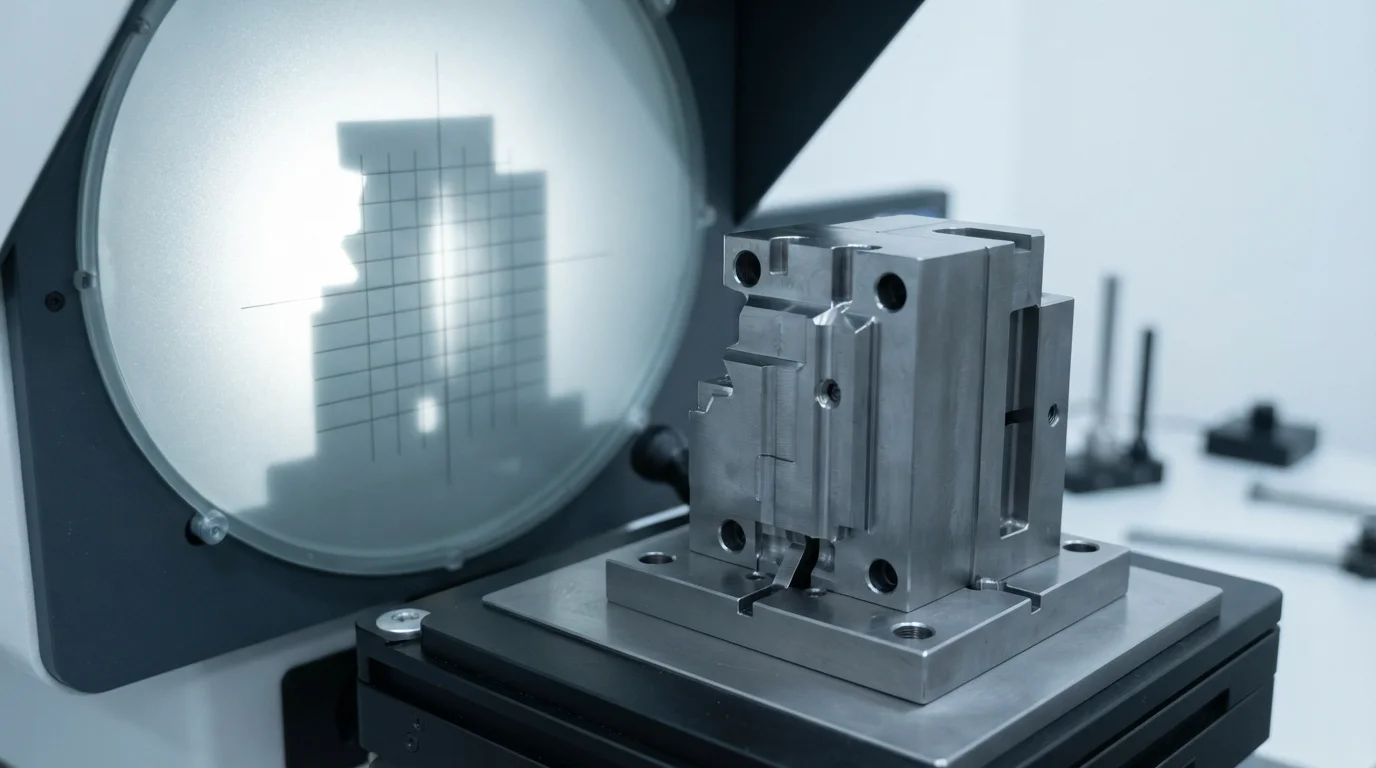
Question: Why does P20 steel outperform aluminum when maintaining precise component tolerances over thousands of continuous injection cycles? Its dense structural grain matrix resists thermal fatigue and mechanical wear, preventing gradual cavity enlargement.
When a bridge manufacturing campaign pushes toward the upper limit of five thousand to ten thousand units, softer metal walls can experience microscopic creep. P20 steel maintains its initial machining dimensions far longer, ensuring the five-thousandth molded part matches the first T1 sample. Sourcing an experienced CNC-Bearbeitungsservice ensures cavity pockets are carved with absolute dimensional precision.
Controlling structural stability and preventing long-term drift involves tracking key performance rules:
- Resisting parting line creep—Harder steel shut-offs prevent molten polymer from squeezing out as flash over time
- Maintaining core pin rigidity—Preventing slender internal core pins from bowing under high-velocity resin injection streams
- Ensuring multi-cavity uniformity—Keeping cavity dimensions synchronized across multi-part bridge molds
Impact Resistance and Crack Prevention in Thin-Walled Molds
Jucheng Precision unterstützt Hardware-Entwickler durch umfassende 24-Stunden-kostenlose DFM reviews that evaluate alloy suitability, structural wall distributions, and clamp pressure requirements prior to cutting metal. Operating with 150+ advanced CNC machines alongside 35+ specialized injection molding workstations, our ISO 9001 certified facilities ensure exceptional structural performance across every tooling tier.
Zu den wichtigsten betrieblichen Vorteilen unseres technischen Bewertungsrahmens gehören:
- Expert alloy consultation—Analyzing whether your project demands aluminum speed or P20 steel toughness
- High-precision metal carving—Utilizing multi-axis CNC workstations to achieve absolute structural fidelity
- Null Mindestbestellmengen-Beschränkungen—Keine MOQ-Richtlinien ermöglichen eine exakte Bestandsabstimmung mit kundenspezifischen Pilotproduktionsläufen
Ready to select the ideal alloy for your mold? High-Performance Tooling Solutions at Jucheng Precision are ready to support your program.
Häufig gestellte Fragen (FAQ)
Does P20 steel deform under high injection pressure?
P20 pre-hardened steel possesses a Brinell hardness of around 300 HB (30 HRC) and exceptional tensile yield strength, making it highly resistant to high-pressure injection and clamping forces with virtually no permanent deformation.
Why does P20 steel offer superior dimensional stability over long production runs?
The dense grain structure and high hardness of pre-hardened steel resist thermal fatigue, parting line crushing, and mechanical wear far better than softer aluminum alloys during extended cycling.
How does Jucheng Precision assist in choosing between P20 steel and aluminum?
Jucheng Precision provides 24-hour free DFM reviews, expert material engineering guidance, and high-precision CNC machining to ensure your rapid mold utilizes the ideal metal alloy.

