


Look through the center of an orthopedic trephine and the manufacturing problem changes. The opening is part of the component’s geometry, not simply material left out of a solid cutting tool. Inner diameter, outer diameter, local wall, cutting rim, and the defined internal path need to be considered together when planning a prototype and its inspection.
For an instrument-development team, this creates a practical decision: which starting form and operation sequence will represent the required hollow structure without leaving important surfaces inaccessible to inspection? The answer depends on the approved design and the purpose of the sample. This guide concerns that component-development decision, with clinical selection and instrument-use procedures outside its scope.
Narrow the instrument definition before choosing stock
The word trephine covers different products and applications. The gSource orthopedic trephine catalog identifies trephines, plug cutters, and associated components within its own range. That catalog is useful for recognizing the product family, but it is not a universal drawing or permission to combine every listed feature and use into one instrument.
Specify the exact instrument configuration. Identify the hollow cutting section, any shaft or coupling, the internal path, and any companion component that affects geometry. Record which features are integral and which belong to an assembly. An image can communicate a broad shape, but it rarely provides enough information to manufacture or accept the full instrument.
Keep this review distinct from a general bone-reamer discussion. The focus here is the relationship between a hollow wall, a circumferential cutting region, and the space that must remain inside. A generic checklist for flutes and a drive shaft would leave that particular manufacturing question unresolved.
Map the hollow section as related surfaces
Start with a controlled section view. Dimension the internal and external features from the references required by the design, including any relationship that controls the remaining wall or the cutting region. Do not assume that checking two nominal diameters independently establishes the complete local geometry. The drawing must define the relationships that matter.
| Region | Question for the drawing review | Question for inspection planning |
|---|---|---|
| Inner and outer surfaces | What relationship defines the hollow wall? | Can both surfaces and their required relationship be measured? |
| Circumferential cutting region | Which profile and edge condition are specified? | Can those features be checked after the final relevant operation? |
| Internal transition or passage | What must remain open and accessible? | Which areas can be inspected directly, and which need another method? |
| Connection to another component | How is the hollow section located or retained? | What reference or mating definition represents the required interface? |
For an orthopedic trephine prototype, this map gives Jucheng Precision a useful starting point for reviewing the required geometry and the sample objective. It separates a visual model from a component intended for dimensional review and from one that must represent a particular material and process state. Each can be valuable when its limitations are identified.
The map also exposes missing information early. If a section cannot show how a wall requirement relates to the chosen reference, resolve that issue before tightening an isolated diameter. If an internal transition is hidden in the assembly, decide whether the necessary evidence can be obtained before assembly or whether another inspection approach is needed.
Compare a tubular blank with a solid-stock route
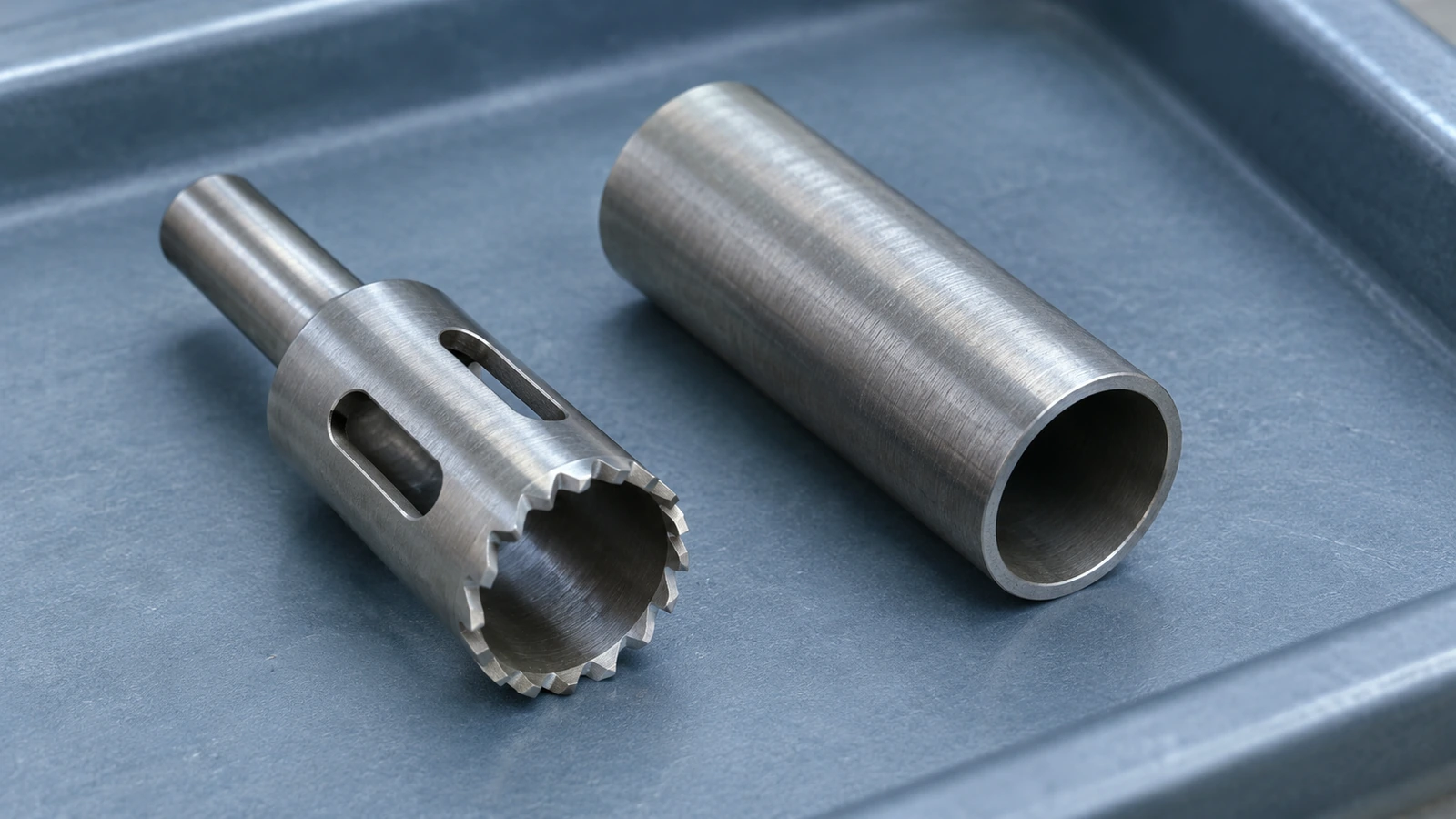
A tubular starting form can provide an existing internal opening, while a solid-stock route creates that opening through subsequent operations. The choice should follow the required material, geometry, quantity, and acceptance scope. Neither route should be assumed to deliver the final wall relationship merely because its starting dimensions appear convenient.
For tubular stock, review what the incoming specification establishes and what still needs to be created or verified. The usable material condition, stock variation, machining allowance, and final reference scheme all need consideration. An incoming tube certificate does not replace an inspection plan for the completed instrument component.
For a solid-stock route, discuss access to the internal features and how the component will be supported through successive operations. A process can create an opening yet leave questions about the required internal surface, transitions, or relationship to the cutting region. Address those questions as part of route selection rather than discovering the inspection gap after the sample is finished.
The value of an early prototype is clarity about these tradeoffs. Jucheng Precision can review a component request around machining access and coordinated sample geometry. If a later production route differs, identify which development conclusions remain applicable and which require another representative build. A successful geometric review does not establish the consistency of an untested manufacturing route.
Protect the rim through subsequent operations
The cutting region needs an explicit definition that distinguishes its controlled profile from general edge treatment. An instruction to polish or deburr the entire component may be too broad if it allows a specified rim to be changed without a defined limit. Resolve the treatment of individual regions before accepting a general finishing note.
When the approved design specifies stainless steel, Jucheng Precision’s stainless steel machining information can support the manufacturing review. The actual grade, condition, treatment, and final surface requirements still belong in the controlled project documents. A general machining material listing is not a substitute for the instrument’s device-specific requirements.
Arrange the inspection sequence around the operations that can change the controlled features. Keep intermediate checks for process control where useful, and identify the final state represented by the delivery report. If a treatment or finishing operation occurs after a rim measurement, explain how the required final characteristic will be established afterward.
Plan evidence for the internal path
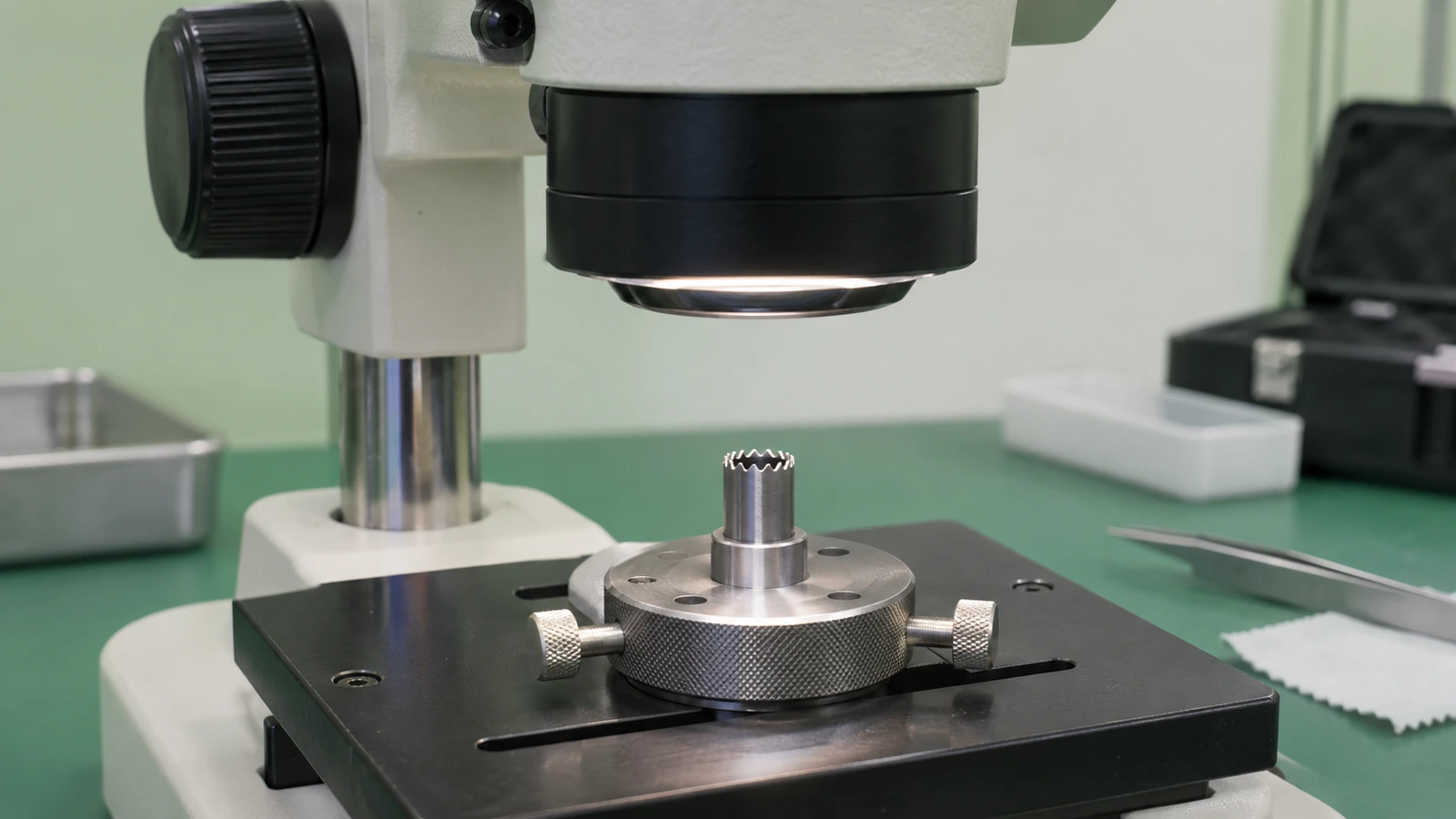
Access and cleanliness are related discussions, but they are different acceptance questions. Identify which internal features can be seen, reached, or measured by the proposed method. A photograph of the outside cannot establish the condition of a hidden transition, and a component that appears open from one end may still need a more specific check against the drawing.
Consider a hypothetical development sample with an acceptable external profile and an internal transition that the selected inspection setup cannot reach. The useful response is to address the evidence gap: agree another method, an identified evaluation sample, or a narrower sample objective. Accepting the part on its exterior appearance would leave the internal requirement unanswered.
If the design requires cleaning or other downstream processing, define the corresponding component scope and responsibility. A supplier can document agreed manufacturing and inspection activities, but those records do not establish clinical readiness or a validated reusable-device process. Keep such requirements explicit in the project plan and supported by appropriate evidence.
Prepare a brief that represents the whole hollow component
Include the model, sectioned drawing, material condition, rim requirements, internal-surface definition, mating references, quantity, and prototype objective. Highlight the characteristics that the delivered evidence must resolve. State any supplied companion component and identify its revision so that the sample review uses a consistent configuration.
The orthopedic trephine brief becomes useful when it connects the hollow wall and working region to a specific manufacturing and inspection decision. The team can then compare route proposals on the same basis and identify which parts of the problem remain open. That is a stronger starting point than ordering a realistic-looking cutting tube and deciding afterward what it was meant to demonstrate.
Should a sectioned sample be part of the first order?
Include one when an agreed evaluation question makes it useful, and identify it separately from complete components. Sectioning changes the sample, so its record should state the preparation method and the conclusions it supports. It does not automatically prove that every component in the lot has the same internal condition.
Can one set of files cover several diameters?
A controlled family drawing can work if it defines the variants and all associated requirements clearly. Do not assume that every feature scales with diameter. Confirm which wall, rim, connection, and identification requirements remain common and which change between variants.
For a coordinated prototype discussion, send Jucheng Precision the section views and evidence requirements alongside the external model.

