


Wie die Oberflächenbeschaffenheit die Formfreigabe im Rapid Tooling beeinflusst
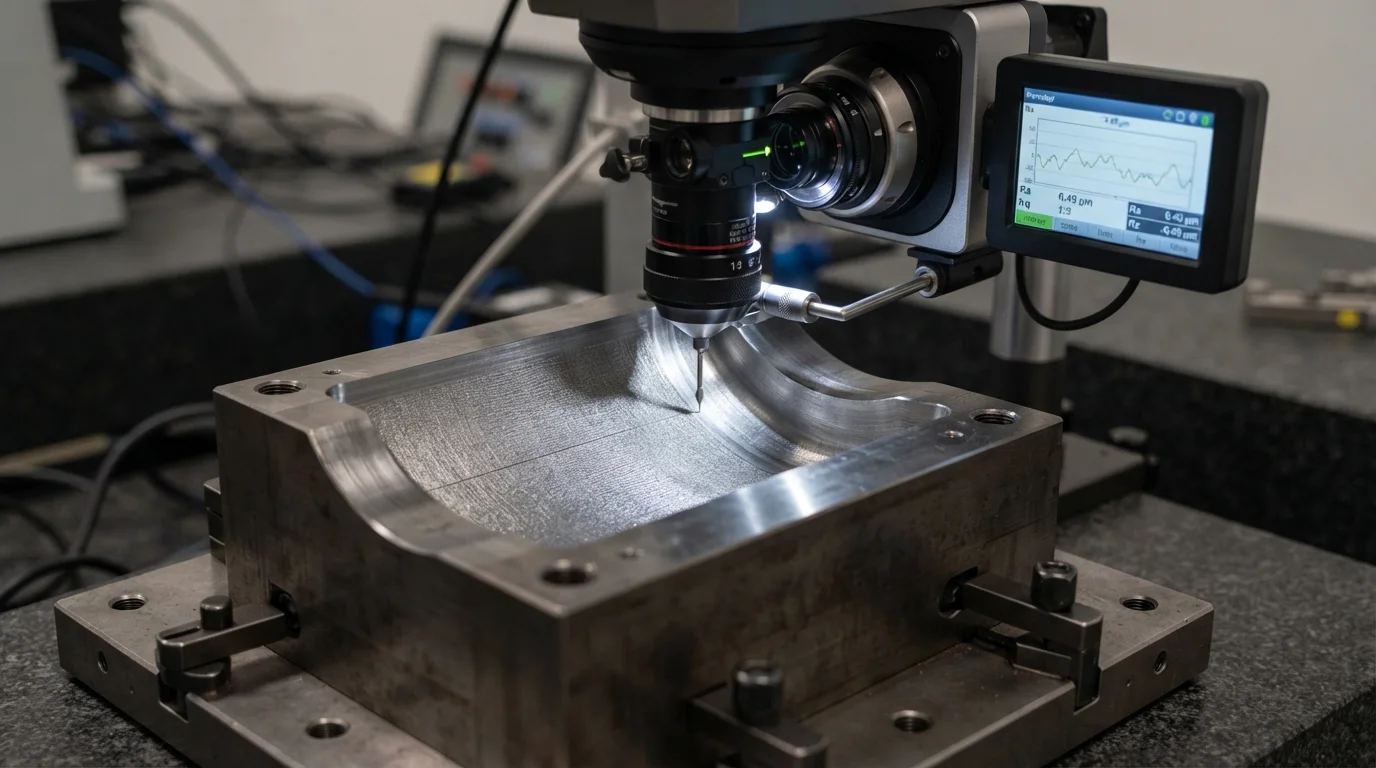
Das reibungslose Herauslösen eines neu eingespritzten Polymerbauteils aus einer Rapid-Metallkavität hängt stark von der mikroskopischen Topographie der Werkzeugwände ab. Wenn Produktentwicklungsteams bewerten, wie die Oberflächenbeschaffenheit die Formfreigabe im Rapid Tooling beeinflusst, ist die Balance zwischen hochglänzender Ästhetik und mechanischer Auswurfreibung entscheidend. Ohne korrekte Politurausrichtung kann sich abkühlender Kunststoff an rauen oder hinterschnittenen Metalloberflächen festsetzen, was zu Vakuumsog, Oberflächenabrieb oder struktureller Verformung des Bauteils führt.
Die Nutzung eines erfahrenen Schnellwerkzeug Der Anbieter stellt sicher, dass die Kavitätsoberflächenrauheit und Entformungsschrägen optimiert sind, bevor Spritzgießens Brückenläufe beginnen. Lassen Sie uns die Physik der Auswurfreibung und die Art und Weise, wie Oberflächenbeschaffenheiten den Entformungserfolg bestimmen, untersuchen.
Modul 1 – Definition und Funktionsprinzipien der Auswurfreibung
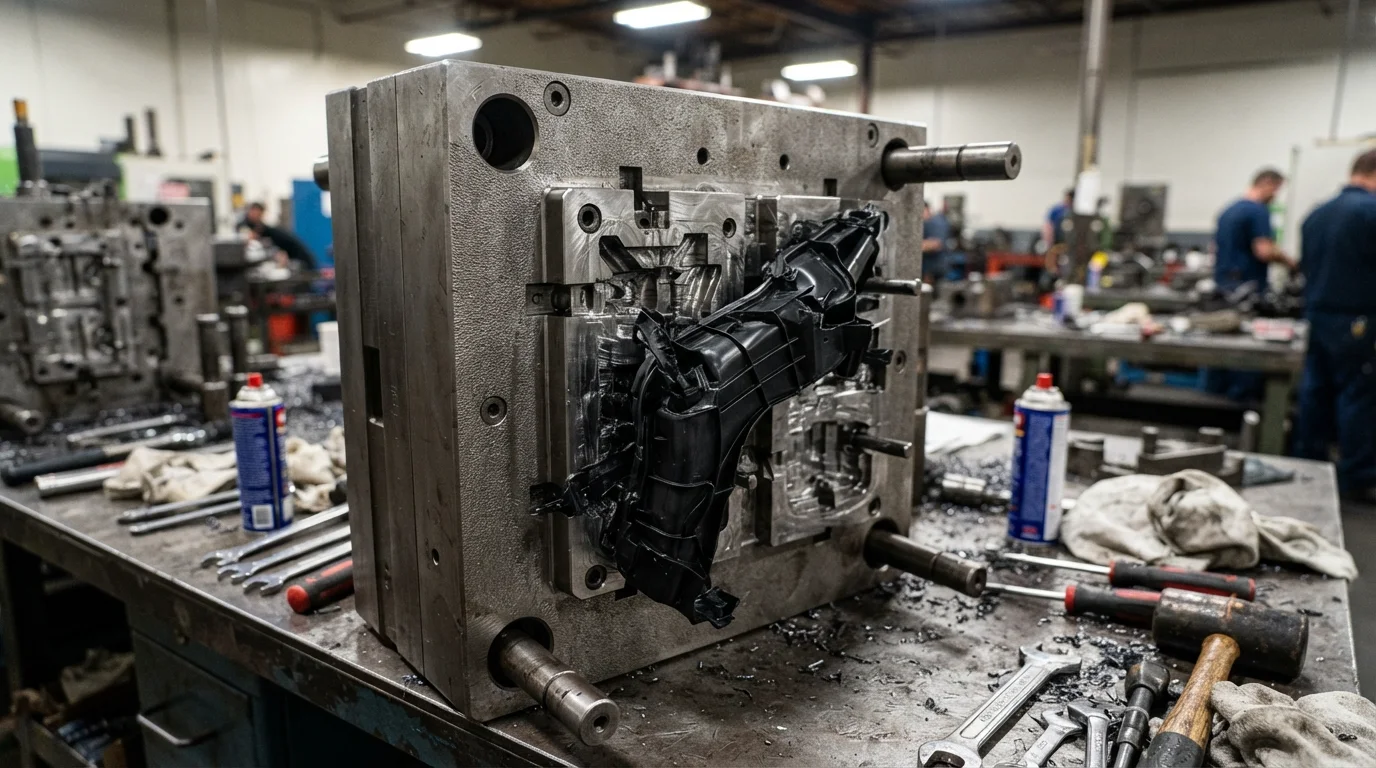
Die Formfreigabedynamik bezieht sich auf die mechanische Wechselwirkung zwischen einem erstarrenden Polymer und den Metallkavitätswänden, wenn Auswerferstifte das Bauteil herausdrücken. Das Funktionsprinzip beruht auf der Minimierung der mikromechanischen Verzahnung. Glattere Spiegeloberflächen reduzieren die Kontaktfläche und die Haftung, während tiefe Texturen oder raue Werkzeugspuren den Auslösewiderstand erhöhen. Während die Primärformen per CNC-Bearbeitung, geschnitten werden, kontrolliert die Werkstattpolitur das endgültige Freigabeprofil für Harze wie ABS oder Polycarbonat (PC).
Um strukturierte Arbeitsabläufe zur Optimierung der Formfreigabe auszuführen, könnten Werkzeugbauer diese praktischen Schritte befolgen:
- Richtungspolitur: Polieren Sie die Kavitätswände streng entlang der Achse des Bauteilauswurfs, um quer verlaufende Mikro-Nuten zu beseitigen, die Kunststoff einfangen.
- Entformungsschrägen-Kalibrierung: Passen Sie die vertikalen Wandverjüngungen direkt an die Rauheitstiefen der Oberfläche an, um einen reibungslosen Gleitspalt zu gewährleisten.
- Positionierung der Auswerferstifte: Positionieren Sie Stahl-Auswerferstifte um tiefe Strukturumfänge, um die Auswurfkraft gleichmäßig zu verteilen.
Modul 2 – Kernanwendungsszenarien
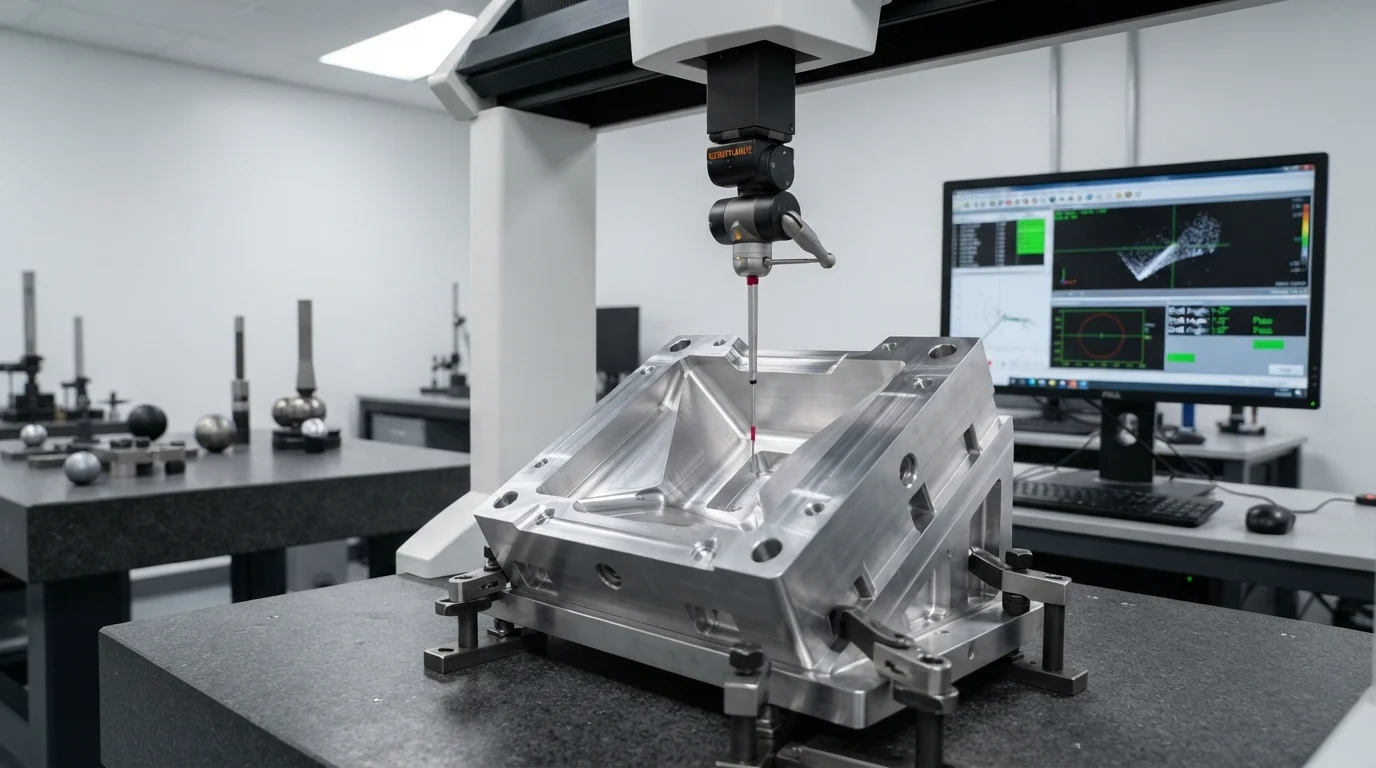
Die Optimierung der Auswurfreibung ist bei tiefgezogenen Gehäusen, Unterhaltungselektronik mit komplexen Schnappverbindungen und medizinischen Gerätegehäusen, bei denen Kleben beim Auswerfen zu Produktionsausfällen führt, unerlässlich. Wenn Ingenieure Teileverzug beheben, deckt die Analyse wie die Oberflächenbeschaffenheit die Formfreigabe im Rapid Tooling beeinflusst grundlegende Formschrägenfehler auf. Rückmeldungen von professionellen Prototyping-Gruppen auf Reddit und Facebook zeigen, dass korrekte Polierausrichtung Vakuumverriegelung an tiefen Wänden verhindert.
Zu den primären Anwendungsbereichen gehören:
- Tiefziehgehäuse: Formen hoher elektronischer Gehäuse mit polierten vertikalen Wänden, um Vakuumsog beim schnellen Auswerfen zu verhindern.
- Texturierte Gehäuse: Herstellung von Konsumgeräten mit Mattfinish und erhöhten Formschrägen, um Mikroverzahnung entgegenzuwirken.
- Automobil-Zierleisten: Herstellung komplexer Innenraumkomponenten, die ein einwandfreies Auswerfen ohne Spannungsrissbildung erfordern.
Modul 3 – Wichtige Auswahlfaktoren für den Projekterfolg
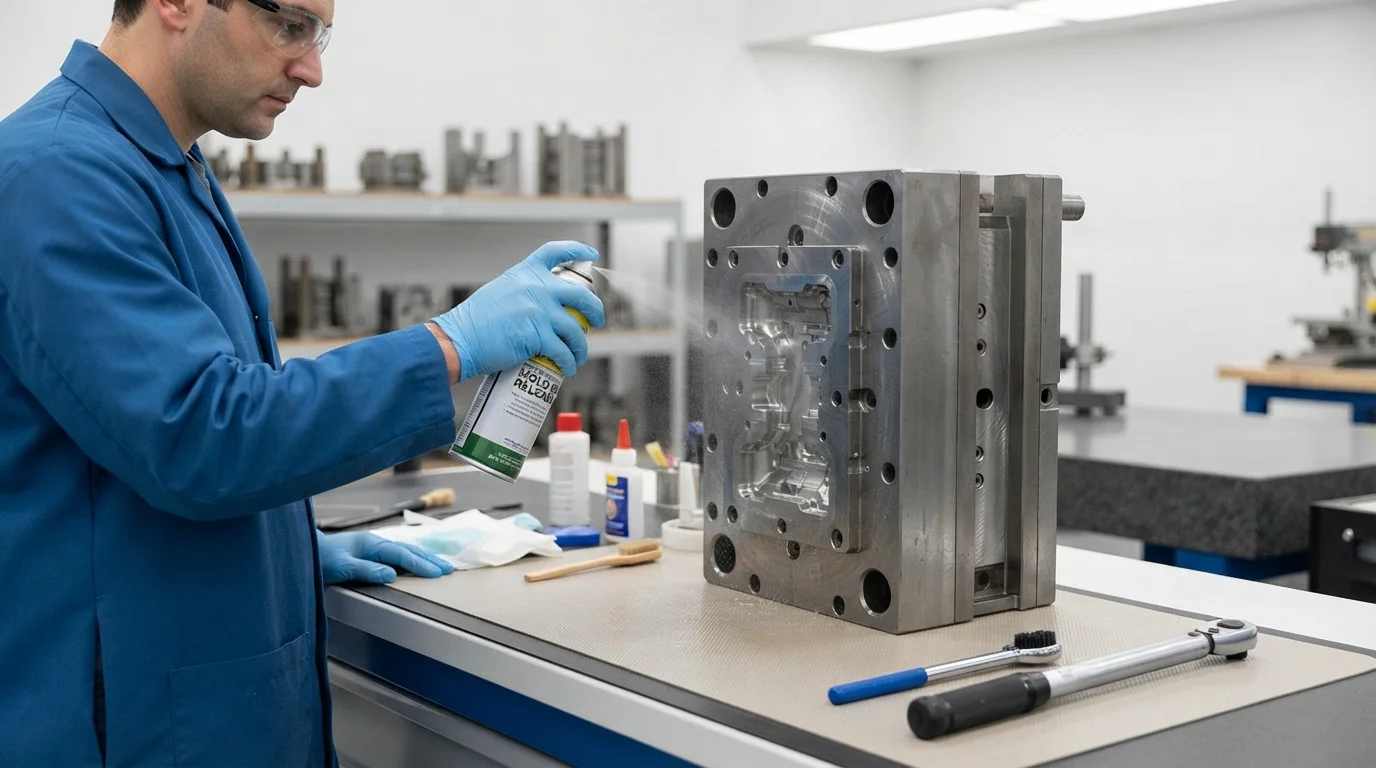
Bei der Festlegung von Oberflächentexturen und Poliergraden für schnelle Brückenwerkzeuge müssen Entwicklungsteams ästhetische Ziele gegen Auswurfkraftanforderungen abwägen. Die Bewertung dieser Kernparameter gewährleistet reibungslose Kurzserienproduktionen.
| Oberflächenbeschaffenheit | Auswurfreibungseinfluss | Erforderliche Formschrägenanpassung |
|---|---|---|
| SPI-A2 Spiegelpolitur | Lowest friction; releases smoothly | Standard minimum draft (0.5 to 1 degree) |
| SPI-B3 Semi-Gloss | Moderate friction resistance | Slight taper increase for safety |
| Deep VDI 33 Textures | High mechanical interlocking friction | Extra 1 degree draft per 0.025 mm depth |
Modul 4 – Installations- und Wartungstipps
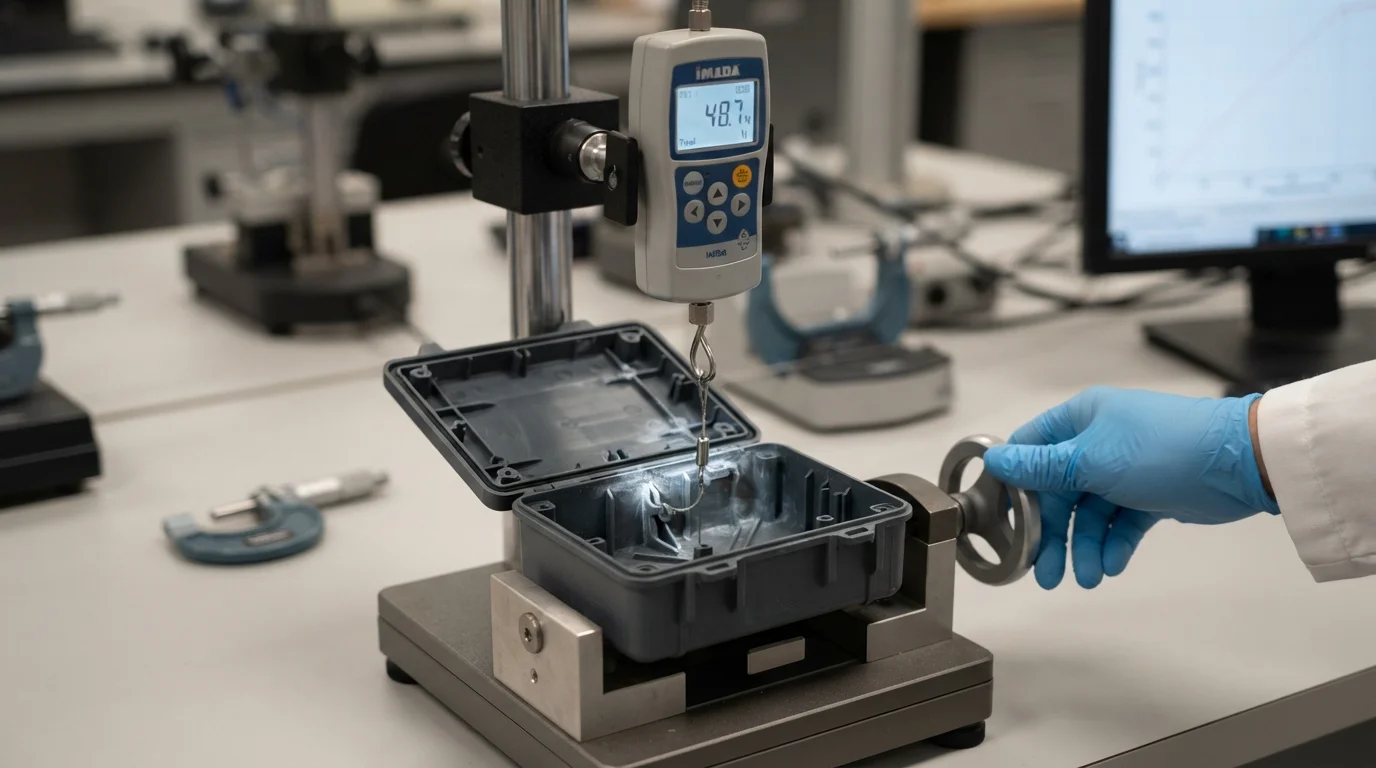
Proper toolroom installation and routine release maintenance safeguard mold cavity walls across active production cycles. Protecting polished surfaces from adhesive wear ensures consistent part ejection.
Wichtige Installations- und Wartungstipps umfassen:
- Release Agent Application: Apply thin, approved anti-stick mold sprays carefully to assist initial pilot part stripping.
- Ejector Synchronization: Verify balanced pin movement across the mold base to prevent asymmetric part binding.
- Parting Line Inspection: Check shut-off faces regularly for micro-burrs that can trap polymer flash during closing.
Modul 5 – Häufig gestellte Fragen (FAQ)
1. How does mold surface finish influence plastic part ejection force?
Smoother mirror polishes reduce microscopic surface friction and vacuum lock, allowing molded parts to release with significantly lower mechanical stripping force.
2. Why do deep textures require increased draft angles in rapid tooling?
Textured micro-craters create mechanical interlocking with cooling plastic, demanding extra wall taper to prevent surface scratching during mold opening.
3. Can poor surface polishing cause parts to stick inside aluminum molds?
Yes, transverse polishing marks or rough tool paths act like tiny anchors, gripping cooling polymer and causing parts to stick during ejection.
4. What role do ejector pins play in overcoming mold release resistance?
Ejector pins thrust forward mechanically to push solidified parts off core features, overcoming the friction between the plastic and cavity walls.
5. How can vacuum lock be prevented on deep-drawrapid molded enclosures?
Vacuum lock is prevented by combining highly polished vertical walls, adequate draft angles, and strategic air valve placement within the tool.
6. How does Jucheng Precision optimize tool design for smooth mold release?
Jucheng Precision provides 24-hour free DFM reviews, expert draft evaluations, and precision polishing to guarantee seamless part ejection.
Modul 6 – Warum JUCHENG für Ihr Projekt wählen
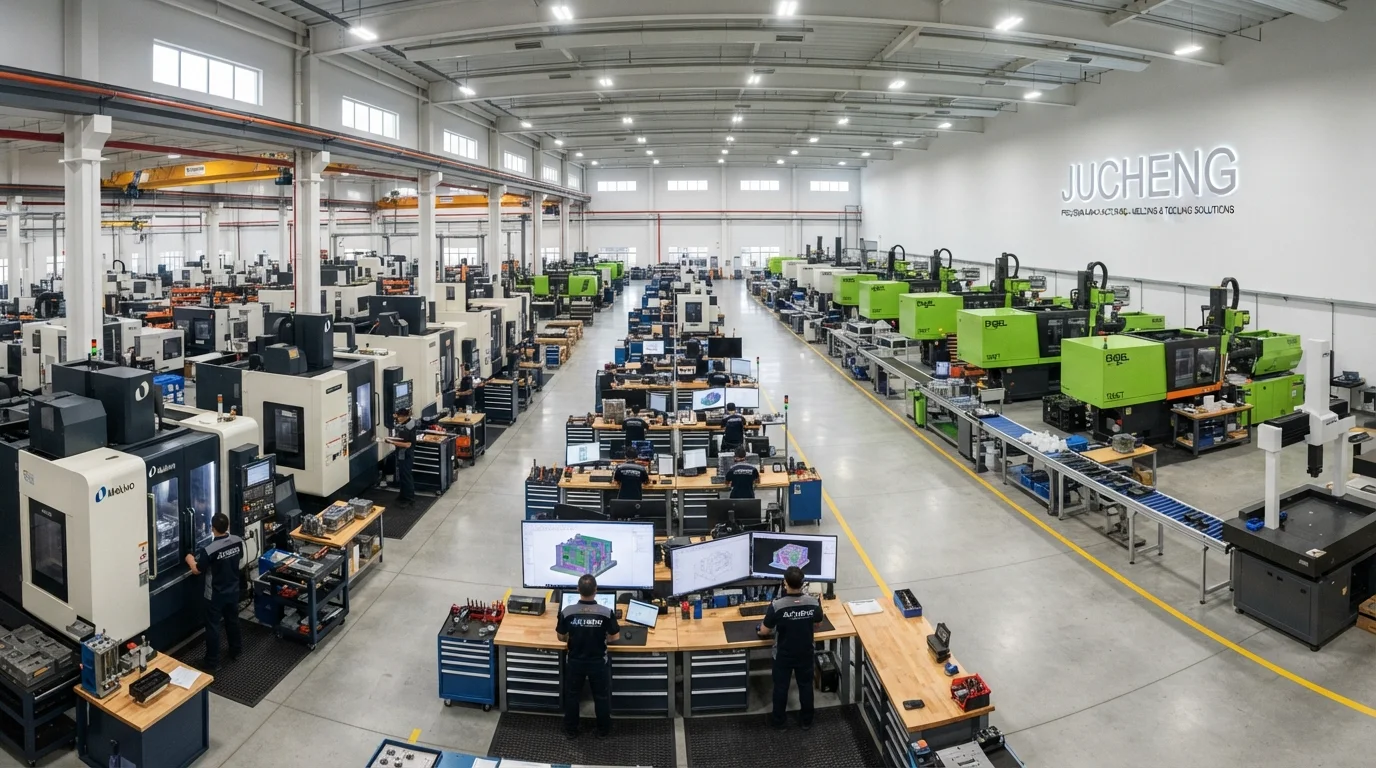
Achieving seamless component ejection requires an experienced manufacturing partner. JUCHENG unterstützt Hardware-Innovatoren durch die Bereitstellung umfassender 24-Stunden-kostenlose DFM Bewertungen, die Entformungsschrägen, Politurgrade und Anschnittpositionen vor dem Werkzeugschneiden analysieren. Gegründet 2012 in Shenzhen mit einer 8.000 Quadratmeter großen Anlage in Dongguan, beherbergt unsere Fabrik über 150 fortschrittliche Maschinen, darunter über 25 leistungsstarke 5-Achsen-Fräszentren von Haas und Mazak.
Backed by ISO 9001, ISO 14001, ISO 13485, and IATF 16949 certifications, our engineering teams ensure that understanding wie die Oberflächenbeschaffenheit die Formfreigabe im Rapid Tooling beeinflusst translates into flawless pilot production runs.
Ready to Optimize Mold Release and Surface Finishes for Your Project?
Laden Sie noch heute Ihre 3D-Modelle hoch, um sofortiges Feedback, wettbewerbsfähige Preise und eine professionelle DFM-Analyse von unseren erfahrenen Ingenieurexperten zu erhalten. Lassen Sie JUCHENG Ihre komplexen Designs mit unvergleichlicher Geschwindigkeit und Zuverlässigkeit zum Leben erwecken!

