
420 stainless steel is a martensitic grade known for its good corrosion resistance, high strength, and moderate wear resistance. However, one common question is whether it tarnishes over time. The short answer is yes—420 stainless steel can tarnish, though the extent depends on environmental conditions and maintenance.

Understanding Tarnish in 420 Stainless Steel
Unlike austenitic grades like 304 or 316 stainless steel, which contain higher chromium and nickel for enhanced corrosion resistance, 420 stainless steel has a lower chromium content (typically 12-14%). This makes it more susceptible to oxidation and tarnishing when exposed to moisture, salt, or acidic environments.
Tarnish appears as a dull, discolored layer on the surface, often due to the formation of chromium oxide or iron oxide (rust) when the protective passive layer is compromised. While not as corrosion-resistant as higher-grade stainless steels, 420 stainless steel still performs well in mild environments, especially when properly maintained.
Factors Influencing Tarnishing
- Exposure to Moisture & Saltwater – Prolonged contact with water or salt accelerates oxidation.
- Acidic or Chlorinated Environments – Chemicals can break down the protective oxide layer.
- Lack of Maintenance – Regular cleaning and polishing help preserve the steel’s appearance.
- Surface Finish – Polished surfaces resist tarnish better than rough finishes.

CNC Machining and 420 Stainless Steel
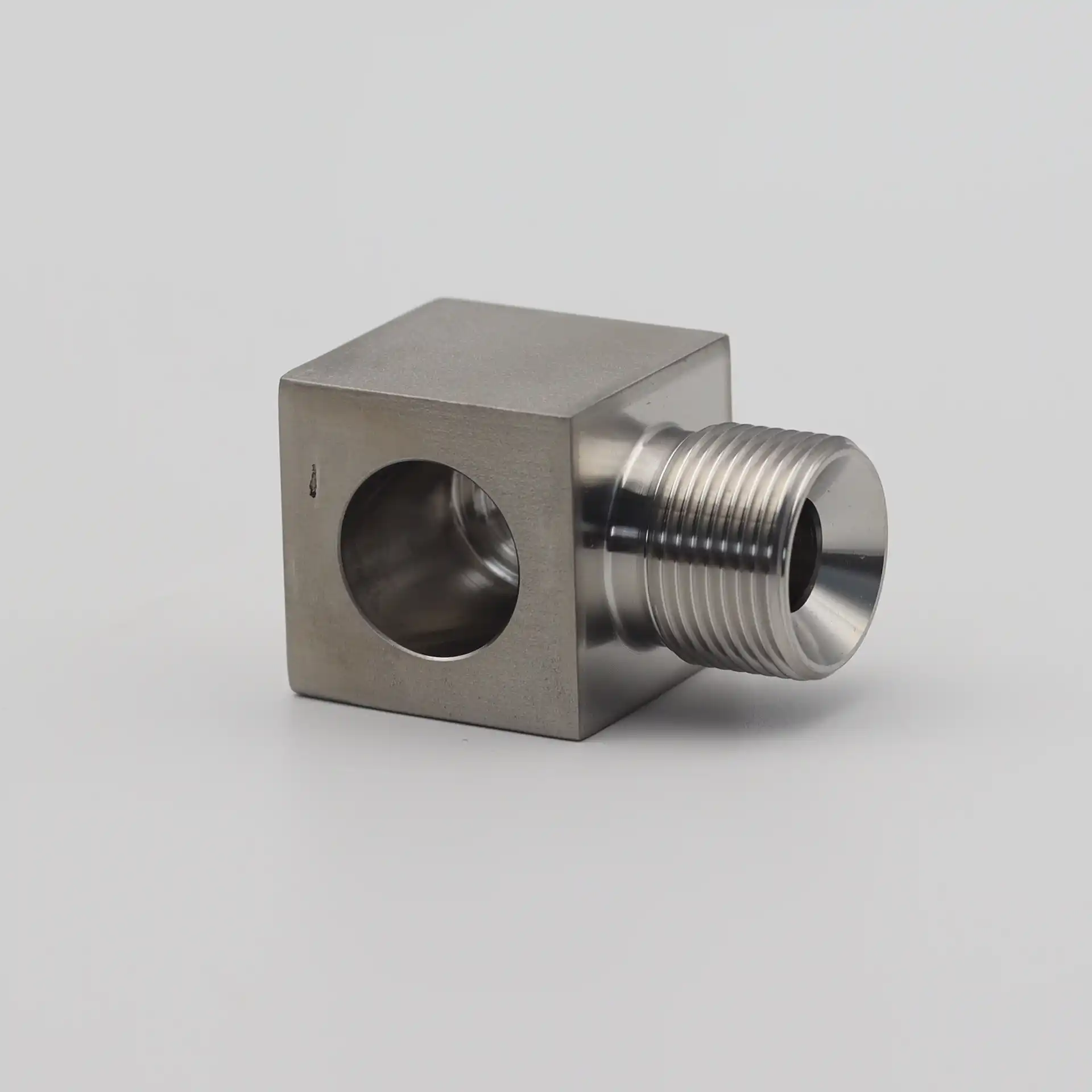
CNC machining stainless steel, particularly 420 stainless steel, is a common method for fabricating precision components. Due to its hardness, this grade requires appropriate tooling and optimized CNC machining stainless steel parameters to avoid excessive tool wear. Post-machining treatments like passivation or electropolishing can further enhance corrosion resistance and reduce tarnishing, ensuring that CNC-machined 420 stainless steel parts achieve superior durability in demanding applications.
Preventing Tarnish on 420 Stainless Steel
- Regular Cleaning – Use mild soap and water, then dry thoroughly.
- Passivation – A chemical process that restores the chromium oxide layer.
- Protective Coatings – Applying oil or wax can provide an additional barrier.
- Proper Storage – Keep in a dry environment to minimize oxidation.
While 420 stainless steel can tarnish under certain conditions, proper care and surface treatments can significantly extend its lifespan and maintain its aesthetic appeal. For applications requiring both machinability and moderate corrosion resistance, 420 stainless steel remains a viable choice, especially when processed with precision CNC machining and appropriate post-treatment techniques.

Fordern Sie Ihr DFM & Angebot an – Laden Sie Ihre Zeichnungen hoch
ㆍGeben Sie Ihre Anforderungen ein und laden Sie Ihre 2D- und 3D-Dateien hoch. Wir senden Ihnen innerhalb von 24 Stunden Ihr Projektangebot und DFM zurück.ㆍDateitypen: STEP, STP, IGES, IGS, SLDPRT, 3DM, SAT oder X_T Dateien Dateigröße: < 128 MB Teilegröße: < 1500*1500*1500 mm
ㆍDatenschutz: Wir respektieren Ihre Privatsphäre. Hier finden Sie ein Beispiel einer Geheimhaltungsvereinbarung. Mit dem Absenden dieses Formulars stimmen Sie unseren AGB und der Datenschutzerklärung zu.
ㆍDatenschutz: Wir respektieren Ihre Privatsphäre. Hier finden Sie ein Beispiel einer Geheimhaltungsvereinbarung. Mit dem Absenden dieses Formulars stimmen Sie unseren AGB und der Datenschutzerklärung zu.
