
Welding stainless steel to carbon steel is a common yet challenging task in metal fabrication. While these metals have different properties, proper techniques can create strong, durable joints. This article explores the best methods for joining stainless steel to steel, highlights key considerations, and discusses applications like stainless steel ventilation hoods and precision components made through CNC machining services in Georgia.
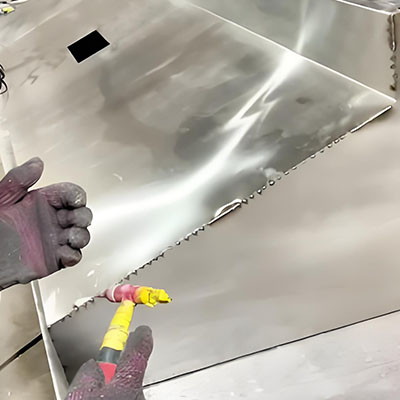
Understanding the Challenges
Edelstahl and carbon steel differ in composition, thermal conductivity, and corrosion resistance. Stainless steel contains chromium, which forms a passive oxide layer to prevent rust. Carbon steel lacks this protection, making it more prone to oxidation. When welded together, these differences can lead to:
Edelstahl and carbon steel differ in composition, thermal conductivity, and corrosion resistance. Stainless steel contains chromium, which forms a passive oxide layer to prevent rust. Carbon steel lacks this protection, making it more prone to oxidation. When welded together, these differences can lead to:
- Galvanische Korrosion due to dissimilar metals
- Cracking from varying thermal expansion rates
- Weak joints if filler material is mismatched
Choosing the right welding technique and filler material is crucial for a successful bond.
Best Welding Methods for Stainless Steel to Steel
1. Shielded Metal Arc Welding (SMAW/Stick Welding)
Stick welding is versatile and works well for thick materials. For stainless-to-steel joints, use 309L or 312 stainless steel electrodes, which provide good ductility and crack resistance. Preheating the carbon steel can reduce thermal stress.
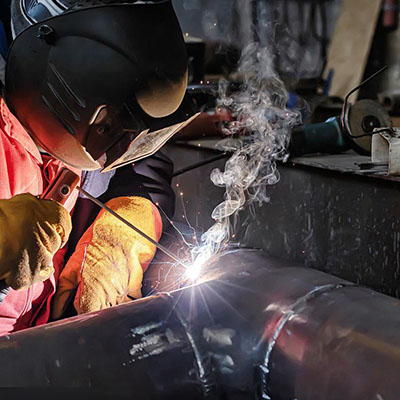
2. Wolfram-Inertgas-Schweißen (WIG-Schweißen)
TIG welding offers precision, making it ideal for thin sheets or critical applications like stainless steel ventilation hoods in commercial kitchens. A 309L filler rod is commonly used to balance the differing properties of the base metals.
3. Gas Metal Arc Welding (GMAW/MIG Welding)
MIG welding is faster and suitable for large-scale projects. A tri-mix gas (90% helium, 7.5% argon, 2.5% CO₂) helps stabilize the arc when welding stainless to carbon steel.
4. Flux-Cored Arc Welding (FCAW)
For outdoor or windy conditions, flux-cored welding with 309L wire provides good penetration and reduces contamination risks.
Key Considerations for a Strong Weld
Filler Material Selection
The filler metal must compensate for the differences in composition. 309L and 312 stainless steel fillers are ideal because they:
- Resist cracking
- Have higher chromium and nickel content to prevent corrosion
- Offer better thermal expansion compatibility
Joint Design and Preparation
- Clean both metals thoroughly to remove oils, rust, and oxides.
- Bevel thick materials to ensure full penetration.
- Use a buttering technique (applying a stainless steel layer to the carbon steel first) to reduce dilution.
- Welding Tools: Equipment to join/cut metal using heat. Includes torches, electrodes, clamps, shields, and grinders. Protects and shapes welds.
Post-Weld Treatment
- Passivate the weld to restore corrosion resistance.
- Apply anti-corrosion coatings if the joint will be exposed to harsh environments.
Applications in Industry
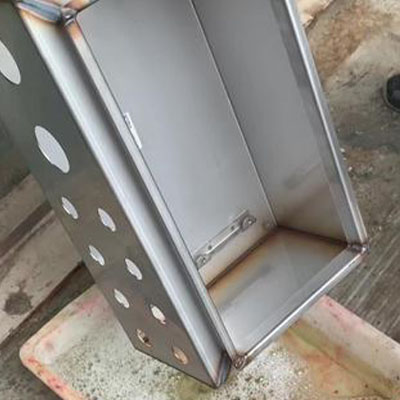
Stainless Steel Ventilation Hoods
Commercial kitchens rely on stainless steel ventilation hoods for durability and hygiene. Welding stainless to carbon steel frames reduces costs while maintaining performance. Proper welding ensures these systems withstand heat, grease, and frequent cleaning.
CNC Machining Services in Georgia
Precision parts often require welded assemblies combining stainless and carbon steel. CNC machining services in Georgia provide finishing operations like milling or drilling after welding to achieve tight tolerances for aerospace, automotive, and industrial components.
Welding stainless steel to steel is achievable with the right techniques, filler metals, and preparation. Whether fabricating stainless steel ventilation hoods or precision parts via CNC machining services in Georgia, understanding the material differences ensures strong, long-lasting joints. By following best practices, manufacturers can overcome challenges and produce high-quality welded assemblies.

Fordern Sie Ihr DFM & Angebot an – Laden Sie Ihre Zeichnungen hoch
ㆍGeben Sie Ihre Anforderungen ein und laden Sie Ihre 2D- und 3D-Dateien hoch. Wir senden Ihnen innerhalb von 24 Stunden Ihr Projektangebot und DFM zurück.ㆍDateitypen: STEP, STP, IGES, IGS, SLDPRT, 3DM, SAT, X_T, DWG, DXF, STL, PDF, ZIP und mehr. Dateigröße: < 128 MB Teilegröße: < 1500*1500*1500 mm
ㆍDatenschutz: Wir respektieren Ihre Privatsphäre. Hier finden Sie ein Beispiel einer Geheimhaltungsvereinbarung. Mit dem Absenden dieses Formulars stimmen Sie unseren AGB und der Datenschutzerklärung zu.
ㆍDatenschutz: Wir respektieren Ihre Privatsphäre. Hier finden Sie ein Beispiel einer Geheimhaltungsvereinbarung. Mit dem Absenden dieses Formulars stimmen Sie unseren AGB und der Datenschutzerklärung zu.