


Eine Idee in Ihrem Kopf ist perfekt. Sie hat keine Fehler. Ein 3D-Modell auf Ihrem Bildschirm ist ebenfalls perfekt. Es hat keine Fertigungsfehler. Aber zwischen dieser Welt der Perfektion und der realen Welt physischer Produkte gibt es eine gefährliche Kluft.
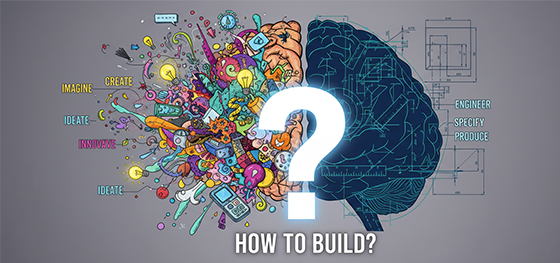
Viele großartige Ideen sterben in dieser Kluft. Sie scheitern an den harten Prüfungen der Realität. Der Schnappverschluss, der im CAD-Modell funktionierte, bricht im echten Leben. Das Material, das sich in einer Simulation gut anfühlte, fühlt sich in der Hand des Kunden billig an.
Was ist also Rapid Tooling? Es ist nicht nur ein Stück Metall. Es ist eine Brücke. Es ist ein strategisches Werkzeug, das entwickelt wurde, um Ihre Idee sicher über diese Kluft zu tragen, von der Fantasie eines Prototyps zur Realität eines fertigbaren Produkts.
Beantwortung der ersten Frage: Was ist ein Prototyp?
Definition von Rapid Tooling: Die Brücke
Vorteil 1: Die Sprache der echten Materialien sprechen
Vorteil 2: Die Frage des Maßstabs beantworten
Ihr Partner für die Überquerung der Kluft
Beantwortung der ersten Frage: Was ist ein Prototyp?
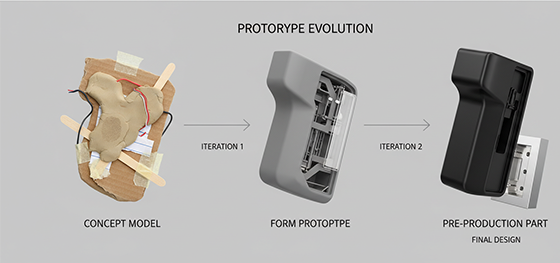
Um Rapid Tooling zu verstehen, müssen Sie zuerst die verschiedenen Ebenen eines "Prototyps" verstehen."
Die erste Ebene ist ein "Look-like"-Prototyp. Dies ist oft ein 3D-Druck. Seine Aufgabe ist es, Form, Größe und Ergonomie Ihres Designs zu validieren. Er beantwortet die Frage: "Sieht meine Idee richtig aus?"
Die zweite Ebene ist ein "Works-like"-Prototyp. Dies könnte eine grobe Baugruppe aus CNC-Teilen und Elektronik sein. Seine Aufgabe ist es, die Kernfunktion zu validieren. Er beantwortet die Frage: "Funktioniert meine Idee?"
Aber es gibt eine dritte, kritische Ebene. Den "Vorserien-Prototyp". Dieser Prototyp muss genau wie das Endprodukt aussehen, sich anfühlen und funktionieren. Er muss aus dem echten Produktionsmaterial und mit dem echten Produktionsprozess hergestellt werden. Er beantwortet die wichtigste Frage: "Kann ich diese Idee tatsächlich herstellen und verkaufen?"
Definition von Rapid Tooling: Die Brücke
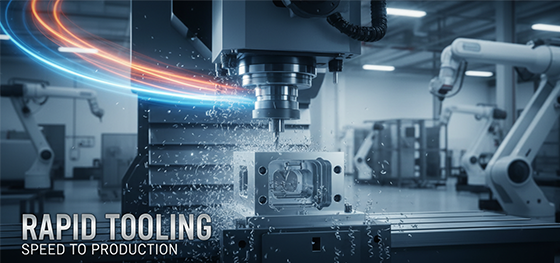
Hier kommt Schnellwerkzeugbau kommt ins Spiel. Es ist der schnellste und kostengünstigste Weg, diese kritischen Vorserien-Prototypen zu erstellen.
Der Teil "Tooling" bezieht sich auf eine Spritzgussform. Aber im Gegensatz zu einer Massenproduktionsform aus gehärtetem Stahl, deren Herstellung Monate dauert, wird ein Rapid Tool typischerweise aus einem weicheren Material wie Aluminium hergestellt.
The "rapid" part refers to how this tool is made. We use high-speed CNC machines to carve the mold directly from a block of aluminum. This allows us to create a functional injection mold in as little as 7 days.
This tool is then used in a standard injection molding machine to produce your parts. The result is not a simulation. It is a real, molded part.
Vorteil 1: Die Sprache der echten Materialien sprechen
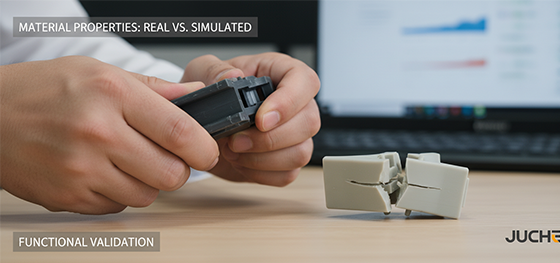
The first huge benefit of this approach is material reality.
3D printing materials are amazing, but they are simulants. A 3D printed part that is "ABS-like" is not the same as a part molded from real ABS pellets. It does not have the same strength, the same flexibility, or the same surface texture.
Rapid tooling allows you to make your parts in the exact, final, production-grade plastic. Real ABS. Real Polycarbonate. Real glass-filled Nylon.
This is a game-changer. It allows you to perform real, meaningful functional tests. Will your snap-fit break after 100 cycles? Will your part deform under heat? With a part from a rapid tool, the data you get is real data you can trust.
Vorteil 2: Die Frage des Maßstabs beantworten

The second benefit is answering the question of scale. 3D printing is great for making 5 or 10 parts. But what if you need 500 parts for a beta test with real customers? Or 2,000 parts for your first production run?
3D printing at this volume is incredibly slow and expensive. The cost per part never goes down.
Rapid tooling is the perfect solution for this "low-volume" stage. While there is an upfront tooling cost, the price per part is extremely low. This makes it economically feasible to produce hundreds or even thousands of parts.
It allows you to get your product into the hands of real users. You can gather market feedback and validate your idea before you make the huge investment in a mass-production steel mold. It is the ultimate risk-reduction strategy.
Ihr Partner für die Überquerung der Kluft
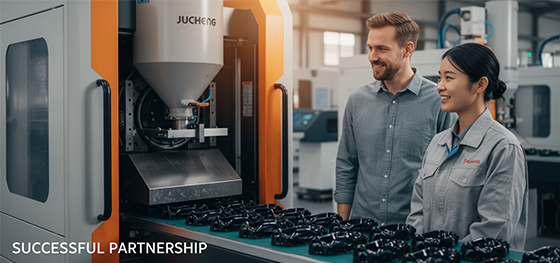
Also, what is rapid tooling? It is the technology that bridges the dangerous gap between a simple prototype and full-scale production.
It is a philosophy that allows you to test, learn, and iterate with real materials, at a realistic scale, and at an affordable cost.
Choosing a partner for this critical stage is essential. At JUCHENG, we are experts in building these bridges. We have the in-house CNC capabilities to create your tool quickly. We have the injection molding expertise to produce your parts perfectly.
We are here to be your guide on the most important part of your product's journey: the journey from a great idea to a real, successful product.

