


Selecting inappropriate manufacturing technologies during early product development routinely destroys venture-backed hardware startups. Engineering teams frequently print fragile, visually appealing plastic models, mistakenly believing these brittle shells accurately represent final production geometry. Subjecting these weak approximations to rigorous kinetic drop tests generates terrifyingly false physical data, mathematically guaranteeing your final steel molds will fail.
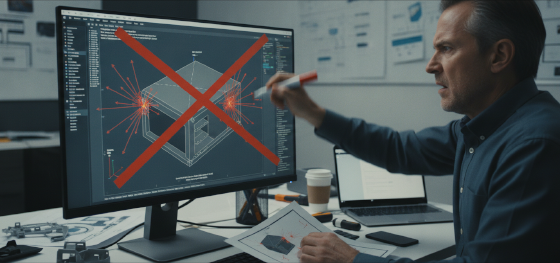
Procurement managers must ruthlessly evaluate multiple distinct types of rapid prototyping to secure legitimate mechanical validation. Slapping a cheap extruded polymer bracket onto a vibrating automotive chassis simply creates a ticking time bomb. Surviving brutal industrial environments dictates aggressively matching your exact physical testing requirements directly against the thermodynamic capabilities of the chosen fabrication method.
Navigating the terrifying gap between single visual mockups and ten thousand mass-produced units requires intense hybrid manufacturing strategies. Elite mechanical designers rarely rely on a single process, actively blending additive printing, subtractive milling, and soft tooling pours to slash development timelines. Understanding exactly when to abandon layered plastics for solid metal billets actively protects your corporate treasury from hemorrhaging cash.
Operating deep inside the Shenzhen precision manufacturing hub equips Jucheng Precision to completely eliminate this dangerous guesswork. We heavily audit your digital CAD files to deploy the absolute perfect 3D-Druck or milling technology necessary for your specific testing phase. Eliminating scattered local vendors ensures your critical dimension tolerances remain perfectly intact across your entire product scaling journey.
Inhalt:
Exposing Additive Anisotropic Material Weakness
Deploying Subtractive CNC for Monolithic Strength
Mastering Low-Volume Functional Beta Validation
JUCHENG Hub: Dominating Bridge Tooling Transitions
Frequently Asked Questions: Hardware Scaling
Exposing Additive Anisotropic Material Weakness
Will an extruded plastic prototype handle extreme mechanical flexing just like a mass-produced injection molded part?
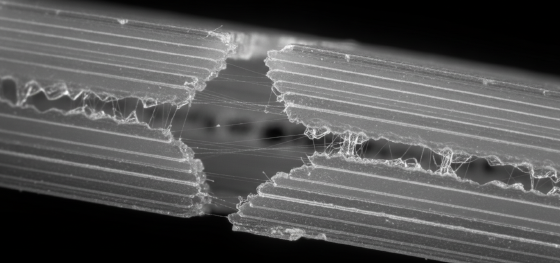
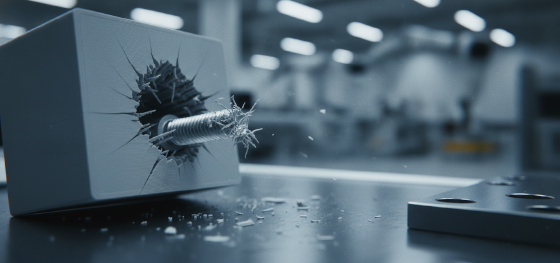
Niemals. Extrudierte Filamente leiden grundsätzlich unter schwerwiegender anisotroper Materialschwäche, was bedeutet, dass die fragilen thermischen Bindungen zwischen den gedruckten Schichten unter seitlicher Belastung gewaltsam aufbrechen, lange bevor das Basispolymer tatsächlich nachgibt.
Die Bewertung verschiedener Arten des Rapid Prototyping erfordert die Konfrontation mit der erschreckenden physikalischen Realität der Schichtdelamination. Ingenieure, die versuchen, schwere Schnappclips oder ineinandergreifende mechanische lebende Scharniere mit standardmäßiger FDM-Extrusion zu testen, sehen normalerweise, wie ihre Konstruktionen sofort in ihren Händen zersplittern. Das Verlassen auf diese falsch-negativen Daten führt das Designteam schwer in die Irre, unnötig Geometrien übermäßig zu verdicken, was das ästhetische Produktprofil vollständig ruiniert.
Die Aufrüstung auf fortschrittliche Pulverbettschmelzsysteme mildert diesen strukturellen Albtraum erheblich. Laser sintern Nylonstaub so intensiv zusammen, dass das resultierende Bauteil eine nahezu perfekte isotrope Dichte erreicht. Diese industriellen additiven Systeme eliminieren physikalisch die spröde Z-Achsen-Schwäche und liefern hochbelastbare komplexe Geometrien, die brutale Aufpralltests mühelos überstehen, ohne teure Schneidwerkzeuge zu erfordern.
Die Sicherung hochauflösender visueller Modelle für Investoren-Präsentationen erfordert den Einsatz von SLA (Stereolithographie) Flüssigharzmaschinen. Harze härten zu unglaublich glatten, verkaufsfertigen Oberflächen aus, die sich perfekt für die Analyse ästhetischer Ergonomie eignen. Diese spezifischen chemischen Verbindungen bleiben jedoch bekanntermaßen spröde und hochgradig empfindlich gegenüber Umgebungsultraviolettlicht, das bei Sonneneinstrahlung gewaltsam zu sprödem Glas zerfällt.
Deploying Subtractive CNC for Monolithic Strength
Müssen Ingenieure Schwermetall fräsen, um legitime Testdaten für lasttragende Halterungen zu erhalten?
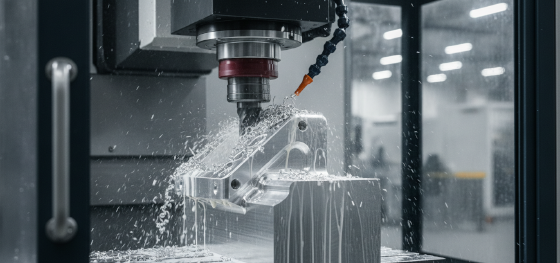
Absolut. Subtraktives Fräsen schneidet die Geometrie gewaltsam direkt aus stark komprimierten, spannungsfreien massiven Barren und liefert die absolute monolithische Kristalldichte, die zur Simulation realer kinetischer Crashes erforderlich ist.
Der Übergang von spröden gedruckten Kunststoffen zu schwerem CNC-Bearbeitung stellt einen massiven Reifemeilenstein für Hardware-Startups dar. Das Drücken von überhitzter Druckluft durch einen porösen, gedruckten Fluidverteiler garantiert praktisch sofortiges katastrophales Leck. Das Fräsen derselben internen Geometrie in einen massiven Block aus extrudiertem Polycarbonat garantiert eine einwandfreie, wasserdichte Abdichtung, die hunderte PSI halten kann.
Die Befestigung komplexer Komponenten hängt vollständig von einer robusten Gewindeintegrität ab. Das Eindrehen von Edelstahlschrauben in geschichtete additive Kunststoffe zerreißt gewaltsam die Innenwände. Massive bearbeitete Kunststoffe wie ABS nehmen nahtlos ultraschallbeheizte Messingeinsätze auf und bieten unzerstörbare Maschinengewinde für kontinuierliche Batteriefachentnahmen während aggressiver Feldbewertungen.
| Fertigungstechnologie | Mechanisches Festigkeitsprofil | Primäre technische Einschränkung | Optimale Fabrikanwendung |
|---|---|---|---|
| Thermoplastic Extrusion | Poor (Splits along layer lines) | Severe geometric warping | Early ergonomic size evaluations |
| Liquid SLA Resin Curing | Brittle (Shatters under impact) | Rapid UV chemical degradation | High-fidelity aesthetic mockups |
| 5-Axis Subtractive Milling | Absolute Maximum Monolithic | Cannot carve impossible internal voids | Hochdruck-Pneumatikventile |
| Soft Blechbearbeitung | Extreme Yield Strength | Expensive upfront setup costs | Heavy structural robotic chassis frames |
Mastering Low-Volume Functional Beta Validation
Is purchasing a hardened steel injection mold the only financial way to secure one hundred identical testing units?
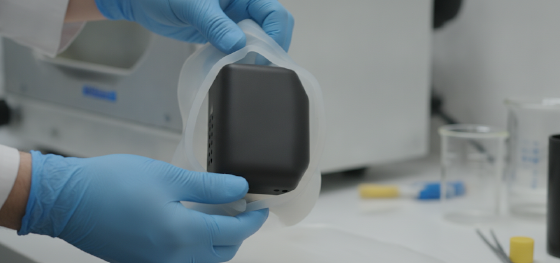
No. Pouring highly reactive liquid polyurethane resins into soft silicone cavities effortlessly delivers hundreds of physically authentic, retail-ready components without paralyzing your corporate cash flow.
Executing legitimate functional beta validation requires putting authentic hardware directly into the hands of real-world end users. Sending out fragile printed plastics instantly destroys the perceived value of your high-end consumer electronics. Vakuumguss bridges this terrifying gap, producing flawlessly smooth enclosures that perfectly mimic the weight and flex of mass-produced plastics.
Matching strict corporate branding dictates injecting highly concentrated liquid dyes directly into the casting vat. Painting basic printed parts often results in catastrophic chipping during heavy mechanical testing. Solid cast colors penetrate the entire wall thickness completely, ensuring aggressive deep scratches remain entirely invisible to your critical investor board.
JUCHENG Hub: Dominating Bridge Tooling Transitions
Why do hardware teams experience catastrophic failures when moving from scattered local print shops to mass manufacturing?
Because splitting the development liability between disconnected vendors destroys dimensional accountability. The high-volume factory has absolutely zero historical context regarding why specific tolerances were established during the additive phase.
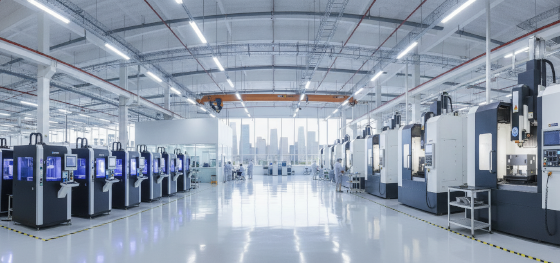
Partnering exclusively with Jucheng Precision guarantees a flawless bridge tooling transition. Operating our massive Shenzhen hybrid facility ensures we completely control your product lifecycle from the first visual print straight through to heavy Injection Molding. We aggressively calculate exact material shrinkage parameters internally, protecting your tight launch deadlines.
Submitting your digital CAD file triggers an immediate, hardcore Design for Manufacturability (DFM) audit. We actively identify impossible geometric undercuts and specify the absolute perfect types of rapid prototyping required for your exact testing phase. We refuse to burn your venture capital budget on physically inappropriate manufacturing methods.
Frequently Asked Questions: Hardware Scaling
Does testing multiple iterations simultaneously drastically reduce the overall launch timeline?
Absolutely. Smart procurement managers utilize our hybrid facility to produce three slightly different geometric variations in parallel. Field-testing multiple designs over the exact same weekend heavily compresses the engineering feedback loop, slicing weeks off the final schedule.
Can a highly detailed resin print accurately predict how a final injection molded part will warp?
No, the thermodynamic physics remain entirely different. Layered resin cures incrementally, whereas molten plastics cool simultaneously inside a highly pressurized steel cavity. Predicting true injection warpage absolutely requires specialized mold flow analysis software.
Why do elite engineers often design parts combining both additive and subtractive methods?
Printing massive complex aerospace blocks saves huge material costs, but additive cannot hold tight bearing tolerances. Engineers print the raw shape oversized, then mount it inside a heavy CNC mill to subtractively carve the critical mating faces to absolute perfection.

