
Structural Foam RIM-Systeme
When reducing weight is as critical as maintaining structural rigidity, Structural Foam RIM is the unrivaled manufacturing solution. This process utilizes a chemical blowing agent to create a component with a unique "sandwich" structure: a high-density, non-porous outer skin and a low-density microporous core. This "I-beam" effect results in parts that have a significantly higher stiffness-to-weight ratio than solid plastics. At JUCHENG, we leverage Structural Foam RIM to manufacture massive, lightweight components—such as heavy truck engine hoods and medical chassis bases—that provide the strength of metal at a fraction of the weight.
Structural Foam RIM-Systeme
JUCHENG's Structural Foam Capabilities
Das Formen erfolgreicher Structural-Foam-Teile erfordert eine präzise Kontrolle über die Schäumreaktion und das Dichteprofil. JUCHENG bietet:
- Dichtemanagement: Wir können die Dichtereduktion (typischerweise 10% bis 30% leichter als massives RIM) anpassen, um Ihre spezifischen Gewichts- und Festigkeitsanforderungen auszubalancieren.
- Großvolumen-Kapazität: Unsere Ausrüstung ist kalibriert, um großvolumige Schüsse für Teile zu handhaben, die über 2 Meter spannen, wie Server-Rack-Türen oder Lüftergehäuse.
- Akustiktechnik: Der zelluläre Kern unserer Structural-Foam-Teile dämpft auf natürliche Weise Vibrationen und Geräusche und bietet überlegene akustische Eigenschaften für industrielle Maschinenabdeckungen.
- Sinkmarkenfreies Formen: Der Innendruck durch das Schäumen eliminiert Sinkmarken, sodass wir unterschiedliche Wandstärken und schwere Rippen ohne kosmetische Defekte formen können.
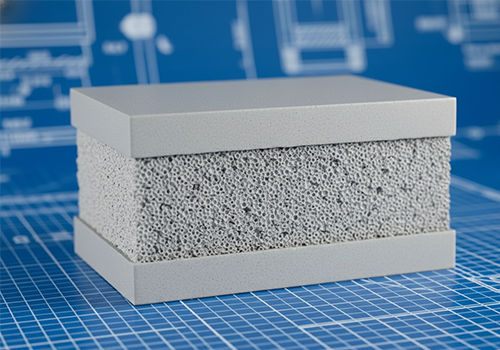
Vorteile von Structural Foam RIM
| Vorteil | Detaillierte Beschreibung | Hauptvorteil |
| Hohes Steifigkeits-Gewichts-Verhältnis | Der zelluläre Kern erhöht die Wandstärke (und damit die Steifigkeit), ohne proportionales Gewicht hinzuzufügen. | Erzeugt Teile, die leichter als massiver Kunststoff sind, sich aber wie Metall gegen Biegen widerstehen. |
| Gewichtsreduzierung | Achieves a specific gravity range of 0.6 to 0.9 g/cm³ (vs 1.2 for solid). | Critical for fuel efficiency in automotive and portability in medical devices. |
| Designfreiheit | Eliminates sink marks on the A-surface, even opposite thick internal ribs. | Allows for complex internal strengthening structures without compromising exterior aesthetics. |
| Acoustic & Thermal Insulation | The foam core acts as a barrier to sound and heat transfer. | Ideal for enclosing noisy engines, compressors, or sensitive electronics. |
| Haltbarkeit | The solid integral skin provides excellent impact and scratch resistance. | Suitable for rugged outdoor and industrial environments. |
Technische Parameter & Materialeigenschaften
We offer specialized foam systems for structural applications:
| Güteklasse | Eigenschaften & Leistung | Ideale Anwendungen |
| Integral Skin Structural Foam | Characteristics: Forms a distinct, thick solid skin (1-2mm) with a foamed core. Surface is smooth and paintable. High surface hardness. Performance: Best balance of aesthetics and structural load bearing. | Medical device chassis, business machine housings, automotive exterior panels, roof modules. |
| Low-Density Rigid Foam | Characteristics: Focuses on maximum weight reduction (density < 0.6 g/cm³). Skin is thinner. High thermal insulation. Performance: Ultra-lightweight, non-load bearing stiffener. | Internal structural fillers, thermal insulation barriers, core materials for composite layups. |
| High-Density Structural Foam | Characteristics: Minimal foaming (density ~0.9 g/cm³). Focuses on eliminating sink marks in varying wall sections rather than extreme weight loss. Performance: Premium surface quality for visible parts. | High-end electronic bezels, thick-walled casings with complex bosses. |
Konstruktions- und Verarbeitungsrichtlinien
- Wandstärke: Structural foam benefits from thicker walls (6mm to 15mm) to allow the foam core to develop. Thicker walls equal higher stiffness.
- Ribbing: Generous ribbing is encouraged to maximize rigidity. Unlike standard injection molding, ribs can be the same thickness as the wall without causing sink marks.
- Einlegeteile: Metal inserts are encapsulated exceptionally well, as the expanding foam locks them securely in place.
- Endbearbeitung: The surface may show a slight "swirl" pattern from the foaming action. We typically apply a textured paint or high-build primer to achieve a Class-A finish.
Anwendungsszenarien
Structural Foam is the standard for "Large, Light, & Stiff" parts:
- Transportwesen: Heavy truck hoods, wind deflectors, bus interior panels, tractor roofs.
- Materialhandhabung: Heavy-duty pallets, shipping containers, tote bins.
- Medical & Science: Chassis bases for CT scanners, laboratory carts, structural frames replacing metal.
- Infrastruktur: Utility enclosure covers, drainage grates, telecommunication cabinets.
Tabelle der physikalischen Eigenschaften
Comparison of Solid vs. Structural Foam (Same Polymer Base):
| Eigenschaft | Solid Rigid RIM | Structural Foam RIM | Einheit |
| Dichte | 1.20 | 0.70 - 0.90 | g/cm³ |
| Zugfestigkeit | 45 | 25 - 35 | MPa |
| Biegemodul | 2,000 | 1,500 - 1,800 | MPa |
| Stiffness-to-Weight | Standard | Hoch | Verhältnis |
| Acoustic Dampening | Niedrig | Hoch | - |
| Oberflächenqualität | Class A | Good (Requires Paint) | - |

Fordern Sie Ihr DFM & Angebot an – Laden Sie Ihre Zeichnungen hoch
ㆍGeben Sie Ihre Anforderungen ein und laden Sie Ihre 2D- und 3D-Dateien hoch. Wir senden Ihnen innerhalb von 24 Stunden Ihr Projektangebot und DFM zurück.ㆍDateitypen: STEP, STP, IGES, IGS, SLDPRT, 3DM, SAT, X_T, DWG, DXF, STL, PDF, ZIP und mehr. Dateigröße: < 128 MB Teilegröße: < 1500*1500*1500 mm
ㆍDatenschutz: Wir respektieren Ihre Privatsphäre. Hier finden Sie ein Beispiel einer Geheimhaltungsvereinbarung. Mit dem Absenden dieses Formulars stimmen Sie unseren AGB und der Datenschutzerklärung zu.
ㆍDatenschutz: Wir respektieren Ihre Privatsphäre. Hier finden Sie ein Beispiel einer Geheimhaltungsvereinbarung. Mit dem Absenden dieses Formulars stimmen Sie unseren AGB und der Datenschutzerklärung zu.
