


Beim Auspacken einer 2 Meter hohen Diagnosescanner-Hülle im Jahr [2026] und dem Entdecken eines Kratzers oder eines abblätternden Lackspans verliert man am schnellsten einen Krankenhausvertrag. Im Reaktionsspritzgussverfahrens, ist das mechanische Skelett nur die halbe Miete; die endgültige Oberflächenqualität bestimmt den wahrgenommenen Wert Ihrer Maschine. Die meisten Thermoplaste wie Polypropylen (PP) oder Polyethylen (PE) sind dafür bekannt, Farbe "abzulehnen", was teure Grundierungen und chemische Ätzmittel erfordert, nur um eine grundlegende Beschichtung zum Haften zu bringen. Die Beherrschung der Polyurethan-RIM-Lackierung und -Verklebung ist der strategische Vorteil für Entwickler, die Automobilqualität und unzerbrechliche Strukturbaugruppen ohne die typischen Kopfschmerzen von Oberflächenversagen benötigen.
Traditionelle Kundenspezifisches Kunststoffspritzgießen behandelt die Endbearbeitung oft als nachträglichen Gedanken, was zu Teilen führt, die "plastikartig" und billig aussehen. Da Polyurethan ein duroplastisches Material mit hoher Oberflächenenergie ist, ist es im Wesentlichen der "König der Haftung". Farbe sitzt nicht nur auf der Oberfläche; sie geht eine mikroskopische chemische Verbindung mit der Polymermatrix ein. Jucheng Precision adressiert diese ästhetischen Hürden durch die Bereitstellung hochwertiger Polyurethan-Formdienstleistungen die eine hauseigene staubfreie Lackierung und strukturelle Montage umfassen. Wir liefern Hardware, die über "Prototypen-Looks" hinausgeht und die verkaufsfertige Perfektion bietet, die medizinische, industrielle und hochwertige Verbrauchersegmente verlangen.
Als Teil des Shenzhener Präzisionsfertigungszentrums agiert JUCHENG als "Endbearbeitungsmeister" für globale OEMs. Wir verwandeln rohe Flüssigchemie in validierte, hochglänzende Strukturhüllen, die der abrasiven Realität des Feldes standhalten können. Dieser Leitfaden ist ein praxisnaher Blick darauf, warum Farbe besser auf RIM haftet, wie man riesige Teile für die Spritzkabine vorbereitet und warum strukturelle Verklebung das Geheimnis ist, um massive Prototyp-Roboter Baugruppen zu bauen, die sich wie ein einzelnes Stück Stein anfühlen. Lassen Sie uns die Wissenschaft der Polyurethan-RIM-Lackierung und -Verklebung erkunden.
Der Haftungskönig: Warum RIM die beste Oberfläche für Farbe ist?
Technische Daten: Vergleich von Lackhaftung und Verbindungsfestigkeit
Vorbereitungsprotokolle: Schleifen, Entfetten und Flammbehandlung
Verkleben großer Teile: Klebstoffe vs. mechanische Verbindungselemente
JUCHENG-Hub: Verwaltung der One-Stop-Nachbearbeitung in Shenzhen
FAQ: Echte Antworten für Endbearbeitungs- und Montagelogistik
Der Haftungskönig: Warum RIM die beste Oberfläche für Farbe ist?
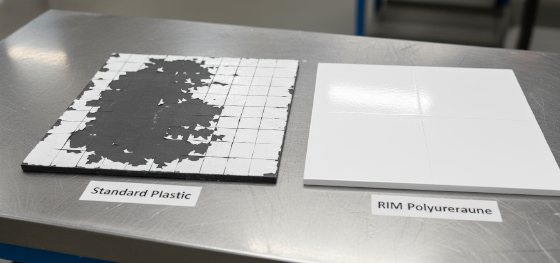
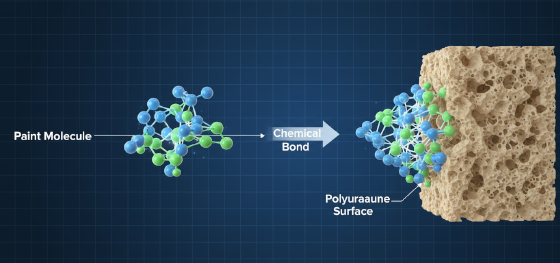
Das Geheimnis eines spiegelglatten Finishs an einem großen Roboter-Kotflügel oder einer medizinischen Konsole liegt auf molekularer Ebene. Bei Polyurethan-RIM-Lackierung und -Verklebung, ist die Oberflächenenergie des Materials natürlicherweise höher als bei olefinbasierten Kunststoffen wie Polypropylen. Während sich ein PP-Teil wie eine "Antihaft-Pfanne" verhält, ist Polyurethan chemisch empfänglich. Wenn JUCHENG hochfesten 2K-Polyurethanlack aufträgt, dringen die Moleküle der Beschichtung tatsächlich in die äußeren mikroskopischen "Poren" des RIM-Teils ein. Dies führt zu einer mechanischen und chemischen Bindung, die praktisch unmöglich abzulösen ist, selbst wenn das Teil gebogen oder extremen Temperaturschwankungen ausgesetzt wird.
Ist eine Grundierung bei RIM-Teilen immer notwendig?
Nein. Obwohl wir oft hochfeste Grundierungen verwenden, um mikroskopische Oberflächentexturen zu verbergen, ist die Haftung des Decklacks auf rohem Polyurethan so stark, dass Standard-Haftvermittler selten benötigt werden, was Ihnen Zeit und Kosten spart.
Die inhärente chemische Beständigkeit des Substrats schützt das Finish von innen nach außen. In [2026] medizinischen Umgebungen werden Geräte ständig mit aggressiven Reinigungsmitteln behandelt. Wenn der Lack auf einem Kunststoff mit geringer Haftung aufgetragen ist, dringt das Reinigungsmittel bei einem winzigen Kratzer unter den Lack ein und "hebt" die gesamte Beschichtung an. Da JUCHENGs Polyurethan-Formdienstleistungen eine monolithische Bindung zwischen Harz und Lack gewährleisten, bleibt die Beschichtung intakt. Deshalb ist RIM die bevorzugte Wahl für MRT-Gehäuse und chirurgische Roboterschalen – es ist die einzige Möglichkeit, ein "Neumaschinen"-Aussehen für die gesamte 10-jährige Lebensdauer der Geräte zu garantieren.
Die durch Niederdruckphysik bestimmte Oberflächenebenheit verbessert die Lackierqualität weiter. Traditionelles Hochdruck-Spritzgießen erzeugt "Einfallstellen" über inneren Rippen, die nach dem Auftragen eines Hochglanzlacks schmerzhaft sichtbar werden. JUCHENGs RIM-Prozess produziert Teile ohne innere Spannungen, sodass 2 Meter lange Paneele perfekt flach bleiben. Dadurch kann unser Lackierteam im Shenzhen-Hub ein "Class-A"-Finish mit minimalem Schleifaufwand erzielen, was direkt Ihr F&E-Budget reduziert und gleichzeitig ein Prototyp-Roboter liefert, das aussieht, als käme es gerade von einer millionenschweren Massenproduktionslinie.
Technische Daten: Vergleich von Lackhaftung und Verbindungsfestigkeit
Die Wahl der richtigen Endbearbeitungs- und Montagestrategie erfordert Daten, nicht Raten. Wenn Ihr Roboter in einer Fabrik mit hohen Vibrationen arbeitet, ist die Bindungsfestigkeit Ihrer Montage wichtiger als der Glanzgrad des Lacks. Jucheng Precision liefert vollständige technische Spezifikationen, um Ihre Beta-Flotte zu validieren. Die folgende Tabelle vergleicht die wesentlichen Leistungskennzahlen von Polyurethan-RIM-Lackierung und -Verklebung gegenüber gängigen thermoplastischen Alternativen für den [2026] Markt.
| Metrik | Polyurethan-RIM (lackiert) | Spritzgegossenes ABS (lackiert) | Spritzgegossenes PP (lackiert) |
|---|---|---|---|
| Haftung (Gitterschnitt) | 5B (kein Abblättern) | 4B - 5B | 1B - 2B (High failure) |
| Chemical Resistance (Alcohol) | Außergewöhnlich | Moderate (Stress cracks) | Low (Solvent swelling) |
| Shear Bond Strength (psi) | 1,200 - 1,800 | 800 - 1,100 | 300 - 500 |
| UV Stability (unpainted) | High (Additive-based) | Niedrig (vergilbt) | Mäßig |
The "Shear Bond Strength" is the most critical data point for building large robotic assemblies. In Polyurethan-RIM-Lackierung und -Verklebung, the material can be chemically "fused" using structural urethane or epoxy adhesives. Because the adhesive and the part share similar chemical origins, the joint often becomes stronger than the surrounding material itself. This allows JUCHENG to manufacture four separate panels and bond them into a single, seamless 2-meter tall enclosure that can handle the vibrational loads of a heavy-duty industrial mobile base without any mechanical fasteners visible on the exterior.
Vorbereitungsprotokolle: Schleifen, Entfetten und Flammbehandlung
Automotive-grade paint quality is not won in the spray booth; it is won at the sanding bench. For oversized Industrieroboterteile, JUCHENG implements a multi-stage surface preparation protocol. We begin with automated degreasing to remove any trace of wax-based mold release agents. Even a microscopic oily spot will cause a "fish-eye" defect in the final paint. We then move to 400-grit to 1000-grit wet sanding to ensure the parting lines and gate scars are 100% invisible. This labor-intensive prep is why our Kundenspezifisches Kunststoffspritzgießen results look so much more professional than parts from "rough prototyping" shops.
How to get paint to stick to a 2-meter part?
Use flame treatment to oxidize the surface molecules, temporarily increasing the surface energy and providing thousands of chemical "anchor points" for the paint.
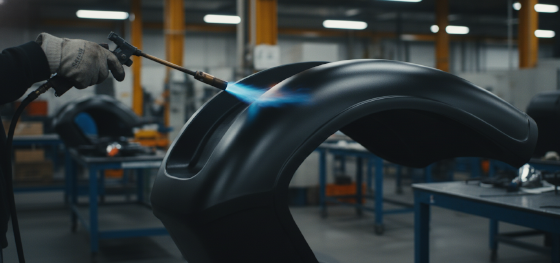
Flame treatment is JUCHENG’s high-tech "secret weapon" for large enclosures. By passing a specialized plasma or gas flame over the part, we break the surface molecular bonds and create polar groups. This makes the polyurethane even more receptive to high-performance topcoats. This process is essential for robots destined for outdoor AgTech use, where the hardware will be exposed to rain and mud. Without flame treatment, the moisture can eventually undermine the paint; with it, the coating becomes a permanent part of the shell, resisting the "sandblasting" effect of dust and debris during high-speed field travel.
Antistatic cleaning is the final prep step at our Shenzhen hub. Large plastic panels are magnets for dust due to static electricity. JUCHENG utilizes ionized air blow-offs and specialized tack-cloths immediately before the part enters the spray booth. This ensures that no tiny specks of dust are trapped under the paint. For 2026 medical-grade diagnostic equipment, this level of "Surgical Cleanliness" is mandatory to prevent the surface imperfections that could harbor bacteria or compromise the clinical professional image of your device.
Verkleben großer Teile: Klebstoffe vs. mechanische Verbindungselemente
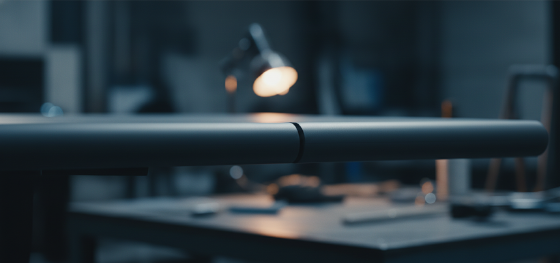
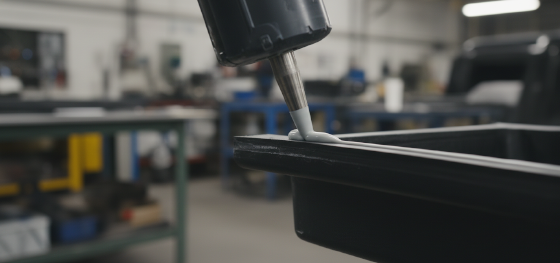
Designing massive Prototyp-Roboter enclosures often requires building the part in segments and then joining them. In Polyurethan-RIM-Lackierung und -Verklebung, you have two choices: hide the joint or show it. JUCHENG recommends "Structural Bonding" for a seamless, retail-ready look. We utilize 5-axis CNC to machine interlocking tongue-and-groove features into the part edges. These features increase the surface area for the adhesive, providing a "Mechanical Interlock" that, when combined with industrial epoxies, creates a joint that can survive a 10-G impact test without cracking.
Can I use screws instead of glue for Beta trials?
Yes. JUCHENG can encapsulate threaded brass or steel inserts directly into the RIM part during the Reaktionsspritzgussverfahrens, allowing for a "Serviceable" bolted assembly that remains rigid.
Solvent bonding is another unique trick for polyurethane. Unlike ABS, which can be melted with simple solvents, PU requires a specialized "chemical fusion" agent. JUCHENG utilizes these agents for small, intricate details where a thick adhesive bead would be too bulky. This results in a "Cold-Weld" that is optically clear—essential for robots with integrated LED light guides or transparent sensor windows. By managing the bonding chemistry in-house, we eliminate the risk of "Stress Cracking" that occurs when engineers use the wrong hardware-store glue on high-performance industrial polymers.
Weight management is optimized through adhesive selection. Mechanical fasteners (bolts and nuts) add significant mass and create "stress risers" that can cause cracks in a large plastic shell. Bonding distributes the load over the entire length of the joint, allowing JUCHENG to use thinner wall sections in your design. This "Monocoque" approach is what allows us to deliver a 2-meter scanner console that weighs 40% less than a metal version but possesses identical structural rigidity. Every gram saved in assembly is a gram added to your robot’s battery life or sensor payload in the [2026] market.
JUCHENG-Hub: Verwaltung der One-Stop-Nachbearbeitung in Shenzhen
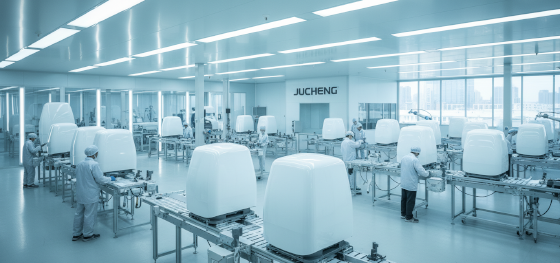
Dominating the large-format hardware market requires a partner that can scale from a single hand-painted prototype to a commercial deployment of 5,000 units without losing a millisecond of momentum. Jucheng Precision operates with a 24/7 manufacturing mindset in our Shenzhen precision manufacturing hub, delivering high-tolerance Polyurethan-RIM-Lackierung und -Verklebung und strukturelle Industrieroboterteile with industry-leading speed. We provide a "Bridge to Production" that ensures your innovations move from concept to pilot run with 100% aesthetic and mechanical confidence.
Integrating your structural design with JUCHENG’s expertise ensures that your hardware survives the "First-Boardroom Contact" and moves into mass adoption. We offer comprehensive DFM reviews within 24 hours, identifying potential bonding-risks or "paint-traps" in your design before they become visual failures. Whether you are building an autonomous medical assistant or a heavy-duty industrial mobile base, Jucheng Precision provides the rigid, precise, and flawlessly finished foundations that keep your innovation moving through the high-stakes cycles and the years of hard labor.
Our facility is equipped with 150+ CNC machines and dedicated dust-free painting and cleanroom assembly cells, allowing us to manage the entire hardware lifecycle in one location. We manage the complexity of multi-material bonding and automotive-grade finishing so your engineering team can focus on the system integration and the AI. By combining Shenzhen's speed with industrial-grade material verification and global ISO 13485 standards, JUCHENG remains the preferred partner for the world's most aggressive Kundenspezifisches Kunststoffspritzgießen challenges. Contact us today to start your next project.
FAQ: Echte Antworten für Endbearbeitungs- und Montagelogistik
Can JUCHENG match a specific Pantone or RAL color?
Yes. We use computer-controlled paint mixing to match your brand colors with +/- 0.5 Delta-E accuracy in our dust-free booth.
What is the typical lead time for a fully painted large enclosure?
Fully finished and assembled enclosure sets are typically delivered in 15 to 20 business days.
Is the bonding strong enough for heavy-duty AgTech use?
Yes. Our structural adhesive joints are engineered to be stronger than the base polyurethane, surviving extreme impact and vibration.
Does the paint on RIM parts scratch easily?
No. We apply ceramic-infused 2K clear coats that provide automotive-grade scratch and chemical resistance.
Can you bond RIM parts to metal frames?
Yes. We specialize in multi-material bonding of polyurethane panels to aluminum or steel skeletons for hybrid robot designs.
Peeling paint and loose joints are absolute innovation killers for 2026 hardware. Partnering with Jucheng Precision ensures that your functional iterations are built with the unyielding Reaktionsspritzgussverfahrens and specialized Polyurethan-RIM-Lackierung und -Verklebung techniques the industry demands. Reach out to our Shenzhen manufacturing hub today for a complete DFM review and build the high-fidelity foundation your autonomous fleet requires.

