
Painting and Bonding Polyurethane RIM Parts: Better for Robots?
Views: 2 Author: Allen Xiao Publish Time: 2026-04-30 Origin: Site


Unboxing a 2-meter tall medical scanner housing only to find a scuffed surface or a peeling paint chip is the fastest way to lose the trust of a hospital procurement team. In the world of polyurethane reaction injection molding, the mechanical skeleton is only half the battle; the final surface quality and assembly integrity are what define the perceived value of your hardware. Most large-scale thermoplastics like Polypropylene (PP) or Polyethylene (PE) are notorious for "rejecting" paint, necessitating expensive chemical primers that often fail in high-humidity environments. Mastering the technical art of painting and bonding polyurethane RIM parts is the strategic advantage for developers who need automotive-grade finishes and unyielding structural joints without the typical headache of surface delamination.
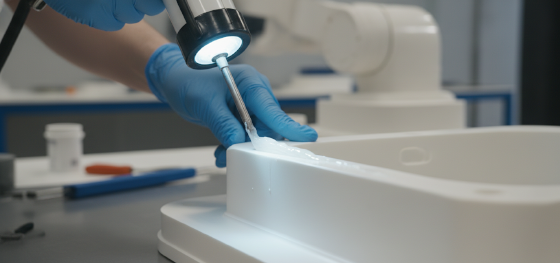
Traditional Custom Plastic Molding often treats finishing as an afterthought, leading to parts that look like rough prototypes rather than retail-ready machines. Because polyurethane is a thermoset material with inherently high polarity, it provides High Surface Energy adhesion that allows paint to form a permanent molecular bond. Jucheng Precision addresses these aesthetic and structural hurdles by providing high-tier Polyurethane Molding Services that incorporate in-house dust-free painting and industrial-strength bonding. JUCHENG delivers components that move beyond a simple model to provide the "Clinical Perfection" that surgical robots and diagnostic systems demand from their Shenzhen supply chain.
Operating under a triple mandate of ISO 13485, ISO 14001, und IATF 16949, Jucheng Precision serves as the high-tier finishing partner for global robotics and MedTech OEMs. We transform raw concept CADs into validated, high-gloss structural skins in as fast as 15 business days, leveraging our fleet of 150+ CNC machines. This guide explores the essential surface preparation protocols, the science of structural adhesives, and the seamless structural joint integrity required for manufacturing painting and bonding polyurethane RIM parts hardware that ensures patient safety and unyielding field performance.
content:
Adhesion Physics: Why Does Paint Stick Better to RIM?
Technical Data: Comparing Adhesion Strength and Joint Shear
Preparation Logic: Mastering Flame Treatment and Degreasing
Structural Assembly: Bonding Giant Panels with Zero Seams
JUCHENG Hub: Managing the One-Stop Shenzhen Finishing Cell
FAQ: Logistics and Durability of RIM Finishing and Bonding
Adhesion Physics: Why Does Paint Stick Better to RIM?
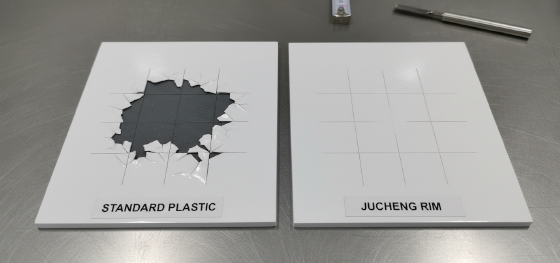
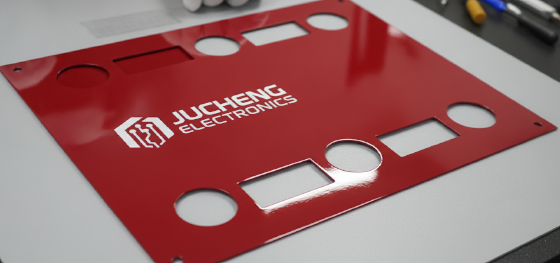
The secret to achieving a mirror-finish on a large-scale robot fender or medical console is found at the molecular interface. In painting and bonding polyurethane RIM parts, the material’s surface is naturally receptive to coatings because it contains polar groups like urethanes and amides. While an olefin-based plastic like Polypropylene acts like a "non-stick pan" that repels coatings, polyurethane is chemically "hungry" for bonds. JUCHENG utilizes high-solids 2K urethane paint systems that chemically interlock with the polymer matrix during the curing phase. This results in a finish that is virtually impossible to peel, even when the part is flexed during a high-speed collision or subjected to the thermal shocks of an industrial autoclave.
Does RIM paint peel in the sun?
No. Because of the high-energy chemical bond, JUCHENG’s painted RIM parts resist the UV-induced delamination that often ruins standard "surface-only" plastic coatings.
Internal stress management dictated by the low-pressure cycle further enhances the coating quality. Traditional high-pressure molding creates sink marks over internal ribs, which become painfully visible once a high-gloss paint is applied. JUCHENG’s RIM process produces parts with zero internal stress, ensuring that 2-meter long panels remain perfectly flat. This allows JUCHENG's paint team in the Shenzhen hub to achieve a Class-A finish with minimal manual sanding labor, directly reducing your R&D budget while delivering a prototype robot that looks like it just rolled off a multi-million dollar mass-production line.
Surface flatness also impacts the "Dry-Film Thickness" consistency. If a part is warped, the paint will pool in low spots and thin out over high spots, leading to color variance. JUCHENG utilizes 25 5-axis Haas/Mazak units to machine our aluminum molds with sub-micron accuracy, ensuring the molded surface is a perfect "Geometric Zero." This mechanical perfection ensures that the Polyurethane Molding Services provided at our facility result in a uniform coating that meets the strict aesthetic requirements of the luxury automotive and high-end medical sectors. By delivering parts that are "Boringly Perfect," we allow your team to focus on the software and sensor integration.
Technical Data: Comparing Adhesion Strength and Joint Shear

Success in large-scale hardware assembly depends on the strength of the joints. If your robot chassis is made of multiple panels, the bonding agent must be as strong as the material itself. Jucheng Precision provides full mechanical characterization reports for all bonded assemblies. The following table compares the essential performance metrics of painting and bonding polyurethane RIM parts against common thermoplastic alternatives for the current industrial market.
| Metric | Polyurethane RIM (Painted) | Injection Molded ABS | Injection Molded PP |
|---|---|---|---|
| Adhesion (Cross-Hatch) | 5B (Zero Loss) | 4B - 5B | 1B - 2B (High Risk) |
| Joint Shear Strength (psi) | 1,200 - 1,800 | 800 - 1,100 | 300 - 500 |
| Chemical Resistance (IPA) | Excellent | Moderate (Stress Cracks) | Low (Swelling) |
| Internal Stress Profile | Zero (Relaxed) | High (Thermal) | High |
The "Shear Strength" data highlights why RIM is the only choice for medical device prototyping requiring oversized consoles. In many projects, JUCHENG machines four separate panels and bonds them into a single, seamless 2-meter tall enclosure using specialized structural urethanes. Because the adhesive and the part share similar chemical structures, the joint becomes a "monolithic fusion." This eliminates the need for hundreds of mechanical fasteners, reducing the robot’s total mass and providing the aerodynamic efficiency required for autonomous mobility in the current hardware sector.
Preparation Logic: Mastering Flame Treatment and Degreasing
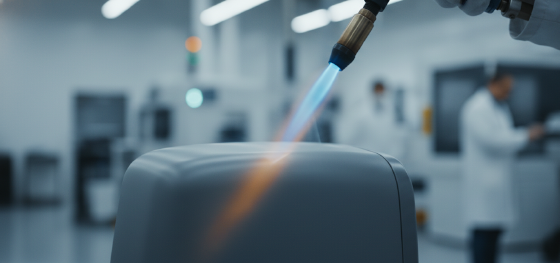
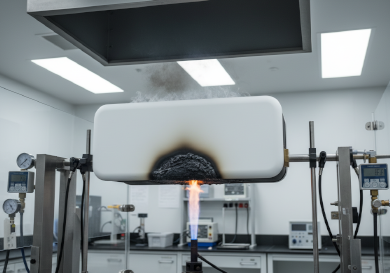
Surface preparation is the most critical sub-process in painting and bonding polyurethane RIM parts. Even the most expensive automotive paint will fail if the substrate has microscopic traces of wax-based mold release agents. JUCHENG implements a multi-stage degreasing protocol using specialized alkaline washes to ensure the part is surgically clean. We then move to the flame treatment molecular bonding phase. By passing a specialized gas flame over the surface of a large robot fender, JUCHENG oxidizes the outer polymer layer, temporarily increasing the surface energy and creating thousands of chemical "anchor points" for the paint or adhesive.
How to ensure 100% paint adhesion on large shells?
Utilize automated flame treatment followed by high-solids epoxy primers to seal the surface and provide a perfect foundation for the final color coat.
Antistatic cleaning is the final barrier to a perfect finish at our Shenzhen hub. Large plastic panels act as magnets for dust due to the static charge generated during the molding process. JUCHENG utilizes ionized air blow-offs and specialized tack-cloths immediately before the part enters the spray booth. This ensures that no tiny specks of dust are trapped under the clear coat. For diagnostic equipment used in cleanroom environments, this level of "Particulate Control" is mandatory to prevent surface imperfections that could harbor pathogens or compromise the retail-ready aesthetic of your innovation.
Texture management is integrated directly into the preparation phase. If your design requires a mix of high-gloss "Piano Black" and matte "Grit" textures, JUCHENG utilize precision masking and bead-blasting. We can achieve VDI 3400 standardized grains on specific sections of a single molded part. This multi-texture capability allows our clients to design enclosures with integrated "Grip Zones" for human interaction, while maintaining a high-end look for sensor bays. By managing these complex surface preparation protocols in-house, JUCHENG provides a single point of accountability for your hardware's entire visual identity.
Structural Assembly: Bonding Giant Panels with Zero Seams
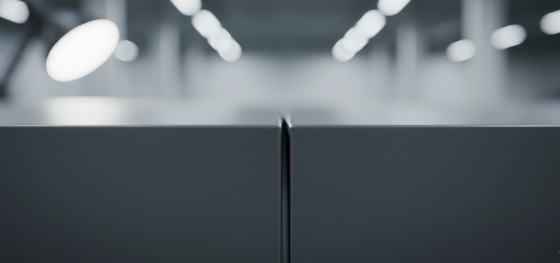
Joining oversized prototype robot panels without visible bolts is the hallmark of a high-tier manufacturer. In painting and bonding polyurethane RIM parts, JUCHENG utilize structural adhesives to replace traditional welding or mechanical fasteners. We machine interlocking "Tongue-and-Groove" features into the edges of large panels using our CNC fleet. This increases the bonding surface area by 300%, providing a joint that can survive a 10-G vibration test without a single crack. This "Seam-Free" look is what investors and users expect from high-end MedTech hardware in the current market.
Can I replace metal frames with bonded RIM panels?
Yes. By utilizing reinforced RRIM panels and high-strength urethane bonds, JUCHENG creates "Monocoque" structures that are lighter than steel but possess equivalent torsional rigidity.
Encapsulated inserts are the secondary strategy for hybrid assembly. If a part needs to be "Serviceable" (removable in the field), JUCHENG molds large steel or aluminum mounting plates directly into the RIM shell. We then use precision 5-axis CNC to machine the bolt holes after the molding cycle. This ensures that the mounting pattern is perfectly aligned with the robot’s drive-train, even on a 2-meter tall chassis. By combining the unyielding strength of metal with the lightweight versatility of polyurethane, we help our clients build hardware that is both high-performance and easy to maintain.
Thermal expansion matching is the final secret to successful bonding. When a robot moves from a cool lab to a hot sunny field, the different materials expand at different rates. If the adhesive is too rigid, the joint will snap. JUCHENG utilizes "Flexible-Structural" epoxies that possess enough internal elasticity to accommodate these thermal shifts without losing their grip. This level of advanced assembly engineering ensures that your autonomous fleet remains a solid unit throughout the entire harvest or industrial shift, preventing the "Rattles and Squeaks" that signal poor manufacturing quality.
JUCHENG Hub: Managing the One-Stop Shenzhen Finishing Cell

Dominating the large-format hardware market requires a partner that can scale from a single hand-painted prototype to a commercial deployment of 5,000 units without losing a micron of accuracy. Jucheng Precision operates with a 24/7 manufacturing mindset in our Shenzhen precision manufacturing hub, delivering high-tolerance painting and bonding polyurethane RIM parts results with industry-leading speed. JUCHENG provides a "Bridge to Production" that allows you to move from your first functional Alpha unit to a commercial Beta fleet with consistent aesthetic and tactile quality. we have No MOQ, allowing you to source 1 to 10 units for user-testing without the crushing cost of mass-production tools.
Integrating your structural design with JUCHENG’s expertise ensures that your hardware survives the "First-Boardroom Contact" and moves into mass adoption. JUCHENG offers a free DFM analysis in 24 hours, identifying potential bonding-risks or "paint-traps" in your design before they become visual failures. Whether you are building an autonomous medical assistant or a heavy-duty industrial mobile base, Jucheng Precision provides the rigid, precise, and flawlessly finished foundations that keep your innovation moving through the high-stakes cycles and the years of hard labor.
Our facility is equipped with dedicated dust-free painting suites and climate-controlled assembly cells, allowing JUCHENG to manage the entire hardware lifecycle in one location. we manage the complexity of multi-material bonding and automotive-grade finishing so your engineering team can focus on the motion control and the AI. By combining Shenzhen's speed with industrial-grade material verification and global quality standards, JUCHENG remains the preferred partner for the world's most aggressive Custom Plastic Molding challenges. Contact us today to start your 4-day rapid delivery project.
FAQ: Logistics and Durability of RIM Finishing and Bonding

Can JUCHENG match my specific corporate Pantone color?
Yes. We use computer-controlled paint mixing to match Pantone and RAL colors with high precision in our in-house booth.
How long does the structural bond take to fully cure?
Standard structural bonds achieve handling strength in 2-4 hours and reach 100% molecular fusion after a 24-hour thermal cycle.
Does the paint on RIM parts scratch easily in the field?
No. We utilize ceramic-infused 2K clear coats that provide automotive-grade scratch and chemical resistance for industrial use.
What is the maximum size for a bonded assembly?
We regularly bond multi-part RIM assemblies up to 3,000mm in length with consistent joint strength.
Do you provide UV-blocking topcoats for outdoor robots?
Yes. JUCHENG applies specialized UV-absorber coatings to prevent surface yellowing and material embrittlement in solar-heavy environments.
Surface failures and loose joints are absolute innovation killers for large-scale robotics. Partnering with Jucheng Precision ensures that your functional iterations are built with the unyielding polyurethane reaction injection molding and specialized painting and bonding polyurethane RIM parts techniques the industry demands. Reach out to our Shenzhen manufacturing hub today for a complete DFM review and build the high-fidelity foundation your autonomous fleet requires.




ㆍDatenschutz: Wir respektieren Ihre Privatsphäre. Hier finden Sie ein Beispiel einer Geheimhaltungsvereinbarung. Mit dem Absenden dieses Formulars stimmen Sie unseren AGB und der Datenschutzerklärung zu.
