


Miniaturisierte Unterhaltungselektronik, die direkt am menschlichen Körper getragen wird, erfordert eine außergewöhnliche Balance zwischen mechanischer Raumoptimierung und ergonomischem Komfort. Das Entwerfen von Smart Rings, biometrischen Fitnessbändern oder Virtual-Reality-Headsets erfordert mikroskopische Komponentenlayouts bei gleichzeitiger Aufrechterhaltung der strukturellen Abdichtung gegen Schweiß und Feuchtigkeit. Die Durchführung von hochpräzisem Wearable-Device-Prototyping ermöglicht es Konstruktionsabteilungen, funktionale Sensorkontakte zu validieren, taktile Tastenreaktionen zu bewerten und strukturelle Montageabstände zu verifizieren, bevor teure Produktionsserien durchgeführt werden.
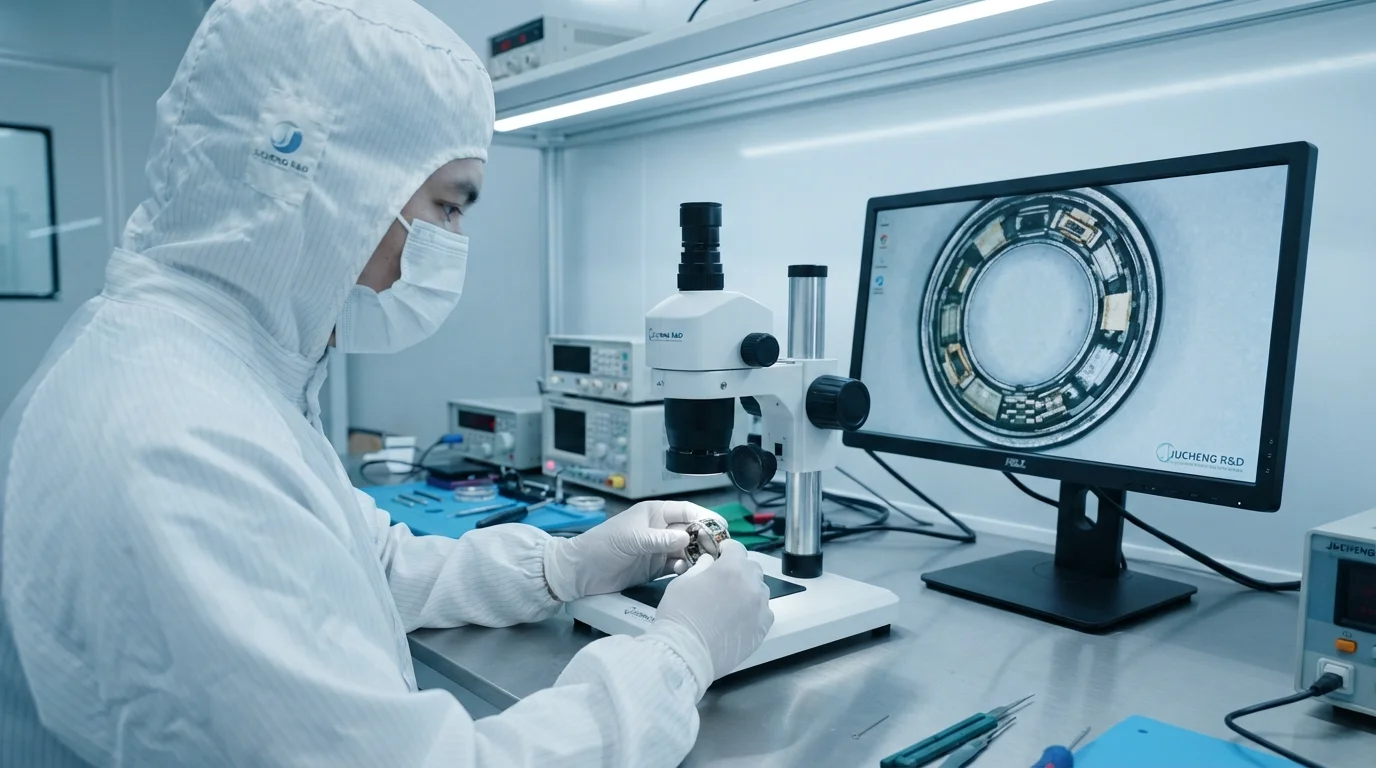
Direkter Hautkontakt erfordert, dass Rohpolymere strenge dermatologische und biokompatible Bewertungen bestehen, um lokale allergische Reaktionen zu verhindern. Materialwissenschaftler wählen medizinische Elastomere, hypoallergene Silikone und leichte Titanlegierungen, um diese empfindlichen Benutzerschnittstellen zu konstruieren. Die Kombination von hochpräzisem CNC-Mikrofräsen mit Mehrkomponenten-Flüssigsilikon-Umspritzung stellt sicher, dass der Prototyp das fertige Handelsprodukt genau nachbildet. Sorgfältige technische Überprüfungen mindern teure Werkzeugkorrekturen und gewährleisten eine hohe Endkundenzufriedenheit bei der Produktvermarktung.
Ergonomische Passformtests stellen eine kritische Phase dar, in der die physische Geometrie den Benutzerkomfort über verschiedene anatomische Profile hinweg bestimmt. Das Testen von Handgelenkskrümmungsabständen, Fingerflexibilität und Kopfbandlastverteilungen erfordert physische Modelle mit variablen Shore-Härtebereichen. Multimaterial-Fertigungsprogramme erzeugen genaue mechanische Proben, die strenge Falltests und dynamische Torsionssimulationen überstehen.
Inhaltsverzeichnis
1. Miniaturisierungsanforderungen und Mikro-CNC-Bearbeitung für Uhrengehäuse
2. Hautverträgliche Elastomere und Flüssigsilikonkautschuk-Umspritzung
3. Zwei-Komponenten-Spritzguss und taktile Ergonomie
4. Virtual-Reality-Ausrüstung und Wearable-Validierungslösungen
Miniaturisierungsanforderungen und Mikro-CNC-Bearbeitung für Uhrengehäuse
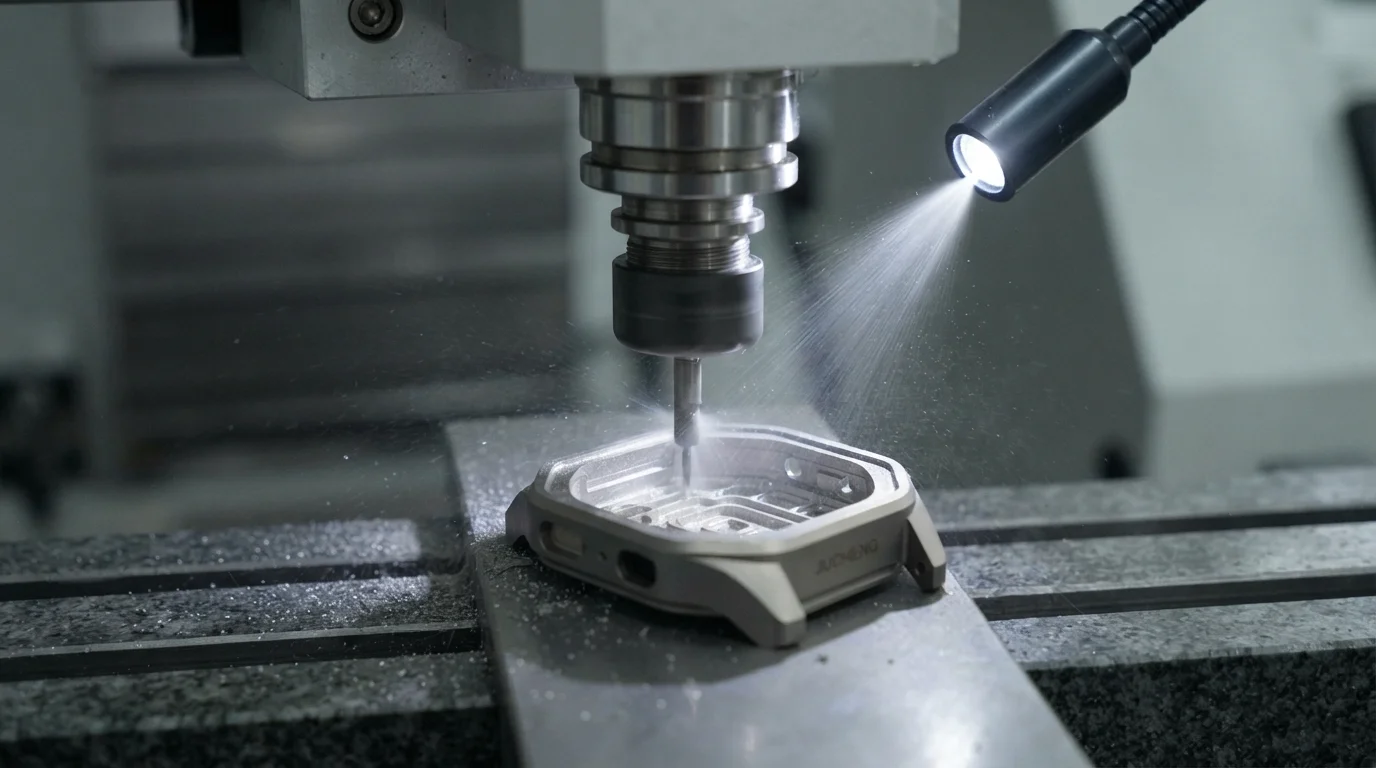
Frage: Warum ist Mikro-CNC-Bearbeitung für Wearable-Hardware entscheidend? Miniaturisierte Innenstrukturen erfordern extrem kleine Fräser mit hohen Spindeldrehzahlen, um enge Sensoraufnahmen zu fräsen.
Komplexe Wearable-Gehäuse stellen besondere mechanische Herausforderungen dar, da sie mikroskopische Volumen-Fußabdrücke aufweisen. Smart Rings und Sportuhren erfordern Hochgeschwindigkeits-CNC-Fräszentren, die mit speziellen Mikrofräsern ausgestattet sind, um Wandstärken von bis zu 0,4 mm sicher zu fräsen. Titan, Magnesium und spezielle Luftfahrtaluminiumlegierungen werden mit mikroskopischen Werkzeugbahnen bearbeitet, um dynamische optische Sensoren präzise zu positionieren. Fertige Metallteile werden gestrahlt, um kleine Werkzeugspuren zu entfernen und eine hochwertige satinierte Oberfläche zu erzielen.
Mikroskopische Gewinde und O-Ring-Nuten erfordern präzise mehrachsige Positionierung, um IP68-Wasserdichtigkeitsklassen zu sichern. Bearbeitungsspezialisten koordinieren Hochgeschwindigkeitsspindeloperationen in temperaturkontrollierten Umgebungen, um die thermische Ausdehnung des Metalls zu minimieren. Spezialwerkzeuge prüfen strukturelle Maßtoleranzen auf Mikrometerebene, um die vollständige Designkonformität zu bestätigen.
Der Einsatz von simultanen Mehrachsen-Fräszentren beschleunigt die Wearable-Device-Prototyping-Phasen und ermöglicht es Produktteams, verschiedene mechanische Layouts innerhalb von Tagen zu testen. Designer iterieren komplexe Freiformflächen, die sich bequem an menschliche Gelenke anpassen, ohne interne PCB-Montagepunkte zu beeinträchtigen. Gefräste Titangehäuse für Uhren bieten hervorragende Korrosionsbeständigkeit gegen menschlichen Schweiß und aggressive Umweltchemikalien.
Hautverträgliche Elastomere und Flüssigsilikonkautschuk-Umspritzung
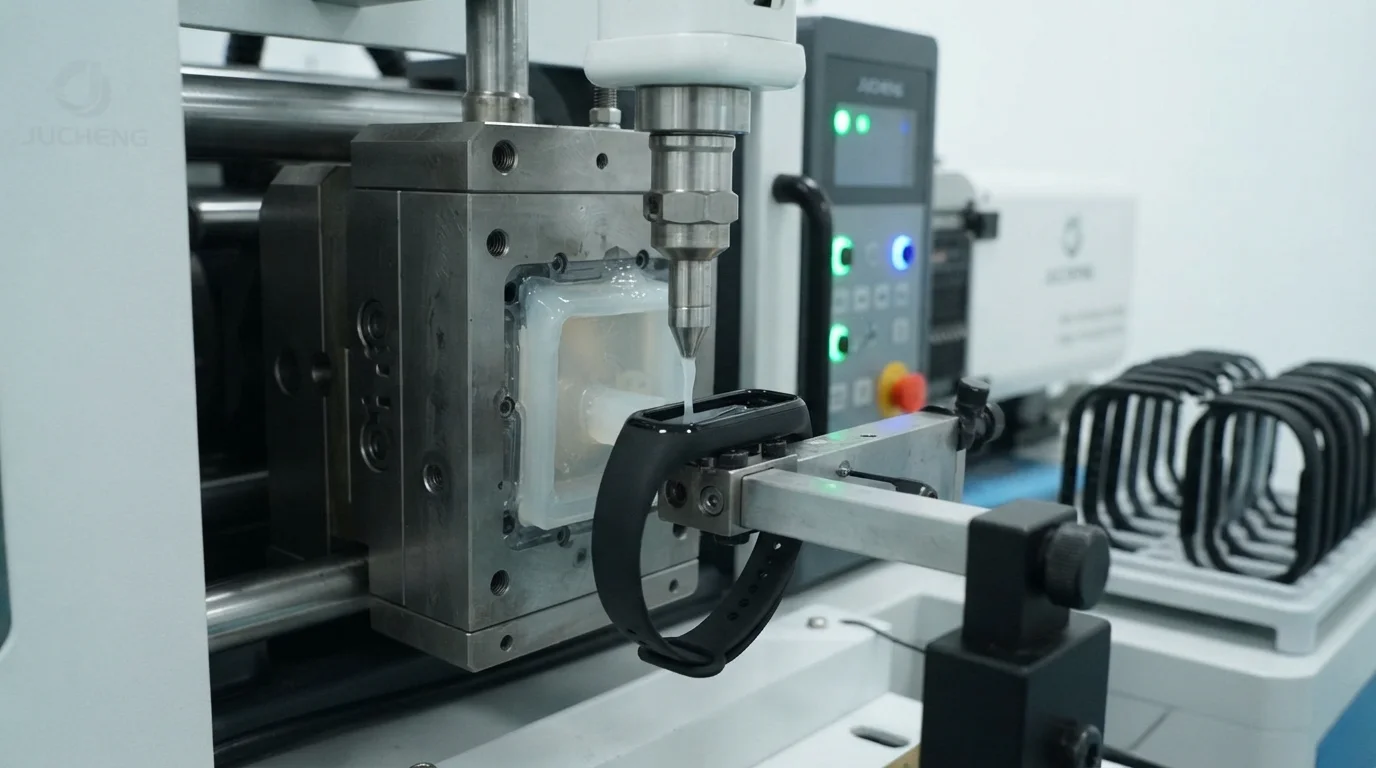
Frage: Wie werden starre intelligente Gehäuse mit flexiblen Soft-Touch-Armbändern kombiniert? Silikon-Umspritzungsverfahren verbinden hautverträgliches Flüssigsilikon direkt mit starren Kunststoffkernen.
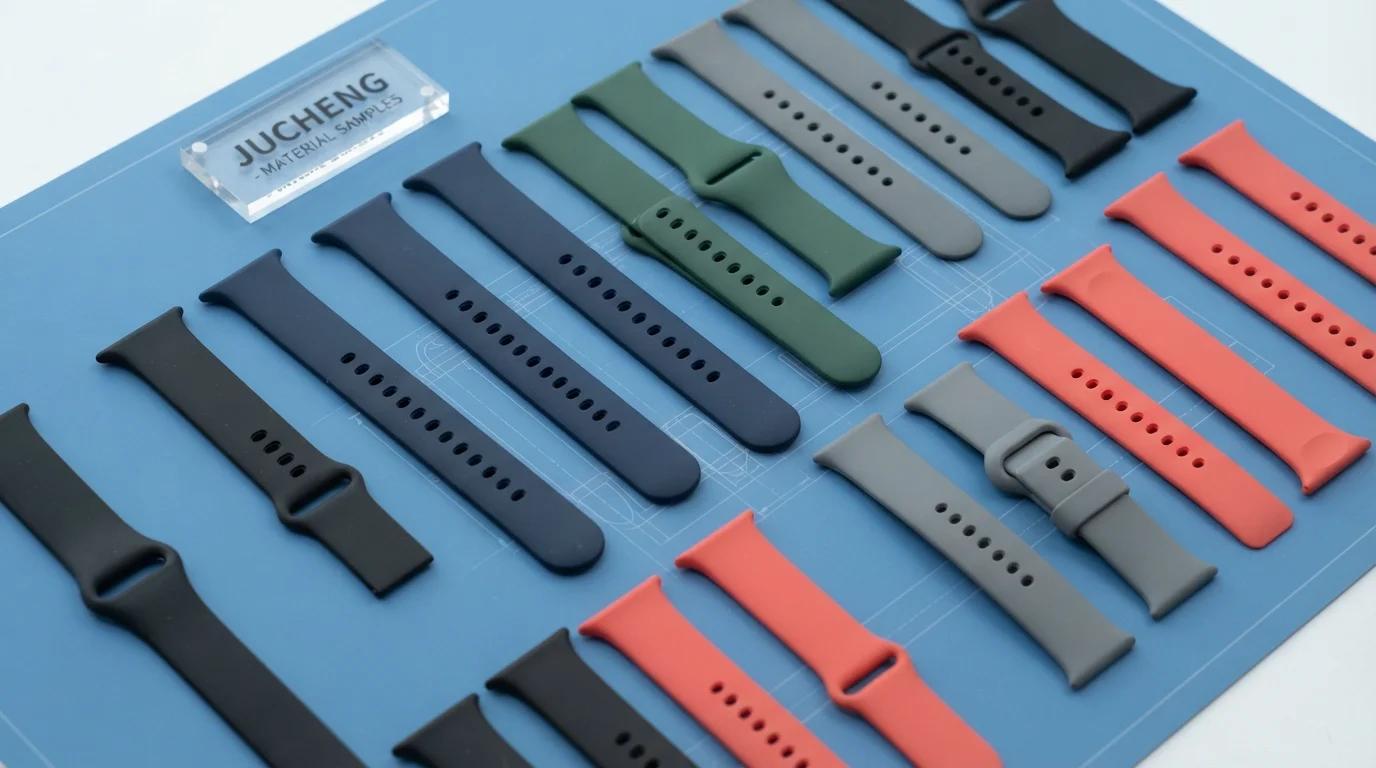
Die Entwicklung komfortabler intelligenter Armbandgeräte und flexibler Ohrhörer-Haken erfordert die Integration flexibler hautverträglicher Elastomere. Das Spritzgießen von Flüssigsilikon (LSR) bietet eine hochgradig biokompatible Lösung mit ausgezeichneter UV-Beständigkeit und taktiler Weichheit. Vakuumgussverfahren nutzen Silikonformen, um starre Polycarbonat-Rahmen mit weichen Polyurethan-Schichten zu umhüllen und so produktionsreifes Umspritzen zu simulieren. Der folgende detaillierte Vergleich hebt Standard-Elastomerpolymere für direkten Hautkontakt hervor:
| Materialbasis | Shore-Härte | Biokompatibilität (ISO 10993) | Anwendung in Wearable-Montage |
|---|---|---|---|
| Flüssigsilikonkautschuk | 40A – 70A | Zertifiziert USP-Klasse VI | Armbänder, weiche Kontaktpolster |
| TPU (Polyurethan) | 80A – 95A | Hautverträgliche Qualitäten verfügbar | Schutzleisten für Gehäuse, strukturelle Bänder |
| TPV (vulkanisierter Gummi) | 60A – 80A | Hypoallergene Optionen | Strukturelle Dichtungen, taktile Tastendichtungen |
Chemische Haftvermittler oder mechanische Verriegelungen sichern die Haftung zwischen weichen Elastomeren und harten Kunststoffen. Maschinenbauingenieure konstruieren strukturelle Hinterschneidungsnuten, die beim Umspritzen fließende Polymere aufnehmen. Diese physische Verbindung verhindert das Ablösen des Bandes bei intensiver Torsionsverdrehung und hohen Zugkräften während sportlicher Nutzung.
Zwei-Komponenten-Spritzguss und taktile Ergonomie
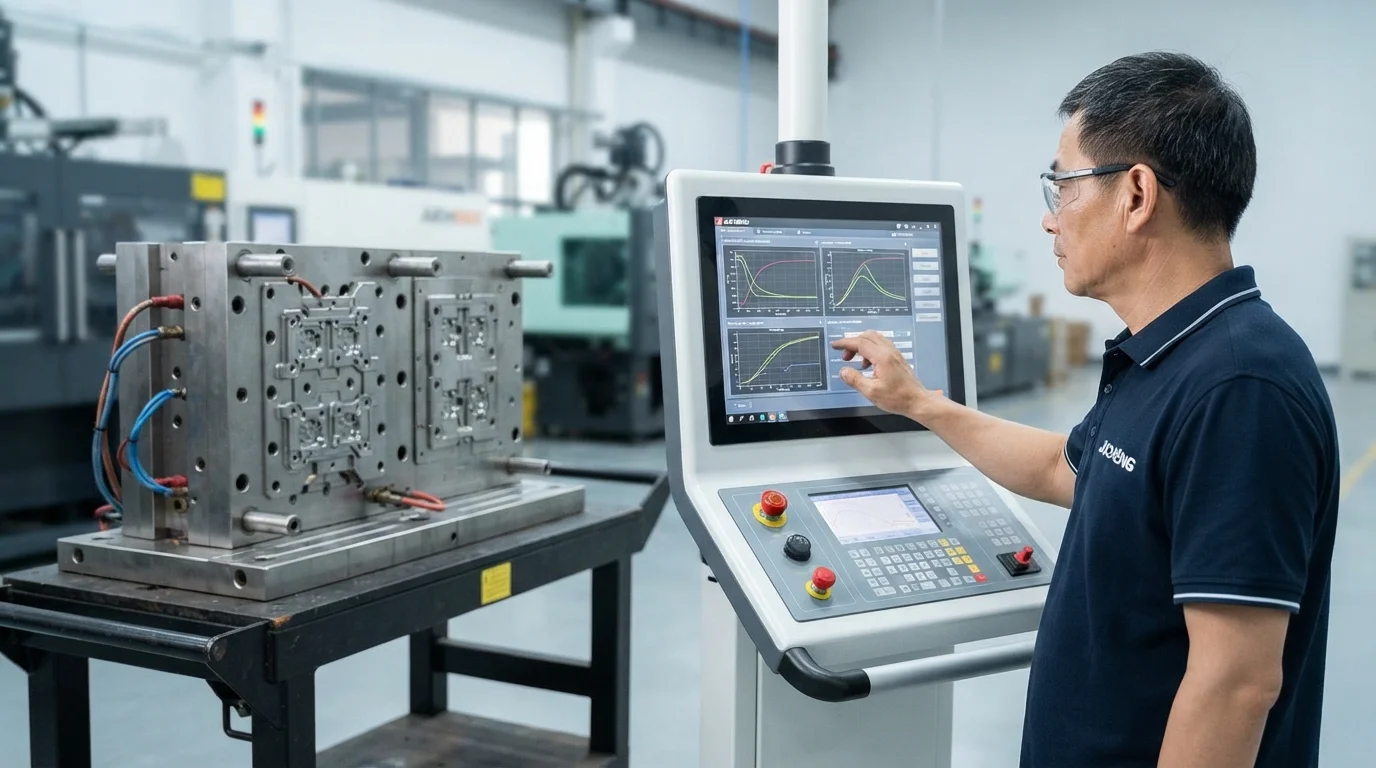
Frage: Was ist die zuverlässigste Methode, um mehrfarbige Wearable-Gehäuse herzustellen? Beim Zwei-Komponenten-Spritzguss werden zwei verschiedene Kunststoffharze nacheinander in eine einzige Formeinheit eingespritzt.
Hochwertige Armbanduhren und tragbare medizinische Monitore kombinieren oft harte Gehäusetasten mit weichen elastischen Dichtungen, um Wasserdichtigkeit zu gewährleisten. Der Zwei-Komponenten-Spritzguss (2K-Spritzguss) bietet eine hochpräzise, produktionsrepräsentative Fertigungsmethode für diese integrierten Schnittstellen. Werkzeugkonstrukteure koordinieren rotierende Kernkonfigurationen, um verschiedene Materialeinspritzungen innerhalb eines einzigen automatisierten Pressenzyklus zu durchlaufen. Fertige Teile verlassen die Presse ohne Montagespalte, was eine makellose Ästhetik und absolute staubdichte Abdichtung gewährleistet.
Verschiedene Rapid-Prototyping-Anwendungen Bei persönlichen Wellness-Geräten wird dieses fortschrittliche Mehrkomponenten-Spritzgussverfahren verwendet, um mechanische Schnappverbindungen zu bewerten. Echte Materialbewertungen stellen sicher, dass Tasten mit einem hörbaren, zufriedenstellenden taktilen Klick betätigt werden, während sie chemische Beständigkeit gegen tägliche Desinfektionswaschungen beibehalten. Ingenieure bewerten Angussstellen und Formflussverhalten mit hochwertiger Software, um sichtbare Bindenähte an kritischen äußeren Kosmetikflächen zu vermeiden.
Die Kontrolle der volumetrischen Schrumpfung bleibt ein vorrangiges Anliegen beim Spritzgießen dünnwandiger Umspritzungsbaugruppen. Unterschiedliche Abkühlungsraten zwischen starren Kunststoffbasen und weichen Elastomerabdeckungen können subtile Maßverwerfungen verursachen. Werkzeugspezialisten optimieren konforme Kühlkanäle in Aluminium-Schnellformen, um eine gleichmäßige Temperaturabsenkung über beide Materialzonen zu gewährleisten.
Virtual-Reality-Ausrüstung und tragbare Validierungslösungen

Frage: Wie werden komplexe Virtual-Reality-Headset-Baugruppen validiert? Produktionsreifes Schnellwerkzeug liefert echte Kunststoffgehäuse für reale mechanische Montageprüfungen und Fallvalidierungen.
Komplexe Virtual-Reality-Headsets (VR) und intelligente Brillen kombinieren hochkomplexe interne Elektronik mit anspruchsvollen optischen Montageplatten. Jucheng Precision betreibt eine vollintegrierte Fabrik mit über 150 CNC-Maschinen, darunter 25 hochpräzise 5-Achsen-Haas/Mazak Maschinen zum Schneiden komplexer struktureller Innenrahmen. Standard-Koordinatenmessgeräte verifizieren Submikrometer-Spielräume und stellen sicher, dass empfindliche Linsenfassungen perfekt mit digitalen Displaytreibern ausgerichtet sind. Starre technische Polymere wie Polycarbonat-ABS bieten die Dimensionsstabilität, die für dynamische Benutzerbelastungstests erforderlich ist.
Entwicklungsteams optimieren ihre Entwicklungszyklen, indem sie umfassende 24-Stunden-kostenlose DFM Engineering-Reviews anfordern. Spezialisierte Schnellwerkzeug Dienstleistungen liefern hochpräzise spritzgegossene Teile innerhalb von 4 bis 15 Tagen, sodass Projekte kritische Markteinführungstermine einhalten können. Die strikte No-MOQ-Politik ermöglicht es Medizin- und Konsumgüter-Startups, mehrstufige Designbewertungen ohne finanzielle Risiken durch Werkzeugkosten durchzuführen.
Die Partnerschaft mit einem zertifizierten Fertigungspartner stellt sicher, dass Ihre Wearable-Prototyping-Phase identische Qualitätsstandards wie die Massenproduktion erfüllt. Technische Qualitätssysteme gemäß ISO 9001 und ISO 13485 gewährleisten strikte Materialrückverfolgbarkeit und Dimensionswiederholbarkeit der Teile. Mit Zuversicht zu entwerfen ermöglicht es Ingenieurteams, komfortable, hochfunktionale Wearable-Technologien direkt an globale Verbraucher zu liefern.
Häufig gestellte Fragen (FAQ)
Wie garantiert Jucheng Precision Hautsicherheit für Kunststoffprototypen?
Rohe medizinische Kunststoffe werden direkt mit zertifizierter Analysezertifikat-Dokumentation beschafft, um Biokompatibilität zu verifizieren. Wir verarbeiten hypoallergene Flüssigsilikone und zertifizierte hautsichere Harze in sauberen, kontrollierten Fertigungsumgebungen, um Kontamination zu verhindern.
What is the minimum wall thickness possible for milled watch cases?
Precision multi-axis micro-CNC milling allows wall thicknesses to reach 0.4 mm in titanium or high-strength aluminum structural frames. Tooling setups require extreme rigidity and optimized cutting feeds to prevent thin walls from undergoing tool-induced deflection.
Can silicone straps be prototyped without expensive injection molds?
Polyurethane vacuum casting using soft silicone molds replicates production-grade elastomer qualities down to specific Shore hardness ranges economically. This flexible casting method produces small batches of ten to fifty flexible bands quickly without tooling expenses.
Why is titanium preferred for smart ring structural frames?
Titanium Grade 5 provides exceptional tensile strength, extremely low weight, and absolute biocompatibility, making it comfortable for continuous skin contact. Highly stable mechanical properties prevent smart rings from deforming under daily physical impacts.

