


Sie haben ein Projekt. Sie benötigen 50 hochwertige Prototypen. Sie erhalten ein Angebot. Aber was bedeutet diese Zahl im Angebot eigentlich? Ist es ein guter Wert? Wohin fließt Ihr Geld wirklich?
Die Kosten des Vakuumgießens zu verstehen, geht nicht nur um Budgetierung. Es geht darum, kluge Investitionsentscheidungen zu treffen. Es geht darum, die Beziehung zwischen Kosten, Qualität und dem Wert, den Sie zurückbekommen, zu verstehen.
Dieser Leitfaden wird dieses Angebot für Sie zerlegen. Wir werden den Vorhang lüften, wie der Preis berechnet wird. Dies wird Sie befähigen, Ihr Budget zu verwalten und den Wert Ihres nächsten Projekts zu maximieren.
Ihr Angebot zerlegen: Die drei Kernkosten
Kostentreiber #1: Das Mastermodell
Kostentreiber #2: Teilegröße und -komplexität
Kostentreiber #3: Ihre Wahl des Harzes
Clevere Wege, Ihr Budget zu verwalten
Ihr Angebot zerlegen: Die drei Kernkosten
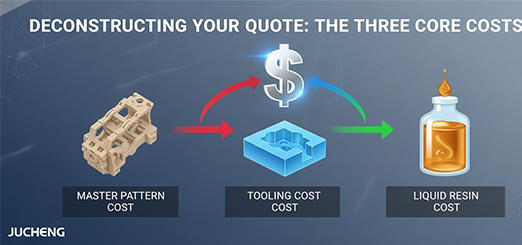
Ein professionelles Angebot für ein Vakuumguss Projekt wird typischerweise in drei Hauptteile unterteilt. Diese Teile zu verstehen, ist der erste Schritt, um die Gesamtkosten zu verstehen.
Der erste ist die einmalige Kosten für das Mastermodell. Dies ist das perfekte Originalmodell Ihres Teils.
Der zweite ist die einmalige Kosten für die Silikonform. Dies ist das Werkzeug, das verwendet wird, um alle Ihre Kopien zu erstellen.
Der dritte ist die Kosten pro Teil. Dies sind die Kosten für das flüssige Harzmaterial und die Arbeit, die erforderlich ist, um jede einzelne Kopie zu gießen und zu veredeln. Ihre gesamten Projektkosten werden (Masterkosten + Formkosten) + (Kosten pro Teil x Menge) sein.
Kostentreiber #1: Das Mastermodell
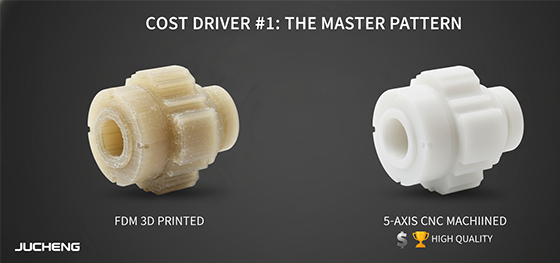
The master pattern is your initial investment in quality. Its cost depends on how it is made.
A master made with a simple FDM 3D printer will be cheap. But it will have layer lines and a rough surface. This means a technician will have to spend many hours hand-sanding and finishing it to perfection. This labor can be very expensive.
A master made with a high-end process like SLA 3D printing or 5-axis CNC machining will have a higher upfront machine cost. But it will come out with a near-perfect surface. This means it requires much less hand finishing.
Often, investing in a higher quality master pattern is the smarter choice. It leads to a better final result and can sometimes even be cheaper overall when you factor in the reduced labor costs.
Kostentreiber #2: Teilegröße und -komplexität
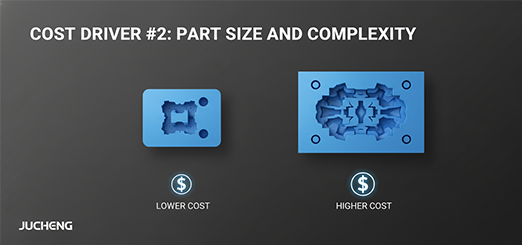
The size and complexity of your part affect both the silicone mold cost and the per-part cost.
The silicone mold cost is directly related to how much liquid silicone rubber is needed to make it. A large, thick part will require a much larger and thicker mold than a small, simple part. Silicone rubber is an expensive material, so this can be a significant cost driver.
The per-part cost is also affected by size. A larger part simply uses more polyurethane resin, which increases the material cost for each copy.
Complexity also adds to the per-part labor cost. A part with many delicate features is harder to demold without breaking. A part that requires complex painting or assembly will take more technician time for each copy.
Kostentreiber #3: Ihre Wahl des Harzes
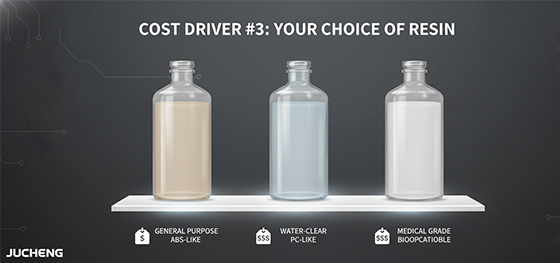
The final major driver of the Vakuumgusskosten is your choice of material. Not all polyurethane resins are priced the same.
A general-purpose, ABS-like opaque resin is the most common and cost-effective choice.
Specialty resins cost more. A water-clear, UV-stable resin that mimics polycarbonate is a more expensive formulation. A soft, rubber-like elastomeric resin also has a higher cost.
At the top of the price list are certified materials. For example, a resin that is certified as biocompatible for medical devices, or a resin that has a UL94-V0 flame retardant rating, will be the most expensive. You are paying for the advanced chemistry and the cost of certification.
Clevere Wege, Ihr Budget zu verwalten

Understanding these cost drivers empowers you to make smart decisions.
First, talk to your manufacturing partner about quantity. A silicone mold can make about 20 copies. If you need 50 copies, the provider will need to make three molds. The cost of these extra molds will be in your quote. Because the master pattern cost is a one-time setup, the cost per part will go down as you order more copies.
Second, consider your finish. If you can test an early prototype without paint, you can save money. You can then choose to paint only the final batch of parts that you will show to customers.
Finally, have an open conversation with your partner. At JUCHENG, we believe in transparent pricing. We can walk you through your quote. We can explain every cost. We can also provide DFM feedback to help you simplify your design for more cost-effective manufacturing. This partnership is the best way to ensure you get the maximum value for your investment.

