


Jeder Ingenieur steht vor einem ständigen Dilemma. Eine Wahl zwischen Kosten und Leistung. Für die meisten Teile findet man einen guten Kompromiss mit Materialien wie Baustahl oder legiertem Stahl.
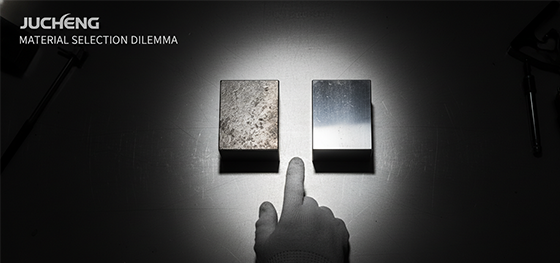
Aber was, wenn die Aufgabe zu anspruchsvoll für sie ist? Was, wenn das Teil unglaublichem Druck, extremem Abrieb und hohen Temperaturen standhalten muss, Tag für Tag, über Millionen von Zyklen?
In diesen Situationen ist ein Kompromiss keine Option. Sie brauchen den ultimativen Leistungsträger in der Welt der Metalle. Sie brauchen Werkzeugstahl. Und die Bearbeitung von Werkzeugstahl ist der ultimative Test für die Fähigkeiten eines Herstellers.
Inhalt:
Ein Metall, geschmiedet, um andere zu formen
Geheimnisse im Stahl
Die ultimative Herausforderung für einen Zerspaner
In Langlebigkeit investieren
Ein Metall, geschmiedet, um andere zu formen

Was ist Werkzeugstahl? Der Name gibt den größten Hinweis. Es ist eine Familie von Stählen, die speziell dafür entwickelt wurde, zu industriellen Werkzeugen verarbeitet zu werden. Werkzeuge, die schneiden, pressen, stanzen und andere Materialien formen, einschließlich anderer, weicherer Stähle.
Die häufigste Anwendung ist im Formen- und Gesenkbau. Eine Spritzgussform zur Herstellung von Kunststoffteilen muss enormem Druck und hohen Temperaturen standhalten. Sie muss eine sehr harte, polierte Oberfläche haben, die zur Herstellung von Millionen von Teilen genutzt werden kann, ohne zu verschleißen. Nur Werkzeugstahl kann diese Aufgabe erfüllen.
Ähnlich muss ein Stanzwerkzeug, das Formen aus Blech schneidet, härter sein als das Metall, das es schneidet. Auch dies ist eine Aufgabe für Werkzeugstahl. Sorten wie A2 und D2 sind die Arbeitspferde der Werkzeug- und Gesenkbauindustrie. H13 ist eine spezielle Sorte, die entwickelt wurde, um den thermischen Schock des Druckgießens zu überleben.
Geheimnisse im Stahl

Was verleiht Werkzeugstahl seine unglaublichen Eigenschaften? Es ist eine Kombination aus einer reichhaltigen Rezeptur und einem präzisen Kochprozess.
Erstens die Rezeptur. Werkzeugstähle haben einen hohen Kohlenstoffgehalt, der das primäre Härtungselement ist. Sie sind auch reich an Legierungselementen wie Chrom, Vanadium, Wolfram und Molybdän. Jedes Element fügt eine besondere Eigenschaft hinzu, wie die Fähigkeit, selbst bei Rotglut hart zu bleiben.
Zweitens der Kochprozess. Dies ist eine komplexe, mehrstufige Wärmebehandlung. Durch kontrolliertes Erhitzen und Abschrecken wird die innere Kristallstruktur des Stahls in einen sehr harten und spannungsbeständigen Zustand namens Martensit umgewandelt. Diese Wärmebehandlung ist eine Wissenschaft für sich und sie ist es, die die ultimative Leistung des Materials wirklich freisetzt.
Die ultimative Herausforderung für einen Zerspaner

Alle Eigenschaften, die Werkzeugstahl großartig machen, machen auch Werkzeugstahlbearbeitung unglaublich schwierig. Es ist der ultimative Test für die Fähigkeiten und die Ausrüstung einer Maschinenwerkstatt.
Das Material ist so hart, dass es sich gegen das Schneidwerkzeug wehrt. Es führt dazu, dass Werkzeuge extrem schnell verschleißen. Es erzeugt enorme Hitze und Schnittkräfte.
Die erfolgreiche Bearbeitung von Werkzeugstahl erfordert eine andere Philosophie. Sie benötigen sehr steife und leistungsstarke CNC-Maschinen. Sie benötigen spezielle Hartmetall-Schneidwerkzeuge mit zähen Beschichtungen. Sie müssen langsamere, überlegtere Geschwindigkeiten und Vorschübe verwenden. Und ein ständiger Fluss von hochwertigem Kühlmittel ist unerlässlich.
Diese Schwierigkeit ist der Grund, warum der Prozess so teuer ist. Sie bezahlen für das zähe Material, die lange Maschinenzeit, den schnellen Werkzeugverschleiß und vor allem für das tiefe Fachwissen des Maschinisten. Für Merkmale, die ein rotierendes Werkzeug nicht erreichen kann, nutzen wir auch unsere hauseigenen EDM-Fähigkeiten, ein kritischer Teil unseres Rapid Tooling Service.
In Langlebigkeit investieren

Wann ist dieser hohe Preis also gerechtfertigt? Er ist gerechtfertigt, wenn Sie in Langlebigkeit investieren.
Sie wählen Werkzeugstahl nicht, um tausend Teile herzustellen. Sie wählen ihn, um eine Million Teile herzustellen.
Eine Spritzgussform oder ein Stanzwerkzeug aus Werkzeugstahl behält seine Präzision für eine unglaublich lange Zeit. Es wird Zyklus für Zyklus, Jahr für Jahr konsistente, hochwertige Teile produzieren. Es reduziert Ausfallzeiten und Wartungskosten.
Die hohen Anschaffungskosten einer Komponente aus Werkzeugstahl sind eine Investition. Sie amortisiert sich über die lange Lebensdauer des Werkzeugs. Für jedes ernsthafte Massenproduktionsprojekt ist es die einzig kluge Wahl. Bei JUCHENG steht unsere Expertise in der Bearbeitung dieser erstklassigen CNC-Bearbeitungsmaterialien im Mittelpunkt unserer weltklassen Werkzeugdienstleistungen.

