


Narben sind die ungeschriebene Geschichte eines 3D-Drucks. In der professionellen Arena von 3D-Druck Nachbearbeitung, ist der Moment, in dem eine Komponente aus der Maschine kommt, nicht die Ziellinie – es ist der Beginn einer chirurgischen Intervention mit hohem Einsatz. Ob es sich um ein Netz aus Harzstiften oder einen massiven Block aus Titan-Ankern handelt, die Entfernung der Stützstrukturen ist die unsichtbare Phase, die den endgültigen Nutzen Ihrer Hardware bestimmt. Eine schlecht ausgeführte Extraktion kann ein Fünftausend-Dollar-Luftfahrtgehäuse in ein Stück strukturierten Schrott verwandeln. Es ist ein Prozess, der ein Gleichgewicht zwischen roher Gewalt und mikroskopischer Feinheit erfordert, um sicherzustellen, dass das strukturelle Fundament, das das Wachstum des Teils ermöglicht hat, nicht zum Fehler wird, der seine Leistung zerstört.
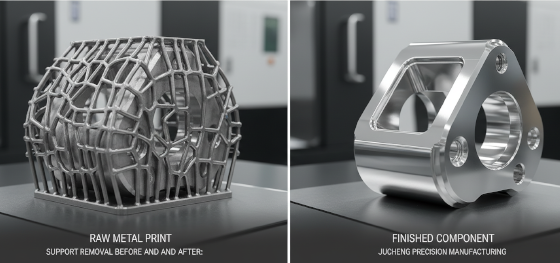
Jucheng Precision hat das Nachbearbeitungslabor neu konstruiert, um mit der technischen Strenge eines Reinraums zu arbeiten. Wir verstehen, dass bei einem medizinischen Implantat oder einem optischen Lichtleiter für die Automobilindustrie die "Stützartefakte" – diese winzigen Noppen und Lochfraßspuren, die zurückbleiben – mehr als nur ästhetische Probleme sind; sie sind potenzielle Ermüdungspunkte und optische Ausfälle. Durch die Integration spezialisierter Entfernungstechnologien wie Hochfrequenz-Wire-EDM und chemischer Auflösungsbäder in unsere Produktionsfläche eliminieren wir die Variabilität der menschlichen Hand. Dieser Leitfaden geht über die Grundlagen des "Abbrechens von Kunststoff" hinaus, um die thermodynamischen und mechanischen Realitäten der Stützentfernung im gesamten industriellen Spektrum zu untersuchen und sicherzustellen, dass Ihre Konstruktionen ohne Fertigungsfingerabdrücke von der Bauplatte ins Feld übergehen.
Die Rentabilität in der additiven Fertigung versteckt sich oft in den Arbeitsstunden des Finish-Raums. Sie können ein Teil in Stunden drucken, aber wenn es zwei Tage dauert, es zu reinigen, ist Ihre Rendite tot. Lassen Sie uns die physikalischen Gesetze der Materialextraktion aufschlüsseln und sehen, wie JUCHENGs integrierte Finish-Protokolle die strukturelle Seele Ihrer nächsten Generation von Komponenten schützen.
Harzentfernung: Der chirurgische Akt von SLA- und DLP-Protokollen
Aufbrechen der Polymerbindung: FDM-Breakaway vs. lösliche Optionen
Metallhandschuh: Warum DMLS-Stützen eine strukturelle Herausforderung darstellen
Narben und Artefakte: Verwaltung des mechanischen Kontaktpunkts
Hybride Integration: Einsatz von CNC zur Beseitigung von Stützfußabdrücken
Validierung: Sicherstellung der Oberflächenintegrität und Maßhaltigkeit
Harzentfernung: Der chirurgische Akt von SLA- und DLP-Protokollen
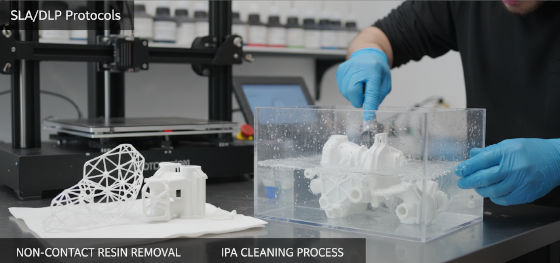
Im Bereich der lichtgehärteten Photopolymere, die Entfernung der Stützstrukturen ist ein Wettlauf gegen das Fenster des "Grünzustands". Wenn ein Teil seinen Aufbau in einem SLA-Behälter abschließt, ist es noch nicht vollständig ausgehärtet. In diesem halbfesten Zustand sind die Stützen so ausgelegt, dass sie dünn und leicht zu durchtrennen sind. Die Kontaktpunkte haben jedoch oft nur einen Durchmesser von wenigen Mikrometern. Wenn ein Techniker zu viel Kraft aufwendet, kann er die Haut des Teils "kratern" und ein Loch hinterlassen, das durch kein Schleifen mehr repariert werden kann.
JUCHENG-Techniker verwenden ein "Pre-Cure-Extraktionsprotokoll". Wir entfernen die Stützen, während das Harz noch formbar ist, mit speziellen Mikro-Scheren, die für Juweliere entwickelt wurden. Dies minimiert die Energieübertragung in den Hauptkörper des Teils. Nach der Entfernung durchläuft das Teil ein Ultraschall-IPA-Bad, um restliche Flüssigkeit aufzulösen, und geht dann in eine UV-Aushärtungskammer. Diese Reihenfolge ist entscheidend für die optische Klarheit; wenn Sie das Teil mit noch angebrachten Stützen aushärten, "backen" die Kontaktpunkte in die Oberfläche ein und erzeugen dauerhafte visuelle Defekte. Indem wir die Harzentfernung als chirurgischen Eingriff und nicht als Reinigungsaufgabe behandeln, stellen wir sicher, dass Ihre klaren Linsen und hochdetaillierten Gehäuse eine Oberflächenintegrität behalten, die für High-End-Automobil- oder medizinische Displays bereit ist.
Aufbrechen der Polymerbindung: FDM-Breakaway vs. lösliche Optionen
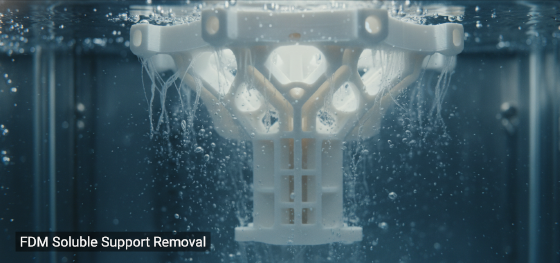
FDM technology presents a dual-pathway for managing overhanging mass. The first is "Breakaway Support"—using the same material as the part but with a lower density infill. This is the fastest method, but it leaves the most aggressive artifacts. When you rip a PEEK or Ultem support away from a part, the "weld" between the scaffold and the skin must be physically broken. At JUCHENG, we utilize proprietary tool-path offsets to create a "Weakened Interface Layer," allowing the supports to snap off cleanly without the need for heavy prying.
The second, and more advanced, pathway is "Soluble Support." By utilizing a dual-nozzle system, we can print the part in an industrial polymer like ASA and the scaffolding in a water-soluble or chemical-soluble resin. Support structure removal in this context is a passive event. The part is placed in a heated circulation tank where the solvent attacks the support material while leaving the part untouched. This is the only reliable way to clean internal labyrinths or intricate fluid manifolds that no mechanical tool can reach. We manage the chemical concentration and temperature of these baths with extreme rigor, ensuring that the part’s skin is never compromised by the dissolution process. This "Hands-Off" approach is the definitive solution for functional 3D-Druck Nachbearbeitung, delivering internal cavities that are as clean as they were in the CAD model.
Metallhandschuh: Warum DMLS-Stützen eine strukturelle Herausforderung darstellen
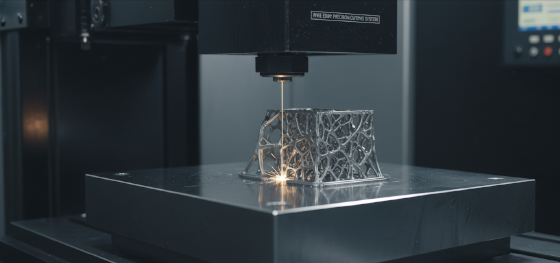
The most violent phase of 3D printing is found in the metal powder bed. In DMLS (Direct Metal Laser Sintering), the supports are not just propping up the part—they are acting as massive heat sinks that anchor the part to a thick steel build plate. These supports are 100% dense metal. Removing them is not a matter of a hand-tool; it is a matter of industrial equipment. Support structure removal for titanium or stainless steel is a technical gauntlet that separates job shops from integrated manufacturing centers.
At Jucheng Precision, we solve the metal extraction riddle through the integration of Wire EDM Machining. We utilize a high-precision molybdenum wire to saw the part off the build plate with zero mechanical stress. This prevents the "spring-back" warping that occurs when a part is hacked off with a manual band-saw. For the intricate supports inside a manifold, we utilize specialized internal grinding tools and 5-axis milling to "bore out" the metal scaffolding. We treat the removal of metal supports as a primary machining operation, ensuring that the thermal integrity of the alloy is maintained and the dimensional tolerances are locked in before the part enters the final inspection lab.
Narben und Artefakte: Verwaltung des mechanischen Kontaktpunkts
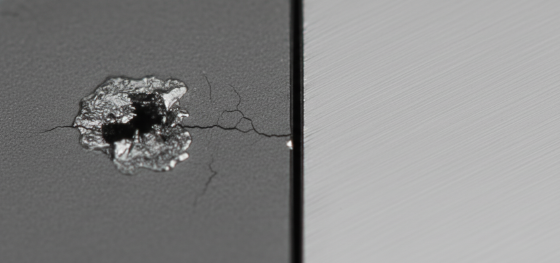
Every support point leaves a "witness mark." In high-fidelity manufacturing, managing these marks is where the artistry of the technician meets the precision of the machine. If a nub is left too high, the part won't fit; if it's sanded too low, the part is undersized. JUCHENG implements a "Staged Refinement" protocol. We don't just sand the surface; we re-engineer it.
First, we use automated bead-blasting to homogenize the surface texture, making the support zones less visible. For parts requiring aesthetic perfection, we move to a five-stage mechanical sanding process, progressing from 400 to 2000 grit. This eliminates the "artifact ghosting" that often plagues 3D printed parts. For industrial components, we utilize vibratory finishing to "break" the sharp edges where the supports were removed, ensuring every part is safe to the touch. By managing the contact point as a micron-scale feature, we deliver components that look and feel like they were cast or molded, providing the professional finish your brand identity requires.
Hybride Integration: Einsatz von CNC zur Beseitigung von Stützfußabdrücken
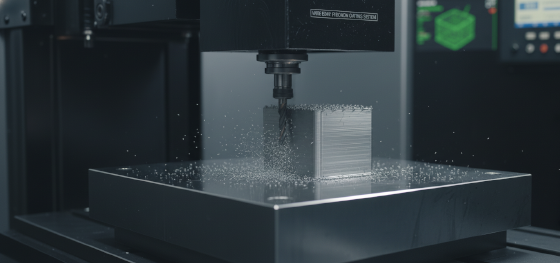
The ultimate strategy for eliminating support artifacts is the "Hybrid approach." Why sand a surface by hand for an hour when a 5-axis mill can refine it in five minutes? Jucheng Precision has optimized its 3D-Druck-Konstruktion logic to include "Post-Machining Allowances." We intentionally print an extra 1.0mm of material over the support zones of critical mating surfaces.
After the primary die Entfernung der Stützstrukturen, the part moves directly to our CNC department. We utilize our 5-axis centers to mill away the support footprints entirely, revealing a mirror-smooth surface with H7-level tolerances. This synergy between additive complexity and subtractive certainty is the definitive solution for aerospace flanges, medical mating plates, and high-performance automotive housings. We don't just "clean" the part; we machine it into a final engineered state. This integration removes the most expensive and variable part of the 3D printing cycle—the manual labor—replacing it with the predictable, documented accuracy of CNC technology.
Validierung: Sicherstellung der Oberflächenintegrität und Maßhaltigkeit
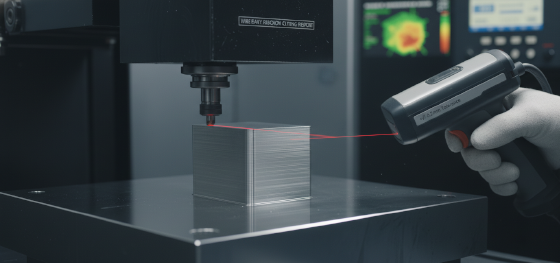
The final hallmark of a professional manufacturing partner is the audit of the extraction. You cannot manage what you do not verify. JUCHENG’s quality protocol includes a full "Surface Integrity Audit" after the supports are removed. We use non-contact 3D scanners to compare the finished part against the original STEP file, ensuring that the removal process hasn't induced any localized bowing or stress warping.
We also utilize surface roughness testers (Ra) to verify that the sanding or milling has reached the required finish level. For medical implants, we perform microscopic inspection at 40x magnification to ensure that zero support fragments or metallic dust remain in the crevices. This transparency is the cornerstone of our service to the global robotics and defense sectors. When you receive a shipment from JUCHENG, you aren't just getting 3D prints; you are getting verified engineered solutions that have been surgically refined for performance. We bridge the gap between a raw build and a functional masterpiece. Contact Jucheng Precision today for a technical DFM review and see how our support extraction protocols can stabilize and elevate your next manufacturing breakthrough.

