


MJF (Multi Jet Fusion) 3D printing is an advanced additive manufacturing technology developed by HP. Unlike traditional 3D printing methods, MJF uses a unique powder-based process that combines high precision with rapid production speeds. This technology is widely adopted in industries such as automotive, healthcare, and consumer goods due to its ability to produce durable, functional parts with complex geometries.
How MJF 3D Printing Works
Materials and Post-Processing in MJF
Key Components: Flux and Accessories
Applications of MJF 3D Printing
How MJF 3D Printing Works
The MJF printer operates by spreading a thin layer of nylon-based powder onto a build platform. A fusing agent is then selectively jetted onto the powder bed, followed by a detailing agent to refine edges. Infrared lamps pass over the bed, melting and fusing the powder where the fusing agent was applied. This layer-by-layer deposition process repeats until the part is complete.
One of the key advantages of MJF is its fast production speed. Since entire layers are fused simultaneously rather than point-by-point (as in SLS or SLA), MJF can produce parts up to 10 times faster than other powder-based 3D printing methods. Additionally, the machine is highly efficient, capable of running multiple jobs with minimal downtime.
Materials and Post-Processing in MJF
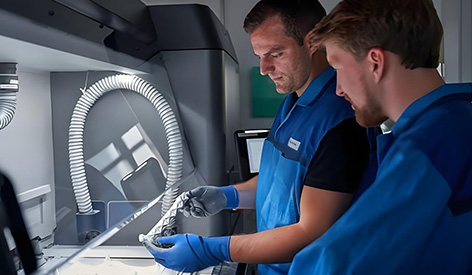
The primary material used in MJF is PA 12 (Nylon 12), a strong and lightweight thermoplastic. However, the technology also supports other engineered polymers, including glass-filled and flame-retardant variants. After printing, the excess powder is removed and can be reused, making MJF a more sustainable option compared to other 3D printing techniques.
Coloring in MJF is typically done during post-processing since the parts come out in a uniform gray or black shade. Dyeing, painting, or coating can be applied to achieve different colors and surface finishes. For enhanced mechanical properties, secondary processes like vapor smoothing or CNC machining may be used.
Key Components: Flux and Accessories
The flux in MJF refers to the energy input required for fusing the powder layers. The infrared heating system ensures consistent thermal distribution, preventing warping and improving dimensional accuracy. Additionally, specialized accessories, such as powder recovery systems and build unit heaters, help maintain optimal printing conditions.
Applications of MJF 3D Printing
MJF ist ideal für die Herstellung von Endverbrauchsteilen, Prototypen und Kleinserienfertigung. Branchen nutzen diese Technologie für:
3D-Druck Automobilindustrie: Funktionelle Prototypen, Luftkanäle und leichte Komponenten.
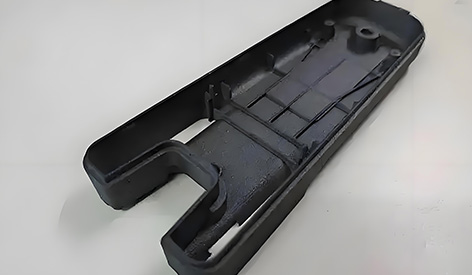
Gesundheitswesen: Maßgeschneiderte Prothesen, chirurgische Führungen und Gehäuse für medizinische Geräte.
Konsumgüter: Langlebige, hochwertige Produkte wie Brillen und Schuhe.
MJF 3D-Druck zeichnet sich durch Geschwindigkeit, Präzision und Materialeffizienz aus. Mit Fortschritten bei Maschinenfähigkeiten und Pulverformulierungen erweitert diese Technologie kontinuierlich ihre Anwendungen in verschiedenen Sektoren. Ob für schnelles Prototyping oder Serienproduktion, MJF bietet eine zuverlässige und skalierbare Lösung für moderne Fertigungsanforderungen.

