


Navigating the "Valley of Death" in hardware development—the gap between a single 3D-printed prototype and a 10,000-unit mass production run—is the most dangerous financial phase for any robotics or MedTech startup. I have seen countless promising innovations stall because traditional injection molding factories reject orders under 2,000 units or demand six-figure tooling fees that drain the R&D budget. In the current competitive market, the distance between a concept and a field-ready fleet must be bridged with capital agility. Utilizing Niedrigvolumen-RIM-Formteile has emerged as the definitive solution for manufacturing 100 to 2,000 high-fidelity units without the crushing NRE costs of hardened steel tools. This process allows developers to launch commercial-grade kundenspezifischen Reaktionsspritzgießens enclosures that possess the unyielding foundations of mass production but with the flexibility of a prototype.
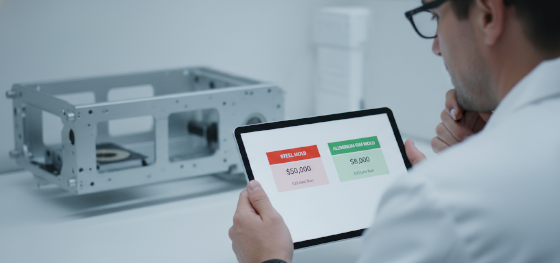
Mechanical integrity at the mid-scale depends on avoiding the "Prototype Look" that can ruin investor demos. When a potential buyer taps on a thin, 3D-printed shell and hears a hollow rattle, the perceived value of the machine evaporates. Jucheng Precision addresses these scaling hurdles by providing On-Demand Manufacturing solutions that utilize high-density polyurethane resins. Jucheng Precision leverages a massive fleet of 150+ CNC-Maschinen und 25 5-Achsen-Haas/Mazak-Einheiten to manufacture the oversized aluminum tools required for Small Batch Plastic Production. By offering a no MOQ policy, Jucheng Precision ensures that your innovation survives the scrutiny of the boardroom and the chaos of the field trials in our Shenzhen hub.
Operating under the global quality mandates of ISO 13485 and ISO 14001, Jucheng Precision acts as the high-tier manufacturing engine for global OEMs. We transform raw liquid chemistry into validated structural hardware in as fast as 15 business days, providing a seamless "Bridge to Production" for complex robotic and medical systems. This guide explores the essential economic sweet spots, the physics of low-stress curing, und die agile tooling strategies required for mastering Niedrigvolumen-RIM-Formteile erforderlich sind, um sicherzustellen, dass Ihre Technologie auf einer schlanken und unnachgiebigen Basis den Markt erreicht.
Inhalt:
Das Tal des Todes: Warum Standard-Spritzguss bei kleinen Serien versagt?
Technische Daten: Vergleich der Werkzeugkosten für 100 bis 2.000 Einheiten
Agiles Werkzeug: Wie man das Design mitten in der Produktionscharge umstellt?
Skalierungsstrategie: Nahtloser Übergang von 50 Einheiten auf 5.000 Teile
FAQ: Echte Antworten zu Lieferzeiten, Größen und ROI-Modellierung
Das Tal des Todes: Warum Standard-Spritzguss bei kleinen Serien versagt?

Hardware-Entwicklungszyklen werden oft durch die binäre Wahl zwischen langsamem additivem Fertigen und kostspieliger Massenproduktion aus der Bahn geworfen. Im Kontext von Niedrigvolumen-RIM-Formteile, ist diese Lücke der Hauptentscheidungsfaktor für Einkaufsleiter. Ich habe persönlich erlebt, wie Medizinstartups ihre gesamte Seed-Runde in eine einzige Stahl-Spritzgussform investierten, nur um nach den ersten 100 Einheiten einen Designfehler zu entdecken. Traditioneller Spritzguss erfordert massive Schließkräfte und mehrkavitäten Stahlwerkzeuge, die für Mengen unter 3.000 finanziell ruinös sind. Die RIM-Technologie bietet einen strategischen Ausweg aus dieser Falle. Da das flüssige Harz die Form mit weniger als 100 psi füllt, kann Jucheng Precision Teile bis zu 2,5 Metern Länge mit leichten Aluminiumwerkzeugen herstellen, die 70-80% günstiger sind als Stahl.
Was ist die maximale Menge für RIM-Niederdruckgießen in kleinen Serien?
Obwohl es ideal für 100 bis 2.000 Einheiten ist, bleibt das Verfahren bis zu 5.000 Einheiten wettbewerbsfähig für übergroße Teile, bei denen die Werkzeugersparnis den Stückpreisunterschied überwiegt.
Strukturelle Konsistenz ist die zweite Säule des RIM-Vorteils. Während einer Beta-Studie mit 500 Einheiten muss jede Einheit identisch funktionieren, um gültige Daten für Ihre KI-Algorithmen zu liefern. 3D-Druck leidet oft unter Chargenschwankungen und anisotroper Schwäche entlang der Schichtlinien. Jucheng Precision verwendet maschinengesteuertes Strahlmischen, um eine 100%ige molekulare Vernetzung für jedes Teil zu gewährleisten. Wenn ich einen fertigen RIM-Kotflügel in den Händen halte, sagen mir die feste Dichte und die Oberflächengleichmäßigkeit, dass es ein Produktionsteil ist, kein Prototyp. Diese unnachgiebige Integrität ist unerlässlich für Industrieroboterteile die 24/7 Belastungszyklen ohne Oberflächen-"Kreiden" oder Risse, die bei minderwertigen Harzen auftreten, aushalten müssen.
Dimensionsstabilität der Oberfläche ist die letzte ästhetische Verteidigung. Traditionell lackierte Kunststoffe neigen zum Ausgasen, was nach einigen Temperaturzyklen zu Blasen unter dem Klarlack führt. Da Jucheng Precision alle flüssigen Komponenten vor dem Spritzen vakuumentgast, sind unsere Teile 100% dicht ohne innere Lufteinschlüsse. Dies beseitigt Oberflächenfehler, die in medizinischen Umgebungen Krankheitserreger beherbergen könnten. Durch die Lieferung von Hardware mit integrierter visueller Stabilität stellt Jucheng Precision sicher, dass Ihr Diagnose-Scanner oder autonomer Roboter am 500. Tag genauso professionell aussieht wie am ersten Tag, und sichert so langfristig den ROI Ihrer Hardware-Investition.
Technische Daten: Vergleich der Werkzeugkosten für 100 bis 2.000 Einheiten

Erfolg bei der Hardware-Optimierung hängt von den Zahlen ab. Wenn Ihr Design die Skalierungseffizienz einer 10.000-Einheiten-Produktion annimmt, Sie aber nur 500 Einheiten benötigen, ist Ihr Projekt finanziell nicht tragfähig. Jucheng Precision bietet kostenlosen DFM-Analyse innerhalb von 24 Stunden um Ihrem Team zu helfen, den Break-even-Punkt zwischen verschiedenen Formgebungswegen zu finden. Die folgende Tabelle vergleicht die typischen finanziellen Variablen für eine 1,2-Meter-Roboterhülle über drei verschiedene Fertigungsstufen.
| Kostenfaktor | 3D-Druck (industriell) | Low Volume RIM | Spritzgießen |
|---|---|---|---|
| Anfängliche NRE-Kosten | $0 | $5,000 - $12,000 | $60,000 - $150,000+ |
| Vorlaufzeit bis T1 | 2 - 3 Days | 15 - 20 Days | 60 - 90 Days |
| Unit Price (500 units) | Maximum ($$$$) | Mäßig ($$) | Lowest ($) |
| Oberflächenqualität | Rough / Layered | Class-A Mirror | Hervorragend |
The data proves that Niedrigvolumen-RIM-Formteile is the "Sweet Spot" for R&D scaling. While 3D printing is faster for one piece, the piece price never drops, making a 500-unit run financially impossible. Injection molding offers a lower piece price but the tooling debt takes years to pay off. Jucheng Precision’s aluminum RIM tools are engineered to deliver up to 10,000 shots with zero dimensional drift, effectively acting as your permanent production bridge. This capital agility allows our clients to invest their resources in critical software and sensor improvements rather than idle manufacturing infrastructure in the Shenzhen hub.
Agiles Werkzeug: Wie man das Design mitten in der Produktionscharge umstellt?
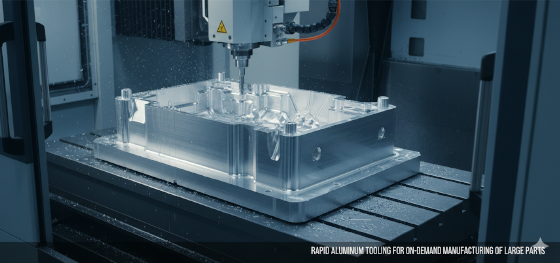
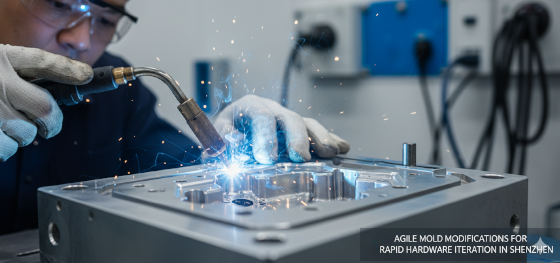
Design changes between Alpha 1 and Alpha 2 trials are a statistical certainty in high-tech robotics. In the context of Niedrigvolumen-RIM-Formteile, the ability to modify the tool is just as valuable as the initial speed. Aluminum molds used in the Jucheng hub offer a level of agile tooling that hardened steel cannot match. If a field trial reveals that an internal mounting boss needs to move by 20mm to accommodate a new LiDAR sensor, Jucheng Precision can weld new aluminum onto the mold face and re-machine the feature in our CNC bay within 48 hours. This flexibility ensures that your hardware evolves at the same pace as your code, providing a clear path to market for innovative designs.
Can I change the material stiffness mid-run?
Yes. One of the greatest benefits of the RIM process is the ability to adjust the chemical recipe to change the part from "Rigid ABS-like" to "Flexible PP-like" using the same aluminum tool.
Complexity management is also more affordable in aluminum. For large enclosures with undercuts or integrated cable exits, the mold must move in multiple directions. Jucheng Precision utilize 25 5-Achsen-Haas/Mazak-Einheiten to machine the mechanical slides and cam-actions required for these complex tools. We ensure that the parting lines and ejector pins are located in non-aesthetic zones, resulting in parts that possess the seamless perfection of high-end consumer electronics. By managing these complex design guidelines in-house, Jucheng Precision provides a single point of accountability for your hardware's entire visual and structural identity, ensuring your pilot fleet is delivered calibrated and ready for power-up.
Internal stress relief of the tool itself is managed through specialized aging cycles. Large aluminum blocks can possess residual stresses from the forging process. Before the critical parting lines and seal tracks are finished, Jucheng Precision performs thermal stabilization on the mold bases. This ensures that the precision foundations achieved in our Shenzhen hub remain stable over thousands of shots. By delivering "Statistically Reliable" tooling, Jucheng Precision ensures that part #100 of your Beta fleet is identical to part #1, providing the geometric evidence required for ISO 13485 und IATF 16949 compliance in the global market.
Skalierungsstrategie: Nahtloser Übergang von 50 Einheiten auf 5.000 Teile
The most effective way to manage production risks is to utilize low volume RIM molding as a Bridge to Production. In this scenario, Jucheng Precision manufactures your first 500 units using rapid aluminum tooling while your high-volume hardened steel tool is still being built in parallel. This strategy allows you to begin revenue-generating operations months earlier, effectively paying for your production tooling using the cash flow from your initial launch. For a 2-meter long medical housing, this bridge eliminates the three-month "Hardware Void" where a company has a validated design but no parts to sell to its first customers.
How to ensure the first 5,000 parts are 100% consistent?
Utilize automated high-pressure RIM machinery and in-house digital metrology to track the "Geometric DNA" of every batch produced in our Shenzhen facility.
Material simulation is the second pillar of the bridge strategy. Jucheng Precision formulate polyurethane resins that mimic the exact Shore D hardness, flexural modulus, and impact strength of your intended mass-production plastic, whether it is ABS, PC, or Polypropylene. This ensuring that the user experience is identical whether the part came from a RIM tool or an injection mold. By delivering high-fidelity hardware early, you can secure early-adopter testimonials and finalize your Prototypenherstellung medizinischer Geräte validation data, providing a solid foundation for your full commercial rollout. Jucheng Precision’s Shenzhen hub is optimized for this high-velocity production, ensuring your innovation stays ahead of the competition.
Unter Einhaltung der ISO 14001 environmental standards, Jucheng Precision ensures that your scaling strategy remains sustainable. Our RIM process operates at 80% lower energy levels than high-heat injection molding, supporting the ESG goals of modern global corporations. We provide a single point of accountability for your hardware needs, from the initial CAD review to the final 4-tägiger Schnelllieferung of your validated Alpha units. This integrated approach minimizes the logistical risks of your hardware launch, ensuring your innovation survives the transition from concept to commercial success. Contact our Shenzhen factory today for a complete DFM review and build the unyielding foundation your autonomous fleet requires.
FAQ: Echte Antworten zu Lieferzeiten, Größen und ROI-Modellierung
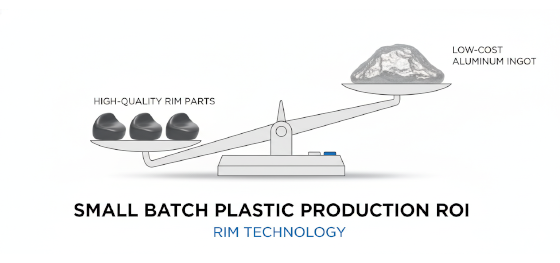
Is the piece price higher in low volume RIM molding?
Yes, the per-part cost is higher than injection molding, but the 80% reduction in tooling costs makes it the more profitable choice for under 2,000 units.
What is the typical lead time for a 1-meter aluminum RIM tool?
Aluminum rapid tools of this size are typically completed and delivering T1 samples in 15 to 20 business days.
Can I order just 10 units with zero setup fee?
We have No MOQ, but a small setup fee applies to cover machine calibration and chemical purge to ensure part purity.
How do you handle shipping for 2-meter fragile prototypes?
Jucheng Precision provide custom-fitted wooden flight cases with internal shock-dampening for all international shipments to prevent transit damage.
Does JUCHENG provide the testing reports for regulatory compliance?
Yes. We provide full dimensional CMM reports and material physical property logs for every medical and automotive production batch.
Tooling debt and long lead times are absolute innovation killers for high-end robotic and medical systems. Partnering with Jucheng Precision ensures that your functional iterations are built with the cost-effective Polyurethan-Reaktionsspritzgießen and specialized Niedrigvolumen-RIM-Formteile knowledge the industry demands. Reach out to our Shenzhen manufacturing hub today for a complete DFM review and build the unyielding foundation your autonomous fleet requires.

