


Ihr neues Produkt ist fertig. Das Gehäuse besteht aus einem schönen, glänzenden, harten Kunststoff. Es fühlt sich solide und starr an. Es sieht aus wie ein hochwertiges Produkt. Dann, beim ersten Herunterfallen durch einen Kunden, zerspringt es.
Der Kunde ist wütend. Der Ruf Ihrer Marke ist beschädigt. Sie haben ein teures Garantieproblem an der Hand. Wie konnte das passieren? Sie haben einen "harten" Kunststoff speziell wegen seiner Festigkeit ausgewählt.
Die Wahrheit ist, dass Sie in eine der häufigsten Fallen bei der Materialauswahl getappt sind. Sie haben Härte mit Zähigkeit verwechselt. Dieser Leitfaden ist eine forensische Untersuchung, warum harte Kunststoffe brechen, und wie Sie einen auswählen, der das nicht tut.
Inhalt:
Der Tatort: Ein zerbrochenes Versprechen
Die Untersuchung: Härte vs. Zähigkeit
Die üblichen Verdächtigen: Häufige harte, aber spröde Kunststoffe
Die Helden: Harte UND zähe Kunststoffe
Konstruktion für Festigkeit: Die Rolle des Herstellers
Der Tatort: Ein zerbrochenes Versprechen
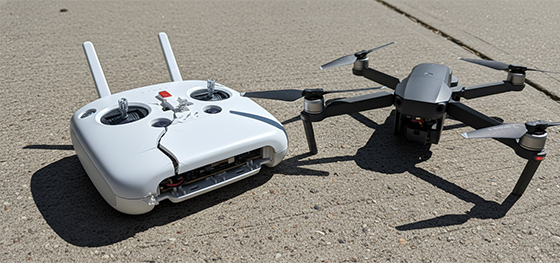
Das Versprechen eines harten Kunststoffs ist ein Gefühl von Qualität. Er widersteht Kratzern. Er ist steif und biegt sich nicht. Diese Steifigkeit kann einem Produkt ein solides und gut gemachtes Gefühl verleihen.
Aber dieses Versprechen wird in dem Moment gebrochen, in dem das Produkt einem plötzlichen Aufprall ausgesetzt wird. Eine Fernbedienung, die Ihnen aus der Hand rutscht. Ein Kinderspielzeug, das gegen eine Wand geworfen wird. Ein Gepäckstück, das am Flughafen grob behandelt wird.
Wenn die falsche Art von Hartplastik ausgewählt wurde, ist das Ergebnis ein katastrophaler Ausfall. Ein Riss. Ein Zerspringen. Ein kaputtes Produkt. Genau die Härte, die es gut anfühlen ließ, machte es auch zerbrechlich.
Die Untersuchung: Härte vs. Zähigkeit
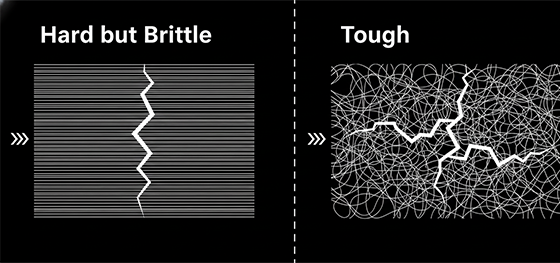
To understand why this happens, we must understand the difference between two key Eigenschaften von Kunststoff: hardness and toughness.
Hardness is a measure of a material's resistance to surface indentation or scratching. A diamond is extremely hard.
Toughness is a measure of a material's ability to absorb energy and deform without breaking. A car tire is extremely tough.
Often, these two properties are in opposition. A very hard material is often very "brittle" (the opposite of tough). Its molecules are locked rigidly in place. When a crack starts, there is nothing to stop it. It travels through the material instantly. This is what happens when glass shatters.
A tough material has a different internal structure. Its molecules can move and stretch. They are entangled. When a crack starts, these entangled chains absorb the energy and stop the crack from spreading. The material might dent or deform, but it does not break.
Die üblichen Verdächtigen: Häufige harte, aber spröde Kunststoffe
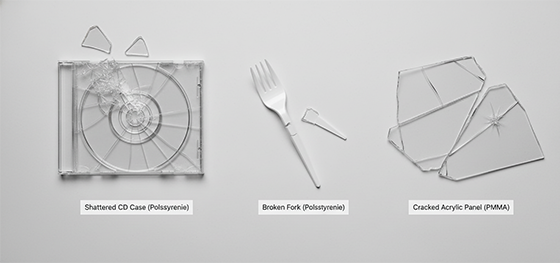
Some of the most common plastics that fall into the "hard but brittle" category are materials you see every day.
General Purpose Polystyrene (GPPS) is a prime suspect. It is crystal clear and very rigid. It is used to make CD jewel cases and disposable cutlery. And as we all know, they break very easily.
Acrylic (PMMA) is another. It is beautifully clear and very scratch-resistant, which is why it is used as a glass substitute. But it has poor impact strength. A sharp knock can easily crack it.
Choosing these materials for a product that needs to be durable is a fundamental design error.
Die Helden: Harte UND zähe Kunststoffe
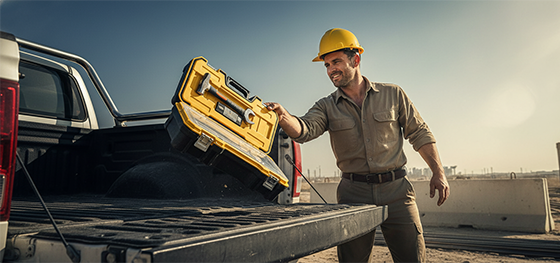
The goal for most product designers is to find a material that is both hard and tough. These are the heroes of the polymer world.
ABS (Acrylonitrile Butadiene Styrene) is a fantastic example. It is hard and rigid, giving products a solid feel. But it also contains butadiene rubber in its chemical structure. This gives it excellent toughness and impact resistance. It is the perfect balance for most consumer electronics.
Polycarbonate (PC) is another hero. It is an extremely tough, transparent plastic. It has incredible impact strength. This is why it is used for motorcycle helmets, safety glasses, and other products where impact protection is a matter of life and death.
Even a steife Kunststoffplatte can be tough. A sheet of PET-G, for example, is stiff but also very impact resistant, making it a great choice for machine guards.
Konstruktion für Festigkeit: Die Rolle des Herstellers
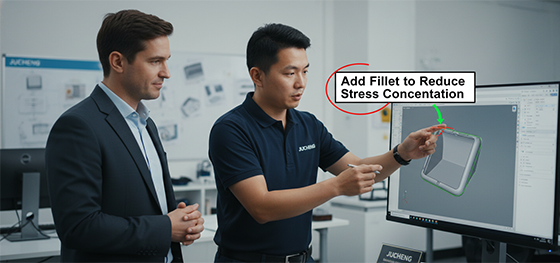
Material choice is critical. But good design can also make a huge difference.
Even a tough plastic can be made brittle if the design is bad. The number one cause of failure is stress concentration. A sharp internal corner in a plastic part is a point of weakness. It is a microscopic "crack starter."
A professional manufacturing partner will spot this in your design. During the DFM (Design for Manufacturability) review, an experienced engineer will recommend adding a smooth radius (a fillet) to all internal corners. This simple change spreads the stress out over a larger area. It can dramatically increase the real-world toughness of your part.
This expert feedback is one of the most valuable services you can get. It is the partnership that turns a potentially fragile design into a robust and reliable product. It is about choosing the right material, and then treating it with respect.

