


Haben Sie schon einmal eine Heißklebepistole benutzt? Stellen Sie sich einen Roboter vor, der diese Klebepistole hält und damit ein Bild zeichnet, nicht auf Papier, sondern in der Luft, Schicht für Schicht, bis ein vollständiges Objekt entsteht. So einfach kann man den FDM-3D-Druck verstehen! Es ist eine der beliebtesten und am einfachsten zu verwendenden Arten des 3D-Drucks. In diesem Artikel werden wir untersuchen, wie es funktioniert, welche verschiedenen Kunststoffe verwendet werden, wie es im Vergleich zu anderen Druckern abschneidet und all die coolen Dinge, die man damit herstellen kann.
Inhalt:
FDM-3D-Drucktechnologie verstehen
Erkundung von FDM-Materialien und ABS im 3D-Druck
FDM vs. SLA: Ein detaillierter Vergleich
Arten von FDM-Druckern und die Rolle von Vollfarb-3D-Druckern
Anwendungen des FDM-3D-Drucks in verschiedenen Branchen
FDM-3D-Drucktechnologie verstehen
FDM steht für Fused Deposition Modeling (Schmelzschichtung). Das ist ein großer, ausgefallener Name, aber es bedeutet einfach "Kunststoff schmelzen und schichten"."
So funktioniert es:
Sie beginnen mit einem digitalen 3D-Design, wie einem Modell, das Sie am Computer erstellen oder aus dem Internet herunterladen.
Ein spezielles Computerprogramm schneidet dieses 3D-Modell dann in Hunderte sehr dünner, flacher Schichten, genau wie beim Schneiden eines Brotlaibs.
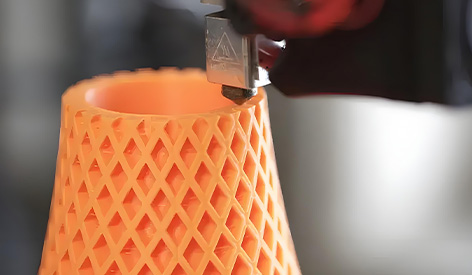
Die FDM-3D-Drucktechnologie macht sich dann an die Arbeit. Ein Faden aus festem Kunststoff (Filament genannt) wird in eine heiße Düse geführt. Die Düse schmilzt den Kunststoff und macht ihn flüssig.
Dieser geschmolzene Kunststoff wird herausgedrückt, und die Düse des Druckers bewegt sich und zeichnet die erste Schicht Ihres Objekts auf eine flache Oberfläche, die Bauplatte genannt wird.
Wenn diese Schicht fertig ist, bewegt sich die Bauplatte ein winziges Stück nach unten, und der Drucker zeichnet die nächste Schicht direkt auf die erste.
It keeps doing this, layer by layer, until your 3D object is finished!
This kind of 3D printen FDM is loved because the printers are often affordable and simple to use, making them great for schools, homes, and businesses.With the demands of the market, multicolor 3d printers have gradually been adopted by enterprises.
Erkundung von FDM-Materialien und ABS im 3D-Druck
Just like a regular printer uses different colors of ink, an FDM printer can use different types of plastic. These are called FDM material. Each type has its own superpowers!
The most common types are:
PLA: This is the most popular plastic for beginners. It's made from plants like corn and is easy to print with. It comes in lots of fun colors!
ABS: This is a tougher plastic. Think of the hard, sturdy plastic used to make LEGO bricks—that's ABS! It's strong and can handle heat, but it can be a little trickier to print with because it sometimes warps as it cools. Using a 3D FDM printer ABS requires a printer with a heated bed to help the plastic stick and cool slowly.
There are also flexible plastics that feel like rubber, and even plastics that glow in the dark or look like wood!
FDM vs. SLA: Ein detaillierter Vergleich
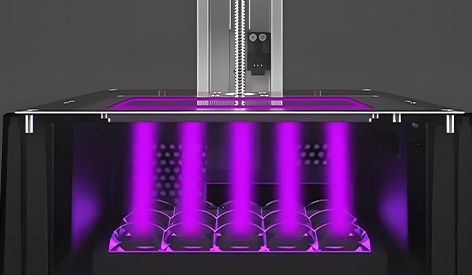
When evaluating 3D print FDM vs SLA, it is essential to consider their distinct mechanisms and outcomes. SLA (Stereolithography) utilizes a laser to cure liquid resin into solid layers, achieving high resolution and smooth surface finishes ideal for detailed models, jewelry, and dental applications. In contrast, FDM relies on thermoplastic extrusion, resulting in stronger, more durable parts that excel in functional testing and mechanical use. FDM generally offers lower material costs and faster print times for larger objects, whereas SLA requires post-curing and handling of resins, which can be messy and expensive. However, SLA surpasses FDM in fine detail and accuracy, making it preferable for intricate designs. The choice between these technologies often hinges on project requirements: FDM is better for robust prototypes and parts needing structural integrity, while SLA shines in applications demanding precision and visual appeal. By weighing factors like cost, material properties, and intended use, makers can select the most suitable method for their needs.
Arten von FDM-Druckern und die Rolle von Vollfarb-3D-Druckern
FDM printers encompass a broad spectrum, from affordable desktop models for home use to industrial-grade systems capable of large-scale production. Basic FDM printers typically extrude single materials and colors, but advancements have introduced multi-extruder models that enable dual-color or multi-material prints. While standard FDM technology does not inherently support full-color output, the term "full color 3D printers" often refers to other additive methods like binder jetting or material jetting, which can produce vibrant, multi-hued objects. In the FDM realm, some workarounds involve filament swapping or post-processing techniques like painting to achieve color variations. Nonetheless, dedicated full-color systems remain separate, highlighting FDM's focus on functionality over aesthetics. As technology evolves, hybrid solutions are emerging, but for now, FDM printers prioritize reliability and material versatility, making them a staple in settings where color is secondary to performance.
Anwendungen des FDM-3D-Drucks in verschiedenen Branchen
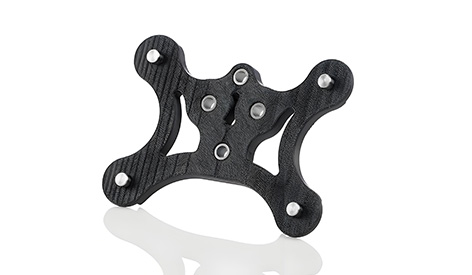
The applications of FDM 3D printing span numerous sectors, driven by its adaptability and cost-efficiency. In aerospace, FDM is used to fabricate lightweight, custom components that reduce weight and improve fuel efficiency. The automotive industry leverages it for prototyping parts, creating jigs and fixtures, and producing end-use components like brackets and housings. Healthcare benefits from FDM through the production of prosthetics, surgical guides, and anatomical models for preoperative planning, enabling personalized patient care. Educational institutions incorporate FDM into STEM curricula, allowing students to bring designs to life and foster hands-on learning. Additionally, consumer goods, architecture, and art sectors utilize FDM for rapid iteration, custom products, and intricate sculptures. The technology's ability to work with various FDM materials, including ABS and composites, ensures it meets diverse demands, from functional prototypes to artistic creations. As FDM continues to advance, its applications are expanding into areas like construction and electronics, underscoring its role as a transformative tool in modern manufacturing.
In summary, FDM 3D printing offers a powerful blend of accessibility, material diversity, and practical applications. From understanding the basics of 3D printer FDM technology to comparing it with SLA and exploring its use with materials like ABS, this technology provides a solid foundation for innovation. While full-color capabilities may lie beyond its core strengths, FDM's reliability and broad utility make it indispensable across fields. As developments in materials and hardware progress, FDM is poised to further revolutionize how we design, prototype, and produce, cementing its place in the future of additive manufacturing.

