


An aircraft turnbuckle enquiry should identify a coordinated assembly, not just a threaded barrel. The body, terminal ends, thread handedness, and specified locking features must belong to the same controlled configuration. A component can look convincing and still leave the buyer without evidence that the intended parts have been produced and identified as a compatible set.
For a development or manufacturing review, the useful task is to define which components are being supplied and how their relationships will be checked. Approved aircraft hardware and custom development samples have different status. This guide concerns the component brief and its evidence; it does not authorize replacing approved hardware or provide instructions for rigging an aircraft control system.
Start by identifying the hardware configuration
Record the applicable part numbers, drawing revisions, and required hardware definition before discussing a custom sample. If the requirement is an existing approved item, first establish the appropriate supply and documentation route. A custom-machining enquiry should not quietly become a proposal to substitute a visually similar prototype for that item.
Die FAA information page for AC 20-45 describes a document addressing turnbuckle safetying methods accepted during past type-certification programs. Its existence reinforces the need to identify the applicable hardware and requirements. It is not a blanket approval for a newly manufactured component, and an information page alone does not supply the complete application-specific acceptance basis.
For an identified development configuration, name the barrel, each terminal, and any separate locking element. State which parts come from the customer and which belong in the supplier’s scope. Include the mating definitions needed to review the assembly. A quantity described only as complete turnbuckles can otherwise conceal different assumptions about included components and verification responsibilities.
Give handedness and component identity their own controls
Left- and right-hand thread definitions must be explicit in the controlled documents where the design requires them. Identify which end and component each definition applies to. A component list should make it possible to trace the physical parts back to the intended assembly without depending on a supplier’s informal naming convention or a photograph.
For an aircraft turnbuckle component enquiry, Jucheng Precision’s machining review is useful when the body and terminal requirements are available together. The team can then discuss which controlled features will be produced, the state in which they will be checked, and the reference parts or gauges needed. That scope does not establish aircraft approval or a load rating.
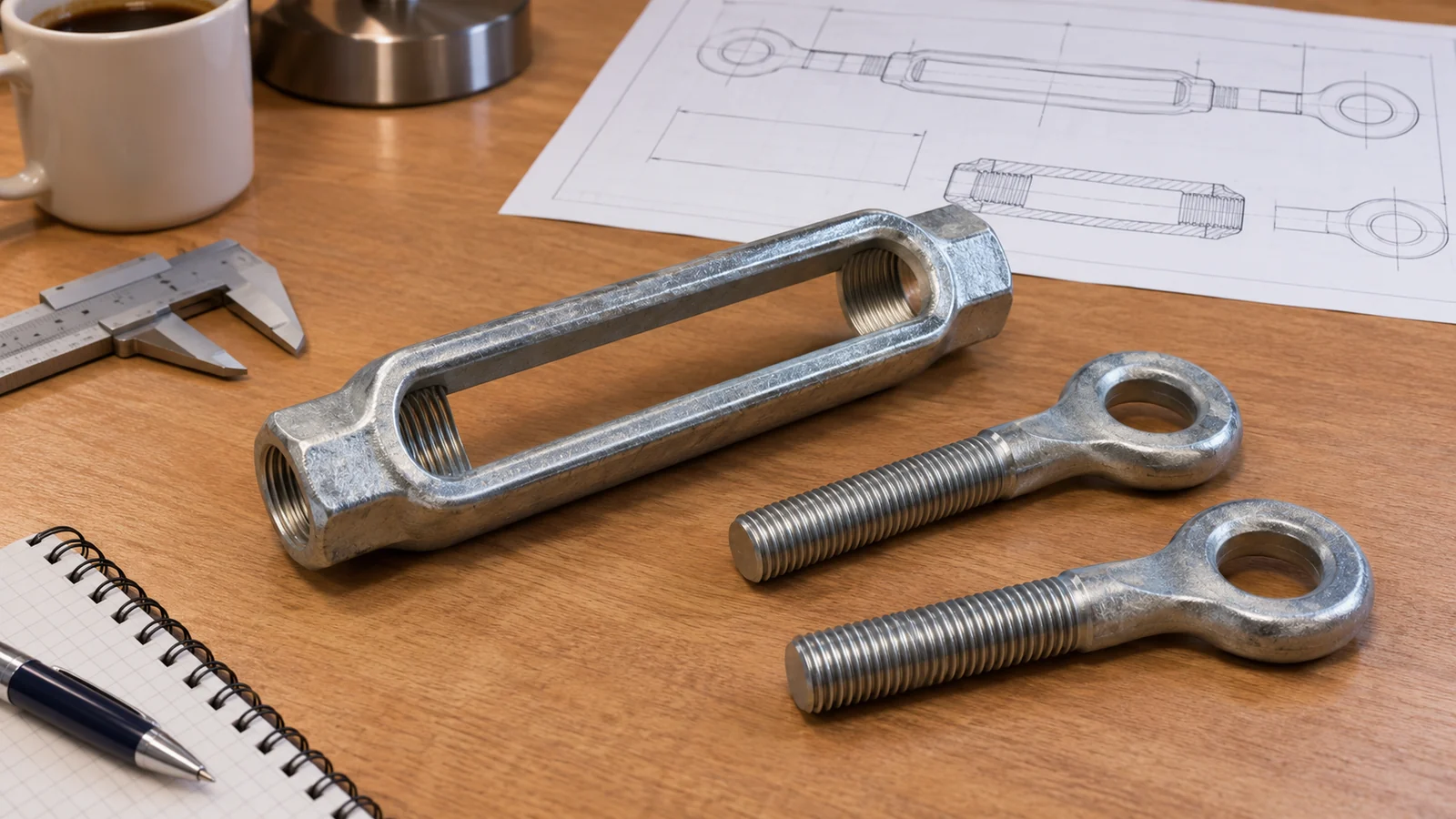
Keep identification separate from geometric acceptance. A mark can help distinguish parts, but it does not prove that the thread conforms. Conversely, a passing thread check does not establish that the component was assigned to the correct configuration. The delivery package should preserve both the inspection result and the identity of the part to which it belongs.
Define the locking features without improvising them
A locking-related slot, hole, groove, or other feature needs the applicable controlled definition. Its geometry can affect both manufacturing access and how the mating elements are represented in an inspection or assembly review. Do not add a familiar feature from another hardware style simply because its purpose appears similar.
Identify which checks are local to the component and which depend on the assembled condition. A local feature measurement can establish a drawing characteristic, while a relationship between a barrel and terminal may need a different reference setup. Record what each check resolves. A loose assembly demonstration should not stand in for requirements it was not designed to verify.
The drawing package should also identify features protected during later processing. If an operation can change the relevant opening, edge, or thread condition, specify how the final requirement will be established. Resolve those questions before a generic finishing instruction is allowed to govern the whole part.
Compare manufacturing proposals on the same final state
A machined development component can help review a controlled geometric relationship before another blank or production route is selected. If the proposed route uses a different material condition or process history, make that difference visible. Compare quotations against the same component scope, quantity, final operations, and required evidence rather than the lowest price for an unfinished shape.
For a multipart prototype, state whether the purpose is identification, dimensional review, or an agreed assembly evaluation. Each objective can require different reference components and records. If specialist testing or qualification is required, identify that activity and its responsible party separately from ordinary component machining. It should not be inferred from the presence of an assembled sample.
Jucheng Precision can review a coordinated component brief around those manufacturing and inspection boundaries. This helps the buyer see where the proposed work answers the development question and where additional evidence remains necessary. The value comes from making the handoff explicit, rather than presenting a general machining service as a source of automatically approved aircraft hardware.
Inspect after the operations that affect the requirement
Specify material, condition, treatment, and surface requirements through the applicable drawing and supporting documents. General labels such as brass, steel, or corrosion resistant are insufficient to identify a particular aviation hardware configuration. Do not derive an approved grade or treatment from a generic material-page example or a similar-looking industrial turnbuckle.
Jucheng Precision’s surface finishing information provides a relevant discussion point for the final state of machined components. Agree which surfaces are treated, which features are protected, and which characteristics must be checked afterward. An intermediate thread result should remain identified as intermediate when subsequent processing can affect the specified final condition.
Select the inspection methods from the actual requirements. Record the thread specification, the relevant reference or gauge, and the component state used for acceptance. Separate a thread check from a positional, profile, or locking-feature check. A single pass statement cannot explain whether all of those distinct characteristics were evaluated.
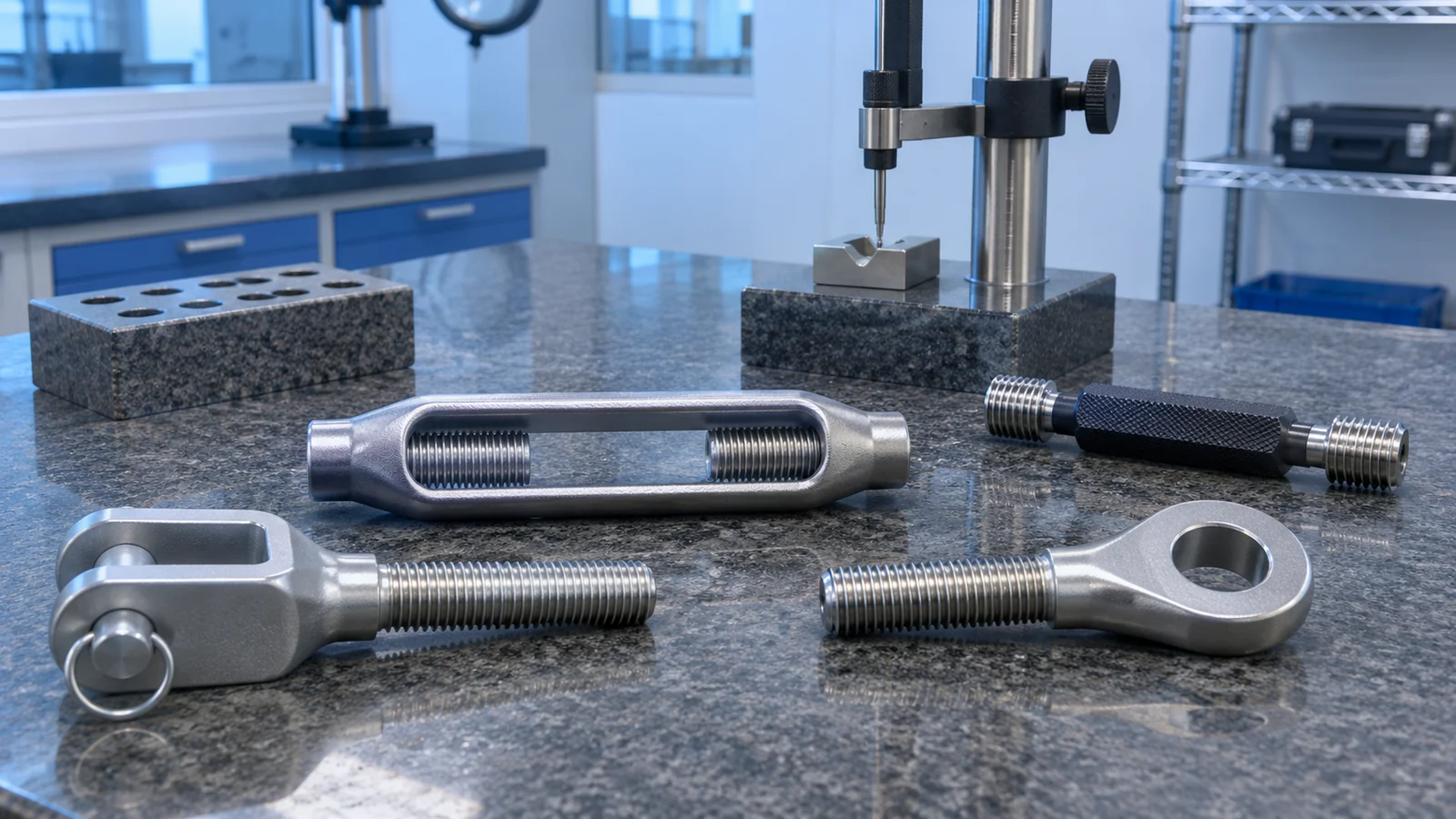
Resolve a mixed-set discrepancy through the records
Imagine a hypothetical development review in which a barrel and two terminals arrive from different sample lots. One pairing behaves differently from another. Before changing a thread or a locking feature, reconcile the component identities, drawing revisions, material states, and inspection records. Confirm that the intended parts are being compared under the same defined conditions.
Then examine the specific characteristic in question using the agreed references. Keep the original observation separate from any adjustment made during the investigation. A component modified to explore a fit issue needs a record of that change; it should not be returned to the lot with its original acceptance status silently intact.
For the aircraft turnbuckle, this approach produces a traceable development finding. It can identify a mixed configuration, a measured component discrepancy, or an inspection gap without claiming that a bench assembly establishes approval for aircraft installation. Preserve the scope of the conclusion alongside the evidence.
Prepare the component handoff
Provide the controlled bill of materials, individual drawings, mating definitions, material and finishing requirements, identification rules, quantity, sample objective, and inspection deliverables. State which hardware definition governs the work and which responsibilities remain with the design or approval authority. If an approved standard item is required, say so before a custom route is evaluated.
What should happen when one terminal changes revision?
Review the configuration as a set. Determine which mating relationships and records are affected and whether the earlier components remain valid for the intended review. Do not assume that unchanged external appearance makes two terminal revisions interchangeable.
Can a display assembly be used for dimensional acceptance?
Only when its components, handling history, and condition meet the agreed inspection requirements. A demonstration assembly may have been adjusted, marked, or handled outside the controlled process. Identify its purpose rather than allowing appearance to determine its acceptance status.
To define a coordinated manufacturing review, send Jucheng Precision the barrel, terminal, and final-state requirements. A useful component package makes the intended configuration and evidence clear before work begins.