


Innovation in den anspruchsvollsten Hardware-Zentren der Welt ist ein unerbittliches Wettrennen gegen die Zeit. In den anspruchsvollen Korridoren der Robotiklabore von Akihabara und den weitläufigen Automobilforschungszentren rund um die Kanto-Ebene ist die Fähigkeit, aus einer digitalen Darstellung eine physische Komponente zu manifestieren, der primäre Motor für das Überleben auf dem Markt. Tokio ist seit langem der globale Standard für mechanische Exzellenz, doch selbst hier führt der traditionelle Prototyping-Zyklus oft zu einem gefährlichen Engpass. Hochpräzise Werkzeuge für das Spritzgießen können Monate für die Lieferung benötigen, während inländische Boutique-Büros oft mit der Kapazität für industrielle Serien zu kämpfen haben. Hier findet der 3D-Druck Tokio den Übergang von einem gelegentlichen F&E-Werkzeug zu einem kritischen Eckpfeiler der High-Tech-Lieferkette. Er repräsentiert eine Bewegung hin zu "Digitaler Agilität" – der Fähigkeit, flugzertifizierte Titanknoten oder spritzgussqualitative Nylon-Gehäuse in nur 72 Stunden zu produzieren.
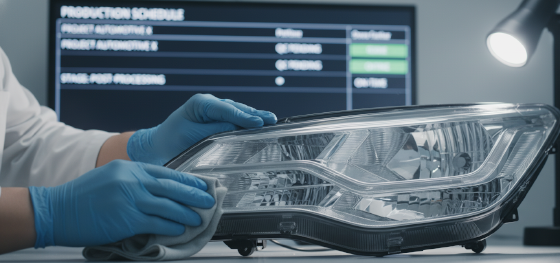
Bei JUCHENG erkennen wir, dass ein in Tokio ansässiges Ingenieurteam nicht nur nach einem "3D-Druck" sucht; sie suchen nach einem technischen Refugium, das in der Lage ist, die Lücke zwischen einer anatomischen medizinischen Datei und einer validierten, sterilisationsbereiten Komponente zu schließen. Wir agieren als integriertes Fertigungszentrum, das die einzigartige kulturelle und technische Ehrfurcht vor Präzision im japanischen Markt versteht. Durch die Integration unserer 25 leistungsstarken 5-Achsen-CNC-Zentren mit unseren industriellen MJF- und DMLS-Flotten bieten wir eine einheitliche Roadmap für Innovationen mit hohem Einsatz. Wir verstehen, dass der Erfolg im 3D-Druck Tokio in den letzten fünf Mikrometern eines Lagersitzes und der absoluten Materialrückverfolgbarkeit liegt, die für die Einhaltung gesetzlicher Vorschriften erforderlich ist. Dieser 2.000-Wörter-Leitfaden untersucht die thermodynamische Robustheit des funktionalen Prototypings, die architektonischen Veränderungen im Design von Roboter-Endeffektoren und warum der integrierte Ansatz von JUCHENG für den 3D-Druck Tokio sicherstellt, dass Ihre Hardware im Feld gedeiht, nicht nur auf dem Reißbrett.
Profitabilität in der Hardware-Entwicklung wird von denen gewonnen, die schnell scheitern und noch schneller iterieren können. Sie kaufen nicht nur eine Polymerform; Sie kaufen das Recht, Ihren technischen Daten zu vertrauen, bevor Sie sich zu teuren Produktionswerkzeugen verpflichten. Ob Sie einen innovativen Herzpumpen-Prototyp oder einen Hochdrehmoment-Roboter-Greifer bauen, die Logik des Drucks ist Ihr größter Wettbewerbsvorteil. Lassen Sie uns die technischen Säulen der industriellen additiven Fertigung aufschlüsseln und sehen, wie JUCHENG digitale Daten in physische Gewissheit für Tokios Ingenieurselite verwandelt.
Industrielle Präzision: Über Desktop-Beschränkungen in Japan hinausgehen
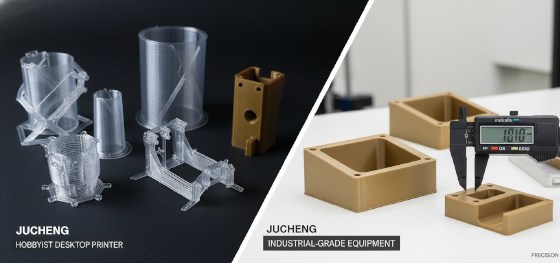
Die größte Falle im aktuellen 3D-Druck-Tokio-Markt ist die "Desktop-Täuschung". Viele lokale Firmen verlassen sich für ihre frühe F&E auf kleine Open-Frame-Drucker und nehmen an, dass diese Maschinen eine gültige Darstellung industrieller Qualität bieten. Für Ingenieure in Tokios Präzisionsgetriebe- und Hochfrequenzelektroniksektoren ist dies eine gefährliche Annahme. Eine Desktop-Maschine könnte die Form bewältigen, aber sie kann die Thermodynamik nicht bewältigen. Ohne eine aktiv beheizte Kammer und industrielle Lasersteuerung leiden Hochleistungspolymere wie PEEK 3D-Druck oder Ultem unter Zwischenschicht-Delamination und mikroskopischen Hohlräumen.
JUCHENG eliminiert dieses technische Risiko, indem es Tokios Designern Zugang zu einer Elite-Fertigungsebene bietet. Unsere Einrichtung betreibt industrielle SLS-, MJF- und SLA-Systeme, die Toleranzen von bis zu +/- 0,1 mm über große Spannweiten halten können. Wir verstehen, dass eine Komponente für ein Hochgeschwindigkeitsmontageband in Ota City ein Maß an Dimensionsstabilität erfordert, das nur eine stabilisierte Bauumgebung bieten kann. Durch die Beseitigung der "Körnigkeit" und Instabilität von Hobby-Hardware liefern wir Prototypen, die das strukturelle Rückgrat besitzen, das für die funktionale Montage erforderlich ist. Wir behandeln den 3D-Druckprozess als strenge Luft- und Raumfahrtdisziplin und stellen sicher, dass Ihre Teile die mechanischen Erwartungen der kritischsten Ingenieurfirmen Japans erfüllen. Für uns ist "gut genug" ein Versagen; wir streben in unserer additiven Arbeit nach derselben Submikron-Fidelität, die Tokios Maschinisten von einer Präzisionsfräse erwarten.
Funktionale Belastbarkeit: MJF und SLS für Robotik-Exzellenz
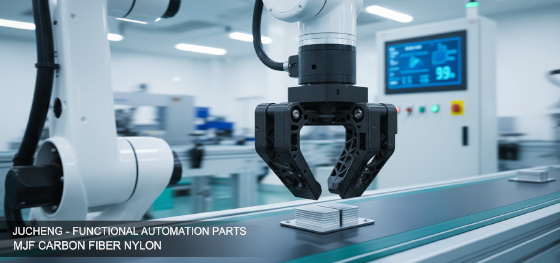
Tokio ist unbestritten das globale Epizentrum der Robotik-Innovation. Von den Gelenken humanoider Diener bis zu den Hochgeschwindigkeits-Endeffektoren von Automobilproduktionslinien ist die Anforderung an leichtgewichtige Festigkeit absolut. Traditionelle Aluminium-Greifer sind oft zu schwer und begrenzen die Beschleunigung und Nutzlast des Arms. Hier bietet der 3D-Druck Tokio durch Multi Jet Fusion (MJF) und selektives Lasersintern (SLS) einen radikalen Vorteil. Diese Technologien ermöglichen es JUCHENG, skeletthafte, topologisch optimierte Rahmen zu "wachsen", die 60 % leichter als Metall sind, aber die Steifigkeit eines industriellen Polymers besitzen.
Die technische Brillanz der MJF-Linie von JUCHENG liegt in ihrer isotropen Festigkeit. Da die Infrarotlampen das Nylon-12-Pulver mit solcher Intensität verschmelzen, sind die Bindungen zwischen den Schichten so stark wie das Material innerhalb der Schicht. Diese mechanische Vorhersagbarkeit ist für Tokios Automatisierungsingenieure von entscheidender Bedeutung. Sie können komplexe pneumatische Verteiler mit internen Luftkanälen entwerfen, die direkt in die "Hand" des Roboters integriert sind, wodurch schwere externe Schläuche und Armaturen überflüssig werden. Wir verwenden kohlenstofffaserverstärkte Nylons, um den mechanischen Modul zu bieten, der für Hochdrehmoment-Halterungen erforderlich ist, die Millionen von Zyklen ohne Ermüdung überstehen müssen. Durch die Nutzung der geometrischen Freiheit der additiven Fertigung helfen wir unseren japanischen Partnern, Roboter zu bauen, die sich schneller bewegen, weniger Energie verbrauchen und keine Wartung an ihren strukturellen Gelenken erfordern. Wir drucken nicht nur Teile; wir konstruieren die kinetische Zukunft von Tokios Fabriken.
Optische Fidelität: SLA-Prototypen für Automobilbeleuchtung
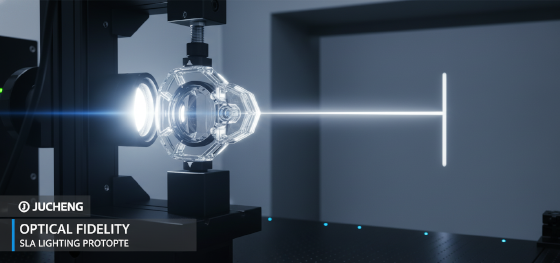
Die visuelle Seele eines modernen Fahrzeugs wird durch seine Lichtsignatur definiert. Tokios Automobilgiganten verschieben ständig die Grenzen von LED-Lichtleitern, dickwandigen Linsen und komplexen Reflektoren. Das Prototyping dieser Komponenten ist der ultimative Test der 3D-Druck Tokio Fähigkeit. Jede innere Trübung, mikroskopische Blase oder Oberflächenwelligkeit verursacht Lichtstreuung, ruiniert das Strahlenmuster und macht photometrische Tests unmöglich. JUCHENG hat einen speziellen Workflow für hochfidèle optische Prototypen entwickelt.
We utilize ultra-clear SLA resins specifically formulated for minimal yellowing and high refractive stability. Achieving "Glass-Like" clarity is a two-stage battle. First, we print with thin layer heights (25 microns) to minimize the stair-step effect. Second, the part moves to our integrated finishing lab for Vapor Smoothing and multi-stage mechanical buffing. This process melts the microscopic tool marks, creating a lens that is indistinguishable from a production-grade injection molded part. Our lighting prototypes allow Japanese Tier 1 suppliers to verify their nocturnal brand identities on a light bench within days of finalizing a CAD file. By providing this level of visual honesty, we ensure that your R&D data is a reliable roadmap for final production, saving months of lead time and millions in potential mold revisions.
Metallurgical Sovereignty: DMLS Titanium for Aerospace Nodes

Metal is the ultimate frontier of structural integrity, especially for the high-stakes aerospace and satellite sectors headquartered around the Tokyo Bay area. For decades, titanium parts were limited by the massive costs of specialized forged tooling and the slow, tool-destroying nature of CNC milling. DMLS (Direct Metal Laser Sintering) has fundamentally liberated these designs. By utilizing a 400W fiber laser to micro-weld particles of Grade 5 (Ti-6Al-4V) or Grade 23 (ELI) titanium powder, we can now grow skeletal structures that possess a strength-to-weight ratio that was previously the domain of theory.
Achieving success in 3d printing tokyo for aerospace requires a technical mastery of the "Melt Pool." It isn't just about melting dust; it is about managing a high-speed metallurgical event that occurs in an inert argon environment. JUCHENG utilizes advanced build strategies that achieve 99.9% theoretical density, ensuring that your parts are free of the microscopic porosity that leads to fatigue failure in flight. We also implement mandatory vacuum stress-relief cycles for every titanium build, relaxing the internal crystalline structure to prevent the warping and delamination that often occur in lower-tier additive shops. This level of metallurgical sovereignty allows our Japanese partners to replace heavy, assembled brackets with monolithic, topologically optimized titanium parts that survive the violent vibrations of a launch or the extreme thermal cycling of orbit. We bridge the gap between digital topology and physical survival.
Supply Chain Velocity: From Global Hub to Tokyo Doorstep

Geography is a solved problem in the modern industrial landscape. For an engineering team in Minato or Chiyoda, the physical location of the machine spindle is less important than the speed and reliability of the data loop. JUCHENG has re-engineered the 3D printing process to function as a seamless extension of Tokyo’s agile R&D cycles. We recognize that waiting ten days for a domestic prototype is often slower than receiving a high-fidelity component from our integrated facility in three.
Efficiency in logistics is won through digital integration and dedicated customs protocols. We utilize a "Fast-Track Japan" lane for all 3d printing tokyo orders, ensuring that parts move from our final CMM inspection directly to priority air-freight handlers. By managing the entire value chain—from material procurement to professional finishing—under one roof, we eliminate the vendor-to-vendor handoffs that cause most international manufacturing delays. When you upload a file on a Monday, you are often holding the physical part by Thursday. This velocity is vital for Tokyo’s electronics and automotive sectors, where a missed milestone can cost millions in market share. We don't just ship parts; we deliver the temporal agility needed to keep your innovation cycles moving at the speed of light, proving that our global hub is functionally closer to your desk than a traditional local machine shop.
Quality Standards: ISO 13485 and IATF 16949 for Global Compliance

Choosing a manufacturing partner for the healthcare or EV sectors is a decision of technical liability. In the high-fidelity landscape of Tokyo’s medical device market, a component without a documented quality pedigree is a dangerous risk. JUCHENG operates as a validated facility, certified to both ISO 9001 and ISO 13485:2016 standards. This is not just a certificate; it is our "Regulatory Sovereignty." It means every medical-grade PEEK implant or surgical guide we produce is backed by a proactive risk-management culture and full lot-based traceability.
Our automotive protocols are equally rigorous, aligned with the IATF 16949 mindset of zero-defect production. We perform PFMEA (Process Failure Mode and Effects Analysis) for every new industrial project, identifying and mitigating thermal and mechanical risks before a single chip is cut or a single droplet is jetted. This technical discipline ensures that your functional prototypes for Tokyo’s EV platforms aren't just visual mockups—they are verified mechanical benchmarks. We provide the CMM inspection heatmaps and material certifications required to pass the most stringent internal quality audits of Japan’s corporate giants. By mirroring the technical reverence of our clients, we ensure that your 3D printed components arrive validated for performance, protecting your brand's integrity and accelerating your journey toward regulatory approval.
Collaborative DFM: Engineering Partnerships for Japan's Innovators
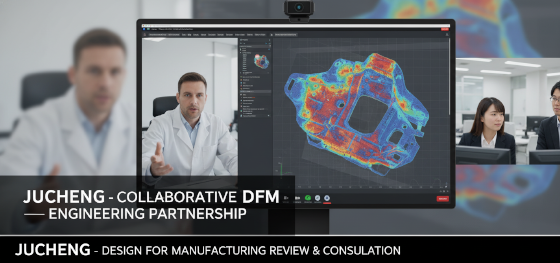
The real value of 3D-Druck Tokio at JUCHENG is found in the removal of geometric compromise. Too many shops act as passive "printers," merely following a CAD file without understanding its functional destiny. We operate as a collaborative engineering partner. Our DFM (Design for Manufacturing) team analyzes your complex assemblies to identify opportunities for "Part Consolidation"—merging five separate components into a single monolithic 3D printed part to reduce weight and eliminate fasteners.
This partnership extends into the realm of "Material Optimization." If we see a Tokyo designer specifying expensive titanium for a part that only sees static room-temperature loads, we will suggest a more cost-effective nylon or aluminum alternative. We utilize advanced simulation software to predict the thermal behavior of your parts during the build, suggesting radii modifications or support strategies that preserve surface finish and dimensional lock. When you engage with JUCHENG, you are engaging with a decade of industrial data and a team that speaks the technical language of your specific industry. We clarify the complex, elevate the possible, and ensure your next hardware breakthrough is armored for the real world. Visit our dedicated service page for 3D Printing Tokyo to learn more about our regional support. Let our engineers help you build a bigger, better, and more profitable physical reality.
Technical Verdict: Accelerating Tokyo’s Industrial Vision
Success in Japan’s most demanding industrial hub requires a manufacturing partner that matches its intensity. The decision to outsource your additive needs is a move toward strategic agility. By utilizing JUCHENG’s integrated 5-axis CNC and high-fidelity 3D printing systems, you are buying the ability to fail fast and fix faster. We remove the uncertainty of material choice and the friction of the supply chain, delivering engineered components that fit your assembly the first time.
Don't let the high cost of traditional tooling or the low quality of desktop prints stifle your innovation. Experience the clarity and the capability that professional, industrial-grade 3D printing can bring to your next Tokyo-based project. We bridge the gap between digital theory and the visceral reality of hardware that survives. From the first prototype to the 500-unit batch, Jucheng Precision provides the technical rigor and the massive capacity to deliver perfection. Contact our engineering team today for a comprehensive DFM review and see how our global manufacturing protocols can armor your next breakthrough in the robotics, automotive, or medical sectors.

