


Wenn die meisten Ingenieure "Titan" hören, denken sie sofort an die Luft- und Raumfahrtindustrie und die hochfesten Legierungen, die in Düsentriebwerken verwendet werden. Es gibt jedoch einen ruhigeren, unbesungenen Helden in der Titanfamilie, der die chemische und maritime Industrie am Laufen hält: Grad 2. Es hat nicht die extreme Härte von Grad 5, besitzt aber eine Korrosionsbeständigkeit, die von kaum einem anderen Metall in seiner Preisklasse übertroffen wird.
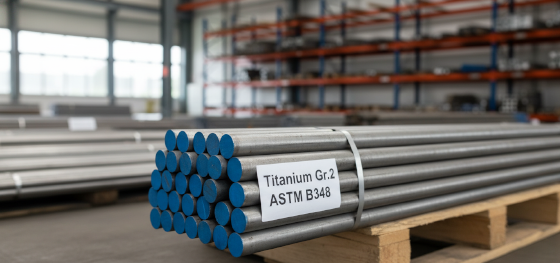
Doch für die Fertigung stellt die, Bearbeitung von Titan Grad 2 ein einzigartiges Paradoxon dar. Es ist weicher als seine legierten Verwandten, was viele Zerspaner dazu verleitet, es zu unterschätzen. Dieser Fehler erzeugt ein klebriges, gummiartiges Albtraumszenario, das Werkzeuge ruiniert und Teile verschrottet. Als führender Anbieter von Titan-CNC-Bearbeitung Dienstleistungen versteht Jucheng Precision, dass Grad 2 eine feine Balance aus scharfen Werkzeugen und aggressiven Vorschüben erfordert, um zu verhindern, dass das Material zurückkämpft.
Wenn Sie Komponenten für Salzwasserumgebungen oder Säureverarbeitung entwerfen, ist Grad 2 wahrscheinlich Ihr Material der Wahl. Dieser Leitfaden taucht in die Realitäten der Formgebung dieses "kommerziell reinen" Metalls ein und wie wir sicherstellen, dass Ihre Teile kontaminationsfrei bleiben.
Grad 2: Das unlegierte Arbeitstier
Navigieren durch die "klebrige" Natur von CP-Titan
Wärmemanagement: Der stille Werkzeugkiller
Nicht verweilen: Die "Vorschub oder Versagen"-Regel
Wo Grad 2 überlebt: Kritische Anwendungen
Das Reinheitsprotokoll bei JUCHENG
Grad 2: Das unlegierte Arbeitstier
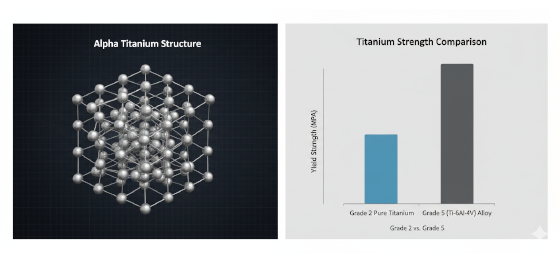
Titangrade werden allgemein in zwei Kategorien unterteilt: Legierungen und kommerziell reines (CP) Titan. Grad 2 liegt bequem in der Mitte des CP-Spektrums. Es bietet eine Streckgrenze von etwa 275 MPa (40 ksi), vergleichbar mit Baustahl, aber mit fast der Hälfte des Gewichts.
From a metallurgical perspective, Grade 2 possesses an "Alpha" crystal structure. Unlike Grade 5, it cannot be heat-treated to increase its strength. Its superpower lies in its ductility. It can be cold-formed, bent, and welded much more easily than high-strength alloys. This makes it the go-to material for fabricating extensive piping systems, large tanks, and intricate brackets that require forming operations after machining.
Navigieren durch die "klebrige" Natur von CP-Titan
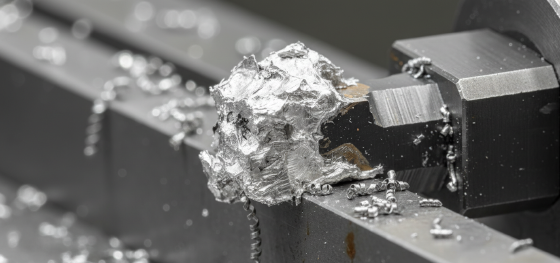
The term "soft" can be misleading in machining. Grade 2 is soft in terms of hardness, but it is incredibly tough and ductile. When a cutting tool engages the workpiece, the material does not want to fracture into clean chips. Instead, it wants to smear and flow.
This behavior leads to a phenomenon known as "Galling" or Built-Up Edge (BUE). The titanium literally pressure-welds itself to the cutting edge of the tool. Once this happens, the tool is no longer cutting; it is rubbing. This dramatically increases cutting forces and destroys the surface finish of the part. To combat this during Bearbeitung von Titan Grad 2, we avoid coated tools that have a rough surface texture. We prefer polished, uncoated carbide inserts or specialized aluminum-titanium-nitride (AlTiN) coatings that offer high lubricity to keep the chips sliding, not sticking.
Wärmemanagement: Der stille Werkzeugkiller
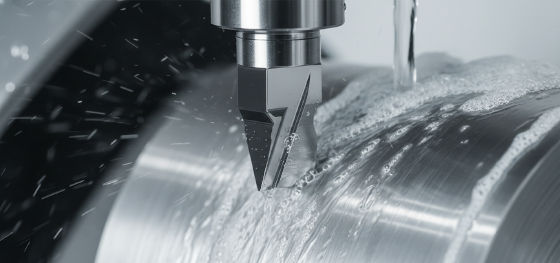
Titanium is a notoriously poor conductor of heat. When you machine steel or aluminum, the heat generated by the cutting action is mostly carried away by the ejected chip. Titanium is different. It acts like a heat insulator.
Because the heat doesn't enter the chip or the workpiece, up to 80% of the thermal energy concentrates squarely on the cutting edge of the tool. If not managed, this intense localized heat will cause the carbide to crater and fail within seconds. At Jucheng Precision, we solve this with high-pressure coolant strategies. We flood the cutting zone with high-volume coolant to physically force the heat away from the tool-workpiece interface. This is not just about cooling; it is about fire prevention, as fine titanium fines can be flammable under extreme heat.
Nicht verweilen: Die "Vorschub oder Versagen"-Regel
Titanium has a unique reaction to stress: Work Hardening. If you allow a tool to dwell in one spot, or if you feed the tool too slowly, the pressure and heat will instantly harden the surface of the material right in front of the cutter.
The next time the cutting flute comes around, it is trying to cut through a hardened skin rather than the base metal. This destroys tool life. The golden rule we follow is "Feed or Flee." We maintain a constant, aggressive chip load. We never let the tool rub. When entering or exiting a cut, we use ramp-in strategies rather than plunging directly, ensuring the tool is always shearing fresh metal. This aggressive approach is counter-intuitive for machinists used to "babying" precision parts, but it is essential for titanium success.
Wo Grad 2 überlebt: Kritische Anwendungen
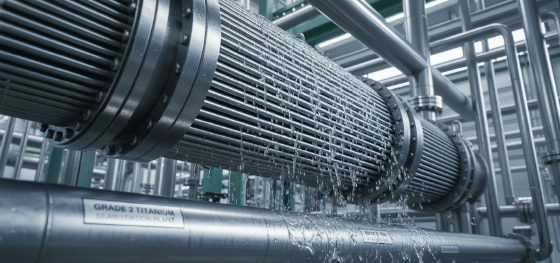
Despite the machining challenges, the effort is worth it because Grade 2 survives where other metals vanish. Its oxide film regenerates instantly in the presence of oxygen, making it immune to saltwater corrosion.
You will find Jucheng's Grade 2 components in:
Heat Exchangers: The material's ability to withstand chlorine and chlorides makes it standard for power plant condensers.
Desalination Plants: Pumps, valves, and fittings that handle high-pressure seawater.
Chemical Processing: Liners and agitators for reaction vessels dealing with oxidizing acids.
Medizinische Instrumente: While implants often use Grade 5 or Grade 23, Grade 2 is frequently used for surgical trays and non-load-bearing housing due to its biocompatibility.
Das Reinheitsprotokoll bei JUCHENG
For our chemical and medical clients, the material composition is not a suggestion; it is a mandate. A common risk in job shops is cross-contamination. If a tool that previously cut steel is used on titanium, it can embed microscopic iron particles into the titanium surface. These iron particles become rust points, destroying the corrosion resistance of the entire part.
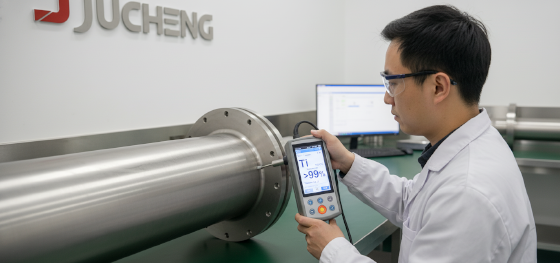
Jucheng Precision implements a strict "Purity Protocol." We utilize dedicated tooling for our titanium runs. We verify every batch of raw material with handheld XRF spectrometers to differentiate Grade 2 from Grade 5 before a single chip is cut. When you order Grade 2 parts from us, you receive full material certification and the assurance that your parts remain chemically pure and ready for the harshest environments.

