
How Can Rapid Tooling Slash Low Volume Die Casting Cost?
Aufrufe: 2 Author: Allen Xiao Publish Time: 2026-06-09


Securing small batches of custom metal hardware without paying massive financial penalties is a constant struggle for innovative startups. Traditional foundries routinely enforce aggressive minimum order quantities (MOQs), completely ignoring the financial constraints of low-volume medical or drone developers. Finding a manufacturing partner capable of optimizing your low volume die casting cost successfully determines whether your niche product is commercially viable.
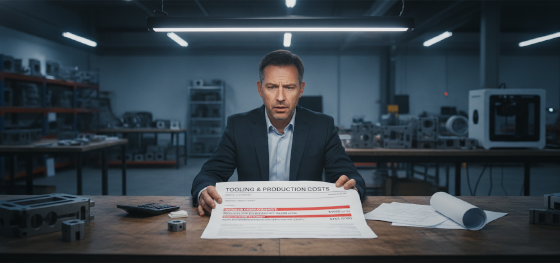
Rushing blindly into permanent high-volume steel tooling is a dangerous trap. Every single slider and complex internal feature on your CAD file directly inflates your initial die casting mold cost. Managing these upfront capital expenses dictates whether your final die casting cost remains sustainable or destroys your early profit margins.
Demanding flexible, low-volume contract manufacturing separates elite suppliers from rigid, mass-production factories. Let's dissect how rapid tooling technologies bypass tyrannical MOQs, calculate the exact financial break-even point against subtractive milling, and explain how to secure profitable small runs.
Inhalt:
Tyrannical Minimums: Challenging Traditional Foundry MOQs
Rapid Tooling: Securing Lower Upfront Mold Expenses
Financial Crossroads: CNC Machining vs. Low-Volume Die Casting
Unlocking Growth: Sourcing Flexible Low-Volume Hardware
FAQ: Honest Answers About Tool Life and Minimum Orders
Tyrannical Minimums: Challenging Traditional Foundry MOQs
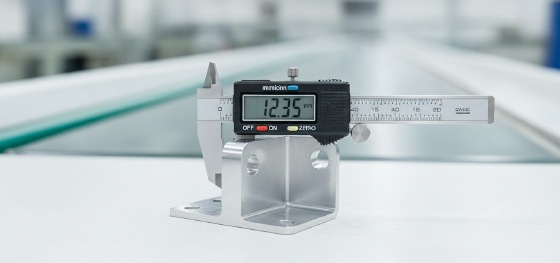
Why do traditional mass-production foundries enforce such high minimum order requirements?
Because setting up massive high-tonnage presses and pre-heating heavy steel dies requires hours of manual labor, making short runs financially unprofitable under old-school business models.
Traditional suppliers charge massive setup fees to offset this labor-intensive calibration phase. If you only need two hundred custom sensor mounts, the flat fee over the small batch creates an impossible unit price.
Securing a competitive low volume die casting cost requires partnering with an agile facility. We actively optimize our factory workflow to run shorter batches, completely eliminating the tyrannical MOQs that restrict hardware innovation.
Rapid Tooling: Securing Lower Upfront Mold Expenses
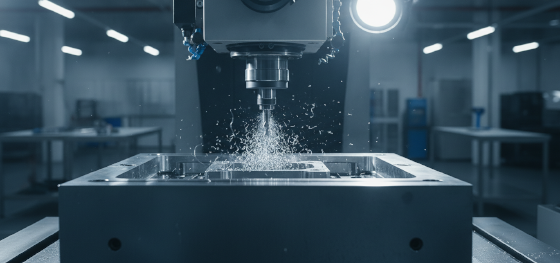
How can manufacturers dramatically lower the initial tooling debt for short production runs?
By deploying custom rapid tooling technologies, utilizing modular master mold bases and softer steel alloys that machine significantly faster on CNC spindles.
Slicing custom cavity inserts directly into pre-machined master frames eliminates raw material waste. This modular approach slashes our CNC milling time by weeks, cutting your upfront tooling bills by over fifty percent.
Transitioning to modular tooling is the ultimate secret to dropping your ongoing low volume die casting cost. You secure the unyielding strength and dimensional consistency of high-pressure metal injection without taking on six-figure capital debts.
Financial Crossroads: CNC Machining vs. Low-Volume Die Casting

How do engineers determine the exact break-even point between milling and casting?
By calculating the exact crossover volume where the accumulated piece-price savings of metal injection offset the initial upfront tooling expense.
Carving your parts directly from solid aluminum billets requires zero tooling debt, making 5-axis CNC machining highly economical for batches under one hundred units.
Pushing past two hundred pieces completely shifts the financial math. The comparison matrix below outlines how the rapid injection of metal quickly outperforms slow subtractive milling.
| Production Volume | Machined Billet Price | Low-Volume Injection Price | Total Project Saving |
|---|---|---|---|
| 50 Units | $45.00 | $150.00 (Amortized) | Subtractive Milling Wins |
| 500 Units | $45.00 | $18.00 (Amortized) | Save $13,500 via Casting |
| 2,000 Units | $45.00 | $9.50 (Amortized) | Save $71,000 via Casting |
Unlocking Growth: Sourcing Flexible Low-Volume Hardware

Why do leading medical and aerospace brands consolidate their small-batch manufacturing?
Because keeping prototyping, low-volume casting, and final CNC finishing under one integrated roof eliminates logistical delays and vendor finger-pointing.
JC Rapid specializes in supporting hardware startups throughout this entire scaling journey. We gladly accept orders of one hundred or five hundred pieces, helping you validate your clinical designs in the field without heavy initial investments.
Stop paying outrageous unit prices for slow subtractive milling or high-NRE mold tooling. Send your complex CAD files to our engineering team today for a comprehensive, manual DFM flow analysis and secure a highly optimized, low volume die casting cost quote.
FAQ: Honest Answers About Tool Life and Minimum Orders

Does a cheap rapid tool wear out quickly when casting aluminum?
Softer steel and aluminum alloy molds naturally degrade faster than hardened H13 steel, but they easily survive two to five thousand shots before showing any dimensional wear.
Can I request strict tolerances on a low-volume cast component?
Yes, we utilize our extensive in-house CNC bays to post-machine critical sealing grooves and threaded holes, achieving microscopic tolerances on small batches.
Do you provide complete chemical and material certifications for small runs?
Providing complete chemical certifications (CoA) and RoHS compliance certificates with every single delivery is our standard practice, regardless of your order size.
Why do some small-batch castings suffer from severe surface sink marks?
Uneven cooling inside poorly designed molds pulls material away from thick sections. We run advanced flow simulations during DFM to eliminate these thermal traps before injection.