
Gas Welding Stainless Steel: Selection Guide
Aufrufe: 24 Author: Allen Xiao Publish Time: 2025-09-12


Stainless steel welding requires precision, and gas selection is critical. Different welding processes demand specific shielding gases to ensure corrosion resistance, strength, and aesthetics. This guide explores gas choices for MIG, TIG, and gas welding processes, highlighting optimal mixtures and alternatives.
Inhalt:
Gas Welding Stainless Steel
Oxy Acetylene Gas Welding Stainless Steel
MIG Welding Stainless Steel Gas
Best Gas for MIG Welding Stainless Steel
Gas for TIG Welding Stainless Steel
Argon Gas for MIG Welding Stainless Steel
Stainless Steel MIG Welding Gas Mixture
Gas Used for MIG Welding Stainless Steel
MIG Welding Stainless Steel No Gas
Gas Welding Stainless Steel
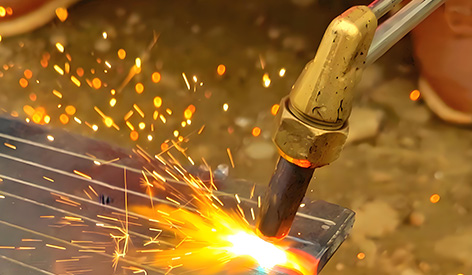
Gas welding stainless steel using oxy-acetylene is a traditional method. While rarely used today for critical applications due to its intense heat and potential for carbide precipitation, it remains an option for minor repairs or thin sections. The flame must be adjusted to a slightly reducing state to prevent oxidation. However, this process often requires post-weld heat treatment to restore corrosion resistance, making it less efficient than arc welding methods.
Oxy Acetylene Gas Welding Stainless Steel
Oxy acetylene gas welding stainless steel involves burning acetylene with oxygen to create a high-temperature flame. This method can warp thin stainless steel due to the broad heat-affected zone. Flux is essential to prevent oxidation, but it can contaminate the weld. For these reasons, oxy-acetylene is mostly outdated for stainless steel, replaced by more controlled processes like MIG or TIG, which offer better precision and material integrity.
MIG Welding Stainless Steel Gas
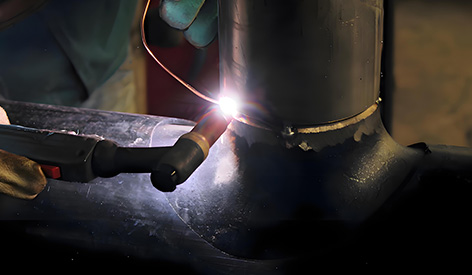
MIG welding stainless steel gas plays a pivotal role in achieving high-quality welds. The gas shields the molten pool from atmospheric contaminants like oxygen and nitrogen. Without proper shielding, welds may suffer from porosity, lack of fusion, or reduced corrosion resistance. MIG welding typically uses a mix of inert and reactive gases to stabilize the arc and improve bead appearance. Choosing the right gas mixture is essential for mechanical properties and efficiency.
Best Gas for MIG Welding Stainless Steel
The best gas for MIG welding stainless steel is a ternary mixture of argon, helium, and carbon dioxide. A common blend is 90% helium, 7.5% argon, and 2.5% CO2. Helium increases heat input, enabling deeper penetration and faster travel speeds. Argon stabilizes the arc, while minimal CO2 enhances arc characteristics without significantly compromising corrosion resistance. This mixture is versatile for various stainless grades and thicknesses.
Gas for TIG Welding Stainless Steel
Gas for TIG welding stainless steel is typically pure argon. Its excellent arc stability and cleaning action make it ideal for TIG’s precision. For thicker sections, a mix of argon and helium can increase heat input without affecting corrosion resistance. Hydrogen is sometimes added in small amounts for austenitic steels to improve travel speed and penetration, but it risks hydrogen cracking in martensitic grades. Pure argon remains the standard for most applications.

Argon Gas for MIG Welding Stainless Steel
Using pure argon gas for MIG welding stainless steel is not recommended. While argon provides good arc stability, it often results in shallow penetration and a narrow bead profile. This can lead to lack of fusion defects. However, argon is a base component in mixtures. Blending it with CO2 or oxygen improves fluidity and penetration. For spray transfer processes, argon-based mixtures with 1-2% oxygen are common, offering a stable arc and minimal spatter.
Stainless Steel MIG Welding Gas Mixture
A popular stainless steel MIG welding gas mixture is 98% argon and 2% carbon dioxide. This blend offers a balance between arc stability, penetration, and corrosion resistance. For thicker materials, a triple mix of 90% helium, 7.5% argon, and 2.5% CO2 provides higher heat input. Another common mixture is 95% argon and 5% CO2, though higher CO2 levels may increase carbon uptake, potentially reducing corrosion resistance in some applications.

Gas Used for MIG Welding Stainless Steel
The primary gas used for MIG welding stainless steel is a blend of inert and active gases. Pure inert gases like argon or helium prevent oxidation but may lack penetration. Adding small amounts of CO2 (1-5%) improves arc characteristics and weld bead wetting. Oxygen (1-2%) is another additive that enhances arc stability but is not suitable for all stainless grades due to oxidation risks. The choice depends on material thickness, transfer mode, and desired weld properties.
MIG Welding Stainless Steel No Gas
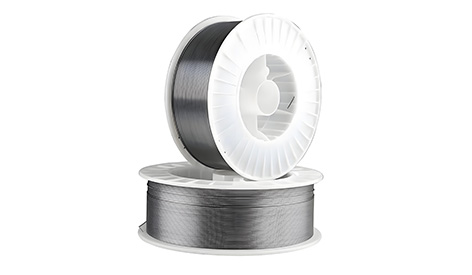
MIG welding stainless steel no gas is possible using flux-cored wires. These wires have a flux core that generates shielding gas when burned, eliminating the need for external gas. This method, known as self-shielded flux-cored arc welding (FCAW-S), is beneficial for outdoor welding where wind might disperse shielding gas. However, slag removal is necessary, and weld appearance may not be as clean as with gas-shielded methods. Gas-shielded flux-cored wires (FCAW-G) are also available, offering better performance with external gas.
Selecting the right shielding gas is crucial for successful stainless steel welding. For MIG welding, ternary mixtures with argon, helium, and small CO2 amounts are optimal. TIG welding relies on pure argon, while gas welding is largely obsolete. Flux-cored wires enable no-gas welding but come with trade-offs. Understanding these options ensures strong, corrosion-resistant welds tailored to specific project needs.

