
Material für CNC-Bearbeitung aus Edelstahl 304/304L
Edelstahl 304 (und seine kohlenstoffarme Variante 304L) ist der weltweit am häufigsten verwendete austenitische Edelstahl. Bekannt als "18-8"-Edelstahl aufgrund seiner Zusammensetzung aus 18% Chrom und 8% Nickel, bietet er ein hervorragendes Gleichgewicht zwischen Korrosionsbeständigkeit, Schweißbarkeit und Umformbarkeit. Bei JUCHENG ist die Bearbeitung von Edelstahl eine Kernkompetenz. Wir verstehen, dass 304 dazu neigt, kaltzuverfestigen, wenn es nicht korrekt verarbeitet wird. Unsere Einrichtung nutzt starre CNC-Aufbauten, Hochdrehmoment-Spindeln und spezielle Werkzeugstrategien, um Präzisionskomponenten aus 304/304L ohne thermische Verformung oder Oberflächendefekte zu liefern.
Edelstahl 304/304L
JUCHENGs Bearbeitungsfähigkeiten für 304/304L
Die Bearbeitung von austenitischem Edelstahl erfordert die Überwindung seiner Neigung, "klebrig" zu sein und kaltzuverfestigen. Wir bieten:
- Kaltverfestigungskontrolle: Unsere Programmierer nutzen Werkzeugwege mit konstanter Last und scharfe Schnittstrategien, um sicherzustellen, dass das Werkzeug immer unterhalb der kaltverfestigten Zone schneidet, was Dimensionsstabilität gewährleistet.
- Passivierungsdienste: Die Bearbeitung kann freies Eisen auf der Oberfläche einbetten. Wir bieten hausinterne Passivierung mit Zitronensäure oder Salpetersäure an, um Verunreinigungen zu entfernen und die Korrosionsbeständigkeit zu maximieren.
- Polieren & Oberflächenbearbeitung: Von Standard-Fräsbearbeitungen mit Ra 1,6 bis zu elektropolierten Oberflächen mit Ra 0,4 für hygienische Anwendungen erfüllen wir strenge ästhetische Anforderungen.
- Doppelzertifizierung: Wir lagern Material, das oft doppelt als 304/304L zertifiziert ist, was Ihnen die Festigkeit von 304 mit den Schweißvorteilen von 304L bietet.
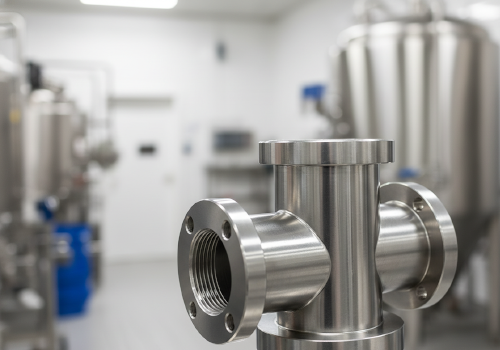
Vorteile der CNC-Bearbeitung von 304/304L
| Vorteil | Detaillierte Beschreibung | Hauptvorteil |
| Hervorragende Korrosionsbeständigkeit | Beständig gegen Oxidation in den meisten architektonischen, industriellen und chemischen Umgebungen. | Ideal für Teile, die Feuchtigkeit, Säuren oder Außenelementen ausgesetzt sind. |
| Hygienische Eigenschaften | Die porenfreie Oberfläche ist leicht zu reinigen und unterstützt kein Bakterienwachstum. | Die Standardwahl für Lebensmittelverarbeitungs-, Molkerei- und Brauereiausrüstung. |
| Hervorragende Schweißbarkeit | Kann mit allen Standard-Schmelzverfahren geschweißt werden. 304L verhindert Karbidausscheidung. | Perfekt für maschinell bearbeitete Fittings, die in Tanks oder Rohrleitungssysteme geschweißt werden. |
| Gute Zähigkeit | Behält die Zähigkeit auch bei kryogenen Temperaturen. | Geeignet für industrielle Anwendungen bei niedrigen Temperaturen. |
| Nicht magnetisch | Im geglühten Zustand im Allgemeinen unmagnetisch (kann nach Kaltverformung leicht magnetisch werden). | Geeignet für Elektronikgehäuse und medizinische Sensoren. |
Technische Parameter & Materialnormen
Wir unterscheiden zwischen der Standard- und der kohlenstoffarmen Güte:
| Güteklasse | Ideale Anwendungen | Eigenschaften |
| Edelstahl 304 | Bearbeitete Verbindungselemente, Küchengeräte, Architekturbeschläge, Federn, Halterungen, die kein starkes Schweißen erfordern. | Standardqualität. Höherer Kohlenstoffgehalt (~0,08%). Etwas höhere Festigkeit als 304L. Ausgezeichnete Korrosionsbeständigkeit, aber anfällig für "Schweißfäule" (interkristalline Korrosion) in stark geschweißten Abschnitten. |
| Edelstahl 304L | Geschweißte Tanks, Rohrverbindungen, chemische Behälter, Kernkomponenten, schwere Industrieblechteile. | Niedrigkohlenstoffqualität. Geringerer Kohlenstoffgehalt (~0,03%). Verhindert Karbidausscheidung beim Schweißen. Etwas niedrigere Streckgrenze, aber überlegene Korrosionsbeständigkeit nach dem Schweißen. |
CNC-Bearbeitungsrichtlinien für 304
- Schnittgeschwindigkeiten und Vorschübe: 304 erfordert langsamere Geschwindigkeiten und höhere Vorschübe als Aluminium, um Kaltverfestigung zu vermeiden. Stillstand (Werkzeug an einer Stelle) muss vermieden werden.
- Kühlmittel: Hochdruck-Überflutungskühlmittel ist zwingend erforderlich, um die Wärmeentwicklung zu reduzieren, die eine Hauptursache für Werkzeugversagen und Werkstückverformung ist.
- Werkzeuge: Wir verwenden TiAlN (Titanaluminiumnitrid) beschichtete Hartmetallwerkzeuge, die Hitzebeständigkeit und Schmierfähigkeit bieten.
- Oberflächenkontamination: Wir weisen bestimmte Maschinen oder Kühlmitteltanks für Edelstahl zu, um Kreuzkontamination mit Kohlenstoffstahlpartikeln zu vermeiden, die Rostflecken verursachen können.
Anwendungsszenarien
- Lebensmittel & Getränke: Ventile, Dosierdüsen, Mischwellen, Förderkomponenten (FDA-konform).
- Medizinisch: Chirurgische Instrumentengriffe, Krankenhaustabletts, Gerätegehäuse.
- Industrie: Druckbehälter, Flansche, Verbindungselemente, Wärmetauscher.
- Architektur: Glasspinnen/Beschläge, Handlaufhalterungen, dekorative Paneele.
- Automobil: Abgasanlagenflansche, Verkleidungskomponenten.
Tabelle der physikalischen Eigenschaften
Vergleich von 304 vs. 304L:
| Eigenschaft | SS 304 | SS 304L | Einheit |
| Dichte | 8.00 | 8.00 | g/cm³ |
| Zugfestigkeit | 515 | 485 | MPa |
| Streckgrenze | 205 | 170 | MPa |
| Dehnung | 40 | 40 | % |
| Härte (Brinell) | 201 | 201 | HB |
| Kohlenstoffgehalt | Max. 0,08% | Max. 0,03% | - |
| Zerspanbarkeit | 45% | 45% | (Ref: B1112=100%) |

Fordern Sie Ihr DFM & Angebot an – Laden Sie Ihre Zeichnungen hoch
ㆍGeben Sie Ihre Anforderungen ein und laden Sie Ihre 2D- und 3D-Dateien hoch. Wir senden Ihnen innerhalb von 24 Stunden Ihr Projektangebot und DFM zurück.ㆍDateitypen: STEP, STP, IGES, IGS, SLDPRT, 3DM, SAT, X_T, DWG, DXF, STL, PDF, ZIP und mehr. Dateigröße: < 128 MB Teilegröße: < 1500*1500*1500 mm
ㆍDatenschutz: Wir respektieren Ihre Privatsphäre. Hier finden Sie ein Beispiel einer Geheimhaltungsvereinbarung. Mit dem Absenden dieses Formulars stimmen Sie unseren AGB und der Datenschutzerklärung zu.
ㆍDatenschutz: Wir respektieren Ihre Privatsphäre. Hier finden Sie ein Beispiel einer Geheimhaltungsvereinbarung. Mit dem Absenden dieses Formulars stimmen Sie unseren AGB und der Datenschutzerklärung zu.
