
1.7131 (16MnCr5) Einsatzstahl-Bearbeitung
Wenn ein Bauteil eine diamantartige, harte Oberfläche benötigt, um Verschleiß zu widerstehen, aber einen duktilen Kern, um Stoßbelastungen standzuhalten, ist DIN 1.7131 (16MnCr5) die branchenübliche Lösung. Diese Chrom-Mangan-Legierung ist ein "Einsatzstahl", der speziell für das Aufkohlen entwickelt wurde. Im Gegensatz zu durchhärtenden Stählen (wie 4140), die durchgehend hart (und damit spröde) werden, ermöglicht 16MnCr5 uns, eine "harte Schale, weicher Kern"-Struktur zu konstruieren. Bei JUCHENG verwenden wir dieses Material umfassend zur Herstellung von Hochleistungszahnrädern, Nockenwellen und Kolbenbolzen für die Automobil- und Schwermaschinenbranche und liefern Teile, die Bedingungen standhalten, bei denen andere Stähle absplittern oder reißen würden.
1.7131 Legierter Stahl
JUCHENGs 16MnCr5 Fertigungskapazitäten
Die Verarbeitung von Einsatzstahl ist ein mehrstufiger technischer Prozess. Wir bieten:
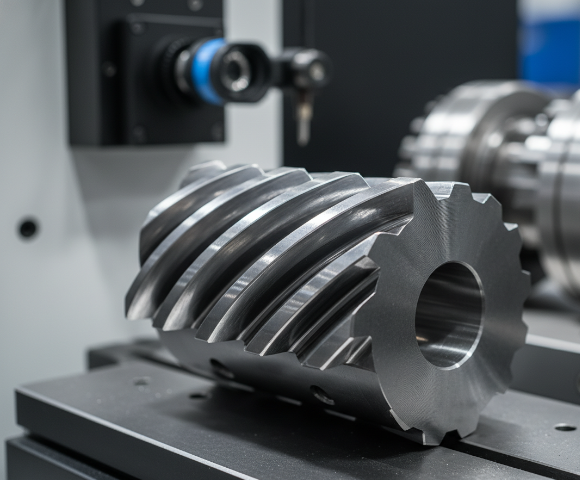
- Präzisionsverzahnung: Wir bearbeiten komplexe Zahnradprofile (Gerad-, Schräg-, Kegelverzahnung), während das Material in seinem weichen, geglühten Zustand ist, für maximale Genauigkeit und Werkzeugstandzeit.
- Aufkohlen und Abschrecken: Wir arbeiten mit zertifizierten Wärmebehandlungsbetrieben zusammen, um Kohlenstoff in die Oberfläche zu diffundieren und eine Randhärte von 58-62 HRC zu erreichen, während ein zäher Kern erhalten bleibt.
- Schleifen nach dem Härten: Die Wärmebehandlung verursacht leichte Verformungen. Wir setzen Präzisions-Innen-/Außenschleifen und Verzahnungsschleifen ein, um kritische Maße nach dem Härten auf Mikron-Toleranzen zurückzuführen.
- Selektives Härten: Durch Maskieren bestimmter Bereiche (z.B. Gewinde) können wir diese weich und duktil halten, während nur die Verschleißflächen (z.B. Zahnflanken) gehärtet werden.
Vorteile der CNC-Bearbeitung von 1.7131
| Vorteil | Detaillierte Beschreibung | Hauptvorteil |
| Doppelte Eigenschaftsleistung | Kombiniert extreme Oberflächenhärte mit einem zähen, stoßdämpfenden Kern. | Verhindert Zahnbruch bei Zahnrädern unter plötzlichen Stoßbelastungen. |
| Hervorragende Verschleißfestigkeit | Die einsatzgehärtete Oberfläche widersteht Abrieb und Gleitverschleiß. | Verlängert die Lebensdauer von Nockenwellen, Buchsen und Gleitschienen. |
| Gute Zerspanbarkeit | Lässt sich im geglühten Zustand vor der Wärmebehandlung leicht bearbeiten. | Ermöglicht die kostengünstige Fertigung komplexer Geometrien. |
| Hohe Oberflächenpressung | Kann hohem Kontaktdruck ohne Grübchenbildung standhalten. | Unverzichtbar für Schwerlast-Getriebekomponenten. |
| Kosteneffizienz | Günstiger als hochlegierte Werkzeugstähle bei ähnlicher Oberflächenhärte. | Wirtschaftlich für die Massenproduktion von Automobilteilen. |
Technische Parameter & Materialnormen
Wir verarbeiten diese Güte nach europäischen Normen:
| Güteklasse | Spezifikation | Eigenschaften & Ideale Verwendungen |
| DIN 1.7131 | 16MnCr5 | Eigenschaften: Der klassische europäische Einsatzstahl. Gute Härtbarkeit und Zerspanbarkeit. Oberflächenhärte erreicht nach der Behandlung 60 HRC. Verwendung: Getriebezahnräder, Hohlräder, Ritzel, Nockenwellen, Kolbenbolzen. |
| EN 10084 | 16MnCr5 | Eigenschaften: Der moderne EN-Standard. Chemisch identisch. Wird oft im Zustand "geglüht auf Ferrit/Perlit" (+FP) für beste Zerspanbarkeit geliefert. Verwendung: Komponenten für den Automobilantriebsstrang, Buchsen für Schwermaschinen. |
CNC-Bearbeitungsrichtlinien für 16MnCr5
- Schleifzugabe: Wir lassen während der ersten CNC-Phase immer 0,2 mm - 0,3 mm Aufmaß an kritischen Merkmalen. Dadurch können wir jegliche Verformung, die durch den Aufkohlungs-Wärmezyklus verursacht wird, wegschleifen.
- Einsatzhärtetiefe: Sie müssen die erforderliche "wirksame Einsatzhärtetiefe" angeben (z.B. 0,8 mm - 1,2 mm). Wir steuern die Aufkohlungszeit, um diese spezifische Härteschichtdicke zu erreichen.
- Oberflächenbeschaffenheit: Bei Zahnrädern und Lagern streben wir nach dem Schleifen eine Rauheit von Ra 0,4 oder besser an, um die Reibung zu reduzieren.
- Gewindeschneiden: Wir empfehlen, Gewinde während des Aufkohlens abzudecken, um zu verhindern, dass sie spröde werden und bei der Montage brechen.
Anwendungsszenarien
- Automobilgetriebe: Getriebezahnräder, Synchronringe, Schaltgabeln.
- Schwermaschinen: Baggerbolzen, Gesteinsbohrkomponenten, Krankräder.
- Motorsport: Nockenwellen, Ventilstößel, Renn-Antriebsstrangteile.
- Industrie: Formführungsäulen, Buchsen, Spannzangen.
Tabelle der physikalischen Eigenschaften
Vergleich: Oberflächen- vs. Kerneigenschaften (nach dem Aufkohlen):
| Eigenschaft | Oberfläche (Randschicht) | Kern | Einheit |
| Härte | 58 - 62 HRC | 30 - 45 HRC | Rockwell C |
| Zugfestigkeit | - | 800 - 1100 | MPa |
| Streckgrenze | - | 600 - 850 | MPa |
| Verschleißfestigkeit | Hervorragend | Mäßig | - |
| Duktilität/Zähigkeit | Niedrig (Spröde) | Hoch | - |
| Dichte | 7.85 | 7.85 | g/cm³ |

Fordern Sie Ihr DFM & Angebot an – Laden Sie Ihre Zeichnungen hoch
ㆍGeben Sie Ihre Anforderungen ein und laden Sie Ihre 2D- und 3D-Dateien hoch. Wir senden Ihnen innerhalb von 24 Stunden Ihr Projektangebot und DFM zurück.ㆍDateitypen: STEP, STP, IGES, IGS, SLDPRT, 3DM, SAT, X_T, DWG, DXF, STL, PDF, ZIP und mehr. Dateigröße: < 128 MB Teilegröße: < 1500*1500*1500 mm
ㆍDatenschutz: Wir respektieren Ihre Privatsphäre. Hier finden Sie ein Beispiel einer Geheimhaltungsvereinbarung. Mit dem Absenden dieses Formulars stimmen Sie unseren AGB und der Datenschutzerklärung zu.
ㆍDatenschutz: Wir respektieren Ihre Privatsphäre. Hier finden Sie ein Beispiel einer Geheimhaltungsvereinbarung. Mit dem Absenden dieses Formulars stimmen Sie unseren AGB und der Datenschutzerklärung zu.
