


Die Navigation durch die korrosive Realität der modernen Landwirtschaft erfordert mehr als nur intelligente Software für Präzisionslandwirtschaftsrobotik. Im Inneren des Chassis eines autonomen Spritzgeräts oder einer Düngerdrohne wird täglich ein stiller Chemiekrieg geführt. Flüssigstickstoff, saure Herbizide und aggressive Pestizide wirken als starke Lösungsmittel, die Standardkunststoffe schmelzen und unbehandelte Metalle innerhalb eines einzigen Erntezyklus oxidieren können. Die Konstruktion chemikalienbeständiger Roboterbauteile ist keine ästhetische Entscheidung; sie ist eine grundlegende Überlebensanforderung für Feldhardware im Jahr [2026].
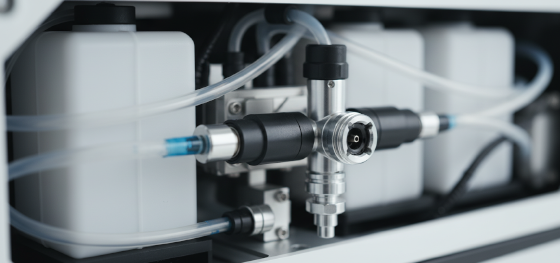
Flüssigdünger weisen oft extreme pH-Werte auf, die bei gängigen Polymeren wie ABS oder Standard-Polyamid 6 schnelle Spannungsrissbildung (ESC) auslösen. Diese Chemikalien dringen in die mikroskopischen Poren des Materials ein, zersetzen die Polymerketten und führen zu plötzlichen, katastrophalen Lecks in Tanks und Verteilern. Jucheng Precision eliminiert diese Schwachstellen durch die Auswahl hochleistungsfähiger Fluorpolymerer und Polyolefine, die bei kontinuierlicher Exposition chemisch inert bleiben.
Mit Sitz im Shenzhener Präzisionsfertigungszentrum bietet JUCHENG eine umfassende Verteidigungsstrategie für den Roboter-"Magen". Wir kombinieren die CNC-Bearbeitung exotischer Metalle mit speziellem Kunststoffspritzguss, um sicherzustellen, dass Ihre Chemikaliendosiersysteme niemals versagen. Dieser Leitfaden erläutert die wesentlichen Materialien und Dichtungstechnologien, die erforderlich sind, um einen Roboter zu bauen, der die aggressivsten chemischen Umgebungen der globalen Landwirtschaft übersteht.
Inhalt:
Vergleichsdaten: Materialbeständigkeit gegen Pestizide
Auswahl hochdichter Polymere für die Fluidhandhabung
Metalle für Düngemittelexposition: 316L und darüber hinaus
Elastomerdichtungen: Verhinderung interner Lecks
JUCHENG: Fortschrittliches Zentrum für Chemiematerialien
FAQ: Hardware-Langlebigkeit in chemischen Umgebungen
Vergleichsdaten: Materialbeständigkeit gegen Pestizide
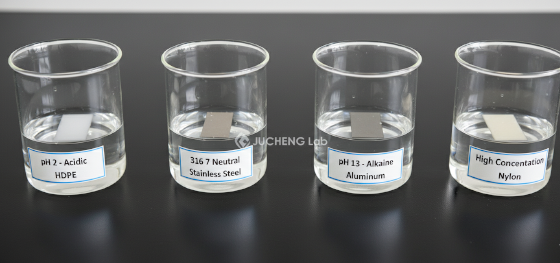
Die Nichtanpassung eines Materials an seine chemische Umgebung führt zu schneller Hardware-Verschlechterung und kostspieligen Feldrückrufen. Jucheng Precision verwendet eine strenge Kompatibilitätsmatrix, um die Auswahl von chemikalienbeständigen Roboterbauteilen. Obwohl Aluminium ideal für die Gewichtseinsparung ist, kann es bei Kontakt mit bestimmten sauren Düngemitteln ohne schwere Beschichtungen innerhalb von Stunden verschwinden. Die folgende Tabelle bietet einen Überblick darüber, wie gängige AgTech-Materialien auf Standard-Agrarchemikalien reagieren.
| Materialgruppe | Düngemittel (Stickstoff) | Herbicides (Acidic) | Pesticides (Oil-Based) |
|---|---|---|---|
| HDPE / PP | Hervorragend | Hervorragend | Hervorragend |
| 316L Stainless | Hervorragend | Sehr Hoch | Hervorragend |
| Eloxiertes Aluminium | Mäßig | Schlecht | Hoch |
| Nylon 6 (PA6) | Poor (Swelling) | Mäßig | Mäßig |
Polypropylene (PP) and High-Density Polyethylene (HDPE) serve as the backbone for chemical tanks and nozzle housings because they lack the reactive polar groups found in more expensive engineering plastics. This chemical simplicity is their greatest strength; they do not provide "hooks" for chemical molecules to latch onto and break the polymer chains. In the [2026] farm environment, where robots must operate autonomously for weeks without maintenance, this inherent resistance is the first line of defense against system failure.
Weight-to-resistance ratios are equally critical. While 316L stainless steel provides ultimate protection, it adds significant mass that can reduce the flight time of a spraying drone or the battery life of a weeding bot. JUCHENG helps engineers navigate this trade-off by suggesting hybrid designs—utilizing lightweight, chemical-grade plastics for large-volume tanks while reserving stainless steel for high-pressure manifolds and valve seats where mechanical strength and chemical immunity must coexist.
Auswahl hochdichter Polymere für die Fluidhandhabung
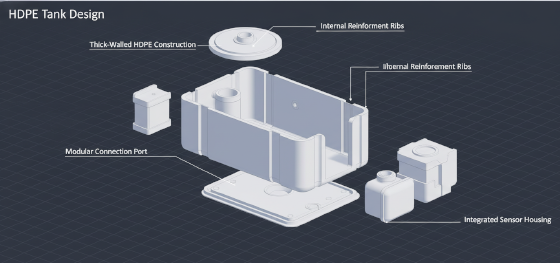
Liquid handling systems are the most vulnerable parts of a spraying robot. Standard hoses and tanks made from off-the-shelf PVC or low-grade rubber often degrade into a gummy mess when exposed to oil-based pesticide carriers. Jucheng Precision focuses on high-performance polyolefins like HDPE and specialized fluoropolymers like PTFE for these critical chemikalienbeständigen Roboterbauteilen. These materials offer low surface energy, which prevents chemicals from "wetting" the surface and penetrating into the material's core.
PTFE (Teflon) remains the gold standard for gaskets, valve linings, and nozzle inserts. Its carbon-fluorine bonds are among the strongest in organic chemistry, making it immune to nearly all agricultural chemicals, regardless of pH or concentration. At our Shenzhen precision manufacturing hub, we CNC machine PTFE components to sub-millimeter tolerances, ensuring that even the most aggressive liquids are contained within the intended flow path without weeping or microscopic leakage.
UV resistance must also be considered for chemical-handling plastics. Many chemical-resistant resins are naturally sensitive to sunlight. JUCHENG solves this by utilizing carbon-black-filled HDPE or by applying specialized UV-blocking additives during the molding process. This dual-protection strategy ensures that a chemical tank doesn't just resist the herbicide inside, but also the unrelenting sun outside, preventing brittle failures that could lead to environmental contamination during a harvest run.
Surface finishes on machined plastics also play a role in chemical longevity. A rough surface finish provides thousands of microscopic "pockets" where chemicals can pool and concentrate over time, accelerating material fatigue. JUCHENG utilizes high-speed CNC milling and specialized diamond-tipped tools to achieve Ra 0.4 finishes on plastic components, creating a mirror-smooth surface that allows chemicals to slide off during washdown cycles, significantly extending the part's service life.
Metalle für Düngemittelexposition: 316L und darüber hinaus
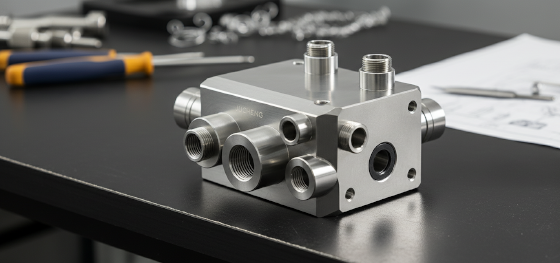
Metal components are often required for high-pressure pumps, spray booms, and structural chassis mounts that must withstand high mechanical loads. In these scenarios, standard 6061 aluminum or 304 stainless steel are often inadequate. Jucheng Precision recommends 316L stainless steel for any metal part in direct contact with liquid fertilizers. The "L" stands for low carbon, which prevents "sensitization" during welding, while the addition of molybdenum provides superior resistance to chloride-induced pitting—a common failure mode in coastal farming regions.
Anodizing provides a secondary defensive layer for aluminum components that cannot be substituted for heavier steel. However, standard Type II anodizing is often too thin for chemical environments. JUCHENG utilizes Type III Hard Anodizing combined with specialized chemical sealants (like PTFE-impregnated coatings) to create a ceramic-like surface that resists pH fluctuations while maintaining the lightweight benefits of aluminum. This is particularly vital for the spray booms of large-scale Präzisionslandwirtschaftsrobotik where every gram of weight reduction directly impacts stability.
Galvanic corrosion is the hidden enemy in chemical robotics. When two dissimilar metals (like an aluminum chassis and a stainless steel bolt) are connected and then splashed with an electrolyte like liquid fertilizer, an internal battery is created that eats away the less noble metal. JUCHENG’s assembly experts prevent this by utilizing non-conductive chemical barriers and specialized isolation washers, ensuring that your robot doesn't literally dissolve itself from the inside out during the humid growing season.
Passivation is another mandatory step in our metal processing. After CNC machining 316L parts, JUCHENG performs a nitric or citric acid wash to remove free iron from the surface. This restores the protective chromium-oxide layer, ensuring that even a tiny scratch in the field doesn't become a starting point for a rust blossom. This level of attention to detail is what allows JUCHENG-manufactured robots to operate in harsh chemical environments for 5 to 10 years without structural degradation.
Elastomerdichtungen: Verhinderung interner Lecks
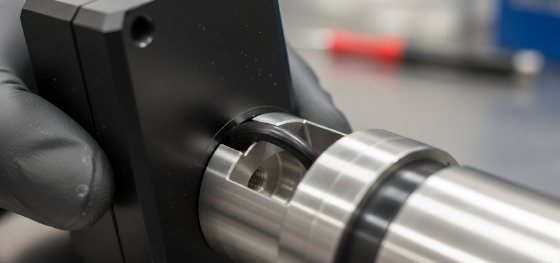
Seals and gaskets are the most common failure points in any chemical-handling robot. A failed O-ring in a high-pressure pump can spray corrosive chemicals directly onto expensive LiDAR sensors or battery packs, leading to total system failure. Standard EPDM or Nitrile seals often swell and lose their elasticity when exposed to pesticide surfactants. Jucheng Precision utilizes FKM (Viton) and FFKM (Perfluoroelastomer) for these critical chemikalienbeständigen Roboterbauteilen.
| Seal Material | Chemikalienbeständigkeit | Temp Range (°C) | Typische Verwendung |
|---|---|---|---|
| Buna-N (Nitrile) | Low (Oil Only) | -40 to 120 | Hydraulic Oil |
| EPDM | Good (Acid/Base) | -50 to 150 | Water Systems |
| FKM (Viton) | Excellent (Universal) | -20 to 200 | Pesticide Seals |
| FFKM (Kalrez) | Ultimativ | -15 to 320 | Extreme pH Fluids |
Viton (FKM) provides the best balance of chemical resistance and cost for most AgTech applications. It maintains its sealing force even after prolonged contact with hydrocarbons and aggressive pesticides. For extremely high-pH fertilizers, we move to FFKM, which provides a level of chemical immunity virtually identical to PTFE but with the flexibility of a traditional rubber. JUCHENG sources these elastomers from certified global suppliers to ensure that "seal creep" and "compression set" never compromise your robot's integrity.
JUCHENG: Fortschrittliches Zentrum für Chemiematerialien

Dominating the [2026] AgTech market requires more than just standard manufacturing; it requires a deep understanding of chemical-material interactions. Jucheng Precision operates with a 24/7 manufacturing mindset in our Shenzhen precision manufacturing hub, delivering high-tolerance chemical components with lead times as fast as 10 business days. We provide a "Bridge to Production" that allows you to scale from a few prototype sprayers to a commercial fleet without ever worrying about material consistency or part failure.
Integrating your design with JUCHENG’s expertise ensures that your robot survives the "Washdown Season" and beyond. We offer comprehensive DFM reviews within 24 hours, identifying potential chemical traps or galvanic couples in your design before they become costly liabilities. Whether you are building an autonomous vineyard sprayer or a soil-sampling robot, Jucheng Precision provides the chemically immune hardware that keeps your innovation running through the spray, the mud, and the years.
Our facility is also equipped for complex overmolding, allowing us to bond chemical-resistant elastomers directly to structural plastic or metal frames. This creates a "monolithic" part with no seams for chemicals to hide in, further simplifying your cleaning protocols. By combining Shenzhen's processing speed with aerospace-grade material verification, JUCHENG remains the preferred partner for the world's most aggressive AgTech hardware challenges.
FAQ: Hardware-Langlebigkeit in chemischen Umgebungen
Which plastic is best for liquid fertilizer tanks?
HDPE or Polypropylene. They are virtually immune to nitrogen-based fertilizers and acidic herbacides.
Is 304 stainless steel safe for pesticide sprayers?
Generally no. 316L is preferred due to its molybdenum content, which prevents chloride pitting.
Can aluminum be used for chemical manifolds?
Only if Hard Anodized (Type III) and sealed with a chemical-resistant topcoat.
How do you prevent leaks at robotic joints?
We utilize FKM (Viton) seals combined with precision-machined grooves to maintain a constant hermetic seal.
What is the typical lead time for custom chemical components?
JUCHENG delivers CNC-machined chemical parts in 10-15 business days.
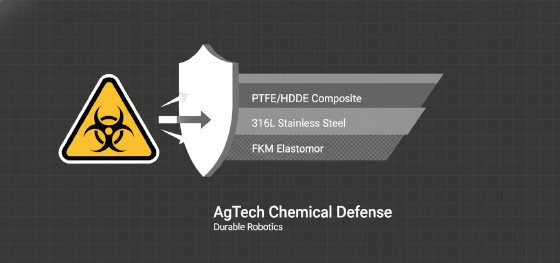
Chemical corrosion in AgTech is an absolute hardware killer. Partnering with Jucheng Precision ensures that your liquid handling systems are built with the 316L stainless steel and specialized HDPE techniques the industry demands. Reach out to our Shenzhen manufacturing hub today for a complete DFM review and shield your robot’s gut from the harsh reality of the field.

