
Brass Sheet Metal Fabrication: Excellent Machinability Guide
Aufrufe: 1 Author: Allen Xiao Publish Time: 2026-06-20


Marrying outstanding acoustic properties, premium gold-like aesthetics, and elite wear resistance is a unique challenge in luxury consumer goods and precision industrial hardware. Utilizing brass sheet metal fabrication provides a highly versatile, non-magnetic solution that bridges the gap between raw mechanical utility and upscale design. This distinct alloy, commonly specified as C26000 cartridge brass, exhibits incredible cold-working formability, superior thermal transfer, and natural antimicrobial action, making it the preferred material for luxury audio faceplates, electrical contacts, and spark-free industrial fittings.
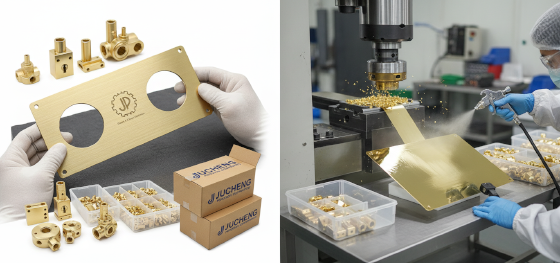
Using standard carbon steels for premium decorative bezels or spark-sensitive electrical cabinets introduces major cosmetic and safety bottlenecks. Steel parts are highly vulnerable to rust if their painted coatings scratch, while copper, though highly conductive, can sometimes lack the physical stiffness required for self-supporting structural covers. Shifting your luxury components and contact plates to premium copper-zinc alloys provides the necessary tensile strength with an inherently beautiful, corrosion-resistant metallic core.
Balancing the material's excellent ductility against its propensity to work-harden is what separates clean, mirror-finished luxury chassis from torn, out-of-tolerance brass scrap. Let's examine how zinc-addition percentages modify brass properties, analyze its outstanding stamping formability under high-speed presses, and review how to apply professional protective finishes to prevent atmospheric oxidation.
Inhalt:
Properties of Brass: Copper and Zinc Alloy
Bending and Stamping Brass Parts
Cosmetic Finishes for Premium Brass Enclosures
Custom Brass Metalwork Delivered Fast at JUCHENG
FAQ: Critical Questions About Brass Sheet Metal Fabrication
Properties of Brass: Copper and Zinc Alloy
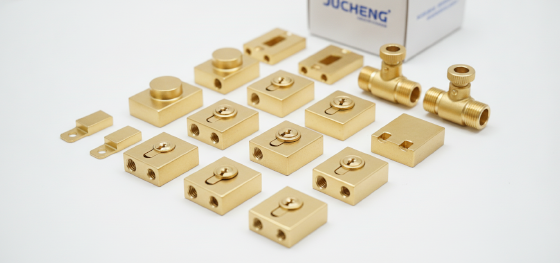
What metallurgical characteristics make brass ideal for specialized industrial environments?
Brass is a copper-zinc alloy offering outstanding structural ductility, natural low friction, excellent electrical conductivity, and critical non-sparking properties.
Understanding how the zinc content alters brass metallurgy is essential to optimizing hardware performance. For standard forming and deep drawing, C26000 cartridge brass is the undisputed industrial baseline, containing roughly 70% copper and 30% zinc. This chemical ratio optimizes the material's elongation, allowing it to stretch cleanly under high pressure without stress fractures.
A critical physical advantage of this metal is its non-sparking nature. Unlike iron-based steels, striking brass with another metal will not produce thermal sparks. This unique physical property makes brass sheet components indispensable in hazardous environments, such as petrochemical storage facilities, explosive gas lines, and aerospace refueling hardware where electrostatic or mechanical sparks represent extreme fire hazards.
Bending and Stamping Brass Parts
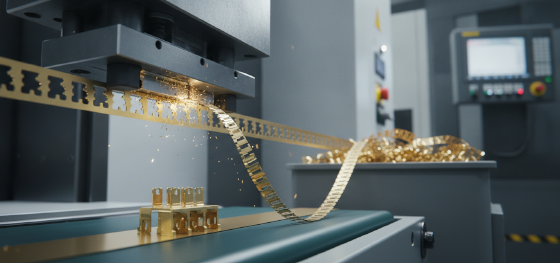
Why is brass sheet metal highly suited for high-speed stamping operations?
Brass exhibits high malleable ductility and a low friction coefficient, allowing progressive dies to blank and emboss intricate terminal shapes with minimal tool wear.
To leverage the high ductility of this copper-zinc alloy during brass sheet metal fabrication, designers must understand the material's physical behavior under high deformation rates. Because of its excellent grain elongation limits, brass is highly receptive to progressive stamping. We utilize high-speed mechanical presses to punch out thousands of complex electrical terminals, spring clips, and structural contacts per hour with extreme repeatability.
Forming brass on CNC press brakes also yields outstanding geometric precision. Brass exhibits very predictable springback, allowing our operators to hit exact flange angles on the first strike. However, because brass is softer than steel, we utilize specialized, highly polished bending dies and apply protective vinyl masking to prevent the tool steel from leaving superficial marks on your premium cosmetic surfaces.
Cosmetic Finishes for Premium Brass Enclosures
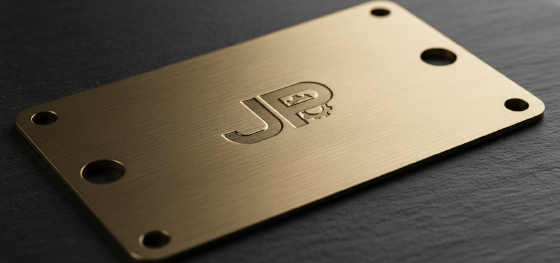
How do you protect high-end brass enclosures from dark atmospheric tarnishing?
We execute physical grain brushing or mirror polishing, followed by chemical passivation and applying clear-coat lacquers to lock in the brilliant golden luster.
High-purity brass parts are highly prone to surface tarnishing when exposed to ambient oxygen and moisture. The raw copper inside the alloy reacts to form a dull brown or green oxide layer known as a patina. While some architectural projects utilize this patina for vintage aesthetics, premium consumer electronics and luxury instrument casings require the metal to retain its brilliant golden luster.
To prevent tarnish, our surface treatment line performs advanced chemical passivation. This process applies a micro-thin, non-conductive barrier that slows down environmental oxidation. For maximum longevity, we spray an ultra-thin, highly transparent polyurethane clear coat over the brushed or polished metal surface, baking it in specialized curing ovens to seal the copper-zinc alloy completely from the surrounding atmosphere.
Custom Brass Metalwork Delivered Fast at JUCHENG

How does JUCHENG manage high-precision custom brass fabrication with tight tolerances?
We operate high-power fiber laser cutters, multi-axis stamping lines, and clean finishing facilities managed by skilled technicians, utilizing dedicated tooling to prevent surface defects.
Selecting this premium, golden Blechmaterial ensures that your luxury hardware and precision electronic casings maintain a distinctive, high-end profile with superior physical durability. JUCHENG integrates advanced fiber cutting, punching, and stamping systems into our full-service production lines. This allows us to transition your 3D models into fully finished, durable brass faceplates with extreme dimensional accuracy.
We process a wide range of raw gauges in both C26000 and C36000 grades, maintaining a rich stock of highly formable plates. Our technical department provides a 24-hour free DFM analysis to check your CAD models for bend radii and stamping limits before production. Supported by our no MOQ policy and rapid delivery guarantee, we manage your project from initial flat pattern cutting to final, fully integrated lacquer coatings and packaging.
FAQ: Critical Questions About Brass Sheet Metal Fabrication

Why is fiber laser cutting preferred over CO2 lasers for processing brass sheets?
Like pure copper, brass is a highly reflective non-ferrous alloy. Standard CO2 lasers operate at a wavelength that brass reflects like a mirror, causing the laser beam to bounce straight back into the cutting head and burn out the optical focus lens. Utilizing advanced fiber lasers operating at a shorter wavelength ensures high material energy absorption, delivering a clean cut without back-reflection risks.
Can brass sheet metal parts be welded successfully?
Yes, but welding brass requires specialized techniques. Because of the low vaporization temperature of the zinc inside the alloy (907 degrees Celsius), standard arc welding causes the zinc to vaporize, creating severe weld porosity and releasing highly toxic white zinc oxide fumes. We resolve this by running specialized TIG welding with silicon bronze filler wires or utilizing rapid spot welding to minimize the heat zone.
What is the difference between brass and bronze sheet metal?
Brass is primarily an alloy of copper and zinc, offering excellent formability, high acoustic resonance, and a bright golden appearance. Bronze is primarily an alloy of copper and tin, offering superior mechanical toughness, high wear resistance, and a reddish-brown appearance, making bronze ideal for heavy-duty industrial sleeve bearings and marine propellers.
How does JUCHENG prevent surface scratching during brass sheet metal fabrication?
We protect the soft, delicate surfaces of raw brass sheets by executing CNC bending with specialized urethane die inserts or applying high-density protective vinyl masking films. This prevents direct metal-on-metal friction between the steel tooling and the brass, delivering clean, mark-free decorative faceplates ready for immediate clear coating.



