
Optimizing 3D Printing Infill Patterns for Industrial Parts
Aufrufe: 72 Author: Allen Xiao Publish Time: 2025-09-10


Additive manufacturing completely redefines the boundaries of structural engineering by decoupling internal geometric complexity from external aesthetic constraints. Unlike subtractive CNC machining operations which mandate solid metallic or polymeric billets, additive technologies construct volumetric models layer by layer. This fundamental shift allows mechanical engineers to purposefully design void spaces within the core of a component. Integrating specific 3D Printing Infill Patterns dictates the ultimate weight-to-strength ratio, operational survival rate, and kinetic energy absorption of industrial custom parts. Novice designers often treat the interior density parameter merely as a cost-saving or print-speed variable. Experienced aerospace and automotive engineers understand that the internal matrix serves as the hidden skeletal framework supporting the entire external shell under severe mechanical loads. Optimizing these hidden internal geometric topologies prevents catastrophic shear failures across complex mating assemblies.
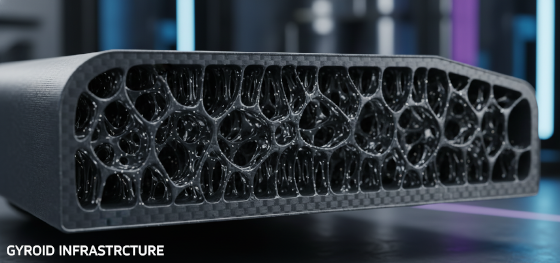
Deploying precise internal structures requires deep knowledge of algorithmic slicing software and thermoplastic polymer behavior. The exact arrangement of extruded filament or fused powder directly governs the mechanical impedance and directional rigidity of the final rapid prototype. Choosing the wrong internal geometry for a functional load-bearing gear leads to immediate structural collapse during high-torque operational cycles. Every single design choice regarding wall thickness algorithms, lattice density percentages, and specific intersection behaviors drastically alters the finite element analysis results of the component. Precision B2B manufacturing demands a mathematically verified approach to internal lattice generation, leaving absolutely no room for uncalculated structural vulnerabilities. The physics of load distribution rule the digital fabrication workflow.
Inhalt:
Mechanics of Internal Lattices in Additive Manufacturing
Grid and Rectilinear Structures for Uniaxial Compression
Gyroid Matrices for Isotropic Load Distribution
Honeycomb Topologies for Aerospace Weight Reduction
Thermal Dissipation Dynamics Across Internal Cavities
Material Selection Synergies with Geometric Density
Bridging Additive Lattices with CNC Machining Tolerances
Jucheng Precision Advanced Prototyping and Production Synergies
Mechanics of Internal Lattices in Additive Manufacturing
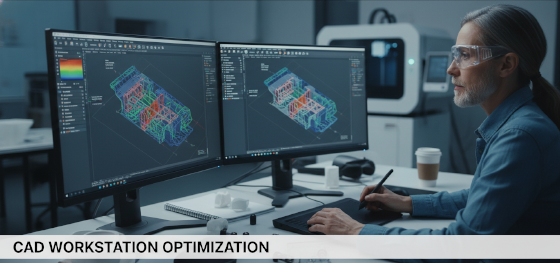
Understanding the raw mechanics of internal voids remains paramount for successful industrial fabrication. A fully solid fused deposition modeling component often introduces severe dimensional warping due to massive thermal accumulation during the extrusion process. Designing strategic empty spaces through intelligent slicing parameters mitigates these fatal thermal stresses while preserving structural integrity. The perimeter shells of the printed object manage the external aesthetic dimensions and resist initial surface abrasion. Conversely, the internal lattice network functions entirely as a complex shock absorber and load transfer matrix. When kinetic force strikes the external perimeter, the mathematical structure of the internal void paths determines how that energy dissipates throughout the polymer volume.
Different 3D Printing Infill Patterns fundamentally alter the directional strength of the printed polymer. Extrusion-based technologies naturally exhibit anisotropic mechanical properties, meaning their tensile strength differs drastically depending on the orientation of the Z-axis layers. Implementing intelligent internal topologies can partially counter this inherent weakness by locking adjacent layers together through overlapping geometric nodes. A high-density lattice dramatically increases the overall compression resistance of a mechanical bracket but drastically inflates the total machine cycle time and raw material consumption. Precision engineering requires meticulously balancing these competing variables. Analysts utilize advanced software suites to predict the optimal intersection density required to support critical overhanging features without generating unnecessary internal mass.
Grid and Rectilinear Structures for Uniaxial Compression
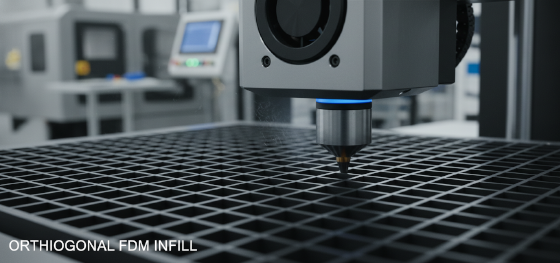
Orthogonal structures dominate the basic tier of additive manufacturing slicing algorithms due to their sheer computational simplicity. Rectilinear and standard grid layouts consist of continuous perpendicular lines intersecting at strict ninety-degree angles. This highly structured geometry excels exceptionally well in scenarios involving direct, uniaxial compression loads. If a custom jig or industrial fixture primarily supports heavy, static vertical weight, the straight vertical columns created by a high-density grid provide tremendous structural resistance against downward crushing forces. The continuous straight-line extrusion paths allow the industrial print head to accelerate rapidly across the build volume, maximizing production throughput for low-volume manufacturing runs.
Despite their superior vertical crush resistance, orthogonal matrices present severe mechanical liabilities under dynamic, multi-directional stress. Uniaxial grids perform terribly when subjected to lateral shear forces or rotational torsion. The straight, unbroken polymer lines easily buckle and fracture along their parallel axes when force arrives from an unexpected diagonal trajectory. Consequently, engineers strictly avoid simple grid structures for complex robotic end-effectors or kinetic drivetrain components facing unpredictable loads. Furthermore, the hard right-angle intersections within the grid create localized stress concentrations. Under extreme fatigue testing, micro-cracks inevitably initiate directly at these rigid geometric junctions, eventually propagating through the entire internal volume and causing catastrophic part failure.
Gyroid Matrices for Isotropic Load Distribution
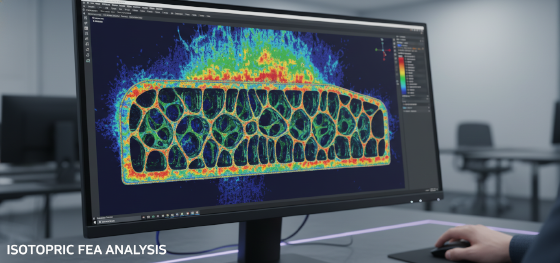
Advanced mathematical topologies solve the directional weakness problems inherent in basic orthogonal grids. The gyroid structure represents a pinnacle achievement in structural generative design. Described as a triply periodic minimal surface, this continuously curving, wavy lattice possesses no straight lines and completely lacks rigid intersection nodes. The absence of sharp ninety-degree angles entirely eliminates the localized stress concentrations that plague standard rectilinear configurations. When unpredictable kinetic impacts strike a gyroid-filled component, the wavy internal architecture absorbs and deflects the energy seamlessly across the entire volumetric matrix. This unique geometry grants the final printed part near-isotropic mechanical properties, delivering uniform tensile and shear strength across the X, Y, and Z axes simultaneously.
Beyond extraordinary mechanical resilience, the gyroid matrix offers unparalleled advantages for specific functional applications involving fluid dynamics. Because the wavy internal channels never seal themselves off into isolated geometric pockets, the entire internal volume remains fully interconnected. Engineers exploit this permeable characteristic to create advanced internal cooling channels for custom heat exchangers. Furthermore, the interconnected cavities facilitate the complete evacuation of liquid resin during SLA stereolithography processes or unbound nylon powder during MJF production cycles. This prevents heavy, expensive raw material from remaining permanently trapped inside the sealed void spaces of the finished prototype. The gyroid stands as the undisputed champion for complex, high-stress engineering applications.
Honeycomb Topologies for Aerospace Weight Reduction
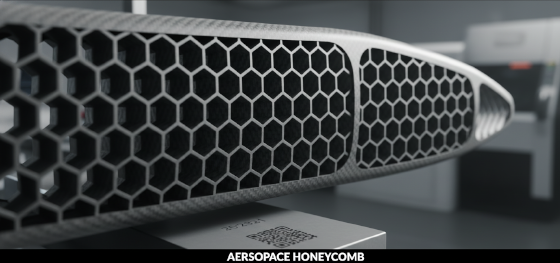
Biomimicry deeply influences modern structural engineering, driving designers to replicate the extreme efficiency found in natural structures. The hexagonal honeycomb matrix perfectly embodies this philosophy, offering an unparalleled strength-to-weight ratio critical for aviation and advanced robotics. The interconnected six-sided polygons utilize minimal thermoplastic material to enclose a maximum amount of volumetric space. When implemented correctly within slicer software parameters, the hexagonal lattice provides extraordinary torsional stiffness and resistance to bending forces. Aerospace engineers frequently specify dense honeycomb interiors for custom drone frames, satellite mounting brackets, and lightweight robotic appendages where every single gram of mass directly penalizes operational battery life.
Manufacturing true hexagonal structures via thermoplastic extrusion requires highly calibrated machine kinematics. The printer nozzle must execute thousands of rapid, sharp angular direction changes per layer to construct the distinct polygonal walls. Poorly tuned equipment introduces severe mechanical vibrations during these sharp corners, resulting in degraded internal layer adhesion. However, when executed flawlessly on industrial-grade additive systems, the honeycomb topology acts as an exceptional acoustic and kinetic dampener. The cellular structure traps distinct pockets of air, creating a natural acoustic barrier ideal for custom automotive interior prototypes or noise-canceling electronic device enclosures. Maximizing the geometric efficiency of the hexagon dictates the success of advanced lightweighting strategies.
Thermal Dissipation Dynamics Across Internal Cavities
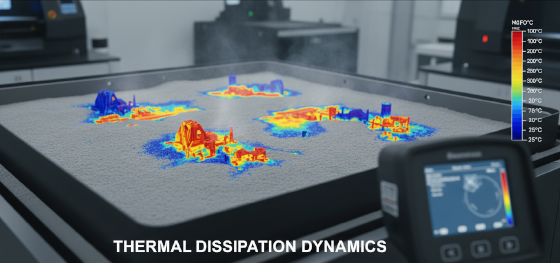
Managing immense thermal energy remains the most critical variable during the fabrication of engineering-grade polymers. High-temperature materials like Polycarbonate, ABS, and Ultem require extrusion temperatures exceeding three hundred degrees Celsius. As the molten polymer exits the nozzle and bonds to the previous layer, it rapidly cools and physically contracts. Massive, completely solid internal regions generate tremendous cumulative shrinkage forces capable of violently tearing the component off the heated build platform. Intelligent 3D Printing Infill Patterns act as vital thermal expansion buffers. By intentionally introducing engineered void spaces, the slicing software effectively limits the total volume of contracting material, drastically reducing the overall thermal stress applied to the external perimeter walls.
The specific geometry of the selected lattice heavily influences the cooling gradient of the active print bed. Dense, closed-cell structures trap extreme ambient heat within isolated polymer pockets, potentially causing localized sagging or structural deformation on overhanging exterior features. Conversely, open-cell architectures like the gyroid allow heated ambient air to circulate freely through the interior matrix during the lengthy fabrication cycle. This internal convective airflow promotes uniform cooling across the entire volumetric envelope, securing tight dimensional tolerances on massive industrial prototypes. Advanced laser sintering systems rely on similar thermal dynamics. Properly tuned internal densities prevent the massive accumulation of thermal energy that otherwise leads to unacceptable part warpage in large-format powder bed fusion chambers.
Material Selection Synergies with Geometric Density
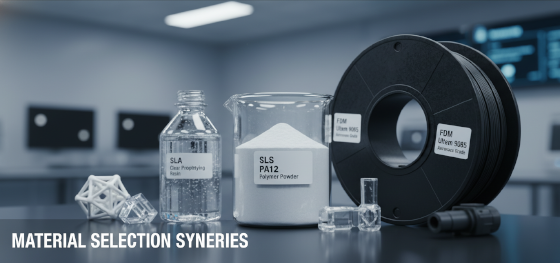
Evaluating the mechanical properties of a printed component requires analyzing the direct synergy between the raw chemical polymer and the programmed internal geometry. A delicate, ten-percent density rectilinear grid printed in flexible TPU elastomer yields a highly compressible, sponge-like prototype ideal for custom footwear midsoles or impact-absorbing industrial gaskets. However, applying that exact same sparse geometric density parameter to a rigid, carbon-fiber infused nylon filament produces a dangerously brittle component highly susceptible to catastrophic internal shattering under impact. Engineers must meticulously match the volumetric density algorithms with the inherent tensile modulus of the selected raw material to achieve the targeted mechanical performance.
Specialized fabrication processes fundamentally restrict certain internal geometries. Direct Metal Laser Sintering systems melting titanium or stainless steel powders cannot easily clear unfused metal powder from intricate, high-density closed-cell lattices. Designers engineering metal additive parts must specify open, self-supporting internal channels that allow the heavy powder to flow out smoothly during post-processing. Alternatively, stereolithography machines utilizing photosensitive liquid resins require specific drainage holes and hollowed internal structures to prevent liquid entrapment, which leads to unpredictable part swelling and chemical degradation over time. Aligning the physical capabilities of twenty distinct advanced materials with optimized structural algorithms guarantees operational success across harsh industrial environments.
Bridging Additive Lattices with CNC Machining Tolerances
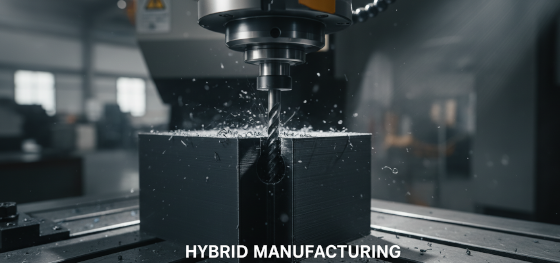
Hybrid manufacturing strategies combine the geometric freedom of additive technologies with the extreme micron-level accuracy of subtractive milling operations. Industrial components frequently require specific threaded holes, high-tolerance bearing press-fits, or perfectly planar sealing surfaces that raw extrusion simply cannot achieve. Slicing software algorithms must proactively anticipate these secondary post-processing sequences. If a technician attempts to tap a mechanical thread directly into a sparse, twenty-percent density internal grid, the drill bit immediately destroys the fragile lattice, leaving zero material for the thread pitch to grip. Advanced CAM planning requires designers to program localized modifier volumes within the slicer, forcing the printer to extrude one hundred percent solid polymer strictly around critical mounting locations.
Securing these complex hybrid prototypes onto high-velocity milling platforms presents massive workholding challenges. Standard pneumatic CNC vises will instantly crush a hollow, low-density plastic prototype under heavy clamping pressure. Manufacturing engineers must design massive, reinforced internal structural ribs directly adjacent to the intended clamping zones. These dense, strategic polymer columns transfer the intense mechanical clamping forces through the component without fracturing the delicate external aesthetic shell. Mastering the delicate transition from a digitally sliced internal lattice to a rigorously machined, aerospace-grade tolerance dictates the ultimate viability of hybrid production workflows. Precision integration eliminates costly scrap rates during secondary machining operations.
Jucheng Precision Advanced Prototyping and Production Synergies
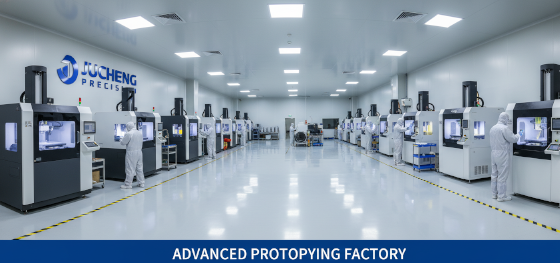
Fragmented supply chains introduce unacceptable delays and critical tolerance failures during rapid product development cycles. Utilizing separate vendors for additive prototypes and high-precision secondary machining invites catastrophic communication breakdowns regarding internal structural requirements. Jucheng Precision entirely eliminates these fatal logistical vulnerabilities by offering true, comprehensive one-stop manufacturing solutions. Our state-of-the-art facility spans over 8000 square meters, heavily equipped with industrial-grade SLS, SLA, FDM, MJF, and DMLS additive systems. We offer over twenty specialized engineering materials, ranging from biocompatible clear resins to ultra-tough glass-filled nylon powders. Calculating optimal internal density matrices and executing complex rapid prototyping occurs flawlessly under rigorous engineering oversight.
Transforming an additive prototype into a fully functional, tight-tolerance industrial component requires serious subtractive hardware. Jucheng houses over 150 advanced CNC machines, including 25 high-precision 5-axis Haas and Mazak milling centers. Our senior engineers seamlessly execute hybrid manufacturing strategies, utilizing advanced CMM inspection equipment to verify micron-level tolerances on complex 3D printed and post-machined assemblies. We proactively offer a comprehensive Free DFM Review to deeply analyze your digital models, recommending localized solid infill regions and optimizing your lattice structures to prevent failure during secondary CNC tapping operations. Operating strictly under ISO9001:2015, ISO 14001, ISO13485, and IATF16949 quality certifications, our firm guarantees absolute structural integrity. Supported by our strict No MOQ policy and blazing fast turnaround times, Jucheng Precision empowers your most aggressive engineering innovations.

