


Die Wahl des optimalen Fertigungswegs für eine neue autonome Plattform oder ein komplexes medizinisches Gehäuse führt oft zu einem technischen Scheideweg: der Entscheidung zwischen einem handgefertigten Modell und einem maschinell gespritzten Teil. In der aktuellen Hochrisikowelt der Rapid-Prototyping-Dienstleistungen, ist das Dilemma von RIM vs. Vakuumguss mehr als nur eine Preisfrage; es ist eine Entscheidung, die das strukturelle Überleben und die regulatorische Bereitschaft Ihrer Hardware bestimmt. Obwohl beide Verfahren flüssige Polyurethanharze verwenden, dienen sie grundlegend unterschiedlichen Phasen des Produktentwicklungszyklus. Ein erfolgreicher Übergang von einem Alpha-Prototypen zu einer Beta-Pilotserie erfordert ein tiefes Verständnis dafür, wie diese beiden "Flüssigkeitsriesen" mit mechanischer Belastung, Maßhaltigkeit und der finanziellen Logik der Werkzeuginvestition umgehen.
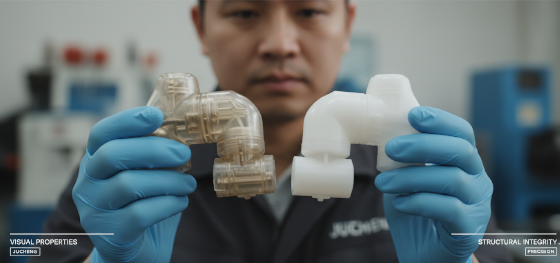
Die mechanische Integrität in übergroßen Gehäusen hängt vom Übergang von der visuellen Validierung zur strukturellen Produktion ab. Der Vakuumguss ist der Branchenfavorit für die ersten 5 bis 10 Einheiten und bietet ein verkaufsfertiges Erscheinungsbild zu den niedrigstmöglichen Einstiegskosten. Sobald die Hardware jedoch in die Feldtestphase eintritt, verlagern sich die Anforderungen hin zu den unnachgiebigen Grundlagen von Low-Volume-Manufacturing. Jucheng Precision adressiert diese kritischen Entwicklungshürden durch eine integrierte Lösung, die den gesamten Polyurethan-Lebenszyklus abdeckt. Jucheng Precision nutzt seine Kapazität von 150+ CNC-Maschinen und 25 5-Achsen-Haas/Mazak-Einheiten um sowohl die hochpräzisen Mastermodelle für Silikonformen als auch die hochfesten Aluminiumwerkzeuge herzustellen, die für die Reaktionsspritzgussverfahrens.
Unter einem dreifachen Mandat von ISO 13485, ISO 14001, und IATF 16949 agiert Jucheng Precision als hochrangiger strategischer Berater für globale MedTech- und Robotik-OEMs. Jucheng Precision liefert eine kostenlosen DFM-Analyse innerhalb von 24 Stunden um sicherzustellen, dass Ihre CAD-Konstruktionen für die spezifische Physik beider Verfahren optimiert sind, wodurch die teuren Nacharbeitszyklen vermieden werden, die unvalidierte F&E plagen. Dieser Leitfaden untersucht die wesentlichen Materialvergleiche, die Mischdynamik, und die Langzeitkriechbeständigkeit erforderlich, um RIM vs. Vakuumguss zu beherrschen und sicherzustellen, dass Ihre nächste Innovation mit 100% Vertrauen in die Haltbarkeit der Hardware auf den Markt kommt.
Inhalt:
Prozessübersicht: Handguss vs. maschinelle Einspritzung
Materialvergleich: Technische RIM-Materialien vs. Prototyping-Harze
Werkzeugstrategien: Flexibles Silikon vs. starres Aluminium
Größe und Maßstab: Warum RIM bei massiven Roboter-Gehäusen dominiert
Wirtschaftliche Logik: Das richtige Volumen für Ihren ROI finden
JUCHENG-Lösung: Beherrschung des gesamten Polyurethan-Lebenszyklus
FAQ: Echte Antworten für Prototyping-Phasen und Logistik
Prozessübersicht: Handguss vs. maschinelle Einspritzung
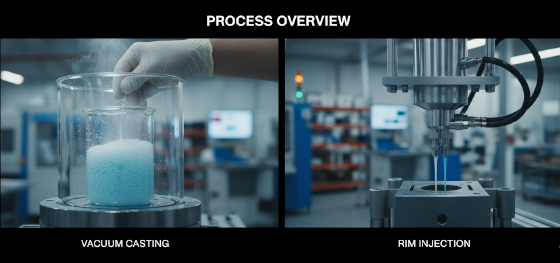
Der grundlegende Unterschied zwischen diesen beiden Prozessen liegt in der Methode der chemischen Zuführung und Drucksteuerung. Vakuumguss ist ein manueller, schwerkraftgetriebener Prozess, bei dem ein Techniker zwei Harzkomponenten von Hand oder in einem kleinen statischen Mischer mischt. Die Flüssigkeit wird dann in einer Vakuumkammer entgast, um Luftblasen zu entfernen, und in eine flexible Silikonform gegossen. Dieser druckarme Ansatz ist ideal für die Alpha-Phase eines Prototyp-Roboter, in der das Ziel darin besteht, die visuelle Form und die interne Passung der Elektronik zu überprüfen. Der manuelle Charakter des Prozesses bedeutet jedoch, dass die Konsistenz von Teil zu Teil vollständig von der Fähigkeit des Bedieners abhängt, was ein Risiko von Abweichungen in großen Beta-Serien darstellt.
Welcher Prozess bietet eine bessere molekulare Konsistenz?
RIM-Formgebung. Der Einsatz automatisierter Hochdruckpumpen und Impingement-Mischköpfe stellt sicher, dass das chemische Verhältnis bei jedem Schuss auf molekularer Ebene perfekt homogenisiert ist.
Die RIM-Technologie stellt die industrialisierte Weiterentwicklung der Polyurethan-Verarbeitung dar. Anstatt von Hand zu gießen, werden die A- und B-Komponenten durch hochpräzise Servopumpen dosiert und mit Geschwindigkeiten von über 150 Metern pro Sekunde in einem speziellen Mischkopf kollidiert. Diese kinetische Energie gewährleistet eine 100%-Homogenisierung, was zu einer Polymermatrix führt, die deutlich stärker ist als handgegossene Alternativen. Jucheng Precision nutzt diese automatisierte Präzision, um Hardware zu liefern, die den strengen ISO 13485 Anforderungen für medizinische Geräte entspricht und den für die FDA-Zulassung erforderlichen "Manufacturing Evidence" liefert, den der manuelle Vakuumguss oft nur schwer erbringen kann.
Curing environment also dictates the final part quality. Vacuum cast parts cure at room temperature over several hours within a soft silicone tool. This slow process can lead to subtle dimensional drift as the material sags under its own weight while still "Green." Jucheng Precision’s RIM process occurs within temperature-controlled aluminum tools, where the exothermic reaction is managed by integrated water-cooling circuits. This thermal discipline ensures that the precision foundations achieved in the Shenzhen hub are "Locked-In" instantly, preventing the post-molding warpage that ruins the fitment of oversized multi-part assemblies in high-end robotics.
Materialvergleich: Technische RIM-Materialien vs. Prototyping-Harze

Choosing between engineering-grade resins and prototyping polyurethanes determines whether your hardware survives its first week in the field. In the comparison of RIM vs Vacuum Casting Material Properties, the cross-link density of the polymer is the primary performance driver. Vacuum casting resins are designed for speed and ease of pouring, often sacrificing long-term fatigue resistance for rapid curing. RIM resins are high-tier engineering systems designed to simulate the exact mechanical profiles of production-grade ABS, Polypropylene, and Glass-filled Nylon. Jucheng Precision helps engineers navigate these metallurgical trade-offs to ensure their hardware is "Mission-Ready."
Can RIM materials handle higher temperatures?
Yes. RIM polyurethanes generally have a higher Heat Deflection Temperature (HDT) than casting resins, making them the superior choice for enclosures housing high-power AI processors.
Structural reinforcement through fillers is another major differentiator. The RIM process allows for the integration of milled glass fibers or minerals, resulting in Verstärktem Polyurethan-RIM (RRIM) composites that rival aluminum in stiffness. Vacuum casting is physically limited by the manual pouring process; adding high loads of fiber would make the resin too thick to flow into a silicone mold. Jucheng Precision utilize specialized mix-heads to handle these abrasive slurries, delivering Hochsteife Strukturkunststoffe hardware that maintains sub-millimeter tolerances even under the intense solar loading of an outdoor agricultural harvest.
| Eigenschaft | Vacuum Casting Resin | Engineering RIM PU | Clinical/Field Impact |
|---|---|---|---|
| Tensile Strength (psi) | 3,000 - 5,000 | 6,000 - 9,000 | Structural Load Bearing |
| Bruchdehnung | 10% - 30% | Up to 400% (Flexible) | Impact and Crash Safety |
| Chemikalienbeständigkeit | Mäßig | Außergewöhnlich | Resists Harsh Disinfectants |
| Biegemodul (psi) | 200,000 | 350,000 - 800,000+ | Maßhaltigkeit |
This data illustrates that while vacuum casting is perfect for aesthetic mock-ups, it lacks the "Backbone" required for Industrieroboterteile that must operate in high-vibration environments. Jucheng Precision’s RIM formulations are engineered for long-term UV stability and chemical immunity, ensuring that your medical device enclosures survive thousands of sterilization cycles without developing the surface "Crazing" that plagues lower-grade cast resins. By delivering hardware with "Locked-In" mechanical properties, Jucheng Precision allows your team to validate the true functional lifespan of your device years before mass production begins.
Werkzeugstrategien: Flexibles Silikon vs. starres Aluminium
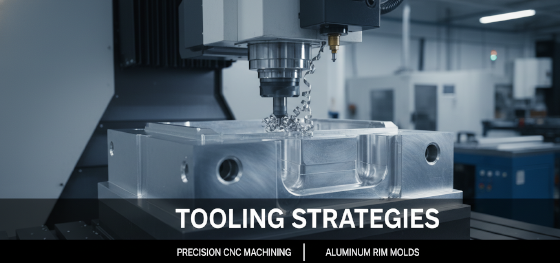
Tooling durability and precision represent the primary economic divide between the two paths. Vacuum casting utilizes silicone molds created by pouring liquid silicone around a 3D-printed master pattern. This "Soft-Tooling" approach is the ultimate risk-mitigation strategy for the Alpha phase, as it allows for the lowest possible NRE-Kosten. However, silicone is an elastic material; under the weight of the resin and the pressure of the vacuum, the mold can flex, leading to a tolerance limit of approximately +/- 0.3mm. For robotic joints or interlocking assemblies requiring +/- 0.05mm accuracy, the flexible nature of silicone becomes a technical barrier.
How long does a silicone mold last?
Typically 20 to 25 shots. Beyond this, the mold loses its surface texture and dimensional accuracy, making it unsuitable for commercial Beta trials.
RIM molding utilizes rigid aluminum tooling machined from high-strength 7075-T6 billets. Because the mold is unyielding, Jucheng Precision can hold significantly tighter tolerances—down to +/- 0.1mm across large spans—than is possible with vacuum casting. Aluminum molds are also much more durable, capable of delivering up to 10,000 shots with zero dimensional drift. This Agile Tooling approach is what allows Jucheng Precision to bridge the gap from a single prototype to a commercial pilot run of 1,000 units seamlessly. If a design change is needed mid-batch, the aluminum mold can be welded and re-machined in our CNC bay within 48 hours, a level of flexibility that steel tooling cannot match.
Unter Einhaltung der ISO 14001 standards, Jucheng Precision emphasizes the sustainability of aluminum tooling. Unlike silicone molds, which are a consumable waste product that must be discarded after 25 parts, aluminum molds are 100% recyclable. For a 500-unit Beta fleet, the environmental impact of consuming 20 silicone tools is significantly higher than a single aluminum RIM tool. By delivering "ESG-Friendly" manufacturing solutions, Jucheng Precision helps global MedTech and robotics firms build a future-proof supply chain that meets the increasing regulatory demands for clean manufacturing and material efficiency.
Größe und Maßstab: Warum RIM bei massiven Roboter-Gehäusen dominiert
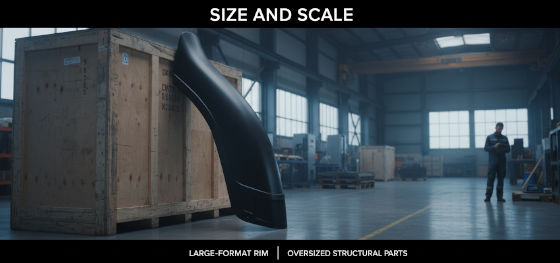
Managing the physical scale of an autonomous vehicle body or a bedside diagnostic scanner reveals the size limits of current technology. Vacuum casting is physically limited by the size of the vacuum chamber. If a part exceeds 600mm in length, the equipment required to degas the resin and the mold becomes prohibitively large and expensive for a prototype service. Most vacuum casting shops hit a "Glass Ceiling" at the half-meter mark. Jucheng Precision addresses this scalability hurdle by providing large scale plastic parts via our dedicated RIM department, which features oversized hydraulic presses and gantry CNC mills for parts up to 2.5 meters in length.
What is the maximum part size for RIM at Jucheng?
We regularly manufacture monolithic structural panels, fenders, and hoods up to 2,500mm long with consistent wall thickness and zero internal voids.
Variable wall thickness capability is the secondary reason for RIM's scale advantage. Large enclosures often require 10mm structural ribs to support heavy sensors, but must maintain a 3mm aesthetic skin. Traditional vacuum casting often results in "Post-Cure Warpage" when thick and thin sections are combined, as the material cools unevenly in the insulating silicone tool. Jucheng Precision’s RIM process utilizes the expanding chemical reaction to fill Fähigkeit variabler Wandstärken (3mm-15mm) with 100% density. By managing the heat through the aluminum mold walls, we ensure that your massive 2-meter shells remain perfectly flat, providing the "Zero-Gap" fitment required for retail-ready aesthetics.
Handling and logistics for these giant parts are managed within Jucheng’s integrated hub. We understand that a 20kg plastic shell is a high-value R&D asset. We provide custom-fitted wooden flight cases and specialized internal shock-dampening for all oversized functional prototypes. By managing the entire lifecycle—from the 2.5-meter mold to the international air-freight crate—Jucheng Precision ensures that your hardware arrives in the lab calibrated and ready for its first power-up. This focus on "Oversized Reliability" is what makes Jucheng Precision the preferred partner for the world's most aggressive AgTech and industrial robotics firms in the Shenzhen hub.
Wirtschaftliche Logik: Das richtige Volumen für Ihren ROI finden
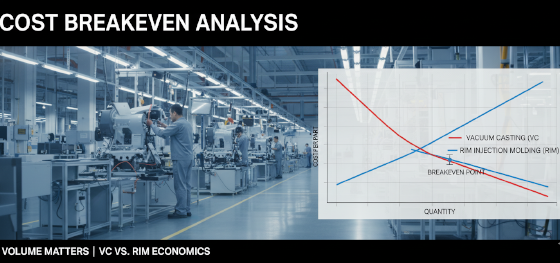
Success in hardware optimization depends on matching the process to the quantity. If you only need 3 units for a design review, vacuum casting is the financial winner because it has near-zero NRE costs. However, as the quantity increases toward the 25-unit mark, the high labor cost and mold-wear of vacuum casting begin to inflate the piece price. Jucheng Precision provides transparent cost modeling to help you find the Reaction Injection Molding Break-Even-Punkts. For most complex robotic enclosures, the breakeven between vacuum casting and RIM typically occurs between 20 and 40 units. Beyond this point, the speed and repeatability of the RIM machine make it the more profitable choice.
| Metrik | Vacuum Casting (Alpha) | RIM Molding (Beta) | Financial driver |
|---|---|---|---|
| Tooling NRE | $800 - $1,500 | $3,500 - $12,000 | CapEx vs. Agility |
| Piece Price | Maximal (hoher Arbeitsaufwand) | Moderat (automatisiert) | Scaling Efficiency |
| Modification Speed | Instant (New Silicone) | Rapid (CNC aluminum) | Iterative Agility |
| Optimal Batch | 1 - 15 Units | 25 - 3,000 Units | Market Pilot Ready |
The "Time-to-Parts" factor is the final variable in the ROI equation. Jucheng Precision provides 4 day rapid delivery for initial functional iterations via CNC or vacuum casting, allowing your software team to start coding months before a mass-production tool would even be finished. By utilizing RIM as a bridge, you can begin commercial operations and secure early revenue while your high-volume hardened steel tool is still being built. This capital agility is essential for maintaining a healthy R&D runway, allowing you to iterate on your product-market fit with the same precision you apply to your mechanical designs.
JUCHENG-Lösung: Beherrschung des gesamten Polyurethan-Lebenszyklus
Dominating the hardware market requires a partner that doesn't just sell one process, but understands the lifecycle of them all. Jucheng Precision operates with a 24/7 manufacturing mindset in our Shenzhen precision manufacturing hub, delivering both hand-fitted vacuum cast models and high-tolerance RIM structural parts with industry-leading speed. Jucheng Precision provides the bridge to production that ensures your innovations move from CAD to field trial with 100% metallurgical and dimensional confidence. Jucheng Precision provides a kostenlosen DFM-Analyse innerhalb von 24 Stunden to ensure your design is optimized for the unyielding reality of the field, whether you are building an autonomous medical assistant or a heavy-duty industrial mobile base.
Integrating your structural design with JUCHENG’s expertise ensures that your RIM vs. Vacuum Casting decision is based on performance data, not guesswork. Jucheng Precision offer comprehensive DFM reviews within 24 hours, identifying potential thermal-expansion risks or machining bottlenecks in your design before they become field failures. Whether you are building an autonomous vineyard scout or a multi-part MRI housing, Jucheng Precision provides the rigid, precise, and chemicals-optimized foundations that keep your innovation moving through the high-stakes cycles and the years of hard labor.
Our facility is equipped with dedicated high-pressure RIM assembly cells and dedicated quality labs, allowing Jucheng Precision to manage the entire hardware lifecycle in one location. Jucheng Precision manage the complexity of multi-material bonding and automotive-grade finishing so your engineering team can focus on the clinical outcomes and the AI. By combining Shenzhen's speed with industrial-grade material verification and global quality standards, Jucheng Precision remains the preferred partner for the world's most aggressive hardware challenges. Contact the Shenzhen hub today to start your next project.
FAQ: Echte Antworten für Prototyping-Phasen und Logistik
Is the surface finish of vacuum casting better than RIM?
VC is excellent for reproducing textures, but RIM provides a more stable surface for high-gloss automotive painting on large-format parts.
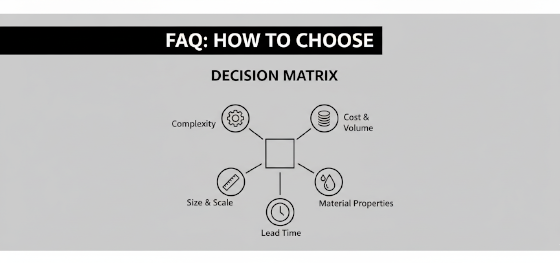
How do I know when to switch from VC to RIM?
As a rule of thumb, once your quantity exceeds 20 pieces or your part length exceeds 600mm, RIM becomes the more reliable and cost-effective choice.
Can JUCHENG overmold silicone gaskets in both processes?
Yes. We specialize in bonding elastomeric seals to both cast and RIM-molded shells to achieve hermetic environmental protection.
Do you offer Pantone color matching for vacuum casting?
Yes. We mix high-stability pigments into the resin for permanent, color-through aesthetics for all Alpha and Beta builds.
What is the typical lead time for a 1-meter RIM part?
Custom aluminum rapid tools and initial T1 samples are typically delivered in 15 to 20 business days.
Tooling debt and material fatigue are absolute project killers in the MedTech and robotics sectors. Partnering with Jucheng Precision ensures that your functional iterations are built with the cost-effective polyurethane reaction injection molding and specialized RIM vs. Vacuum Casting knowledge the industry demands. Reach out to our Shenzhen manufacturing hub today for a complete DFM review and build the unyielding foundation your autonomous fleet requires.

