
Functional Robot Prototypes Manufacturing for Stress Tests
Views: 5 Author: Allen Xiao Publish Time: 2026-04-22 Origin: Site


Testing a new autonomous platform in a sterile lab environment provides only a fraction of the data needed for a successful prototype robot launch. In the [2026] market, the real challenge begins when the machine leaves the bench and faces peak actuator torques, internal thermal spikes from AI compute stacks, and the unpredictable impact of field use. Relying on fragile, aesthetic-only models for these tests leads to catastrophic data loss and expensive redesigns. Mastering Functional robot prototypes manufacturing is the only way to validate your mechanical margins and ensure the hardware survives its first 1,000 hours of operation.
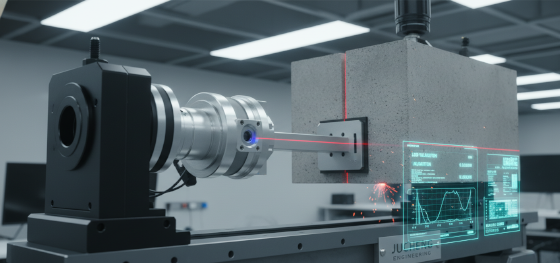
Engineering teams frequently hit the "Hardware Wall" during Alpha trials. A motor mount that flexes by only 0.5mm under load can misalign a precision gearbox, causing it to shred its teeth within minutes. When your software team is chasing bugs that are actually caused by mechanical instability, the development budget evaporates. Jucheng Precision addresses these critical validation hurdles by providing "functional-fidelity" manufacturing, utilizing aerospace-grade alloys and high-performance plastics that mirror the physics of mass-production materials.
Operating within the Shenzhen precision manufacturing hub, JUCHENG provides the manufacturing horsepower required for high-stress robotic hardware. We transform CAD files into functional skeletons that can handle 100% motor torque and high-speed reversals from day one. This guide explores the essential load-bearing standards, thermal management strategies, and environmental sealing requirements necessary for manufacturing functional prototypes that move directly from the bench to the field trial.
content:
Load-Bearing Validation: Machining Skeletons for Torque
Technical Data: Material Performance for Functional Builds
Thermal Management: Protecting Internal AI Electronics
Environmental Reliability: Testing IP67/IP69K Seals
JUCHENG: Delivering Field-Ready Functional Hardware
FAQ: Stress and Speed in Robotic Hardware Builds
Load-Bearing Validation: Machining Skeletons for Torque
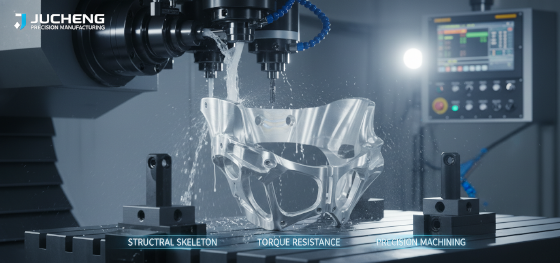
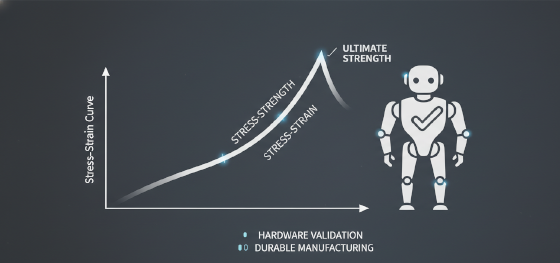
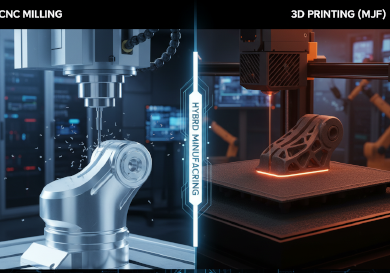
Mechanical rigidity is the non-negotiable foundation of any autonomous machine. In Functional robot prototypes manufacturing, the chassis and joints must handle the peak dynamic loads of sudden stops and directional shifts. If the skeleton exhibits elastic deformation (flexing), the robot’s sensors will experience "noise," and the control loops will become unstable. JUCHENG utilizes high-speed 5-axis CNC machining to carve these bones from solid 7075-T6 aluminum, providing a yield strength of 500 MPa. This ensures that the Alpha build is a "rigid constant," allowing your team to isolate software performance from mechanical error.
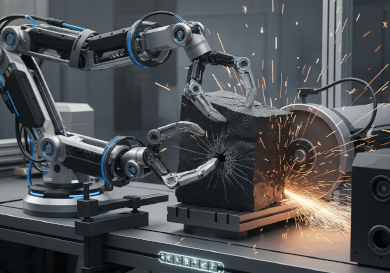
Torsional resistance is critical for high-torque robotic wrists and legs. When a robot navigates an obstacle, the forces are rarely axial; they are multi-directional torsional loads. JUCHENG’s DFM process identifies potential "flex-nodes" in your design—such as thin-walled joints or long lever arms—and suggests reinforcing geometries like internal gussets or hollow-box sections. By machining these features with +/- 0.02mm precision, we deliver a prototype robot that maintains its kinematic accuracy under full payload, preventing the "vibration-creep" that leads to joint bearing failure during long-term testing.
Fatigue testing requires material authenticity. A 3D-printed plastic prototype might last 100 cycles, but a functional trial often requires 10,000 to 100,000 cycles to identify wear patterns. JUCHENG utilizes production-grade materials for these functional builds, such as hard-anodized aluminum and hardened alloy steels for gears and shafts. This level of material integrity ensures that the data gathered during the R&D phase is valid for the future production unit, allowing your engineering team to verify safety factors and maintenance intervals before scaling to mass manufacturing.
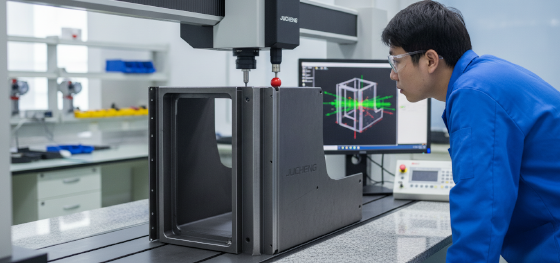
Assembly fitment under load is the final check for structural parts. JUCHENG performs physical load-testing and interference checks on critical assemblies before shipping. We ensure that when the motors are torqued down, the chassis does not warp or bind. This "Ready-to-Run" hardware approach is essential for robotics startups that need to maximize their time in the field. By providing a functional skeleton that never yields, JUCHENG allows you to focus 100% of your energy on the AI and autonomy stack.
Technical Data: Material Performance for Functional Builds
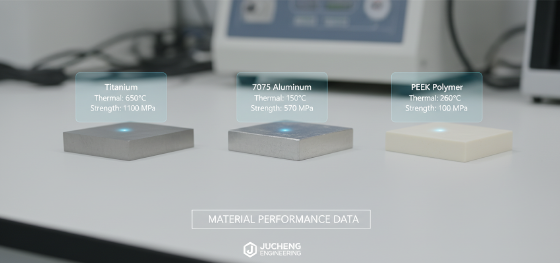
Selecting the right material for a functional prototype determines the validity of your testing data. High-fidelity materials are required to accurately simulate thermal expansion and mechanical fatigue. Jucheng Precision provides technical consultations to help you match the alloy or polymer to your robot's specific mission profile. The following table compares the physical performance of materials used in high-end Functional robot prototypes manufacturing for the [2026] market.
| Material | Yield Strength (MPa) | Thermal Conductivity (W/m·K) | Primary Application |
|---|---|---|---|
| 7075-T6 Aluminum | 500 - 540 | 130 | Load-Bearing Joints / Feet |
| 6061-T6 Aluminum | 240 - 270 | 167 | Chassis / Main Frames |
| PEEK (Industrial) | 90 - 100 | 0.25 | Insulated Bushings / Gear Parts |
| 17-4 PH Stainless | 1000 - 1100 | 16 | High-Torque Drive Shafts |
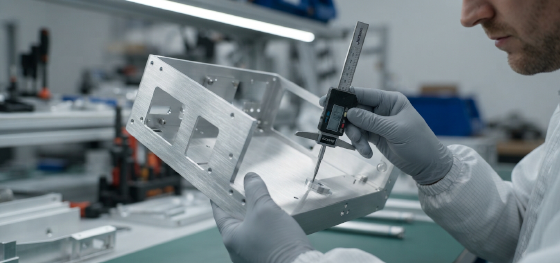
7075-T6 is our preferred choice for joints because its stiffness-to-weight ratio allows for "aerospace-light" components that do not sacrifice rigidity. In our Shenzhen hub, we utilize specialized diamond-tipped cutters to achieve Ra 0.4 finishes on functional interfaces, ensuring that the Functional robot prototypes manufacturing process delivers parts that fit as well as they perform. This level of technical oversight is essential for maintaining the sub-micron concentricity required for high-speed robotic gearboxes.
Thermal Management: Protecting Internal AI Electronics
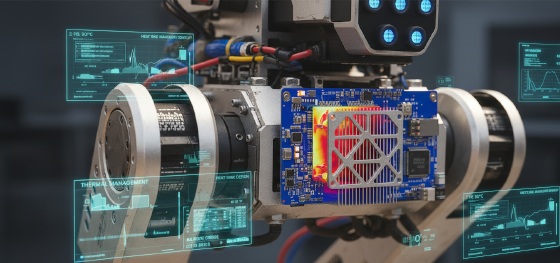
Heat is the silent enemy of the modern prototype robot. As AI compute stacks (like NVIDIA Jetson or custom NPUs) run at peak loads, they generate intense localized heat within the enclosure. Without efficient thermal paths, these processors will "throttle," leading to software latency and potentially dangerous robot behavior. JUCHENG integrates thermal management directly into the Functional robot prototypes manufacturing workflow. We machine custom aluminum heat sinks with complex fin geometries and integrate them into the robot's primary structure, effectively turning the chassis into a giant passive radiator.
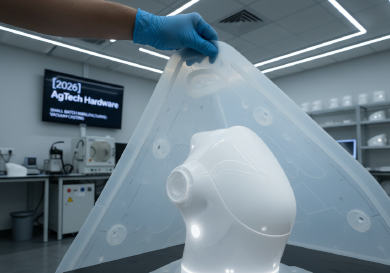
Conductivity is the key to protecting your "Robot Brain." While plastic enclosures are lightweight, they act as thermal insulators, trapping heat inside. JUCHENG offers hybrid enclosures where the high-heat areas are CNC-machined from 6061-T6 aluminum, which possesses superior thermal conductivity (167 W/m·K), and then bonded to lightweight 3D-printed or vacuum-cast panels. This dual-material strategy ensures that heat is moved away from the electronics while keeping the overall robot weight low for agility.
Active cooling interfaces are often required for high-duty-cycle prototypes. JUCHENG machines precision mounting points for fans and liquid-cooling blocks with mirror-flat finishes (+/- 0.005mm) to ensure maximum contact with thermal interface materials (TIMs). This minimizes thermal resistance and allows your Alpha builds to run 24/7 stress-tests without overheating. By treating thermal management as a core manufacturing requirement, JUCHENG ensures that your hardware doesn't become the bottleneck for your AI software’s progress.
Internal airflow optimization is the final step. During the functional build phase, JUCHENG can machine internal baffles and ducts that direct cool air over high-voltage components like motor drivers and battery management systems (BMS). By controlling the "internal climate" of the robot, we prevent the premature component failure that often plagues early-stage prototypes. This level of industrial-grade thermal engineering is what makes JUCHENG a trusted partner for the world's most advanced humanoid and mobile robotics firms in [2026].
Environmental Reliability: Testing IP67/IP69K Seals
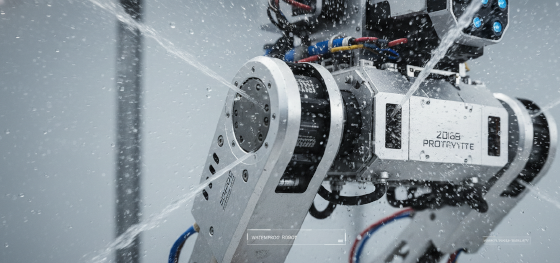
Surviving the "Field Trial Season" requires a prototype robot that is hermetically sealed against dust, mud, and water. A functional prototype that dies after its first rainstorm is a failure of manufacturing. Functional robot prototypes manufacturing at JUCHENG includes the integration of precision CNC-machined gasket grooves and O-ring seats. Unlike 3D-printed seals which are prone to leakage, our machined interfaces provide the 25-30% compression ratio required to achieve IP67 and IP69K ratings, ensuring your internal electronics remain bone-dry in the harshest outdoor conditions.
Material compatibility with agricultural or industrial chemicals is another focus. For robots used in spraying or factory maintenance, the enclosure must resist corrosive fertilizers or cleaning agents. JUCHENG utilizes specialized fluoropolymer coatings (like PTFE) or chemical conversion coatings on our machined parts to create an inert surface barrier. This prevents the environmental stress cracking (ESC) that can lead to seal failure and catastrophic leaks during long-term field testing.
Pressure equalization is the silent requirement for waterproof robots. Airtight enclosures can develop internal pressure differentials due to rapid temperature changes, which can actually "suck" water through the seals. JUCHENG integrates breathable, hydrophobic ePTFE vents (Gore vents) directly into the machined chassis. These vents allow the robot to breathe while blocking liquid water and dust, preventing the internal condensation that can blind computer vision sensors and short out sensitive circuitry during a morning harvest.
Ruggedized sensor windows are the final barrier of environmental reliability. JUCHENG machines optical-grade Polycarbonate or sapphire windows with scratch-resistant coatings and integrates them into the functional shell with sub-micron flatness. This ensures that the LiDAR and camera "eyes" remain clear even after being blasted by sand or mud. By delivering a "Fortress" for your technology, JUCHENG ensures that your field trial data is a true representation of your robot's potential, not a record of hardware failures.
JUCHENG: Delivering Field-Ready Functional Hardware
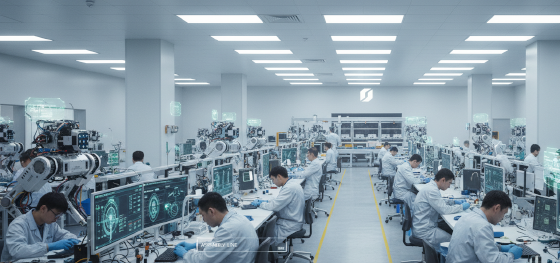
Dominating the [2026] robotics market requires a partner that can bridge the gap between material science and rapid fabrication. Jucheng Precision operates with a 24/7 manufacturing mindset in our Shenzhen precision manufacturing hub, delivering high-tolerance Functional robot prototypes manufacturing and structural components with lead times as fast as 7 to 10 business days. We provide a "Bridge to Production" that allows you to move from a benchtop concept to a commercial pilot run of 50 Beta units with consistent metallurgical and dimensional quality.
Integrating your functional design with JUCHENG’s expertise ensures that your prototype robot survives the "First-Contact" and moves into mass adoption. We offer comprehensive DFM reviews within 24 hours, identifying potential fatigue points or thermal bottlenecks in your design before they become field failures. Whether you are building an autonomous underwater vehicle (AUV) or a heavy-duty industrial mobile base, Jucheng Precision provides the rigid, precise foundations that keep your innovation moving through the high-speed cycles and the years of hard labor.
Our facility is equipped with 150+ CNC machines and dedicated material-testing cells, allowing us to manage the entire functional prototype lifecycle in one location. We manage the complexity of multi-material bonding and precision sealing so your engineering team can focus on the control loops and the AI. By combining Shenzhen's speed with industrial-grade material verification, JUCHENG remains the preferred partner for the world's most aggressive robotics challenges. Contact us today to start your next functional project.
FAQ: Stress and Speed in Robotic Hardware Builds
Is aluminum strong enough for a load-bearing robot prototype?
Yes. 7075-T6 aluminum provides a yield strength comparable to mild steel but at one-third the weight, ideal for dynamic robotic joints.
How do you ensure a prototype robot is waterproof?
We utilize precision CNC-machined gasket grooves and ePTFE vents to maintain IP67/IP69K ratings in the field.
What is the maximum torque JUCHENG machined joints can handle?
Our functional joints are engineered and tested to handle peak actuator torques exceeding 500Nm for heavy industrial applications.
What are typical lead times for a complete functional robot assembly?
A fully machined and sealed functional assembly is typically delivered in 10 to 15 business days.
Field failures in robotics R&D are absolute innovation killers. Partnering with Jucheng Precision guarantees that your iterations are built with the impact-resistant 7075 aluminum and specialized Functional robot prototypes manufacturing techniques the industry demands. Reach out to our Shenzhen manufacturing hub today for a complete DFM review and build the unbreakable foundation your autonomous fleet requires.


ㆍDatenschutz: Wir respektieren Ihre Privatsphäre. Hier finden Sie ein Beispiel einer Geheimhaltungsvereinbarung. Mit dem Absenden dieses Formulars stimmen Sie unseren AGB und der Datenschutzerklärung zu.
