
Precision Custom Robotic Gear and Actuator Prototyping Hub
Views: 1 Author: Allen Xiao Publish Time: 2026-04-22 Origin: Site


Detecting the slight mechanical shudder or audible "click" in a robotic joint during an initial bench test reveals the ultimate high-stakes challenge for any prototype robot: the drivetrain. While AI manages the logic, the gears and actuators manage the physics. If the transmission system lacks the necessary torque density or exhibits excessive backlash, the robot's movements will be jerky, inaccurate, and prone to oscillating. Engineering these critical motion components requires specialized Custom robotic gear and actuator prototyping to bridge the gap between idealized CAD simulations and the brutal reality of frictional heat and material fatigue in [2026].
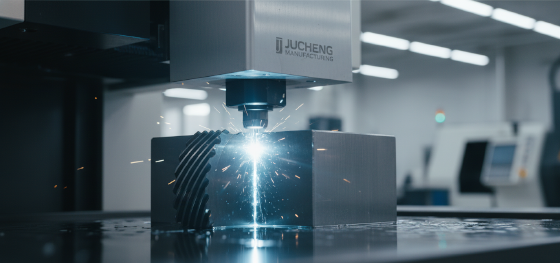
Off-the-shelf actuators often fail to meet the unique form-factor or weight requirements of next-generation humanoid and bionic systems. Relying on generic gearboxes often results in "Mechanical Compromise," where the robot is built around the motor rather than the mission. Jucheng Precision addresses these development hurdles by providing bespoke drivetrain manufacturing, utilizing Hard Milling and Wire EDM to execute complex tooth geometries in hardened alloys. 我们 deliver the precise torque-transmission foundations that allow your autonomy stack to perform with surgical accuracy.
Operating within the Shenzhen precision manufacturing hub, JUCHENG serves as the high-accuracy gear partner for global robotics OEMs. We transform high-strength alloy steels into micron-level drive components in as fast as 10 business days. This guide explores the essential zero-backlash requirements, the challenges of actuator integration, and the material wear standards required for Custom robotic gear and actuator prototyping hardware that survives the most demanding R&D cycles.
content:
Precision Gearing: Solving the Backlash Problem
Technical Data: Comparing Alloys for High-Torque Drivetrains
Actuator Integration: Machining Compact Motor Housings
Wear Testing: Selecting Materials for the First 10,000 Cycles
JUCHENG: The Precision Hub for Custom Robot Drives
FAQ: Manufacturing High-Precision Gears for Prototype Robots
Precision Gearing: Solving the Backlash Problem
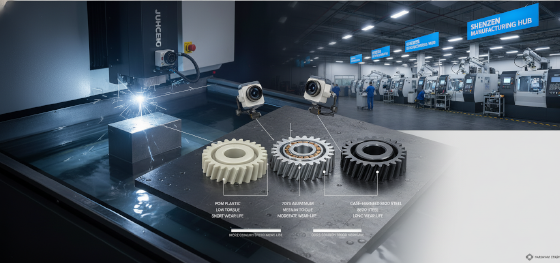
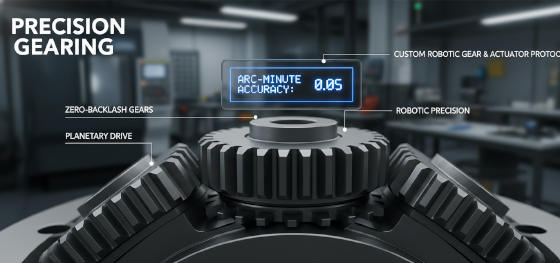
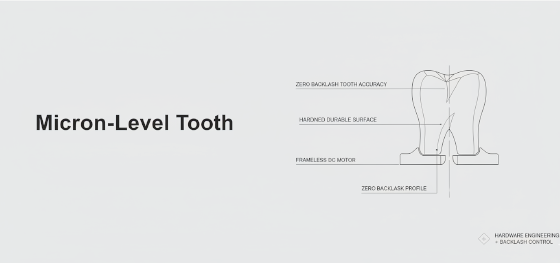
Zero-backlash performance is the non-negotiable benchmark for modern robotic joints. In Custom robotic gear and actuator prototyping, backlash—the "play" between mating gear teeth—is the primary cause of positional drift and control loop instability. For a high-precision arm, even a single arc-minute of backlash can result in a 0.5mm error at the end-effector. JUCHENG minimizes this through the use of ultra-precision Wire EDM (Electrical Discharge Machining) and CNC gear grinding. By holding involute profile tolerances within +/- 2 microns, we ensure that the gear mesh is constant and fluid throughout the entire rotation.
Complex tooth geometries such as cycloidal pins and harmonic flexsplines are becoming standard in [2026] prototype robot designs. These shapes are often impossible to manufacture via traditional hobbing or shaping. JUCHENG utilizes 5-axis CNC hard milling to carve these components from pre-hardened steels (HRC 55+), eliminating the "Heat-Treat Warp" that ruins the accuracy of lower-quality gears. This process ensures that the Alpha build joint moves with the same mechanical silence and efficiency as a mass-produced unit, providing valid data for your vibration and acoustic sensors.
Concentricity between the gear axis and the bearing seat dictates the lifespan of the actuator. Any eccentricity leads to uneven gear wear and localized heating, which can melt the lubricants and lead to sudden seizure. JUCHENG machines the gear profile and the bearing registration features in a single setup whenever possible. This "Common-Axis" philosophy eliminates stacking errors and ensures that the drive torque is distributed evenly across all gear teeth, maximizing the torque density of your custom actuator design.
Surface finish on the gear teeth is the final defense against transmission error. A rough surface finish increases friction and causes a "break-in" period where the robot's accuracy changes over the first few hours of use. JUCHENG utilizes specialized mirror-grinding to achieve a Ra 0.2 finish on gear surfaces. This "Direct-to-Field" finish ensures that your prototype robot maintains its calibrated accuracy from the first minute of power-up, allowing your software team to trust the mechanical baseline during high-frequency control tests.
Technical Data: Comparing Alloys for High-Torque Drivetrains
Selecting the right material for a robotic gear set determines whether the actuator survives a single drop-test or lasts for a decade. High-performance drivetrains require a balance of surface hardness and core toughness. Jucheng Precision provides technical consultations to help you match the alloy to your robot's torque-to-weight targets. The following table compares the performance of materials used in high-end Custom robotic gear and actuator prototyping for the [2026] market.
| Material | Hardness (HRC) | Torque Density | Primary Application |
|---|---|---|---|
| 18CrNiMo7-6 | 58 - 62 | Maximum | High-Payload RV Gears |
| 7075-T6 Aluminum | Standard | Moderate | Lightweight Drone Hubs |
| PEEK (Carbon-Filled) | 90 (Shore D) | Low | Silent / Lubricant-Free |
| Tool Steel (D2) | 55 - 60 | Very High | Impact-Resistant Joints |
18CrNiMo7-6 is our gold standard for custom gear sets because it allows for deep carburizing. This results in a "wear-proof" surface shell that resists pitting, while the core remains ductile enough to absorb the violent shock loads of an emergency stop. In our Shenzhen hub, we utilize vacuum heat treatment to prevent oxidation of the precision-cut teeth, ensuring that the Custom robotic gear and actuator prototyping process delivers parts that are metallurgicaly perfect. This level of material integrity is essential for the high-duty-cycle requirements of industrial AMRs.
Actuator Integration: Machining Compact Motor Housings
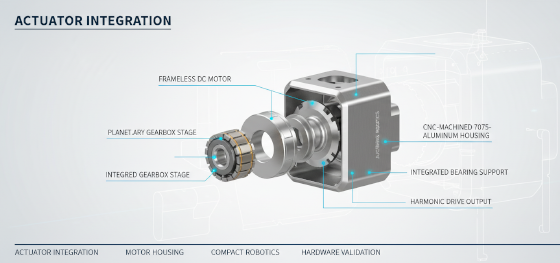
Integrating frameless motors directly into the robot's structure is the key to achieving the sleek silhouettes of [2026] humanoids. This "Integrated Actuator" design requires the housing to perform multiple roles: it is a motor stator mount, a bearing carrier, and a structural skeleton all in one. Custom robotic gear and actuator prototyping at JUCHENG involves machining these multi-functional housings from lightweight aerospace alloys like 7075-T6. We hold +/- 0.005mm tolerances on motor registration pilots to ensure that the air gap between the rotor and stator is perfectly uniform, maximizing motor efficiency.
Thermal paths are integrated directly into the housing geometry. High-power density actuators generate intense heat that can degrade motor winding insulation. JUCHENG machines complex internal cooling fins and liquid-cooling channels into the actuator shells. By providing a direct metal-to-metal thermal path from the motor to the external air, we prevent the thermal throttling that often limits the performance of prototype robot units during long-duration stress tests. This advanced thermal engineering is a hallmark of JUCHENG’s "Functional Fidelity" approach.
Internal cable routing for encoders and power lines must be managed within the cramped confines of the actuator. JUCHENG utilizes 5-axis "undercutting" to carve smooth internal passages and exit ports for high-speed data lines. We ensure all transitions are deburred and polished to a Ra 0.4 finish to prevent cable abrasion during the millions of oscillating moves the joint will perform. By consolidating the routing and the structural mount into a single CNC component, we reduce the total part count and eliminate potential failure points in your robot's "Wrist-to-Hand" chain.
Sealing for IP67/IP69K ratings is the final integration challenge. A custom actuator must keep lubricants inside while keeping farm dust or factory moisture out. JUCHENG machines precision gasket grooves and O-ring seats with sub-micron flatness to ensure a hermetic seal. Unlike generic motor mounts, our integrated housings provide the specific compression ratios required for high-pressure washdown environments. This level of environmental defense ensures that your prototype robot survives the "Washdown Season" and provides reliable data throughout its entire field trial.
Wear Testing: Selecting Materials for the First 10,000 Cycles
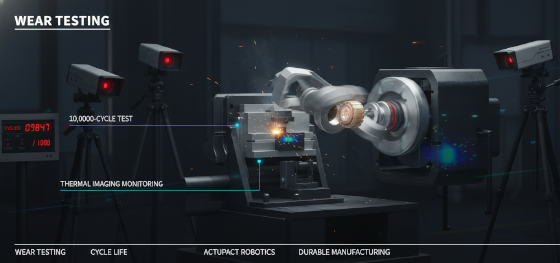
Reliability in robotics is earned through cycle testing. In Custom robotic gear and actuator prototyping, the first 10,000 cycles reveal the "Mechanical Truth" of your design. If the material selection is incorrect, the gear teeth will show signs of "Spalling" or "Galling" within the first week of R&D. JUCHENG recommends utilized specialized coatings like DLC (Diamond-Like Carbon) or PVD nitriding to provide an ultra-hard sacrificial layer. These coatings reduce the coefficient of friction to below 0.1, preventing the localized heat buildup that leads to premature drivetrain seizure in high-speed SCARA or Delta robots.
Lubricant compatibility is a critical variable in wear testing. JUCHENG’s DFM team analyzes the interplay between your chosen synthetic grease and the machined surface texture. We often suggest micro-texturing the non-load-bearing areas of the gear teeth to act as "oil reservoirs," ensuring that the critical contact zones remain lubricated even under high-centrifugal forces. This attention to microscopic detail is what allows our prototype robot components to survive the "Stress-to-Failure" tests required for aerospace and medical certification.
Component fatigue must be monitored via vibration analysis. During the prototyping phase, JUCHENG can machine recessed pockets within the actuator frame to house high-frequency accelerometers. This allows your team to capture the "vibrational signature" of the drivetrain in real-time, identifying the onset of gear wear before it becomes a catastrophic failure. By providing a "Sensory-Enabled" skeleton, JUCHENG turns your prototype into a high-fidelity data-gathering machine, accelerating the transition from version 1.0 to a production-ready Beta fleet.
Post-testing forensic analysis is a service we provide to our R&D partners. After your field trials, JUCHENG performs metallurgical inspections on the worn parts to identify the specific root causes of failure—whether it was subsurface fatigue, lubrication breakdown, or thermal deformation. This closed-loop manufacturing approach is what makes JUCHENG more than just a vendor; we are the mechanical intelligence partner that helps you refine your drivetrain for mass adoption in the [2026] market.
JUCHENG: The Precision Hub for Custom Robot Drives
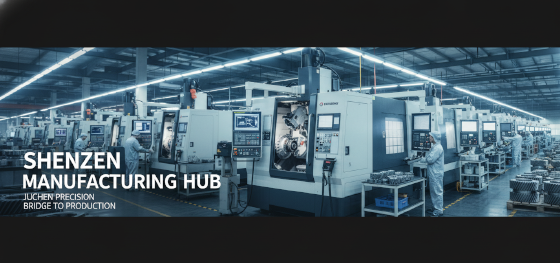
Dominating the [2026] robotics hardware market requires a partner that can scale from a single hand-fitted gear set to a commercial fleet without losing a micron of accuracy. Jucheng Precision operates with a 24/7 manufacturing mindset in our Shenzhen precision manufacturing hub, delivering high-tolerance Custom robotic gear and actuator prototyping and structural industrial robot parts with lead times as fast as 12 business days. We provide a "Bridge to Production" that allows you to move from your first functional joint to a commercial deployment of 500 actuators with consistent metallurgical and dimensional quality.
Integrating your drivetrain design with JUCHENG’s expertise ensures that your prototype robot survives the "First-Million Cycle" test and moves into mass adoption. We offer comprehensive DFM reviews within 24 hours, identifying potential torque-loading risks or "flex-zones" in your actuator design before they become field failures. Whether you are building an autonomous surgical assistant or a heavy-duty industrial mobile base, Jucheng Precision provides the rigid, precise "hearts" that keep your innovation moving through the high-speed cycles and the years of hard labor.
Our facility is equipped with 150+ CNC machines, including the latest Wire EDM centers and precision gear grinders, allowing us to manage the entire actuator lifecycle in one location. We manage the complexity of hard milling and micro-gear cutting so your engineering team can focus on the motion control algorithms and the AI. By combining Shenzhen's speed with industrial-grade metrology, JUCHENG remains the preferred partner for the world's most aggressive robotics challenges. Contact us today to start your next drivetrain project.
FAQ: Manufacturing High-Precision Gears for Prototype Robots
What is the maximum gear hardness JUCHENG can machine?
We specialize in hard milling and grinding gear steels up to HRC 62 for maximum wear resistance in high-torque joints.
Can you machine custom cycloidal gear profiles?
Yes. We utilize precision Wire EDM and 5-axis CNC grinding to execute complex cycloidal and harmonic drive geometries.
How do you minimize backlash in prototype gearboxes?
We hold sub-micron tolerances on tooth profiles and bearing bores to ensure a perfectly tight mesh with zero dead-zones.
What is the best material for silent robotic gears?
Carbon-filled PEEK or high-performance POM. They provide high stiffness with excellent internal dampening properties.
What is the typical lead time for a custom robotic actuator?
A fully machined and assembled high-precision actuator is typically delivered in 15 to 20 business days.
Drivetrain failure in robotics R&D is an absolute innovation killer. Partnering with Jucheng Precision ensures that your functional iterations are built with the HRC 55+ hardened steel and specialized Custom robotic gear and actuator prototyping techniques the industry demands. Reach out to our Shenzhen manufacturing hub today for a complete DFM review and build the high-torque foundation your autonomous fleet requires.



ㆍDatenschutz: Wir respektieren Ihre Privatsphäre. Hier finden Sie ein Beispiel einer Geheimhaltungsvereinbarung. Mit dem Absenden dieses Formulars stimmen Sie unseren AGB und der Datenschutzerklärung zu.
